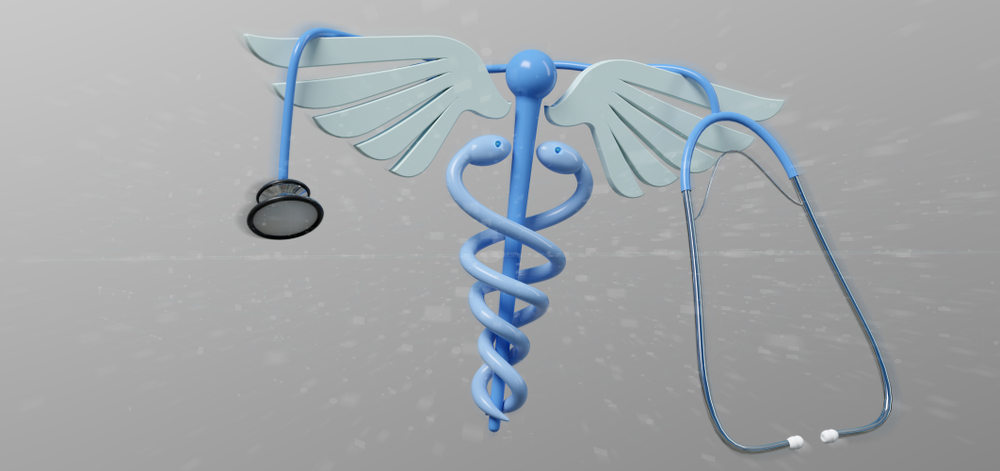
The world of medicine has no shortage of powerful images: the white coat, the stethoscope, the prescription pad, the glowing hospital cross, and the heroic clipboard that somehow disappears exactly when a nurse needs it. But among all these symbols, one ancient image continues to coil its way through health care branding, medical education, emergency services, and public imagination: a snake wrapped around a staff.
Simple, memorable, and slightly dramatic, the Rod of Asclepius is one of the oldest and most meaningful symbols of healing. Yet, in a plot twist worthy of a medical-history sitcom, it is often confused with the caduceus, the winged staff with two snakes associated with Hermes, the Greek messenger god linked to travel, commerce, negotiation, and clever exchange. In other words, one symbol says healing; the other says “your package has shipped.”
This article is a call to embrace the Asclepionnot only as an ancient healing sanctuary but as a deeper idea of authenticity in medical symbolism. In a time when health care institutions must earn trust, every visual choice matters. Symbols are not decoration. They are promises in graphic form.
What Is the Asclepion?
An Asclepion, also spelled Asclepieion, was an ancient Greek healing sanctuary dedicated to Asclepius, the god of medicine and healing. These sanctuaries were not hospitals in the modern sense, but they were more than temples. They were places where ritual, rest, environment, observation, and early medical practice came together.
People traveled to Asclepieia seeking relief from illness, pain, infertility, disability, anxiety, and mysterious symptoms that would probably make a modern search engine panic. Visitors might bathe, pray, make offerings, sleep in a sacred area, describe dreams, and receive guidance from temple attendants. Some sites were associated with exercise, diet, theater, fresh air, and social support. In other words, the Asclepion understood something modern health care keeps rediscovering with new terminology: healing is not only a procedure; it is an experience.
The famous sanctuary at Epidaurus became one of the best-known healing centers in the ancient world. Pergamon and Kos were also associated with medical learning and healing traditions. These spaces shaped how later cultures imagined the physician: not merely as a technician, but as a guide, interpreter, witness, and servant of human vulnerability.
The Rod of Asclepius: One Snake, One Staff, One Clear Message
The Rod of Asclepius is usually shown as a single serpent coiled around a plain staff. It is associated with Asclepius, whose mythology links him with medicine, restoration, and the difficult art of bringing suffering bodies back toward balance. The serpent was not chosen randomly. Across many ancient cultures, snakes suggested renewal because they shed their skin. They also represented danger, wisdom, mystery, and the thin line between poison and remedy.
That tension makes the Rod of Asclepius unusually honest. Medicine itself lives in tension. A drug can heal or harm depending on dose, timing, and patient. Surgery can save life while wounding the body first. A diagnosis can bring relief and fear in the same breath. The snake on the staff quietly admits that healing is powerful, risky, and never casual.
The staff matters too. It is not a sword, crown, or lightning bolt. It is a walking stick, a humble support. It suggests journey, guidance, patience, and the steady work of care. A good medical symbol should not shout, “Behold my authority!” It should whisper, “You are not walking alone.”
The Caduceus Confusion: How Two Snakes Sneaked into the Clinic
The caduceus has two snakes and often wings. In classical mythology, it belongs to Hermes, known to the Romans as Mercury. Hermes was a messenger, guide, traveler, negotiator, and patron of merchants. This made the caduceus a fitting symbol for movement, communication, trade, and exchange.
None of that is automatically bad. Communication is vital in medicine. Commerce exists in health care whether we like it or not. But the caduceus is not historically the primary symbol of healing. Its repeated appearance on clinic signs, medical products, badges, and logos is largely a modern mix-up, especially common in the United States.
The confusion grew because the two symbols look similar at a glance. Both involve serpents and a staff. Add a designer in a hurry, a committee with fifteen opinions, and someone saying “Can we make it look more premium?” and suddenly Hermes is wearing scrubs.
In American medical symbolism, the caduceus gained visibility through military usage and older medical publishing traditions. Over time, many people simply assumed the winged two-snake version was the medical symbol. The mistake became familiar, and familiarity has a sneaky way of dressing up as correctness.
Why Authentic Medical Symbols Matter
Some may ask, “Does it really matter which snake we use?” Fair question. Patients are not usually checking logo mythology before choosing an emergency room. Nobody with a sprained ankle pauses outside urgent care and says, “Sorry, I cannot enter; that serpent count is historically irresponsible.”
But symbols matter because they shape trust before words begin. Health care relies on trust more than almost any other field. A hospital logo, medical school seal, public health emblem, or professional association mark should communicate seriousness, integrity, and continuity. When an institution uses the wrong symbol, it may not cause clinical harm, but it can suggest carelessness in a field where details are everything.
Authentic symbolism is not about academic snobbery. It is about alignment. If medicine wants to project healing, service, humility, and patient-centered care, the Rod of Asclepius does that beautifully. The caduceus, with its commercial and messenger associations, can feel oddly mismatchedespecially in a country where patients already worry that health care is too transactional.
The Asclepion as a Better Metaphor for Modern Health Care
Embracing the Asclepion means going beyond swapping logos. It means asking what medicine wants to represent in public life. The ancient Asclepion was a place of refuge. People came because they were afraid, uncomfortable, or desperate for answers. They did not come merely to purchase a service. They came seeking restoration.
That idea still matters. A modern hospital may have MRI machines, electronic health records, robotic surgery, and billing statements that require emotional support. But at its core, it remains a place where people arrive hoping to be seen, believed, treated, and guided. The Asclepion reminds us that healing is relational.
Authentic medical symbolism can help institutions remember their purpose. A symbol cannot fix burnout, staffing shortages, insurance complexity, or patient mistrust. But it can serve as a small ethical anchor. It can say: our work is not merely technical; it is human.
Medical Branding and the Ethics of Visual Language
In the digital age, medical symbols appear everywhere: websites, apps, appointment reminders, social media profiles, pharmacy packaging, ambulance graphics, academic seals, and telehealth platforms. Patients may encounter a logo before they ever meet a clinician. That logo becomes a handshake.
Using the Rod of Asclepius instead of the caduceus is a small but meaningful way to practice visual accuracy. It signals that the organization understands the tradition it claims to represent. It also helps educate the public. When people see one snake and one staff used consistently, the authentic symbol becomes familiar again.
Medical branding should avoid empty prestige. Too many health care visuals rely on shiny shields, generic blue gradients, and symbols that look as if they were assembled in a hurry by someone searching “doctor logo but fancy.” Authenticity offers a better path. A clean Rod of Asclepius can be modern without losing history. It can be simple without being boring. It can be ancient without looking like a museum brochure that smells faintly of dust.
Specific Examples of Symbolic Authenticity
Many respected health organizations use or reference the Rod of Asclepius because it directly represents medicine and healing. The World Health Organization’s emblem includes the staff and serpent. The American Medical Association is strongly associated with the Staff of Asclepius. Medical dictionaries and historical references often identify the single-serpent staff as the conventional symbol of medicine.
These examples show that authenticity is not obscure or impractical. It is already present in major institutions. The challenge is consistency. Medical schools, clinics, health startups, emergency services, and wellness brands can all benefit from choosing symbols carefully and explaining them clearly.
A medical school using the Rod of Asclepius on its seal can connect students to the long history of healing professions. A clinic can use it to emphasize service rather than sales. A public health campaign can use it to evoke trust, continuity, and care. Even a small family practice can benefit from saying, visually and verbally, “We know what this symbol means.”
What the Snake Teaches Us About Medicine
The serpent is not cute in the usual branding sense. It is not a smiling tooth, a cheerful apple, or a cartoon heart wearing sneakers. The snake is complex, and that complexity is exactly why it works.
Medicine is not simple. Patients are not simple. Bodies are not simple. The best medical symbol should not reduce healing to a glossy promise of instant wellness. The snake reminds us that healing involves uncertainty, transformation, danger, skill, and renewal. It asks medicine to remain humble.
In a world full of overconfident health claims, that humility is refreshing. The Rod of Asclepius does not promise magic. It represents the disciplined, ancient, imperfect, evolving pursuit of healing. That is far more powerful than a winged staff accidentally borrowed from the god of commerce.
How Health Organizations Can Embrace the Asclepion
Audit Existing Visual Identity
Health organizations should begin by reviewing their logos, seals, icons, signage, and marketing materials. If the caduceus appears where the Rod of Asclepius would be more appropriate, leaders can consider a phased update. This does not require panic, public embarrassment, or a committee meeting titled “Emergency Snake Situation.” It requires thoughtful correction.
Explain the Symbol
A short website note, lobby display, student orientation slide, or social media post can explain why the organization uses one serpent and one staff. People enjoy learning visual history when it is presented clearly. The explanation can become part of a broader message about ethical care, accuracy, and respect for medical tradition.
Use Modern Design Without Erasing Meaning
The Rod of Asclepius does not have to look old-fashioned. Designers can simplify the linework, balance the proportions, and adapt it for digital use while preserving the essential structure: one staff, one serpent, no wings. The goal is not antique cosplay. The goal is meaningful clarity.
Connect Symbolism to Patient Experience
Symbols should be matched by behavior. A clinic cannot use the Rod of Asclepius to project trust while treating patients like calendar interruptions. Authentic symbolism must be supported by respectful communication, transparent policies, accessible care, and compassionate service. Otherwise, the logo is just a well-dressed promise with nowhere to go.
Authenticity in an Age of Medical Mistrust
Public trust in medicine is precious and fragile. Scientific expertise saves lives, but institutions must still communicate with humility. Patients bring personal histories, cultural beliefs, financial worries, and past experiences into every medical encounter. A symbol alone cannot earn trust, but it can contribute to the atmosphere in which trust grows.
Choosing the Rod of Asclepius is a small act of seriousness. It says details matter. History matters. Meaning matters. In health care, those values are not decorative; they are foundational.
When medical institutions embrace the Asclepion, they embrace a richer story of healing. They acknowledge that medicine has always been more than instruments and interventions. It is also listening, interpretation, rest, environment, ritual, hope, evidence, and relationship. The ancient sanctuary and the modern clinic are separated by centuries, but they are linked by the same human plea: help me heal.
Personal and Professional Experiences Related to Medical Symbolism
Anyone who has spent time around hospitals, clinics, pharmacies, or medical websites has probably seen both symbols used almost interchangeably. At first, the difference may seem like a piece of triviathe kind of fact that makes one person at dinner suddenly too powerful. But once the distinction becomes clear, it is hard to unsee. The single snake and plain staff begin to look calm and purposeful, while the winged caduceus starts to feel like it wandered into the wrong department and is now pretending to understand lab results.
In conversations with students, patients, designers, and health communicators, medical symbols often reveal how people interpret care before they receive it. A clean, accurate symbol gives a sense of steadiness. A confused or overly commercial symbol can feel generic, even if the care behind it is excellent. This is especially true online, where a patient may compare several clinics in minutes. The logo is not the whole story, but it is the front door.
One practical experience comes from reviewing health-related branding for small practices. Many owners choose the caduceus simply because it appears first in stock image searches. They are not trying to misuse history; they are trying to find something patients will recognize. When the meaning of the Rod of Asclepius is explained, the response is often surprise followed by relief: “That actually fits us better.” Authenticity becomes easier when people are given the right tools.
Another experience involves medical education. Students entering health professions often inherit symbols without being taught their meanings. They memorize anatomy, pharmacology, ethics, and documentation rules, but may never discuss why the profession uses a serpent on a staff. Yet symbolism can support identity formation. A future physician, nurse, pharmacist, therapist, or public health worker benefits from knowing that the profession’s historic emblem points toward healing, humility, and service.
Patients also respond to symbols emotionally. A person waiting for test results does not need mythological trivia. They need reassurance, clarity, and dignity. Still, the environment around them matters. Thoughtful symbols, calm design, respectful language, and human-centered spaces all help reduce the feeling that medicine is a machine. The Asclepion offers a useful model here: healing spaces should make people feel held, not processed.
The strongest lesson from embracing the Asclepion is that authenticity is not nostalgia. It is not about pretending ancient medicine was better than modern science. Modern medicine, with vaccines, antibiotics, imaging, anesthesia, intensive care, and evidence-based practice, is an extraordinary human achievement. The point is not to go backward. The point is to carry forward symbols that still tell the truth.
The Rod of Asclepius reminds medicine to be accurate in small things and compassionate in large ones. It invites health organizations to align what they show with what they do. It encourages designers to research before decorating. It gives educators a doorway into the history of professional ethics. Most importantly, it offers patients a symbol that belongs to healing rather than commerce. In a health care world often crowded with noise, that quiet authenticity is worth protecting.
Conclusion: One Staff, One Serpent, One Better Story
Embracing the Asclepion is not merely a design preference. It is a call for medical institutions to choose symbols that match their mission. The Rod of Asclepius is historically grounded, visually clear, and ethically resonant. It points toward healing rather than transaction, service rather than spectacle, and humility rather than confusion.
The caduceus may be familiar, especially in American medical imagery, but familiarity is not the same as authenticity. If medicine asks patients to trust its expertise, it should also respect the meaning of its own symbols. One snake. One staff. No wings required.
In the end, the Asclepion gives modern health care more than an emblem. It gives it a reminder: healing is not just what happens to the body. It is what happens when knowledge, compassion, environment, and trust meet in the same roomand, ideally, when the logo on the door has the correct number of snakes.
Note: This HTML article is written for web publication, with source-link placeholders and contentReference markers removed for clean copying.