
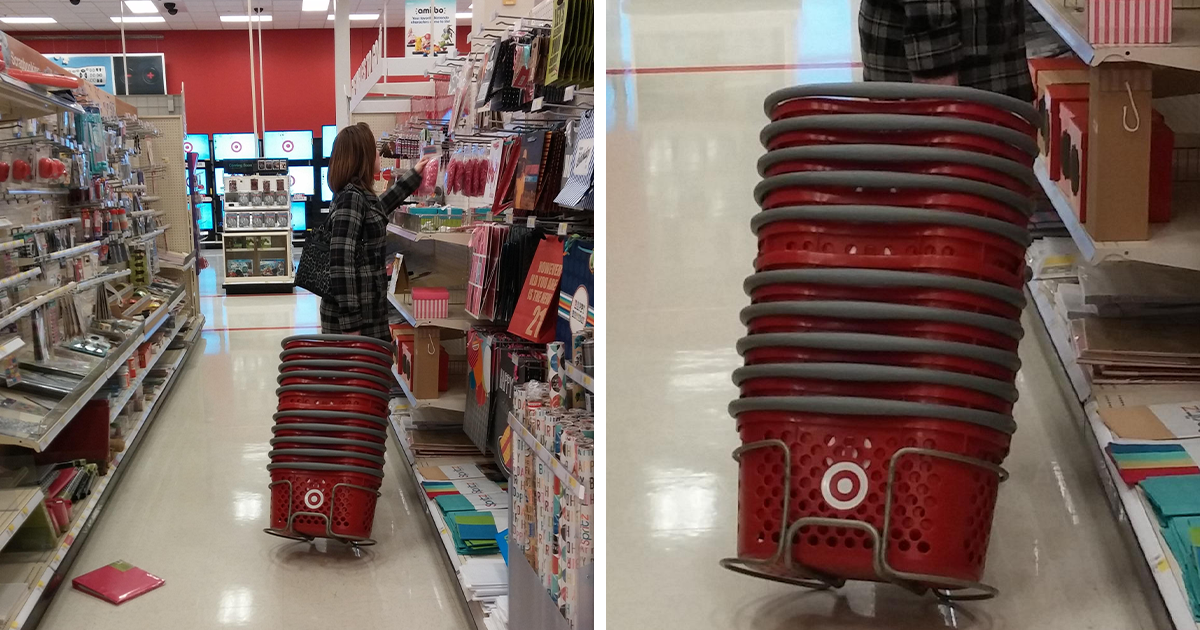
If you’ve ever worked a customer-facing job, you already know the truth: some days, you’re basically a helpful human…
and other days, you’re an emotional support search engine wearing a name tag.
The internet loves a good “dumbest customer encounters” compilation because it’s funny in the way a banana peel is funnyuntil you’re the one slipping.
And if you’ve seen those “40 pics” style threads (screenshots, receipts, signs, and customer requests that make your brain do a slow reboot),
you’ve probably laughed, winced, and whispered, “I need a raise,” all within the same 10 seconds.
This article breaks down why these customer service stories are so common, what patterns show up again and again,
and how employees survive the chaos without turning into a haunted mannequin in aisle seven. We’ll keep it fun,
but we’ll also talk about the real-world pain behind the punchlinesbecause frontline employees deserve more than “wow, that’s crazy.”
Why “Dumb Customer Encounters” Go Viral (And Why They’re So Relatable)
First, a small reality check: most customers are fine. Many are lovely. Some are the reason you keep believing in humanity.
But the stories that get shared tend to feature the same repeat characters: confusion, entitlement, selective reading,
and a mysterious allergy to signs that are literally in 72-point font.
Customer experience research consistently shows that people want service to be fast, seamless, and friendlyoften all at once.
In other words, customers want to feel cared for immediately, and they’re less patient when systems slow them down.
That expectation is a big reason why small misunderstandings can escalate into “sir, please stop arguing with the coupon.”
The “Sign Blindness” Phenomenon
You could hang a neon banner that reads “RESTROOMS THIS WAY ➜,” and someone will still ask,
“Do you have a bathroom?” while standing directly under it. This isn’t always malicesometimes it’s stress,
tunnel vision, or people multitasking. But it becomes funny when it happens five times in a single hour.
Confusion Loves Company (Especially in Retail and Food Service)
Customer behavior gets extra chaotic when environments are noisy, crowded, or time-sensitive.
The same person who can manage a complicated phone plan will suddenly forget what a “line” is when there’s a latte involved.
Add in self-checkout machines, app-only deals, and “member pricing,” and you’ve got a recipe for misunderstanding.
The Greatest Hits: Categories of Dumb Customer Encounters Employees Keep Sharing
While every workplace has its own brand of nonsense, most funny customer stories fall into a few predictable buckets.
Think of this as your unofficial field guide to customer service nightmaresserved with a side of humor.
1) The Customer vs. The Sign (Round 12)
- “Are you open?” (Employee is behind the counter, lights on, music playing, door unlocked, “OPEN” sign glowing like a tiny sun.)
- “Where do I check out?” (Standing in front of a register with a giant “CHECKOUT HERE” sign.)
- “Is this the line?” (There are six people in a neat queue, all holding items and the same thousand-yard stare.)
These are the moments that make employees feel like they’re living inside a simulation designed by someone who hates retail workers.
The humor is in how confidently the question is askedlike you’re the weird one for assuming “open” means open.
2) The “I Don’t Want a Solution, I Want a Miracle” Requests
- “Can you make it arrive yesterday?” (Shipping, unfortunately, does not come with time travel.)
- “Can you remove the calories?” (Sir, if I could do that, I would not be here. I would be on a yacht.)
- “I want it exactly like the photo, but cheaper, bigger, and also different.”
A lot of dumb customer encounters aren’t about intelligencethey’re about expectations that reality refuses to meet.
Sometimes customers talk to employees like staff control inventory, corporate policy, and the laws of physics.
Employees become the messenger, and the messenger gets shot… with sarcasm.
3) The Policy Amnesia Olympics
The customer who says, “I do this all the time,” is either (1) lying, (2) confusing you with another business,
or (3) accidentally revealing they’ve been breaking policy for years and are shocked it finally stopped.
- “But last time you let me return this with no receipt.” (The item is older than your store’s renovation.)
- “I shouldn’t have to show ID.” (This is not a personal attack; it’s a legal requirement.)
- “I don’t believe in your return policy.” (That’s… not how policies work.)
4) The “It Didn’t Scan, So It Must Be Free” Comedy Routine
If every time an item didn’t scan it became free, retail stores would be empty, and employees would be wandering the earth like nomads,
trading barcode scanners for shelter. Yet the joke lives onimmortal, tireless, and somehow always delivered with the same grin.
5) The Technology Tangled-Up Saga
Modern shopping often requires navigating apps, QR codes, digital coupons, and “verify your email” steps that feel like a mini escape room.
Employees can become tech support for everything from payment terminals to a customer’s personal phone settings.
Cue the famous customer service exchange:
- Customer: “Your Wi-Fi isn’t working.”
- Employee: “Is your phone on airplane mode?”
- Customer: “What’s airplane mode?”
- Employee (internally): “Take me with you, plane.”
6) The Literal Interpretation Hall of Fame
Some stories are hilarious because the customer takes language extremely literally.
Not always stupidjust profoundly, beautifully literal.
- “Do you have fresh fish?” “Yes.” “Like… fresh out of the ocean?” (In a landlocked mall.)
- “Is this gluten-free?” (Pointing to a fruit.) “Yes.” “Even the sticker?” (The sticker is innocent.)
- “How spicy is ‘mild’?” “Not spicy.” “But what if I’m sensitive to flavor?”
The Part That’s Funny… and the Part That’s Not
These retail worker stories and customer service encounters are comedy gold because they’re absurd.
But the “painful to read” part exists for a reason: employees aren’t robots. They’re doing emotional labor
staying calm, helpful, and polite even when the situation is unreasonable.
Workplace incivility and rude behavior don’t just ruin a shift; they can wear people down over time.
And in some industries, customer aggression isn’t just verbalit can become a safety issue,
which is why many organizations emphasize de-escalation, clear reporting, and prevention planning.
Why Customers Act Like This (A Gentle, Slightly Funny Analysis)
- Stress and cognitive overload: People under pressure miss obvious cues and make shaky decisions.
- Entitlement and “main character” thinking: Some customers assume rules exist for other people.
- Learned helplessness: When systems feel confusing, some customers stop trying and outsource all thinking to staff.
- Confirmation bias: They “know” they saw a deal online, so any contradiction must be your fault.
- Bad design: Cluttered signage, unclear policies, and complicated processes create confusion that lands on employees.
How Employees Survive Dumb Customer Encounters Without Losing Their Minds
If you’ve ever wondered how frontline employees keep their cool, the answer is usually:
teamwork, scripts, humor, and the quiet knowledge that breaks are real and clocks do eventually move.
1) The “Golden Phrases” That Defuse Chaos
- “Let’s figure this out together.” (Collaborative, not confrontational.)
- “Here’s what I can do right now.” (Sets boundaries while staying helpful.)
- “I hear you. The fastest option is…” (Acknowledges feelings, redirects to solutions.)
- “For safety/legal reasons, we have to…” (Shifts the conflict away from personal blame.)
2) Humor (Used Responsibly)
Employees often cope by sharing stories with coworkers after the factnot to bully customers,
but to process the absurdity. Laughter becomes a pressure valve.
The key is keeping it private, kind, and never at the expense of someone who’s genuinely vulnerable or confused.
3) Clearer Systems Reduce “Dumb Moments”
Not every dumb customer encounter is a customer problem. Sometimes it’s a system problem.
Businesses that reduce frictionclear signage, straightforward return policies, simple checkout flows,
and easy-to-find helpget fewer “How do I exist in this store?” questions.
4) Management Support Matters More Than Posters
“Be kind to staff” posters are great, but employees also need real backing: consistent policies, safety protocols,
and managers who step in when customers cross the line. A workplace that protects employees creates better service,
because workers aren’t spending all their energy bracing for impact.
If You’re the Customer: How to Avoid Becoming Pic #41
Nobody wakes up and says, “Today I will become a viral screenshot.” Here are simple ways to be a customer service hero:
- Read the sign. If you still need help, that’s finebut give the sign a chance first.
- Assume the employee is on your side. They didn’t invent the policy; they’re navigating it with you.
- Bring receipts (or order info). “I bought it sometime between 2019 and the dawn of time” is hard to track.
- Be specific. “It’s broken” is a start. “It won’t power on, and I tried two outlets” is gold.
- Use your frustration strategically. Aim it at the problem, not the person holding the scanner.
Extra : More Real-World Employee Experiences That Are Funny, Brutal, and Weirdly Universal
To really capture why “employees sharing their dumbest customer encounters” threads keep thriving, you have to zoom in on the small moments
the ones that aren’t dramatic enough for a training video but are unforgettable enough to become a story employees tell for years.
Here are additional experiences (composite, common, and painfully familiar) that fit the “hilarious but painful” vibe of those 40-pic compilations.
One classic is the customer who treats a store like a museum exhibit where nothing should be touched… except by them. They pick up an item,
turn it upside down, remove the packaging, set it on a totally different shelf, and then ask, “Do you sell these?”
You gently point to the exact product in their hands, and they look at it like it materialized from another dimension.
It’s not that they’re trying to be difficultthey’re just in a fog of shopping thoughts like, “I need towels, but also my kid has practice,
and also why is there music, and did I ever reply to that text?”
Then there’s the customer who asks a question, hears the answer, and immediately rejects itlike reality is negotiable.
“What time do you close?” “We close at 9.” “No, you close at 10.” At that point, you’re not even an employee; you’re a spokesperson for the clock.
And somehow, the employee becomes the villain for not personally extending business hours on demand.
The funniest part is that the conversation often ends with the customer storming off… and then returning ten minutes later to ask the same question again,
as if a different employee will unlock the secret “bonus hour” setting.
In food service, the “customization spiral” deserves its own award. A customer orders something with six modifications,
but each modification contradicts the last one. “No dairy.” “Extra cheese.” “Actually, no cheese.” “But keep it creamy.”
Employees learn to ask clarifying questions like a detective: “Just to confirmno dairy, no cheese, and you’d like it not creamy?”
The customer nods, satisfied, and then looks shocked when the final product is… exactly what they asked for.
Suddenly, you’re facing the universal customer complaint: “This isn’t what I wanted,” translated loosely as,
“This isn’t what I pictured in my mind during the five seconds I spent deciding.”
Another common experience is the “coupon archaeologist.” They pull out a screenshot of a coupon that expired last year,
possibly during a different presidency, and insist it should still work because they “just found it.”
Employees often have to explain that expiration dates aren’t a suggestion.
The customer then tries to bargain, as if the register is a medieval merchant: “What if I’m really nice about it?”
You appreciate the niceness, but you also know corporate policies don’t bend because someone is smiling extra hard.
Finally, there’s the kind of moment that makes employees laugh later because it’s so deeply human:
the customer who is clearly tired, confused, and operating on 4% batteryemotionally and literally.
They ask where something is, you walk them right to it, and they say, “I’m so sorry, I walked past this three times.”
That’s the soft side of these stories: the reminder that sometimes “dumb” is just “overwhelmed.”
Employees remember the rude ones, surebut they also remember the customers who apologize, listen, and treat them like people.
Those small acts of respect are what keep a long shift from feeling like 40 pics of chaos and zero hope.
Conclusion
“Employees are sharing their dumbest customer encounters” content works because it’s relatable, ridiculous, and real.
It’s humor built from the everyday friction between customer expectations and how the world actually operates.
The best takeaway isn’t “customers are dumb”it’s that service work is hard, and the people doing it deserve patience, clarity, and backup.
So laugh at the absurdity (because sometimes you have to), but keep the empathy too.
If you’ve ever been the employee in these stories, you’ve earned your right to vent.
And if you’ve ever been the customer staring at a sign like it’s written in ancient runeswelcome to the club.
Just try not to become the next screenshot. Or at least make it a funny one.












