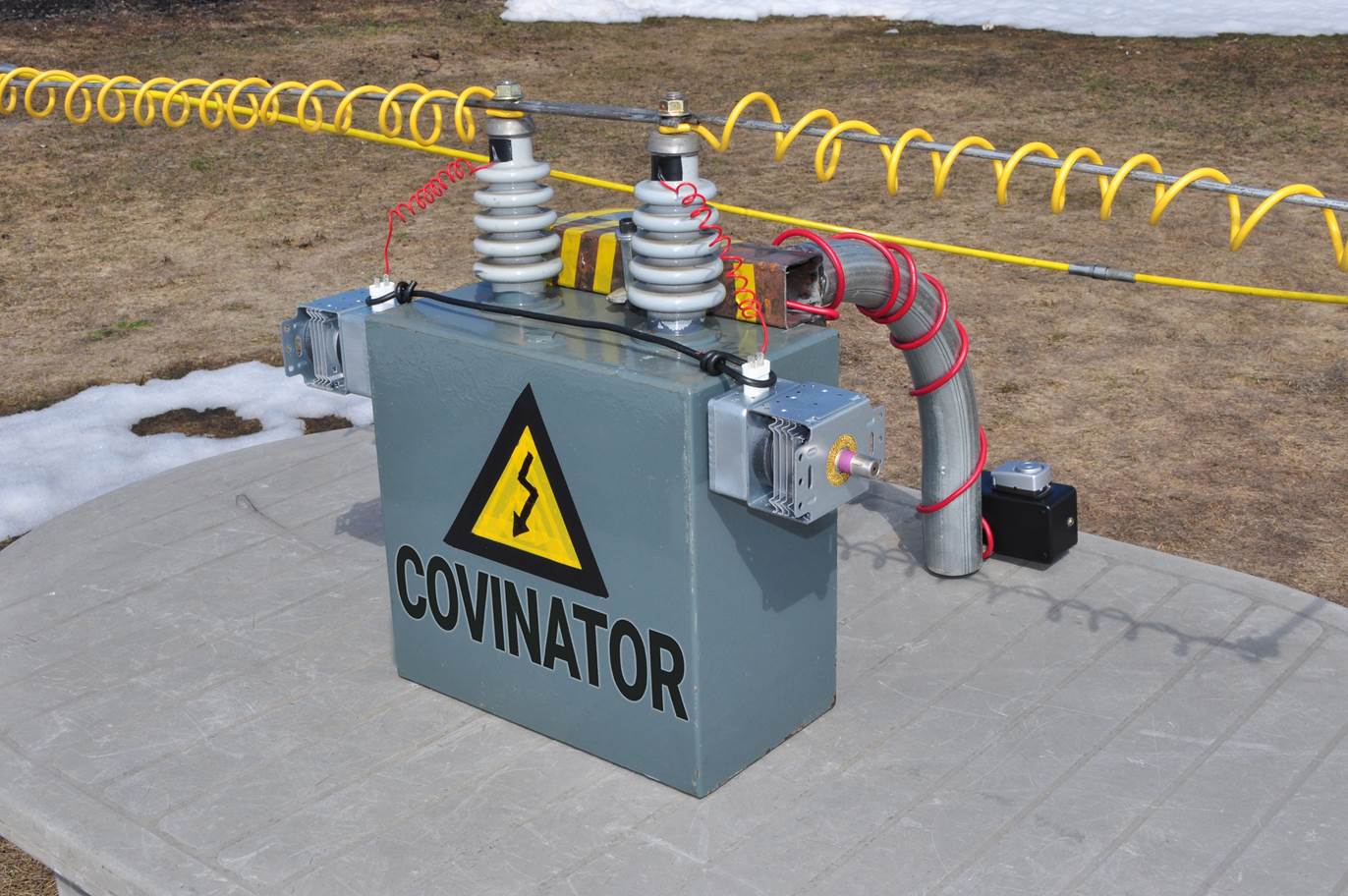
At the height of the COVID-19 pandemic, people tried floor stickers, plastic barriers, one-way grocery aisles, homemade warning signs, and the universally understood technique of glaring over a face mask. Then one maker appeared to ask the inevitable question: why politely request personal space when you could surround yourself with a giant, supposedly electrified hoop?
“Enforce Social Distancing With High Voltage” sounds like a rejected superhero movie, but it became the title of a widely discussed pandemic-era maker project. The contraption combined theatrical engineering, high-voltage imagery, recycled appliance parts, and a generous helping of internet mischief. It was memorable precisely because it exaggerated a familiar problem until the solution became gloriously absurd.
This article examines the idea as a cultural artifact, an engineering spectacle, and a lesson in responsible invention. It is not a construction guide. High-voltage equipment and microwave components can cause electrocution, fire, severe burns, and other life-threatening injurieseven after equipment has been unplugged.
What Was the High-Voltage Social Distancing Project?
In April 2020, Hackaday featured a device created by a maker known as Radical Brad or AtomicZombie. The wearable machine, nicknamed the “Covinator,” appeared to place a large circular boundary around its operator. Its theatrical purpose was to discourage anyone from entering the recommended personal-space zone during the early months of the pandemic.
The project was presented as having been assembled from surplus equipment associated with microwave ovens and other electrical hardware. Its visual centerpiece was a wide metal hoop extending around the wearer. Sparks, electronic controls, warning labels, bulky components, and a backpack-like power assembly gave it the appearance of something built after a Tesla coil and a hula hoop made several questionable decisions together.
The original coverage described a machine that supposedly delivered a taser-like response to people violating the six-foot boundary. However, the presentation was intentionally humorous, and viewers immediately debated how much of the demonstration was real, exaggerated, edited, or designed simply to provoke reactions. The creator repeatedly joked that the machine performed “exactly” its intended functiona carefully chosen phrase suggesting that entertainment may have been the real payload.
A Project Designed for Attention
The Covinator succeeded spectacularly as internet theater. It attracted arguments about voltage, sparks, microwave hardware, electrical arcs, personal freedom, pandemic anxiety, and whether a six-foot-wide hoop actually created six feet of distance in every direction. That last question inspired the kind of geometric debate only the internet can produce during a global emergency.
More importantly, the machine converted an invisible social rule into a physical object. A painted line on the floor asks people to cooperate. A giant ring covered with high-voltage warnings announces, “This conversation has moved beyond gentle suggestions.”
Why Social Distancing Became Such a Powerful Idea
During the first phase of COVID-19, public-health organizations encouraged people to reduce close contact. The familiar six-foot guideline became an easy message for signs, stores, schools, workplaces, and public transportation systems. Johns Hopkins explained the early concept as avoiding gatherings and maintaining approximately six feet of separation when possible, while archived CDC materials described distancing as a way to limit close face-to-face contact.
The science and official guidance evolved as researchers learned more about airborne transmission. Today, the CDC does not describe one distance as universally safe. Risk depends on factors including how close people are, how long they remain together, whether anyone is ill, the amount of ventilation, and the characteristics of the space. Physical distance remains an additional layer of protection, particularly around symptomatic people or during periods of elevated respiratory illness.
Distance Is Helpful, but Air Does Not Read Floor Stickers
Respiratory particles generally become more concentrated near the person releasing them, so additional space can reduce exposure. However, smaller aerosols may remain suspended and move through indoor air. A major scientific review published through the National Institutes of Health described how respiratory viruses can travel in aerosols carried by airflow.
That means a six-foot ring, electrified or otherwise, cannot create a magical force field. Indoors, ventilation and filtration matter. The Environmental Protection Agency explains that ventilation replaces indoor air containing concentrated contaminants with outdoor air, while filtration can help remove airborne particles. These measures work best as part of a layered strategy rather than as a single miracle solution.
In other words, the original concept was visually unforgettable but biologically incomplete. Viruses are notoriously disrespectful of personal boundaries, signage, dramatic sound effects, and homemade control panels.
Why High Voltage Is Not a Real Distancing Solution
The humor works because the idea is obviously excessive. Turning it into a functional system capable of shocking another person would eliminate the joke and introduce severe safety, ethical, and legal problems.
Electrical Shock Can Kill
OSHA identifies electrical shock, electrocution, fire, explosion, and arc-flash events as serious hazards. The outcome of contact with electricity depends on more than the advertised voltage. Current, exposure time, the path through the body, skin condition, grounding, equipment design, and environmental moisture can all affect the severity of an injury.
Even a brief shock may trigger muscle contractions, falls, burns, breathing problems, or abnormal heart rhythms. A person with an implanted medical device or an underlying heart condition may face additional danger. A supposedly “nonlethal” deterrent is therefore not reliably nonlethal when used on an unknown member of the public.
Microwave Components Are Especially Dangerous
Microwave ovens contain circuitry designed to operate at hazardous voltages. Some internal components can retain stored electrical energy after the appliance has been disconnected. The U.S. Consumer Product Safety Commission has specifically warned consumers that removing a microwave cover and touching internal parts can result in serious electrical injury, even when the appliance is unplugged. Professional servicing is strongly recommended.
This is an important distinction between watching a theatrical maker video and attempting to imitate it. A video can cut away, use controlled conditions, employ off-camera safeguards, exaggerate an effect, or rely on editing. Your garage cannot edit an electrical accident out of the timeline.
Arcs, Fires, and Unexpected Energy Paths
High-voltage systems can arc across air gaps, puncture insulation, ignite nearby materials, or energize metal surfaces that were never intended to carry current. OSHA recommends controlling electrical hazards through measures such as guarding, insulation, grounding, protective devices, safe work practices, and proper training.
A wearable metal framework makes risk management even more complicated. It moves, flexes, approaches people and objects unpredictably, and may be exposed to rain, sweat, pets, doorframes, vehicles, trees, and curious strangers. It is essentially a mobile catalog of variables that a qualified electrical engineer would prefer to keep in separate rooms.
The Ethical Problem With Electrifying Personal Space
Personal boundaries matter, but intentionally injuring someone for crossing an invisible or unfamiliar perimeter is neither proportionate nor responsible. A child might run toward the wearer. A visually impaired person might not see the structure. Someone could stumble, be pushed, or misunderstand the demonstration. Emergency responders might need to approach quickly.
Good safety design does not depend on every nearby person behaving perfectly. It assumes that humans become distracted, misunderstand instructions, trip over things, panic, ignore signs, and occasionally attempt to pet machinery that is clearly labeled “DO NOT TOUCH.”
A responsible design should fail safely. When a proximity sensor malfunctions, the ideal result is an unnecessary beepnot a burn, electric shock, or fire. The system should warn, guide, or inform rather than punish.
Safe Technology for Encouraging Physical Distance
The entertaining part of the Covinator can be preserved without energizing a metal ring. Sensors, lights, sound, vibration, and visual design can create a convincing personal-space reminder while keeping the consequences harmless.
Ultrasonic Proximity Sensors
Ultrasonic sensors estimate distance by transmitting a sound pulse and measuring its return time. Similar technology appeared in several pandemic-era maker projects. A safe wearable could monitor the area ahead and activate a light, vibration motor, or friendly audio alert when someone comes unusually close.
Such devices have limitations. Clothing, angles, nearby surfaces, crowds, and environmental noise can affect measurements. They also tend to work directionally unless several sensors are used. Still, an inaccurate beep is considerably easier to apologize for than an inaccurate lightning bolt.
Bluetooth and Privacy-Preserving Wearables
NIST researchers explored wearable proximity technology using Bluetooth signal strength and ultrasonic ranging. Their work also considered privacy-preserving “encounter metrics,” allowing interactions to be measured without permanently linking every encounter to a person’s identity.
That research illustrates a more productive approach to social-distancing technology. Instead of coercing individuals, organizations can study movement patterns, revise room layouts, reduce bottlenecks, improve schedules, and identify spaces where people are repeatedly forced together.
Lights, Vibration, and Sound
A harmless personal-space wearable could use:
- LEDs that gradually change brightness as another person approaches;
- A vibration alert that only the wearer notices;
- A short, adjustable chime rather than a siren;
- A visible fabric or foam ring for performances and demonstrations;
- A manual button that activates a humorous prerecorded message;
- Low-power electronics fully enclosed in a nonconductive housing.
The goal should be communication, not enforcement. A device that makes people smile may encourage cooperation more effectively than one that makes them search for the nearest attorney.
Lessons for Makers and Content Creators
1. Satire Needs a Visible Safety Boundary
Dangerous-looking machines attract attention, but creators should clearly distinguish theatrical effects from practical instructions. Viewers have different experience levels, and some may imitate what they see without recognizing hidden hazards.
2. “Do Not Try This” Is Not a Complete Safety System
A warning is useful, but responsible communication also avoids providing the exact sequence, component configuration, or operating method needed to reproduce a hazardous device. Demonstrations should emphasize professional controls, remote operation, de-energized displays, barriers, and nonfunctional props.
3. Use the Lowest-Energy Solution
If an LED can communicate the message, there is no need for an arc. If a vibration motor can alert a wearer, there is no need for exposed conductors. Engineering is not the art of using the most energy possible. It is the art of solving a problem reliably with appropriate resources and acceptable risk.
4. Design for People Who Never Saw the Video
A stranger encountering a device in public does not know the backstory. They have not read the description, heard the safety briefing, or agreed to participate. Public-facing projects must therefore remain safe for uninformed bystanders.
5. Humor Is a Legitimate Design Goal
The Covinator did not need to become a practical product to be successful. It gave people something ridiculous to discuss during a frightening and isolating period. Humor can be valuable. It can reduce tension, encourage curiosity, and make technical subjects approachableas long as the punch line is not delivered through someone’s cardiovascular system.
Does Physical Distancing Still Matter?
The rigid universal rules associated with 2020 have changed, but creating space can still be useful when someone is coughing, recovering from a respiratory illness, or trying to protect a medically vulnerable person. Current CDC guidance treats physical distancing as one optional layer that can be added when circumstances call for extra protection.
Organizations can support healthier behavior without resorting to intimidating gadgets. Flexible sick leave, remote-work options, improved ventilation, better air filtration, less crowded layouts, and clear communication address the underlying problem more effectively. The CDC specifically notes that paid leave and telework policies can help sick employees remain away from others.
The most successful interventions make the safer choice convenient. People should not have to stand inside an electrified hamster wheel merely because a workplace refuses to fix its ventilation or allow an ill employee to stay home.
Experiences and Reflections: What the High-Voltage Distancing Idea Teaches Us
Looking back at Enforce Social Distancing With High Voltage feels like opening a time capsule from the strangest part of 2020. Ordinary routines had suddenly become complicated. People calculated the distance between shopping carts, baked alarming quantities of bread, attended meetings from laundry rooms, and treated every throat tickle like the opening scene of a disaster film.
Against that background, the high-voltage distancing machine made emotional sense even though it made little practical sense. It transformed frustration into comedy. Anyone who had watched a stranger ignore floor arrows or lean around a clear barrier could recognize the fantasy: perhaps a larger sign, louder alarm, or mildly apocalyptic metal circle would finally communicate the message.
One useful experience from examining the project is realizing how easily dramatic visuals can overpower engineering questions. Sparks look impressive. A control panel covered in switches looks official. Heavy hardware suggests power. Viewers may instinctively assume that a machine is functional because it resembles machines they have seen in movies. Good technical judgment requires stepping back and asking what is measurable, what is theatrical, and what evidence supports the claim.
A second lesson involves the difference between a private experiment and a public device. On isolated property, a creator may be able to control access, establish barriers, use remote cameras, and keep other people away. In a sidewalk, store, office, or convention hall, those assumptions collapse. A safe public design has to account for children, animals, emergency situations, mobility aids, medical devices, crowded exits, and people who do not speak the language printed on the warning label.
A third reflection concerns leftover components. Makers often see discarded equipment as treasure. Reuse can reduce waste and inspire creative projects, but not every reusable-looking part belongs on a hobby bench. Microwave power systems, large capacitors, damaged batteries, and unknown electrical assemblies deserve special caution. The CPSC’s warning about unplugged microwave ovens demonstrates why “disconnected” does not always mean “safe.”
The safest creative response is to reproduce the experience rather than the hazard. A costume version could use lightweight tubing, reflective tape, battery-powered LEDs, a small speaker, and foam “electrodes.” It could crackle theatrically when someone approaches while remaining electrically ordinary. The result would retain the absurd science-fiction personality without giving the performer a backpack full of consequences.
There is also a broader communication lesson. Commands often produce resistance, while humor can invite participation. A funny wearable, cartoon sign, or playful floor graphic may remind people to provide space without making them feel accused. The best public-health messages usually explain the purpose of a behavior and make it socially comfortablenot merely mandatory.
Finally, the project reminds us that invention does not always have to produce a marketable product. Sometimes a machine exists to tell a story, start a debate, or capture the mood of a peculiar moment. The Covinator became memorable because it combined cabin fever, engineering culture, pandemic etiquette, and internet skepticism in one oversized metal circle.
The responsible conclusion is not that people should enforce social distancing with high voltage. It is that technical creativity can make invisible concerns visible. Sensors can reveal crowding. Wearables can provide private reminders. Better layouts can reduce close encounters. Ventilation can lower indoor concentrations of airborne particles. Comedy can make difficult conversations easier.
High voltage, meanwhile, should remain inside properly engineered, guarded, and professionally serviced equipment. Personal space is important, but nobody needs to defend it like a final boss in an electrical substation.
Conclusion
Enforce Social Distancing With High Voltage was an unforgettable pandemic-era maker spectacle, not a sensible public-safety strategy. Its exaggerated design turned a simple six-foot guideline into a visual joke powerful enough to ignite years of discussionfiguratively, which is the preferred type of ignition.
The project’s lasting value lies in the questions it raises. How can technology communicate personal boundaries? When does an entertaining demonstration become an irresponsible example? How can makers create dramatic effects without exposing themselves or bystanders to genuine harm?
The answers point toward low-energy sensors, lights, vibration alerts, better ventilation, flexible workplace policies, privacy-conscious proximity tools, and clearer communication. Those approaches may be less cinematic than a crackling metal hoop, but they are much more likely to improve safety without creating an entirely new category of emergency.