Environmental racism sounds like a complicated academic phrase, but the basic idea is painfully simple: some communities are forced to live with more pollution, weaker protections, fewer resources, and louder official silence because of race, ethnicity, income, or political power. In plain English, it is what happens when the “bad stuff” highways, toxic waste, industrial plants, unsafe water, dirty air, flood risk, and climate danger repeatedly lands on the same people’s doorsteps. And somehow, those doorsteps are rarely in the neighborhoods with private tennis courts and tiny dogs wearing sweaters.
This issue is not just about old history or dramatic headlines. Environmental racism is a living public health problem, a civil rights problem, a climate problem, and a global development problem. Research shows that communities of color and low-income neighborhoods are often exposed to higher levels of air pollution, hazardous waste, extreme heat, contaminated water, and industrial risk. Current events from PFAS contamination and air quality rollbacks to community lawsuits in Louisiana’s petrochemical corridor show that the debate is still very much alive.
To understand environmental racism, we need to look at the science, the policy, the lived experience, and the global pattern. Spoiler alert: pollution may be invisible, but injustice usually leaves fingerprints.
What Is Environmental Racism?
Environmental racism is the unequal exposure of racial and ethnic communities to environmental hazards, often caused or worsened by discriminatory policies, zoning decisions, housing segregation, infrastructure neglect, and weak enforcement of environmental laws. It can be intentional, but it does not have to be. A policy can look “neutral” on paper and still produce deeply unequal results in real life.
Think of a city map. If highways cut through Black neighborhoods, if industrial plants cluster near Latino communities, if Indigenous land is targeted for extraction, or if poor rural areas lack safe wastewater systems, that map is telling a story. It is not a random doodle. It is the result of decades of planning choices, political bargaining, real estate practices, and regulatory decisions.
Environmental Racism vs. Environmental Justice
Environmental justice is the solution-oriented movement that pushes back against environmental racism. It demands fair treatment and meaningful involvement for all people in decisions about air, water, land, energy, climate, and public health. In other words, environmental justice asks a very reasonable question: “Shouldn’t people who breathe the air and drink the water have a real say in what happens to it?”
The environmental justice movement in the United States is often linked to protests in Warren County, North Carolina, in 1982, where a predominantly Black community resisted the dumping of contaminated soil. But the roots go much deeper, from Indigenous resistance to land dispossession to Black communities fighting toxic infrastructure, poor sanitation, and industrial siting.
What Research Shows About Environmental Racism
Environmental racism is not just a slogan; it is backed by decades of research. Studies have repeatedly found that race, income, and neighborhood conditions influence exposure to pollution and environmental risk. Researchers have examined fine particulate matter, lead contamination, hazardous waste sites, industrial emissions, heat islands, flood risk, and access to clean infrastructure. The pattern is not identical in every place, but the overall direction is hard to miss.
Air Pollution Disparities
Air pollution is one of the clearest examples. Fine particulate matter, often called PM2.5, is especially dangerous because the particles are small enough to penetrate deep into the lungs and enter the bloodstream. Exposure is linked to asthma, heart disease, stroke, lung cancer, premature birth, and early death.
Research from major universities and public health institutions has shown that racial and ethnic minority groups in the United States are often exposed to higher levels of PM2.5 than white populations. This is not because pollution owns a tiny racist GPS device. It is because highways, ports, warehouses, refineries, power plants, and industrial corridors have historically been placed closer to communities with less political power.
The American Lung Association’s recent “State of the Air” findings continue to highlight unequal exposure to ozone and particle pollution. People of color and lower-income communities are more likely to live in counties with failing air quality grades. When heat waves and wildfire smoke worsen air pollution, communities already carrying higher pollution burdens get hit again. It is the environmental version of being charged twice for a meal you never ordered.
Water, Lead, and Infrastructure Neglect
Water crises also reveal how environmental racism works. Flint, Michigan, remains one of the most recognized examples. A government decision to switch the city’s water source without proper corrosion control exposed residents to lead-contaminated water. Flint is a majority-Black city, and residents repeatedly raised concerns before officials fully acknowledged the disaster.
Lead is especially dangerous for children because it can harm brain development, learning, behavior, and long-term health. The Flint crisis showed that environmental racism often includes more than pollution itself. It also includes disbelief, delay, weak accountability, and the exhausting burden placed on residents to prove that something is wrong.
Other communities face different water problems: failing septic systems, sewage backups, nitrate pollution, PFAS contamination, and unsafe drinking water infrastructure. In places like Lowndes County, Alabama, residents have faced raw sewage exposure because of inadequate sanitation systems. This is not a glamorous environmental topic, but safe wastewater infrastructure is one of the most basic public health protections a society can provide.
Current Events: Why Environmental Racism Is Still in the News
Environmental racism is not sitting in a dusty textbook waiting for a history teacher with elbow patches. It is in courtrooms, agency decisions, budget debates, neighborhood meetings, and emergency rooms right now.
PFAS and “Forever Chemical” Accountability
PFAS, often called “forever chemicals,” are a large class of synthetic chemicals linked to potential health risks. They persist in the environment and have contaminated drinking water in many communities. Recent federal action and major settlements involving PFAS manufacturers show that chemical contamination has become one of the biggest environmental justice issues of the decade.
When contamination affects water systems, the burden often falls hardest on communities with fewer resources to test, filter, litigate, relocate, or pressure decision-makers. A wealthy suburb can sometimes organize quickly, hire experts, and install expensive filtration systems. A rural community or low-income neighborhood may wait years for answers, funding, or enforcement.
EPA Enforcement and Environmental Justice Tools
Environmental justice also depends on data. Tools such as environmental justice screening maps help identify communities facing overlapping burdens: pollution, poverty, poor health outcomes, flood risk, traffic exposure, and limited access to services. These tools are not perfect, but they are useful for seeing cumulative harm rather than pretending every pollution source exists in isolation.
Recent controversy over the removal or weakening of federal environmental justice tools has raised concerns among advocates, researchers, and community groups. Without public data, communities have a harder time proving what they already know from daily life: the air smells wrong, the water looks wrong, the asthma rates are too high, and the official answer has been “please enjoy this spreadsheet maze.”
California Emissions Rules and Air Quality Policy
Vehicle emissions are another current battleground. California has long held authority to set stricter vehicle pollution standards, and other states often follow its lead. Legal conflicts over whether those standards can be reversed affect more than car companies. They influence air quality, climate policy, and the health of people living near highways, freight routes, ports, and distribution centers.
Why does this matter for environmental racism? Because tailpipe pollution is not distributed equally. Neighborhoods near heavy traffic corridors often include communities of color and lower-income residents. Cleaner vehicle rules can reduce pollution where people are already overexposed. Weakening those rules may save money for some industries in the short term, but the health bill often arrives at someone else’s doorstep.
Case Studies: Environmental Racism in Real Places
Louisiana’s Cancer Alley
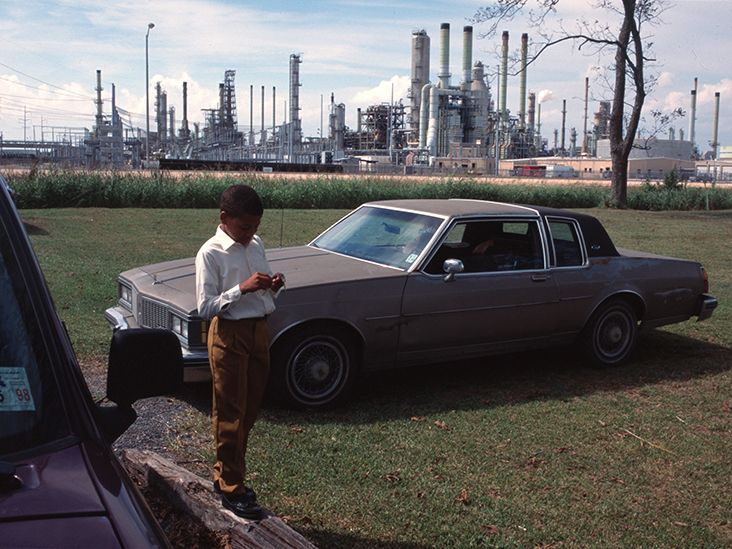
One of the most cited examples of environmental racism in the United States is Louisiana’s “Cancer Alley,” an industrial corridor along the Mississippi River between Baton Rouge and New Orleans. The area includes many petrochemical facilities and predominantly Black communities that have fought for years against pollution, industrial expansion, and weak oversight.
Human rights and environmental groups have documented residents’ concerns about cancer risks, respiratory disease, reproductive health, and the psychological stress of living next to industrial hazards. Whether one looks through the lens of civil rights, public health, or land-use policy, Cancer Alley shows how environmental burdens can become concentrated in places already shaped by racial inequality.
Flint, Michigan
Flint is not only a water crisis story. It is also a story about trust. Residents reported discolored, foul-smelling water and health concerns, yet official responses were slow and inadequate. The crisis became a national symbol because it revealed a brutal truth: environmental harm becomes worse when institutions fail to listen to the people most affected.
The lesson is not just “test the water.” The deeper lesson is “believe communities early.” Public health works best when residents are treated as partners, not as background noise.
Tribal Lands and Extraction
Indigenous communities have long faced environmental racism through land theft, resource extraction, pipeline construction, uranium mining, water contamination, and threats to sacred sites. These harms are not only environmental; they are cultural, spiritual, economic, and political.
For many Indigenous nations, land is not simply property. It is identity, history, food system, medicine, and responsibility. When extractive projects damage land and water, they can also damage language, tradition, community health, and self-determination.
Global Impact: Environmental Racism Beyond U.S. Borders
Environmental racism is global because pollution follows power. Wealthy nations and corporations often benefit from resource extraction, cheap manufacturing, and waste disposal while poorer countries and marginalized communities absorb the damage.
Air Pollution and Poverty Worldwide
Air pollution is one of the world’s biggest environmental health threats. Billions of people breathe air that does not meet health-based guidelines, and low- and middle-income countries carry a major share of the exposure. The global pattern is deeply unequal: people who contributed least to industrial pollution often face the highest health risks from dirty air, unsafe work, weak infrastructure, and limited healthcare access.
This matters because environmental racism is not only about race within one country. It can also appear through global systems that treat certain regions as sacrifice zones for mining, waste, manufacturing, energy production, or climate risk.
Plastic Waste, E-Waste, and the Global South
Plastic pollution and electronic waste are major environmental justice issues. Wealthier countries consume huge amounts of electronics and packaged goods, then waste often moves through global trade routes to places with weaker environmental protections. Communities that did not create the largest share of the waste may end up burning, sorting, dismantling, or living beside it.
This creates exposure to toxic metals, fumes, microplastics, and contaminated soil and water. The global waste economy can look efficient on paper, but “out of sight, out of mind” is not a waste-management strategy. It is just denial wearing a business suit.
Climate Change as an Environmental Justice Crisis
Climate change magnifies environmental racism. Extreme heat, stronger storms, flooding, wildfire smoke, drought, and food insecurity do not affect everyone equally. Communities with poor housing, limited tree cover, weak infrastructure, fewer savings, and less political influence are more vulnerable before the disaster even arrives.
A heat wave is dangerous for everyone, but it is more dangerous for a family in an apartment without reliable air conditioning, a worker paid hourly outdoors, an elderly person in a heat island neighborhood, or a community without emergency services. Climate change is global, but vulnerability is local.
Health Effects: What Environmental Racism Does to the Body
The health effects of environmental racism can include asthma, chronic obstructive pulmonary disease, heart disease, stroke, cancer risk, preterm birth, low birth weight, developmental harm from lead, heat illness, anxiety, and chronic stress. The body keeps score even when policymakers do not.
Children are especially vulnerable. They breathe more air per pound of body weight than adults, spend time outdoors, and are still developing. When a child grows up near diesel traffic, industrial emissions, lead pipes, or moldy housing, the exposure can affect school attendance, learning, sleep, and long-term health.
Environmental racism also harms mental health. Living with constant odors, sirens, floods, boil-water notices, cancer fears, or official neglect creates stress. Community members often become unpaid researchers, activists, documentarians, meeting attendees, and emergency responders. That level of burden is exhausting and it should not be required for basic safety.
Why Policy Often Fails
Environmental policy often fails because it treats each problem separately. A permit may examine one facility at a time, one pollutant at a time, one regulation at a time. But communities experience cumulative burden. One neighborhood may face a highway, a refinery, a landfill, poor housing, flood risk, and underfunded healthcare all at once.
Another problem is weak enforcement. Environmental laws matter only if they are enforced consistently. If violations are ignored, fines are tiny, inspections are rare, or agencies lack staff, polluters may treat penalties as a business expense. Communities then pay with asthma inhalers, bottled water, missed work, and shorter lives.
Finally, communities are often invited into the decision-making process too late. A public meeting after the deal is basically done is not meaningful participation. It is theater with fluorescent lighting.
Solutions: What Environmental Justice Requires
1. Stronger Cumulative Impact Rules
Regulators should consider the full burden on a community before approving new pollution sources. If an area already has high asthma rates, heavy traffic, industrial emissions, and flood risk, adding another facility should face serious scrutiny.
2. Better Data and Public Mapping
Communities need access to pollution data, health data, enforcement records, and climate risk maps. Data should be transparent, updated, understandable, and available in multiple languages. A map cannot solve injustice by itself, but it can make denial much harder.
3. Community-Led Decision-Making
The people most affected should help shape solutions. That means funding community organizations, paying residents for expertise, holding meetings at accessible times, translating materials, and treating local knowledge as evidence.
4. Clean Infrastructure Investment
Environmental justice requires investment in safe drinking water, wastewater systems, clean energy, public transit, home weatherization, tree canopy, flood protection, and pollution cleanup. Prevention is cheaper than disaster, although disaster does have the bad habit of getting more attention.
5. Corporate Accountability
Companies that profit from pollution should help pay for cleanup, health protection, monitoring, and safer technology. Communities should not be left fundraising for air sensors while corporations send shareholders glossy annual reports with pictures of leaves on the cover.
Experience Section: What Environmental Racism Looks Like on the Ground
Environmental racism becomes easier to understand when we move from abstract language to everyday experience. Imagine waking up in a neighborhood where the first thing you smell is not coffee, rain, or breakfast, but chemicals from a nearby facility. The air may look normal, yet parents check pollution alerts before letting children play outside. A child’s backpack may contain not only homework but also an inhaler. That is not a normal childhood accessory; it is a warning label for a broken system.
In many overburdened communities, residents describe a strange double life. On one hand, they are expected to go to work, raise families, attend school, and keep life moving. On the other hand, they must become experts in zoning law, environmental permits, toxicology, public records, and agency acronyms that sound like rejected robot names. They attend evening meetings after long shifts. They collect water samples, photograph smoke, track odors, compare cancer stories, and ask officials why help is always “under review.”
The experience is not only physical. It is emotional. People may feel anger when their concerns are dismissed, fear when children get sick, grief when elders die early, and exhaustion when every solution requires a fight. There is also the quiet insult of being told that pollution is the price of jobs, as if communities should be grateful for employment opportunities that come wrapped in health risks. Good jobs and clean air should not be treated like rival sports teams.
At the same time, environmental justice communities are not helpless. Many are incredibly organized, creative, and persistent. Residents build neighborhood networks, partner with scientists, use low-cost air monitors, file civil rights complaints, speak to journalists, pressure agencies, and teach younger generations how to defend their land and health. Churches, schools, tribal councils, local nonprofits, nurses, doctors, and students often become part of the same movement.
One powerful lesson from these experiences is that expertise comes in many forms. A university researcher may bring statistical models. A resident may know which nights the smell gets worse, which ditch floods first, which children miss school after bad air days, and which promises were made ten years ago and never kept. Real environmental justice needs both kinds of knowledge.
Another lesson is that solutions must be practical. Communities do not only need speeches about equity; they need clean water, enforceable permits, safe housing, emergency alerts, healthcare access, legal support, and money for cleanup. They need agencies that answer phones, inspectors who show up, and leaders who understand that “later” can be dangerous when people are breathing pollution today.
The most hopeful experience is seeing communities turn frustration into power. Environmental racism may begin with exclusion, but environmental justice grows through participation. When residents are heard, data is shared, laws are enforced, and investments reach the places that need them most, the story can change. The goal is not simply to move pollution somewhere else. The goal is to stop treating any community as disposable.
Conclusion
Environmental racism is not an accident of geography. It is the result of decisions about zoning, housing, transportation, enforcement, industry, infrastructure, and whose voices count. Research shows that communities of color and low-income populations often face higher environmental burdens. Current events show that enforcement, data access, and climate policy remain contested. Global patterns show that pollution and climate harm are often exported to people with the least power to refuse them.
The good news is that environmental racism is not destiny. It can be measured, challenged, regulated, litigated, and repaired. Cleaner air, safer water, stronger infrastructure, and fairer decision-making are not luxury items. They are basic ingredients of a healthy society. And unlike many complicated problems, this one has a refreshingly clear moral compass: no community should have to sacrifice its health so that someone else can enjoy convenience, profit, or political comfort.
Note: This article is written for public education and web publication. It is based on synthesized information from reputable environmental health, public policy, academic, legal, and human-rights sources, with examples selected for relevance to environmental racism, environmental justice, public health, and global climate inequality.