
The universe has a flair for drama. Just when we thought we had seen enough jaw-dropping space photos to make our desktop wallpapers feel inadequate, the Euclid telescope arrived with its first images and politely said, “Hold my star chart.” Released by the European Space Agency with NASA contributions, Euclid’s first science images gave the world a wide, sharp, and dazzling look at galaxies, star clusters, and nebulae that help explain why astronomers are so excited about this mission.
These were not just pretty cosmic postcards. The Euclid telescope was built to investigate two of the biggest mysteries in modern astronomy: dark matter and dark energy. Together, these invisible ingredients appear to make up most of the universe, even though we cannot see them directly. That sounds like the universe is running on hidden software, and Euclid is one of the best tools scientists have for reading the code.
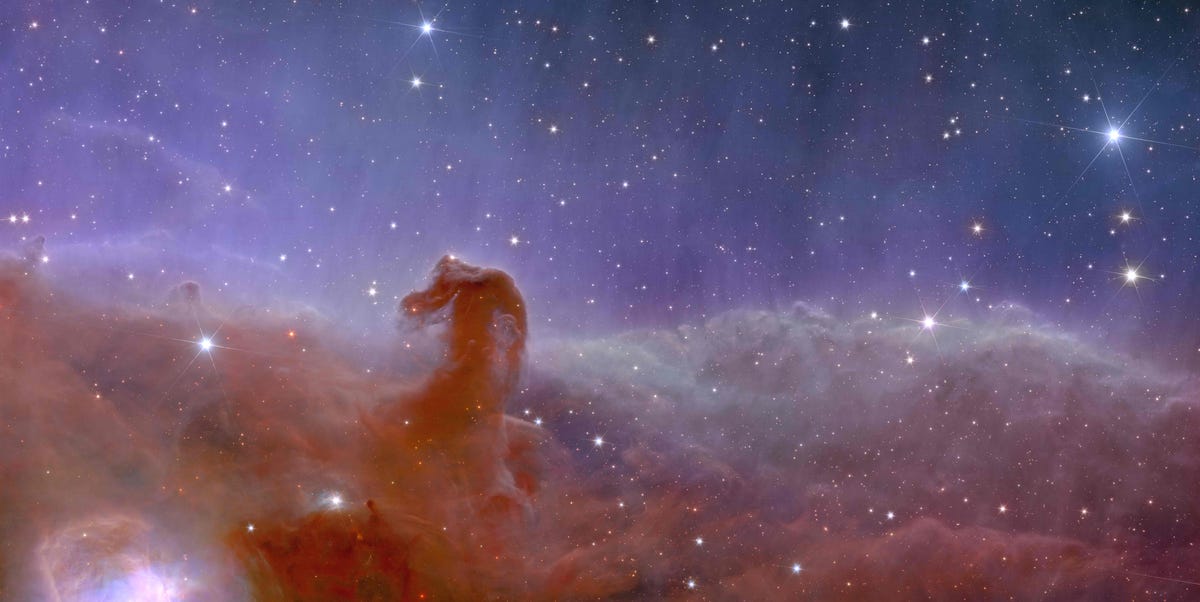
The first Euclid images included the Perseus galaxy cluster, the spiral galaxy IC 342, the irregular dwarf galaxy NGC 6822, the globular cluster NGC 6397, and the Horsehead Nebula. Each image showed something different about Euclid’s superpower: it can capture enormous areas of the sky while keeping tiny details impressively crisp. In other words, it does not just zoom in beautifully; it sees the big picture beautifully too.
What Is the Euclid Telescope?
Euclid is a space telescope designed to create an extremely detailed 3D map of the universe. Its main job is to observe billions of galaxies across a huge stretch of the sky, looking deep into cosmic history. By studying the shapes, positions, and motions of galaxies, scientists hope to better understand how the universe expanded and how invisible dark matter shaped cosmic structures.
The mission launched in July 2023 and traveled to a stable observing region about one million miles from Earth. From there, Euclid can stare into space with fewer interruptions from Earth’s atmosphere, weather, and city lights. No clouds. No humidity. No neighbor’s porch light ruining the view. Just clean, patient cosmic surveying.
Euclid carries two major scientific instruments. One observes visible light with remarkable sharpness. The other studies near-infrared light, helping scientists estimate distances and understand the properties of galaxies. Together, these instruments allow Euclid to capture both beautiful images and scientific data that can be used to map the universe in three dimensions.
Why Euclid’s First Images Matter
Space photos often go viral because they are gorgeous, and Euclid’s first images definitely qualify. But their real importance goes deeper than beauty. These images proved that Euclid could do what it was designed to do: observe wide areas of the sky in high detail. That combination is essential for a mission focused on dark matter, dark energy, and the large-scale structure of the cosmos.
Many telescopes are excellent at looking closely at small patches of sky. Others can survey large areas but with less fine detail. Euclid’s strength is the rare ability to do both at once. Imagine trying to photograph an entire city from above while still being able to identify individual windows. That is the kind of balance Euclid brings to astronomy.
The first images also gave scientists a preview of the massive data stream to come. Euclid is expected to observe more than a billion galaxies during its prime mission. Those observations will help researchers trace how galaxies are distributed through space and time, which can reveal the gravitational fingerprints of dark matter and the expansion effects linked to dark energy.
See the Incredible Photos: What Euclid Captured
The first Euclid telescope images were selected to show the observatory’s range. Instead of focusing on one type of object, the release included galaxy clusters, a spiral galaxy, a dwarf galaxy, a dense star cluster, and a famous nebula. It was like Euclid’s opening-night performance: a little drama, a little elegance, and a lot of “wait, how many galaxies am I looking at?”
The Perseus Galaxy Cluster: A Cosmic Crowd Scene
The Perseus galaxy cluster may be the most spectacular of Euclid’s first images. Located about 240 million light-years from Earth, Perseus is a massive gathering of galaxies bound together by gravity. Euclid’s image showed around 1,000 galaxies belonging to the cluster, plus more than 100,000 additional galaxies in the distant background.
That number is almost rude. Most of us struggle to organize 1,000 photos on our phones, while Euclid casually captures 100,000 galaxies behind another galaxy cluster. Many of those faint background galaxies are extremely distant, and some are so far away that their light has traveled for billions of years before reaching Euclid’s detectors.
For scientists, the Perseus image is valuable because galaxy clusters act like natural laboratories. Their enormous mass bends light from objects behind them, creating a phenomenon known as gravitational lensing. By studying these subtle distortions, astronomers can infer where dark matter is located, even though dark matter itself does not shine.
IC 342: The “Hidden Galaxy” Steps Into the Spotlight
Another first image featured IC 342, often called the “Hidden Galaxy.” It is a spiral galaxy that resembles the Milky Way in some ways, but it is difficult to observe because dust and stars in our own galaxy partially block the view. Euclid’s instruments helped reveal its structure with impressive clarity.
IC 342 is especially interesting because spiral galaxies are cosmic construction projects with arms full of stars, gas, and dust. By examining galaxies like this, scientists can study how stars form and how galactic structures evolve. Euclid’s wide-field view makes it possible to see more than just a bright central region; it can show the broader architecture of a galaxy in context.
For casual viewers, IC 342 is simply beautiful. Its glowing spiral arms look calm and graceful, even though galaxies are anything but quiet. They are busy places filled with star formation, stellar deaths, gas flows, and gravitational tug-of-war. Space may look peaceful from a distance, but zoom in scientifically and it becomes a very elegant traffic jam.
NGC 6822: A Small Galaxy With Big Scientific Value
Euclid also captured NGC 6822, an irregular dwarf galaxy located relatively close to the Milky Way in cosmic terms. Unlike neat spiral galaxies, irregular galaxies do not have a tidy shape. They are clumpy, uneven, and a little chaotic, which makes them scientifically useful.
Many galaxies in the early universe were smaller and more irregular than the grand spirals we admire today. That means nearby dwarf galaxies like NGC 6822 can help astronomers understand how galaxies grew over time. Think of it as studying a cosmic “before” picture: not because the galaxy is young in every sense, but because its structure can resemble the building blocks that helped form larger galaxies.
Euclid’s view of NGC 6822 gives researchers a rich field of stars and star-forming regions to analyze. It also shows how the telescope can contribute to galaxy evolution studies beyond its headline mission of dark energy and dark matter. The universe, apparently, does not believe in single-purpose content.
NGC 6397: A Glittering Globular Cluster
NGC 6397 is a globular cluster, which means it is a dense, ancient collection of stars held together by gravity. In Euclid’s image, the cluster looks like someone spilled diamond dust across black velvet. But behind the sparkle is serious science.
Globular clusters contain hundreds of thousands of stars, many of them very old. Studying them helps astronomers learn about the history of the Milky Way and the behavior of stars in crowded environments. Euclid’s ability to separate and measure many stars across a wide field can help researchers study how such clusters move and evolve.
The challenge with globular clusters is that they are packed tightly. Individual stars can overlap in images, making them harder to distinguish. Euclid’s sharpness helps reduce that confusion. For scientists, that means better data. For everyone else, it means another image that makes you briefly consider becoming an astronomer before remembering that math exists.
The Horsehead Nebula: A Famous Shape in a Wider View
The Horsehead Nebula is one of the most recognizable objects in the night sky. Also known as Barnard 33, it is part of the Orion molecular cloud and sits near Alnitak, one of the stars in Orion’s Belt. Its dark, horse-head-shaped cloud of gas and dust has been photographed many times, but Euclid’s view stands out because of its wide and detailed perspective.
Euclid captured the Horsehead Nebula in about an hour, showing how quickly it can image a large area of sky. That speed matters. A telescope designed to map a huge portion of the universe cannot spend forever on each target. It must be efficient, precise, and reliablethe astronomical equivalent of a photographer who can shoot a wedding, a sports event, and a galaxy cluster before lunch.
The Horsehead image is also a reminder that Euclid is not only about distant galaxies. It can study objects inside our own Milky Way too, including star-forming regions where gas and dust collapse into new stars. These local views help connect the grand story of the universe with the smaller-scale processes happening closer to home.
How Euclid Helps Scientists Study Dark Matter
Dark matter does not emit, absorb, or reflect light in the ordinary way, so telescopes cannot photograph it directly. However, scientists can detect its presence through gravity. Galaxies and galaxy clusters behave as though there is more mass present than we can see. That missing mass is what we call dark matter.
Euclid’s images help by measuring the shapes of galaxies across vast distances. When light from distant galaxies travels through the universe, the gravity of intervening matter slightly distorts it. This effect, called weak gravitational lensing, is subtle, but across millions or billions of galaxies it becomes a powerful tool.
By mapping these distortions, scientists can build a picture of where dark matter is distributed. It is a bit like noticing footprints in snow: you may not see the person who walked there, but the pattern tells you something passed through. Euclid is designed to collect enough “footprints” to map the invisible structure of the cosmos.
How Euclid Helps Scientists Study Dark Energy
Dark energy is even stranger. It is the name scientists give to whatever is causing the expansion of the universe to accelerate. We know the universe is expanding, and observations show that expansion has been speeding up. The big question is why.
Euclid will help by measuring how galaxies are distributed across cosmic time. Since light from distant galaxies takes billions of years to reach us, looking far away also means looking into the past. By comparing galaxy patterns at different distances, scientists can study how the expansion rate of the universe has changed.
This is why Euclid’s 3D map matters so much. A flat picture of the sky is useful, but a 3D map adds depth and history. It allows researchers to compare where galaxies are, how they cluster, and how cosmic structures grew over billions of years. That information may help narrow down what dark energy really isor at least make the universe’s weird behavior slightly less rude.
Euclid vs. Hubble and Webb: What Makes It Different?
It is tempting to compare every new space telescope with Hubble or the James Webb Space Telescope. Hubble gave us decades of iconic images in visible and ultraviolet light. Webb specializes in infrared observations and can peer through dust and into the early universe with extraordinary sensitivity. Euclid is different because it is built primarily as a survey telescope.
Euclid’s mission is not to spend long periods studying one tiny patch of space in extreme detail. Instead, it is designed to scan huge areas efficiently while maintaining excellent image quality. That makes it ideal for mapping galaxy distributions, measuring weak lensing, and building a statistical picture of the universe.
A simple way to think about it: Hubble and Webb are like powerful telephoto lenses for deep cosmic portraits. Euclid is like a high-resolution panoramic camera for the universe. We need both approaches. Portraits show exquisite detail; panoramas reveal patterns, scale, and structure.
What Happened After the First Images?
The first Euclid images were only the beginning. Since then, the mission has moved deeper into its survey work, including observations of deep fields where the telescope can look especially far into the universe. Later releases have expanded the scientific value of Euclid’s early observations, offering researchers large catalogs of galaxies and gravitational lensing candidates.
That matters because Euclid’s greatest discoveries may not come from a single famous photo. They may come from patterns hidden inside enormous datasets. A galaxy here, a lensing signal there, a statistical shift across millions of observationsthe mission’s power is cumulative. Euclid is not just taking pictures; it is building a cosmic database.
For the public, the first images were the “wow” moment. For scientists, they were proof of performance. The telescope showed that it could produce the kind of wide, sharp, information-rich images needed for its ambitious map of the universe.
Why These Photos Feel So Different
There is something emotionally unusual about Euclid’s first images. They do not just show one spectacular object floating alone in space. They often show depth: a foreground cluster, background galaxies, layers of cosmic history, and countless objects that turn the image into a time machine.
The Perseus image is a perfect example. At first glance, it is a cluster of galaxies. Then you look longer and realize the background is crowded with more galaxies. Then you remember that each galaxy may contain billions of stars. Then your brain quietly closes twelve browser tabs and asks for a snack.
This is the magic of Euclid. It makes the universe feel both enormous and measurable. The images are beautiful enough for anyone to appreciate, but they are also structured enough for scientists to use as data. They are art, evidence, and mystery all at once.
Viewing Experience: How to Really Look at Euclid’s Images
If you want to appreciate Euclid’s first images properly, do not scroll past them like regular social media content. These are not latte photos. Give them time. Start by looking at the whole frame, then slowly focus on smaller regions. In the Perseus cluster image, try to separate the bright cluster galaxies from the tiny background galaxies. The longer you look, the more crowded the universe becomes.
For the Horsehead Nebula, pay attention to contrast. The famous dark shape is not empty space; it is dense dust blocking light from behind it. That is one of the wonderful tricks of astronomy: darkness can be an object, not an absence. The silhouette tells a story about material thick enough to hide what is behind it.
When viewing IC 342, look for the spiral structure. Notice how the arms curve outward and how the central glow differs from the surrounding regions. Spiral galaxies are not static pinwheels; they are dynamic systems where gravity, gas, dust, and star formation interact over immense timescales.
NGC 6397 rewards a different kind of attention. Instead of looking for a shape, look for density. The stars appear packed toward the center and thinner toward the edges. That pattern reflects gravity’s long-term work inside the cluster. It is not just sparkle; it is structure.
NGC 6822 may look less symmetrical, but that is part of its charm. Irregular galaxies help break the idea that all galaxies should look like perfect spirals or smooth ellipses. The universe is not a showroom. It is messy, evolving, colliding, forming, fading, and occasionally looking like someone shook a snow globe full of stars.
Experience Section: What Euclid’s First Images Teach Us About Wonder
Looking at Euclid’s first images is a little like standing at the edge of the ocean at night. You can understand the factsdistance, light, gravity, timebut the feeling is bigger than the explanation. The photos remind us that science is not only about answers. It is also about better questions.
One of the best experiences connected to these images is the slow realization of scale. At first, a galaxy cluster seems like a single object. Then you learn it contains around 1,000 galaxies. Then you notice the background contains far more. Then you remember each galaxy is not a dot but a vast system of stars, planets, gas, dust, black holes, and unknown histories. Suddenly, “large” no longer feels like a useful word.
Another powerful experience is seeing how beauty and data overlap. A person can enjoy the Horsehead Nebula because it looks dramatic and mysterious. A scientist can study the same image to understand star formation and interstellar dust. A student can look at it and ask why the dark cloud has that shape. A photographer can admire the composition. A poet can stare at it for ten minutes and write something emotional about cosmic horses. Everyone gets an entry point.
Euclid’s first images also make astronomy feel active, not finished. Sometimes space photos are presented like museum pieces: amazing, distant, and complete. But Euclid’s images are more like opening chapters. They tell us the mission is working and that the bigger story is still unfolding. The telescope will continue collecting data, and researchers will keep finding new signals inside that data for years.
There is also a humbling experience in realizing how much of the universe is invisible to us. Dark matter and dark energy are not tiny side notes. They are central to the structure and fate of the cosmos. Euclid’s mission is exciting because it faces that ignorance directly. It does not pretend we already understand everything. It says, in effect, “Here is a giant mystery. Let’s measure it carefully.”
For readers, students, and casual space fans, the best way to connect with Euclid’s images is to treat them as invitations. Read the captions. Compare the targets. Ask why one image shows a nebula while another shows a galaxy cluster. Notice how different cosmic objects require different scientific questions. The more context you bring, the more the images open up.
And yes, it is completely acceptable to enjoy them simply because they look incredible. Not every moment of wonder needs a spreadsheet. Sometimes the right response to a field of 100,000 galaxies is just to lean back and whisper, “Well, that makes my weekend plans seem small.”
Conclusion: Euclid’s First Images Are Only the Beginning
The Euclid telescope’s first images were more than a successful debut. They were a preview of a mission that could reshape how scientists understand the universe’s hidden structure. From the crowded Perseus galaxy cluster to the iconic Horsehead Nebula, Euclid showed that it can capture wide, sharp, scientifically rich views of space.
Its real mission is ambitious: to map the cosmos in three dimensions, study billions of galaxies, and help explain dark matter and dark energy. The first photos gave us beauty. The coming years may give us answersor at least better mysteries, which is often how science politely moves forward.
For now, Euclid’s first images invite us to look longer, think bigger, and appreciate the strange fact that a telescope floating far from Earth can make the invisible universe feel just a little more knowable.














