
Editorial note: This article summarizes publicly reported European military assistance to Ukraine as of May 30, 2026. It is written for general news and analysis purposes, not as a technical or tactical guide. Because some governments now limit disclosure for security reasons, “every single weapon” here means the major known weapon systems, weapon categories, and representative examples confirmed through public reporting and official statements.
Introduction: Europe’s Arsenal Has Become Ukraine’s Lifeline
When Russia launched its full-scale invasion of Ukraine in February 2022, Europe did not start by emptying every garage, hangar, and Cold War warehouse at once. The first wave of support looked more like emergency medicine: anti-tank weapons, helmets, body armor, small arms, portable air defense, ammunition, and enough defensive gear to keep Ukraine from being swallowed whole. Then the war changed. Ukraine survived the opening shock, Russia dug in, cities came under repeated missile and drone attacks, and the conflict became a grinding test of logistics, production, training, and political will.
That is when Europe’s aid evolved from “hold the line” to “rebuild an army while it is already fighting.” The result is a sprawling collection of weapons: British Challenger 2 tanks, German Leopard tanks, French CAESAR howitzers, Polish T-72 and PT-91 tanks, Czech artillery and armored vehicles, Swedish CV90 infantry fighting vehicles, German IRIS-T air defense systems, Franco-British Storm Shadow and SCALP missiles, Dutch and Danish F-16s, French Mirage 2000 jets, and now Sweden’s planned Gripen contribution. It is not exactly a tidy catalog. It is more like NATO’s attic, Europe’s industrial base, and a very urgent Amazon cart all rolled into one.
The big story is not simply that Europe is sending weapons to Ukraine. It is that Europe is sending almost every type of battlefield capability a modern army needs: armor, artillery, air defense, aircraft, drones, missiles, engineering vehicles, naval-defense tools, ammunition, radar, electronic warfare equipment, repair systems, and training. This is a military supply chain with a thousand moving partsand yes, somewhere in that chain, a logistics officer is probably surviving on cold coffee and spreadsheets.
The Big Picture: What Europe Has Sent So Far
European military aid to Ukraine falls into several major buckets: armored vehicles, artillery, air defense, aircraft, missiles, drones, naval-defense equipment, battlefield engineering gear, ammunition, and support vehicles. The European Union and individual European states have also helped finance ammunition production, training, and long-term defense-industry cooperation. This matters because a tank without spare parts is a museum exhibit with ambition, and an air defense launcher without missiles is an expensive lawn ornament.
Europe’s contribution has grown in both size and sophistication. Early donations focused on portable defensive weapons and Soviet-compatible equipment Ukraine could use immediately. Later packages included Western main battle tanks, advanced self-propelled artillery, modern air defense, precision missiles, and fighter aircraft. The shift tells us something important: Ukraine’s partners moved from emergency support to a long-war strategy.
Main Battle Tanks: Leopard, Challenger, T-72, and PT-91
Leopard Tanks
The German-made Leopard tank has become one of the most recognizable European weapons in Ukraine’s arsenal. Leopard 2 tanks have been pledged or supplied by countries including Germany, Poland, Spain, Portugal, Sweden, and others. Leopard 1 tanks, older but still useful when refurbished and supported, have also been provided through European cooperation, including German and Danish-backed efforts.
Leopard deliveries matter because they represent a shift from Soviet-era armor to Western-designed systems. They also created a “tank coalition,” where several countries pooled vehicles, ammunition, training, spare parts, and maintenance support. In plain English: one country had tanks, another had spare parts, another had training capacity, and everyone had paperwork. Somehow, all of it had to become a working battlefield package.
Challenger 2
The United Kingdom sent Challenger 2 tanks, becoming one of the first countries to break the political barrier around Western main battle tanks for Ukraine. The British package also included ammunition, spare parts, and training. Challenger 2 did more than add heavy armor; it helped normalize the idea that Ukraine could receive advanced Western armored systems.
T-72 and PT-91 Tanks
Poland, the Czech Republic, and other Central and Eastern European countries sent Soviet-designed or Soviet-derived tanks, including T-72 variants and Poland’s PT-91 Twardy. These vehicles were especially valuable early in the war because Ukrainian crews already understood the basic platform. No one had to pause the war for a semester-long “Introduction to Tanking 101” course.
Infantry Fighting Vehicles and Armored Personnel Carriers
Modern warfare is not only about tanks. Infantry need protected mobility, and Europe has supplied a long list of armored vehicles. Germany provided Marder infantry fighting vehicles. Sweden supplied CV90 combat vehicles. The Netherlands, Denmark, Lithuania, Latvia, Estonia, Finland, Poland, and other countries have contributed armored personnel carriers, mine-resistant vehicles, medical evacuation vehicles, and battlefield transport platforms.
Known systems include Marder IFVs, CV90 vehicles, YPR-765 armored vehicles, M113 variants, Patria and Sisu vehicles, Bushmaster vehicles supplied through European channels, Rosomak-type vehicles from Poland, and multiple protected mobility platforms. These vehicles help move troops, evacuate wounded personnel, tow equipment, and keep units connected across dangerous terrain. They are less glamorous than fighter jets, but in daily warfighting, protected mobility is the difference between arriving and not arriving.
Artillery: Europe’s Loudest Contribution
Self-Propelled Howitzers
Artillery has been central to the war, and Europe has supplied some of Ukraine’s most important big-gun systems. Germany and the Netherlands provided Panzerhaubitze 2000 self-propelled howitzers. France sent CAESAR truck-mounted howitzers. The United Kingdom supplied AS90 systems. Poland provided Krab self-propelled howitzers. Slovakia supplied Zuzana 2 systems, some financed in cooperation with Denmark, Germany, and Norway. The Czech Republic supplied Dana-type artillery and other heavy systems.
Each system comes with its own maintenance needs, ammunition requirements, training demands, and repair headaches. Ukraine has had to operate a mixed artillery fleet that looks like a defense expo after a thunderstorm. Yet this diversity also helped Ukraine stay supplied when no single donor could provide everything.
Towed Artillery and Light Guns
Europe has also sent towed artillery, including British L119 light guns and other field guns from partner inventories. These weapons are easier to transport and useful in different battlefield conditions. They are not as protected as self-propelled systems, but they can be reliable, flexible, and easier to maintain.
Multiple Launch Rocket Systems
European countries have supplied or supported multiple launch rocket systems, including M270-family launchers from the United Kingdom, Germany, and Norway, as well as Czech and other regional rocket artillery. These systems expanded Ukraine’s ability to strike military targets at longer distances than traditional tube artillery, while still depending heavily on ammunition supply and targeting discipline.
Air Defense: The Shield Ukraine Keeps Asking For
If there is one category Ukraine keeps requesting, it is air defense. Russia’s repeated missile and drone attacks made this an urgent civilian-protection and military-survival issue. Europe has responded with short-range, medium-range, and long-range systems.
IRIS-T, Patriot Support, NASAMS, and SAMP/T
Germany’s IRIS-T systems are among the most important European air-defense contributions. Germany also supplied Gepard anti-aircraft vehicles, Patriot components or systems through public packages, and radar equipment. Spain has provided Patriot missiles and explored broader air-defense support. Norway, the Netherlands, Denmark, and other European partners have supported NASAMS, Patriot-related efforts, or funding arrangements for air-defense purchases.
France and Italy have supported the SAMP/T air-defense system, while France has also supplied Crotale and Mistral systems. The United Kingdom sent Starstreak and Stormer-based air-defense support. Poland and other countries provided Soviet-era or locally upgraded systems such as Osa or Newa-related platforms, depending on availability and public reporting.
Gepard: The Old System That Found a New Job
Germany’s Gepard anti-aircraft vehicles became a surprisingly famous part of Ukraine’s air defense. Originally designed in a different era, Gepard found renewed relevance against drones and low-flying threats. It is a reminder that in war, “old” does not always mean “useless.” Sometimes old means “the thing that still works when the shiny new thing is backordered.”
Aircraft: F-16s, Mirage 2000s, and Gripens
F-16 Fighter Jets
Denmark and the Netherlands have led Europe’s F-16 effort, with Norway and Belgium also part of the broader fighter coalition. Denmark committed 19 F-16s, while the Netherlands pledged 24 aircraft for Ukraine, along with training and support infrastructure. The F-16 transition is not just about aircraft; it involves pilots, ground crews, airbase preparation, weapons integration, spare parts, simulators, and maintenance pipelines.
Mirage 2000
France pledged Mirage 2000 fighter aircraft and later delivered initial aircraft to Ukraine. France also tied this support to pilot training and additional air-to-ground capabilities. The Mirage contribution adds another European aircraft type to Ukraine’s growing Western-supported air force, though it also adds another layer of logistics. Ukraine’s air force is becoming a flying group project, and group projects are rarely simple.
Gripen
Sweden’s planned Gripen support marks another major development. Public reporting in May 2026 said Sweden would donate older Gripen C/D aircraft in 2027 while Ukraine would buy newer Gripen E models for later delivery. Gripen is attractive to Ukraine because it was designed for flexible operations and relatively efficient maintenance. Still, any fighter program takes time, training, and a serious support network.
Long-Range and Precision Missiles
The United Kingdom supplied Storm Shadow cruise missiles, while France supplied SCALP-EG, the French version of the same missile family. These systems gave Ukraine a European long-range strike capability against military targets. France has also supported AASM Hammer guided bombs for Ukrainian aircraft. European countries have supplied anti-ship missiles, including Harpoon-related coastal-defense support from Denmark and the United Kingdom, as well as other maritime-defense tools.
This category has always been politically sensitive because longer-range weapons raise escalation concerns. As a result, countries often describe these transfers carefully and attach conditions to their use. The key point for readers is simple: Europe has not only sent defensive equipment; it has also supplied precision systems intended to disrupt military logistics and protect Ukraine’s territory.
Anti-Tank and Short-Range Weapons
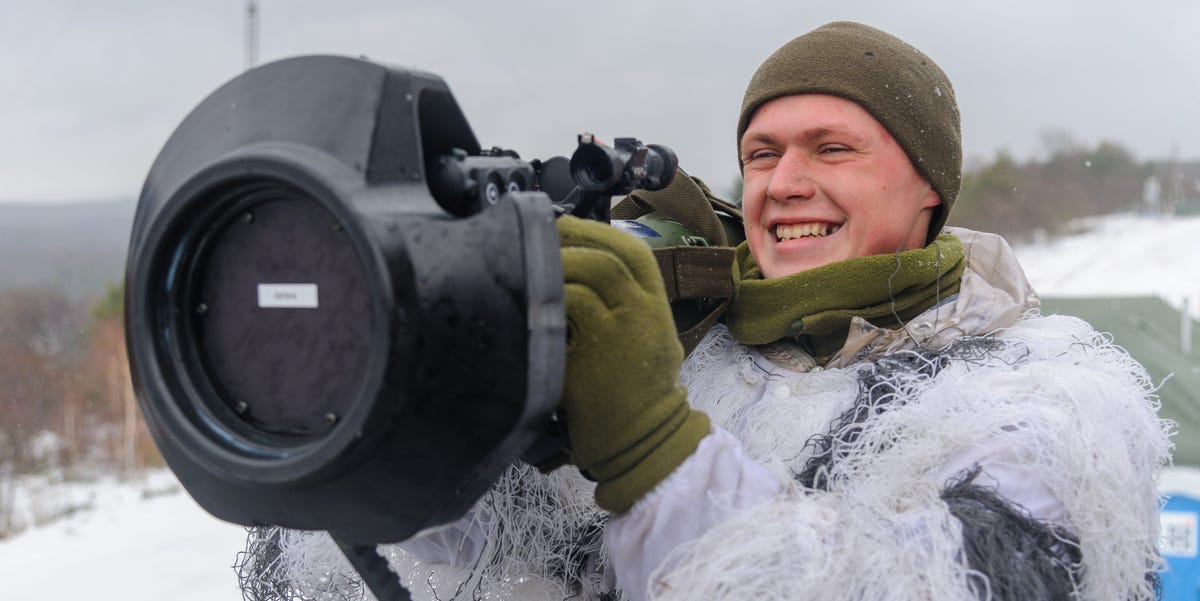
Early in the war, anti-tank weapons became symbols of Ukraine’s resistance. The United Kingdom supplied NLAW anti-tank weapons. Sweden supplied AT4 systems and other support. Germany provided Panzerfaust and RGW-type anti-armor weapons. France, Norway, Poland, the Baltic states, and others contributed portable anti-tank and infantry weapons from national stocks.
These weapons were especially important in the first months, when Ukraine needed mobile defensive tools that could be distributed quickly. They were not glamorous in the Hollywood sense. They were practical, portable, and availablethree adjectives that make logisticians clap politely.
Drones, Counter-Drone Systems, and Electronic Warfare
The war in Ukraine has become the world’s most visible drone war. Europe has supplied reconnaissance drones, combat drones, unmanned ground systems, drone-detection systems, jammers, radars, and counter-drone equipment. Germany has provided VECTOR reconnaissance drones and other unmanned systems. The United Kingdom, Denmark, Latvia, Lithuania, Estonia, Sweden, Norway, and others have supported drone coalitions or direct drone procurement.
Europe is also funding Ukrainian defense production, including drones and missiles. Denmark has been especially active in financing Ukrainian-made capabilities, reflecting a broader trend: instead of only shipping equipment from European warehouses, donors increasingly help Ukraine build or buy more of what it can produce itself.
Ammunition: The Unsexy Superstar
No article about weapons for Ukraine is complete without ammunition. Artillery shells, air-defense missiles, tank rounds, small-arms ammunition, mortar rounds, rockets, and spare barrels are the quiet engine of military aid. Europe’s one-million-round artillery initiative, the Czech-led ammunition effort, and national procurement programs all reflect the same lesson: modern war consumes ammunition at staggering rates.
The Czech Republic has played a major role in arranging artillery ammunition supplies, including shells sourced through international channels and financed by partner countries. Germany, France, the UK, the Nordic states, the Baltic states, Poland, Spain, and others have contributed ammunition directly or through funding mechanisms. In this war, ammunition is not a footnote. It is the headline wearing plain clothes.
Engineering, Recovery, and Support Equipment
Europe has also sent equipment that does not always make dramatic headlines but keeps armies functioning: armored recovery vehicles, bridge-laying equipment, mine-clearing systems, repair vehicles, trucks, fuel tankers, ambulances, mobile workshops, radars, communications systems, night-vision devices, winter gear, medical supplies, and protective equipment.
Germany has supplied Bergepanzer recovery vehicles, Wisent mine-clearing vehicles, bridge-laying equipment, radars, and other support systems. Other countries have supplied demining equipment, armored ambulances, logistics vehicles, and maintenance support. This category matters because destroyed roads, mined fields, damaged vehicles, and exhausted units are as much a part of war as tanks and missiles.
Naval and Coastal Defense Weapons
Although the war is mostly discussed in terms of land battles and air defense, the Black Sea has been strategically important. European support has included coastal-defense missiles, naval drones, maritime surveillance equipment, mine-countermeasure support, patrol boats, and training. Denmark and the United Kingdom have been associated with anti-ship and maritime-defense assistance, while other European states have contributed naval support through coalitions and funding.
Ukraine’s ability to protect export routes and pressure Russian naval activity has had economic and strategic effects. Grain shipments, port access, and maritime security are not side stories; they are part of Ukraine’s national survival.
So, What Is Europe Sending? A Publicly Reported Category List
Here is the cleanest way to understand the publicly reported European weapons pipeline:
- Tanks: Leopard 2, Leopard 1, Challenger 2, T-72 variants, PT-91 Twardy, and other Soviet-era tanks from European stocks.
- Infantry fighting vehicles: Marder, CV90, BVP/BMP variants, and other tracked armored vehicles.
- Armored personnel carriers: M113 variants, YPR-765, Patria/Sisu-type vehicles, Rosomak-type vehicles, Bushmaster vehicles, and other protected mobility platforms.
- Self-propelled artillery: CAESAR, Panzerhaubitze 2000, AS90, Krab, Zuzana 2, Dana, Archer, and related European systems.
- Towed artillery: L119 light guns and other field artillery.
- Rocket artillery: M270-family launchers, Czech rocket systems, and other multiple-launch platforms.
- Air defense: IRIS-T, Gepard, Patriot missiles or components, NASAMS support, SAMP/T, Crotale, Mistral, Starstreak, Stormer, Osa/Newa-related systems, radar, and counter-drone tools.
- Aircraft: F-16s from Denmark and the Netherlands with broader European coalition support, French Mirage 2000s, and planned Swedish Gripens.
- Precision weapons: Storm Shadow, SCALP-EG, AASM Hammer guided bombs, and other precision-guided munitions.
- Anti-tank weapons: NLAW, AT4, Panzerfaust, RGW-type systems, and other portable anti-armor weapons.
- Drones and counter-drone systems: reconnaissance drones, strike drones, unmanned ground systems, jammers, sensors, and drone-defense equipment.
- Naval-defense equipment: coastal-defense systems, maritime drones, patrol craft support, and mine-countermeasure assistance.
- Ammunition: artillery shells, tank rounds, air-defense missiles, rockets, mortar rounds, small-arms ammunition, and spare barrels.
- Support systems: recovery vehicles, mine-clearing vehicles, bridge layers, trucks, ambulances, repair kits, communications equipment, and protective gear.
Analysis: Why Europe’s Weapons Mix Looks So Messy
From the outside, Europe’s military aid can look chaotic. Ukraine receives German tanks, British tanks, French artillery, Polish howitzers, Swedish IFVs, Dutch aircraft, Danish aircraft, Czech ammunition, Italian-French air defense, and Baltic drone support. That is not a neat military catalog; it is a multinational puzzle where every piece comes with a different manual.
But the mess has a reason. Europe did not design this support system in advance. It built it under pressure. Countries donated what they had, what they could spare, what Ukraine could use, and what domestic politics allowed. Some equipment came from active military stocks. Some came from storage. Some was bought from industry. Some was financed by one country and supplied by another. Some was refurbished before delivery. Some required months of training.
The result is imperfect but powerful. Europe has helped Ukraine stay in the fight, protect cities, rebuild brigades, modernize parts of its armed forces, and reduce dependence on Soviet-era systems. At the same time, the war has exposed Europe’s own weaknesses: limited ammunition production, thin stockpiles, slow procurement, fragmented weapons fleets, and defense industries that were not prepared for a long, high-intensity war.
Experience Section: What This Weapons Pipeline Teaches Us
Watching Europe’s weapons pipeline to Ukraine unfold offers a few practical lessons about modern security, logistics, and political decision-making. The first lesson is that equipment is only the visible tip of the iceberg. A tank on a train makes a dramatic photo. Spare parts, mechanics, fuel systems, training programs, recovery vehicles, and ammunition depots do not. Yet without them, the tank is just a very expensive metal animal with commitment issues.
The second lesson is that compatibility matters. Ukraine began the war with a military heavily built around Soviet-era platforms. That made early donations from Poland, the Czech Republic, Slovakia, and other Central European states especially useful. T-72 tanks, BMP-type vehicles, Soviet-caliber ammunition, and familiar air-defense systems could be integrated quickly. Western systems brought better capabilities in many areas, but they also required new training, maintenance, and supply chains.
The third lesson is that air defense is now a national survival tool, not a luxury. Ukraine’s repeated requests for Patriot, IRIS-T, NASAMS, SAMP/T, Gepard, Crotale, Starstreak, and missile ammunition show that modern war reaches far behind the front line. Cities, power grids, ports, rail hubs, factories, and hospitals all become part of the security equation. Air defense is expensive, scarce, and constantly consumed. That makes it one of the most politically urgent categories of aid.
The fourth lesson is that drones changed everything. European support increasingly includes drones, counter-drone systems, electronic warfare, and funding for Ukrainian production. This reflects a battlefield where small unmanned systems can observe, disrupt, and shape operations every day. For readers who still picture war only as tanks rolling across fields, Ukraine is a very loud correction.
The fifth lesson is that defense production is strategy. Europe discovered that donating from existing stockpiles is faster than building new weapons, but stockpiles run down. Replacing them takes years unless factories expand, contracts are signed, and governments accept long-term costs. The Czech ammunition initiative, EU ammunition-production efforts, German air-defense production, French artillery output, and Nordic drone funding all point toward the same reality: supporting Ukraine is not just about generosity; it is about industrial capacity.
The sixth lesson is political. Many transfers happened only after months of debate. Tanks were controversial until they were not. Fighter jets were “too difficult” until training began. Long-range missiles were sensitive until they were delivered under strict conditions. Each step changed the boundary of what Europe considered possible. In that sense, the weapons list is also a timeline of Europe’s changing risk tolerance.
Finally, the Ukraine case shows that military aid is not a single shipment; it is a relationship. Weapons arrive, break, need repair, require ammunition, demand training, and eventually need replacement. The countries that support Ukraine are not simply sending hardware. They are building an ongoing defense ecosystem around a country fighting for survival. That ecosystem is complicated, expensive, and sometimes slow. But it has also become one of the most important security projects in Europe since the end of the Cold War.
Conclusion: Europe Is No Longer Just Donating WeaponsIt Is Rebuilding Ukraine’s Arsenal
Europe’s weapons support for Ukraine has grown from emergency aid into a full-spectrum military effort. The list now includes tanks, artillery, aircraft, air defense, drones, missiles, naval-defense systems, engineering vehicles, ammunition, and training. No single country has supplied everything, but together Europe has created a layered support network that keeps Ukraine equipped while forcing European governments to confront their own defense gaps.
The headline “Every Single Weapon Europe Is Sending to Ukraine” sounds simple, but the reality is anything but. This is not one list. It is a living supply chain. It changes with battlefield needs, factory output, political decisions, and security concerns. What remains constant is the direction of travel: Europe is more deeply involved in Ukraine’s defense than at any point since the invasion began, and its role is likely to grow as the war continues.
For readers, the takeaway is clear. Ukraine is not being supported by a few symbolic donations. It is receiving a broad, evolving arsenal that touches nearly every part of modern warfare. Europe’s challenge now is to keep that support credible, coordinated, and sustainablebecause in a long war, the winner is not always the side with the flashiest weapon. Often, it is the side that can still deliver ammunition, repairs, training, and spare parts when everyone else is tired.














