
Note: This article is written for web publication in standard American English and is based on documented reporting, official statements, civil rights research, and public records related to the 2020 George Floyd protests, FBI evidence requests, and police violence captured on video.
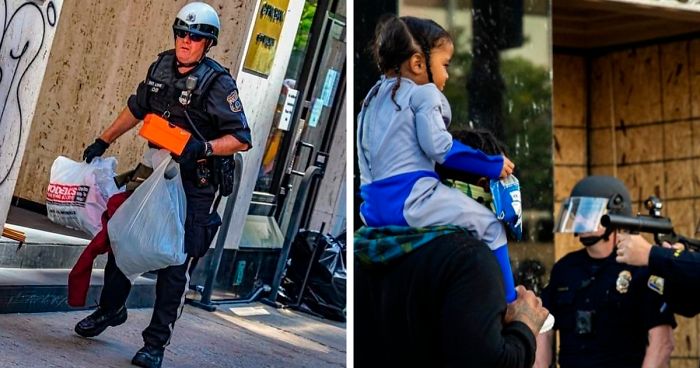
When the FBI asked the public to send photos and videos of violence during the nationwide protests after George Floyd’s killing, the internet did what the internet does best: it read the assignment, added footnotes, and sent back a very different syllabus. Instead of only identifying protesters accused of vandalism, arson, or assaults, many people responded with videos and pictures of police officers shoving, striking, pepper-spraying, tear-gassing, and driving into demonstrators.
The moment became a digital boomerang. A federal agency asked for evidence of violence surrounding protests. The public replied, in effect: “Great idea. Let’s start with the people wearing badges.”
That sharp online response captured a larger national argument: who gets labeled violent during protests, who gets investigated, and whose actions are treated as public safety rather than public harm? The answer, as millions of Americans watched in real time in 2020, was not simple. Protests over police brutality were sometimes met with the very conduct that protesters were marching against. The result was a flood of citizen-shot videos that changed the conversation from “violent protesters” to “violent policing.”
The FBI’s Request Came During A Historic Protest Wave
In early June 2020, the FBI publicly asked people to submit tips, photos, and videos related to individuals “actively instigating violence” during demonstrations that followed the killing of George Floyd in Minneapolis. Floyd, a Black man, died on May 25, 2020, after then-Minneapolis police officer Derek Chauvin pressed his knee on Floyd’s neck while Floyd was handcuffed and repeatedly said he could not breathe.
The killing, recorded by a teenage bystander, triggered one of the largest protest movements in modern American history. Demonstrations spread from Minneapolis to New York, Los Angeles, Philadelphia, Atlanta, Washington, D.C., Seattle, Portland, Louisville, Denver, and hundreds of smaller cities and towns. People marched against police brutality, systemic racism, qualified immunity, militarized crowd control, and the long history of Black Americans dying during encounters with law enforcement.
There were real incidents of property damage, looting, vehicle fires, and clashes. Those events received enormous attention, and law enforcement agencies repeatedly emphasized the need to identify people who committed crimes under cover of protest. But independent research later found that the overwhelming majority of Black Lives Matter demonstrations in the summer of 2020 were peaceful and nondestructive. That matters because public framing can turn a movement into a mugshot before anyone reads the actual report.
Then The Replies Started Rolling In
After the FBI’s request circulated online, many social media users responded with footage that appeared to show police violence. Some clips showed officers pushing protesters to the ground. Others showed chemical irritants being sprayed at close range. Some showed police using batons, projectiles, bicycles, riot shields, or vehicles against crowds. The message was direct: if the FBI wanted evidence of violence during protests, the public had plenty of evidence to offer.
One reason the response spread so quickly was that it flipped the expected narrative. A government agency appeared to be asking citizens to help identify violent actors among the crowds. Citizens replied that the state itself should not be exempt from the same scrutiny. It was less a comment section than a public audit with memes, outrage, and video receipts.
The online reaction also revealed a deep trust gap. For many protesters, the question was not whether some people had committed crimes. The question was why police violence was so often described in softer language: “crowd control,” “dispersal,” “officer response,” or everyone’s favorite bureaucratic fog machine, “an incident occurred.” If a protester throws a bottle, it is violence. If an officer fires a rubber bullet at someone’s face, many argued, that should not magically become “restoring order.”
Police Violence Was Not Just A Social Media Claim
The wave of videos was not merely an online pile-on. Multiple investigations, newsrooms, civil rights groups, and press freedom organizations documented aggressive law enforcement actions during the 2020 protests. Amnesty International reviewed hundreds of videos and documented more than 100 incidents of police violence against protesters across dozens of states and Washington, D.C. The reported abuses included beatings, misuse of tear gas and pepper spray, and the use of rubber bullets or other so-called less-lethal projectiles in ways that raised serious human rights concerns.
ProPublica analyzed dozens of videos showing apparent cases of officers escalating force during protests. The U.S. Press Freedom Tracker and press freedom groups also documented an alarming number of attacks, arrests, and injuries involving journalists who were covering the demonstrations. In one widely discussed incident, CNN correspondent Omar Jimenez and his crew were arrested live on air while reporting in Minneapolis, even after identifying themselves as journalists.
These examples did not prove that every police action during every protest was unlawful. They did, however, make it much harder to pretend the problem was limited to a few unruly protesters. The camera phone had become America’s unofficial civil rights monitor, and it was working overtime.
Specific Incidents Became Symbols Of A Bigger Pattern
Buffalo: A 75-Year-Old Protester Shoved To The Ground
One of the most disturbing videos from the 2020 protests showed Buffalo police officers pushing 75-year-old protester Martin Gugino, who fell backward and struck his head on the pavement. The footage spread rapidly and prompted national outrage. Two officers were suspended and later charged, though the case also generated fierce backlash from police supporters. The image of an elderly man bleeding on the sidewalk became a brutal visual shorthand for the question protesters were asking: if this is how police act while the world is watching, what happens when cameras are off?
New York City: Police Vehicles And Crowd Control
In Brooklyn, videos appeared to show NYPD vehicles moving into a crowd of protesters. Police sources argued that officers were trapped and trying to escape, while critics saw the footage as another example of reckless force against civilians. Either way, the clip became part of the larger online response to the FBI’s request: evidence of protest violence could not be separated from evidence of law enforcement conduct.
Philadelphia: Tear Gas On The Vine Street Expressway
Philadelphia became another major flashpoint after police used tear gas and other force against protesters on the Vine Street Expressway. The scene looked less like a city managing a march and more like a disaster movie with worse leadership meetings. Years later, Philadelphia agreed to a multimillion-dollar settlement with protesters over police actions during the 2020 demonstrations, including allegations involving tear gas, rubber bullets, and mass detentions.
Journalists, Medics, And Legal Observers Were Also Targeted
Footage and reports from 2020 showed that it was not only protesters who faced force. Journalists were struck by projectiles, arrested, pepper-sprayed, and shoved while doing their jobs. Legal observers and street medics also reported being targeted. This widened the concern from protest rights to basic democratic accountability. When people documenting events are attacked or arrested, the public loses more than live coverage. It loses a layer of protection against official spin.
Why The FBI Request Hit A Nerve
The FBI’s request was legally understandable on one level. Federal authorities do investigate crimes connected to civil unrest, including arson, assaults, threats, and organized violence. Peaceful protest is protected by the First Amendment; violence and property destruction are not. That distinction is important and should not be tossed into the shredder just because the national mood is tense.
But timing and tone matter. The request landed while many Americans were watching police departments respond to anti-police-brutality protests with riot gear, tear gas, rubber bullets, mass arrests, and aggressive dispersal tactics. To critics, the FBI’s framing seemed to focus attention downward on protesters rather than upward on the power of the state. That is why the replies became so pointed. People were not merely trolling the FBI. They were challenging the boundaries of accountability.
The public reaction said: if evidence matters, let evidence matter for everyone. Not just the teenager breaking a window. Not just the person throwing fireworks. Also the officer shoving a demonstrator. Also the commander ordering tear gas. Also the department issuing a statement that looks suspiciously allergic to the video everyone has already seen.
The Camera Phone Changed Protest Accountability
The 2020 protests proved that smartphones are now central to civil rights documentation. George Floyd’s death itself became globally known because Darnella Frazier recorded it. Without that video, the official story may have sounded very different. That fact shaped how protesters understood the importance of filming police.
During the demonstrations, videos often contradicted initial official descriptions. In some cases, departments announced investigations only after footage went viral. In others, videos helped lawyers, journalists, and watchdog groups reconstruct what happened. Public video did not solve the accountability problem, but it narrowed the space where institutions could simply say, “Move along, nothing to see here,” while the entire internet replied, “Actually, we have 4K.”
This shift also created new complications. Videos can be clipped, miscaptioned, stripped of context, or used to inflame rather than inform. A ten-second clip may show force without showing what happened before it. But that limitation cuts both ways. Police reports can also omit context, minimize harm, or frame civilians as threats. The best evidence often comes from multiple angles, timestamps, body-camera footage, independent witnesses, and careful reporting.
Violence, Protest, And The Power Of Labels
One of the biggest lessons from the FBI backlash is that words shape public judgment. Calling a protest “violent” can change how people interpret everything that happens afterward. Once a crowd is framed as dangerous, force against that crowd may seem justified before anyone evaluates the facts.
That is why many activists objected to blanket descriptions of the 2020 demonstrations as riots. Yes, some protests involved serious destruction and dangerous confrontations. But many were peaceful marches, vigils, sit-ins, and rallies. When the most dramatic fires dominated television coverage, quieter scenes of thousands marching peacefully were often reduced to background noise.
The same labeling issue applies to police. “Less-lethal” weapons can still blind, maim, fracture bones, and cause lasting trauma. “Crowd dispersal” can describe anything from a lawful order to a chaotic rush of officers swinging batons. “Use of force” sounds clean enough for a training manual, but for the person on the receiving end, it may mean a cracked rib, a burned throat, or a concussion.
What The Public Response Revealed About Trust
The flood of police-violence videos sent in response to the FBI’s request was not just a viral episode. It was a referendum on institutional trust. Many Americans did not believe law enforcement would investigate itself with the same urgency it used to investigate protesters. That skepticism did not come from nowhere. It came from decades of controversial police shootings, internal reviews that cleared officers, civil settlements paid without admissions of wrongdoing, and disciplinary systems that often seemed slower than a printer jam in a government office.
Trust requires more than asking the public for evidence. It requires proving that evidence will be evaluated fairly, even when it implicates officials. When agencies ask citizens to help identify violence, they should be prepared for citizens to identify violence by anyone. Accountability cannot have a VIP entrance for the state.
The Bigger Legal And Civic Question
The First Amendment protects peaceful assembly, protest, speech, and press activity. It does not protect assault or arson. But it also does not disappear because a city declares a curfew, a crowd becomes inconvenient, or officials dislike the message being shouted through a megaphone. The challenge for law enforcement is to separate individuals committing crimes from the broader group exercising constitutional rights.
That is difficult work. It requires training, restraint, communication, discipline, and leadership. It is also exactly what democratic policing demands. A protest is not a customer service survey for the government. It is often loud, angry, disruptive, and uncomfortable. That is the point. The Constitution does not only protect polite suggestions submitted between 9 a.m. and 5 p.m. with a parking validation stamp.
Why This Story Still Matters
The episode still matters because it shows how quickly official narratives can be challenged in the digital age. The FBI asked for evidence. The public answered with evidence that complicated the government’s preferred focus. In doing so, people forced a broader conversation about police accountability, protest rights, and the difference between public safety and state force.
It also matters because protest policing remains a live issue in the United States. Demonstrations over racial justice, abortion rights, labor disputes, war, immigration, campus politics, and police misconduct continue to raise the same questions. Who gets protected? Who gets surveilled? Who gets called violent? Who gets believed?
The 2020 moment was not a quirky internet clapback, although it certainly had the rhythm of one. It was a reminder that evidence is not loyal. It does not automatically flatter the institution that asks for it. Sometimes the footage points in the opposite direction.
Experiences And Reflections: What It Felt Like To Watch The Evidence Flood In
For many people watching from home in 2020, the experience was disorienting. One minute, officials were talking about restoring order. The next, a video appeared showing a protester shoved, a journalist arrested, or a crowd coughing through tear gas. The news cycle moved so fast that the public had to become part viewer, part fact-checker, part emotional triage nurse. It was exhausting, and nobody even got a complimentary tote bag.
What made the FBI response so memorable was the sense that ordinary people were refusing to accept a one-way definition of violence. They were saying, “We see the broken windows, but we also see the broken bones.” That distinction mattered. A person could condemn looting and still condemn excessive police force. A person could support public safety and still believe officers should be investigated when video appears to show misconduct. Mature civic thinking allows more than one thing to be true at once, even if cable news sometimes treats nuance like an endangered species.
The public’s video-driven response also showed how modern protest movements depend on documentation. People brought signs, masks, water bottles, first-aid supplies, and fully charged phones. Recording became a form of protection, not because cameras always prevent violence, but because they can make denial harder afterward. In a country where official reports have too often carried more weight than civilian testimony, video gave ordinary people a louder voice.
There was also fear. Filming police can feel risky, even when it is legally protected in many public settings. Protesters worried about arrest, retaliation, surveillance, doxxing, or being misidentified. Some people blurred faces before posting. Others debated whether sharing footage might help prosecutions of protesters more than accountability for police. The FBI’s call for digital media sharpened those concerns. Sending evidence to the government is not the same as posting it for public awareness, and communities with long histories of over-policing had reason to be cautious.
At the same time, many people felt a responsibility to preserve what they saw. Videos of police violence were not just viral content; they were potential evidence for lawsuits, disciplinary complaints, journalism, and historical memory. The clips helped create a public archive of a chaotic national moment. That archive was messy, incomplete, and sometimes emotionally overwhelming, but it made one thing clear: protest stories cannot be told only from press conferences.
Watching the replies to the FBI unfold also offered a lesson in civic skepticism. Skepticism does not mean assuming every officer is guilty or every protester is peaceful. It means refusing to let power narrate events without challenge. It means asking for the full video, the body-camera footage, the radio logs, the orders given, the injuries reported, and the names of decision-makers. Democracy is healthier when citizens ask annoying questions. Annoying questions are basically fiber for public institutions: uncomfortable, necessary, and good for long-term function.
The experience also showed the emotional gap between people who saw the protests as chaos and people who saw them as grief. For many Black Americans and allies, the marches were not abstract political theater. They were a response to repeated death, humiliation, fear, and exhaustion. When police responded with force, it did not feel like neutral crowd management. It felt like confirmation of the original complaint.
That is why the FBI episode had such staying power. It condensed a national argument into one simple contradiction: authorities asked for evidence of violence during protests against police violence, and the public sent evidence of police violence during those protests. The irony was sharp, but the underlying issue was serious. Accountability cannot be selective. If violence is wrong, it is wrong whether it comes from a protester in a hoodie or an officer in riot gear.
The lasting experience, for many observers, was a loss of innocence about official language. Phrases like “unlawful assembly,” “less-lethal munitions,” and “restoring order” began to sound less neutral after people saw what they could look like on the ground. The videos trained the public to ask a better question: not merely “Was force used?” but “Was it necessary, proportional, lawful, and accountable?” That is the question that should outlive the viral moment.
Conclusion
The FBI’s call for protest-related evidence became memorable because the public expanded the definition of evidence. People did not only point toward vandalism, looting, or clashes. They pointed toward police conduct and demanded that state violence be judged with the same seriousness as civilian violence.
The episode remains a revealing snapshot of 2020: a year when phones became witnesses, social media became an evidence board, and official narratives faced instant public cross-examination. It was messy, emotional, imperfect, and sometimes chaotic. But it also showed a powerful democratic instinct: when government asks people to help document wrongdoing, people may document the government too.














