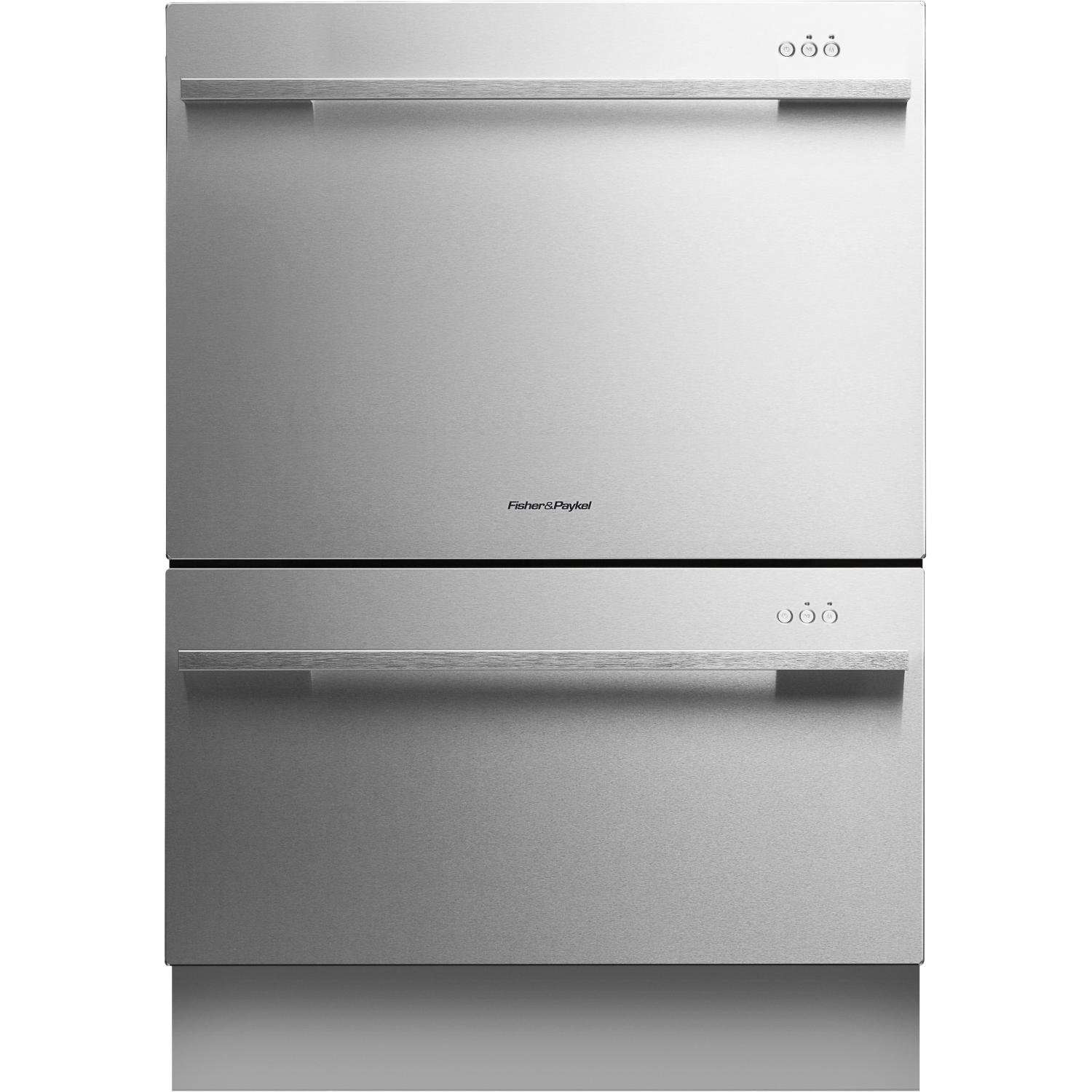
The Fisher & Paykel DishDrawer Tall Series SS 24 in. Semi-Integrated Dishwasher does not approach dishwashing like an ordinary appliance. Instead of hiding one large tub behind a door that drops into the middle of the kitchen, it divides the work between two independent drawers. Think of it as dishwasher duplex living: plates upstairs, pots downstairs, and nobody arguing over the thermostat.
Commonly identified by the legacy model number DD24DDFTX7, this stainless steel Tall Double DishDrawer was designed for homeowners who wanted flexible loading, easier access, and the ability to wash small or large loads without wasting an entire full-size cycle. Each drawer operates separately, yet together they provide room for up to 14 place settings.
Because this is an older, discontinued model, shoppers are most likely to encounter it as remaining dealer stock, a showroom appliance, or a used unit. That makes a detailed review especially important. Its drawer format remains clever, but installation quality, service history, and parts availability matter just as much as the original feature list.
What Is the Fisher & Paykel Tall Double DishDrawer?
The appliance is a roughly 24-inch-wide built-in dishwasher containing two pull-out wash drawers. Rather than lowering a conventional door and sliding racks toward you, you open each compartment like a deep kitchen drawer. The upper drawer is taller than the lower one and was engineered to accommodate plates and platters up to approximately 13 inches in diameter.
Archived product listings occasionally disagree over whether the DD24DDFTX7 should be called “semi-integrated” or “fully integrated.” The practical description is clearer: it has visible stainless steel drawer fronts and straight handles, while the operating controls are concealed for a cleaner exterior appearance. Regardless of the catalog terminology, it is not a custom-panel model that disappears completely behind matching cabinetry.
Key Specifications at a Glance
| Configuration | Tall double-drawer built-in dishwasher |
|---|---|
| Common model number | DD24DDFTX7 |
| Finish | Stainless steel with straight handles |
| Total capacity | 14 place settings, seven per drawer |
| Wash programs | Nine, including Eco variations |
| Largest plate capacity | Approximately 13 inches in the upper drawer and 11.5 inches in the lower drawer |
| Approximate width | 23 9/16 inches |
| Approximate height | 34 to 36 3/8 inches with adjustment |
| Approximate depth | 22.5 inches, excluding handle projection |
| Electrical supply | 120 volts on an appropriately installed circuit |
| Current status | Discontinued legacy model |
Two Independent Drawers Create Genuine Flexibility
The strongest reason to choose a double DishDrawer is not novelty. It is the ability to treat the two compartments as separate dishwashers. A household can run one drawer after breakfast without waiting for enough dirty dishes to fill a conventional tub. During a dinner party, both drawers can operate at once.
The independent design also allows different loads to receive different treatment. Delicate glasses can wash in one drawer while heavily soiled cookware runs through a stronger program in the other. That is considerably more useful than a decorative feature that looks impressive in a showroom but spends the next decade gathering fingerprints.
Using a single drawer may reduce the water and energy required for a small load. Archived specifications place consumption at roughly two gallons per drawer on applicable cycles, or around four gallons when both compartments are used. Actual consumption depends on the selected program and loading conditions.
Who Benefits Most From Split-Load Washing?
Couples and smaller households can use one drawer for everyday dishes while keeping the second available for cookware or entertaining. Families may designate the upper drawer for cups and plates and the lower one for lunch containers, bowls, and utensils. Some owners also use one drawer as a temporary staging area for dirty dishes while the other is running.
The format is particularly attractive in open kitchens. A partially loaded conventional dishwasher can become a ceramic waiting room, holding dishes until somebody finally declares the machine “full enough.” A DishDrawer lets you run smaller loads sooner and return clean items to cabinets before they begin applying for permanent residency.
Tall-Series Capacity and Loading
The Tall Series designation is important because earlier drawer dishwashers were sometimes criticized for limited vertical clearance. Fisher & Paykel increased the upper compartment’s usable height so it could accept large dinner plates and selected platters measuring up to about 13 inches. The lower drawer accommodates plates up to approximately 11.5 inches.
Each drawer holds seven formal place settings, creating a combined rating of 14. That number is competitive with many conventional 24-inch dishwashers, although real capacity depends on the shape of the dishes. Fourteen matching place settings from a laboratory-style capacity test are easier to arrange than a real Wednesday-night collection of mixing bowls, insulated mugs, cutting boards, and one saucepan shaped like a medieval helmet.
Flexible Racking Helps, but Technique Matters
Fold-down tines, adjustable cup racks, pitch-adjustable supports, and dedicated cutlery baskets provide multiple loading arrangements. Long utensils can be positioned along the racks, while sections of tines can be lowered to create room for bowls or cookware.
However, a drawer has a different geometry from a tall conventional tub. Very large stockpots, oversized sheet pans, and unusually tall stemware may be awkward. Buyers who routinely wash bulky cookware should examine an actual drawer before purchasing a used unit. The upper drawer’s extra height is valuable, but it is not a magical portal to infinite casserole-dish storage.
Wash Programs and Cleaning Performance
The DD24DDFTX7 was marketed with nine wash choices: Heavy, Normal, Fast, and Delicate programs; Eco versions of those four cycles; and a separate Rinse program. This selection gives users more control than simply choosing between “regular” and “the plates have become an archaeological site.”
Heavy is intended for pots, pans, and dishes with baked-on soil. Normal handles mixed everyday loads. Fast is useful for lightly soiled items needed again soon, while Delicate provides gentler treatment for glassware and fragile pieces. Rinse keeps food residue from drying onto dishes when a full wash will be started later.
Eco Programs
Eco alternatives reduce resource consumption by adjusting variables such as temperature, water use, and cycle duration. As with most dishwashers, the trade-off is time. An energy-conscious program may take longer than expected, because modern efficiency often works by using less water and allowing chemistry and circulation to do more of the work.
High-Temperature Sanitizing
Archived specifications promote a sanitizing temperature of up to 163 degrees Fahrenheit. The hotter final stage can improve hygiene and help remove greasy residue. Nevertheless, archived retailer data does not consistently identify this model as having an NSF-certified sanitizing rinse. Buyers who require a formally certified sanitation cycle for a specific health or regulatory reason should not rely solely on the temperature claim.
For ordinary home use, cleaning performance depends heavily on correct loading. Spray arms must rotate freely, dishes should not be packed tightly together, and tall utensils must not interfere with the drawer’s closing mechanism. A powerful cycle cannot wash a bowl whose dirty surface is pressed lovingly against another bowl like two porcelain pancakes.
Drying Performance
The dishwasher uses vented, fan-assisted drying rather than relying exclusively on a traditional exposed heating element. The design helps move moist air out of the drawer after washing and is gentler on delicate items.
Glass, ceramic, and metal generally dry more readily than lightweight plastic. Food-storage lids, reusable containers, and items with deep rims may retain droplets, especially after an Eco cycle. Rinse aid, sensible loading, and allowing the fan-assisted drying stage to finish can improve results.
Owners should resist opening the drawer the moment the wash stops making noise. The drying process may continue quietly after the main cleaning stage. Interrupting it early and then criticizing the dishwasher for wet plastic is a little like removing a cake halfway through baking and filing a complaint against the oven.
Noise and Everyday Kitchen Comfort
The DD24DDFTX7 was advertised as a quiet-operating appliance, although archived sellers do not always publish the same decibel figure. It is generally unobtrusive during normal circulation, making the drawer concept suitable for kitchens connected to dining or living areas.
Users may still hear water entering, draining, or moving between stages. Proper installation also affects perceived noise. A unit secured squarely inside its cabinet opening will usually sound more refined than one with poorly routed hoses, loose mounting hardware, or dishes arranged as an experimental percussion ensemble.
Ergonomics: Less Bending, Easier Access
The upper drawer sits near counter height, so loading everyday dishes requires less bending than loading the lower rack of a conventional dishwasher. This can be particularly helpful for taller users or anyone who finds repeated crouching uncomfortable.
The bottom drawer remains lower, but it pulls outward without a large door lying across the floor. That reduces interference in narrow kitchens and island layouts. Someone can often pass behind an open drawer more easily than behind a fully lowered dishwasher door.
There is also less reaching into a deep cavity. Plates, cups, and utensils remain visible from above, simplifying unloading. The design feels familiar because it behaves like cabinetry rather than like a miniature drawbridge attached to the sink.
Installation Requirements Deserve Serious Attention
The appliance is approximately 23 9/16 inches wide and adjusts from roughly 34 to 36 3/8 inches high. Planning documents call for a cabinet opening around 23 5/8 inches wide, at least 22 1/16 inches deep, and approximately 34 inches high for this double-drawer configuration. Exact dimensions should always be taken from the installation guide associated with the complete model and product code.
Drawer dishwashers are less forgiving of improvised installation than many conventional models. The cabinet must be level, the chassis must be secured properly, and the drain hoses must follow the specified high-loop arrangement. Water, electrical, and drainage connections also need sufficient space without being pinched when the drawers move.
Professional installation is strongly recommended, especially for a used or relocated unit. An appliance technician familiar with Fisher & Paykel products can inspect hoses, lid seals, drawer runners, mounting points, and electrical connections before the dishwasher disappears into the cabinetry.
Check Drawer Clearance
Each drawer extends more than 21 inches from the cabinet front when open. Islands, corner cabinets, nearby handles, and perpendicular doors must not block that movement. A half-inch minimum corner clearance appears in related planning documentation, but real kitchens may need additional room for comfortable use.
Measure with the opposite cabinet doors open, not merely closed. Kitchen conflicts have a special talent for waiting until after installation to introduce themselves.
Maintenance and Long-Term Ownership
Routine care includes cleaning the drain filter and filter plate, checking that each spray arm turns freely, replenishing rinse aid, and wiping the stainless exterior with nonabrasive products. Food debris should not be allowed to accumulate beneath the filter assembly.
The appliance should receive automatic dishwasher detergent in the amount recommended for the soil level and local water conditions. Excess detergent can cause residue or foaming, while too little may leave grease behind. Owners should follow the original user guide rather than assuming that more detergent equals more enthusiasm from the machine.
Because the DD24DDFTX7 is discontinued, serviceability is a major buying consideration. Replacement spray arms, hoses, filters, valves, drawer components, and selected electronic parts have appeared through appliance-parts distributors, but availability can change. Before purchasing a used unit, confirm the full model and product code from the identification label and ask a local service company whether it supports that generation.
Advantages of the Fisher & Paykel DishDrawer Tall Series
- Two drawers can run independently with different programs.
- A single drawer is practical for smaller daily loads.
- The upper drawer reduces bending and accepts plates up to approximately 13 inches.
- Combined capacity reaches 14 place settings.
- Flexible racks accommodate mixed dishes and selected cookware.
- Nine programs include Heavy, Normal, Fast, Delicate, Eco, and Rinse choices.
- The stainless steel exterior suits contemporary kitchens.
- Drawer operation takes up less floor space than a fully lowered conventional door.
Potential Drawbacks
- Large pots, sheet pans, and unusually tall items may be harder to load.
- The two drawers require a different loading strategy.
- Plastic items may retain moisture after energy-saving cycles.
- Correct installation and drain-hose routing are essential.
- Repair work may require a technician experienced with DishDrawer mechanisms.
- The DD24DDFTX7 is discontinued, making condition and parts support especially important.
- A used example may cost less initially but can carry greater service risk than a new successor.
Who Should Consider This Dishwasher?
This model makes sense for a household that values flexibility more than the ability to load one enormous cavity. It suits couples, small families, frequent entertainers, and people who prefer running dishes promptly instead of waiting several days to fill a conventional machine.
It may also appeal to homeowners with a narrow kitchen aisle, an island opposite the dishwasher, or mobility concerns that make upper-level loading attractive. Buyers who own many oversized pots or full-size baking sheets may be happier with a conventional tall-tub dishwasher.
Since this specific model is no longer in regular production, it is best considered when the unit has a documented service history, clean drawers, undamaged seals, smooth runners, and verifiable local repair support. A suspiciously cheap appliance with mysterious beeping may not be a bargain; it may simply be auditioning for a role in your next home-repair story.
Real-World Ownership Experience With the DD24DDFTX7
The following experience reflects the practical patterns commonly associated with this model’s documented design and published owner feedback rather than a claim of personal hands-on testing.
The first noticeable change is behavioral. Instead of collecting dishes until one large machine is full, users naturally divide the day into smaller loads. Breakfast plates and coffee cups may go into the upper drawer and run before lunch. The lower drawer remains available for dinner cookware, or both drawers can be started together after guests leave.
This flexibility can make the kitchen feel tidier. Dirty dishes disappear from the sink sooner, and clean dishes are returned to cabinets in smaller, less intimidating batches. Unloading seven place settings feels more like a quick chore and less like being assigned inventory duty at a ceramic warehouse.
The tall upper drawer often becomes the favorite compartment. Its position reduces bending, and it handles everyday plates, glasses, bowls, and cutlery comfortably. Large dinner plates generally fit as promised when the adjustable racks are positioned correctly. The lower drawer works well for smaller plates, containers, and bowls, although users quickly learn that its vertical clearance is more limited.
Loading requires a short adjustment period. Conventional dishwasher habits do not transfer perfectly because items must sit within the drawer’s height envelope and leave the circular spray arm unobstructed. Deep bowls need spacing, long tools should be secured, and a tall utensil placed casually in the wrong location can prevent the lid mechanism from sealing correctly.
Once that learning curve passes, separate programs become genuinely useful. Glasses can receive a Delicate wash upstairs while a heavier load runs below. A Rinse cycle keeps breakfast residue from drying when the drawer will not be washed until evening. Eco programs are attractive for routine loads, although they reward patience rather than people who expect every appliance to finish before the next commercial break.
Drying is usually strongest on glass, dishes, and metal utensils. Plastics may emerge with droplets around recessed bases or curved rims. Using rinse aid and leaving the drawer closed until fan-assisted drying finishes improves the outcome. Some owners may still shake or towel a container lid, which is hardly a domestic tragedy but is worth knowing before expecting desert-level dryness.
Noise is generally restrained enough for conversation, television, or an open-plan kitchen. The machine is not silent; filling and draining remain audible. A sudden increase in sound can indicate a poorly placed utensil, a blocked spray arm, or an installation issue rather than a fundamental flaw in the concept.
Maintenance becomes part of the ownership rhythm. Removing food fragments from the filter, checking the spray arms, and keeping the drawer seals clean prevent many avoidable problems. Because this is an older model, owners should pay attention to unusual beeps, standing water, resistance while opening a drawer, or evidence that a lid is not sealing evenly.
The experience is most satisfying for people who use the two drawers strategically. Running both compartments as though they were simply one conventional dishwasher divided by a shelf misses much of the point. The real benefit is independence: one drawer now, one later, two programs when necessary, and fewer half-empty full-size cycles.
Overall, the DD24DDFTX7 can still be an appealing appliance when it is in excellent condition and professionally installed. Its convenience is real, its ergonomics are thoughtful, and its split-load capability remains distinctive. However, age changes the buying equation. A pristine, serviced unit with local technical support is far more attractive than an unknown machine purchased only because the stainless steel still photographs nicely.
Final Verdict
The Fisher & Paykel DishDrawer Tall Series SS 24 in. Semi-Integrated Dishwasher is an inventive alternative to a conventional built-in dishwasher. Its independent drawers, 14-place-setting capacity, tall upper compartment, flexible racks, and broad wash selection create a practical system for households that prefer smaller, more frequent loads.
Its disadvantages are equally clear. Drawer geometry limits some oversized cookware, drying plastics may require patience, and the DD24DDFTX7’s discontinued status makes installation quality, service access, and replacement-part availability essential considerations.
For the right kitchen and the right owner, this Tall Double DishDrawer can feel wonderfully convenient. For a buyer who routinely washes giant pans or lacks experienced local service, a new conventional dishwasher or current-generation DishDrawer may be the safer investment. Clever design is valuable, but clever design backed by available technicians is even better.