
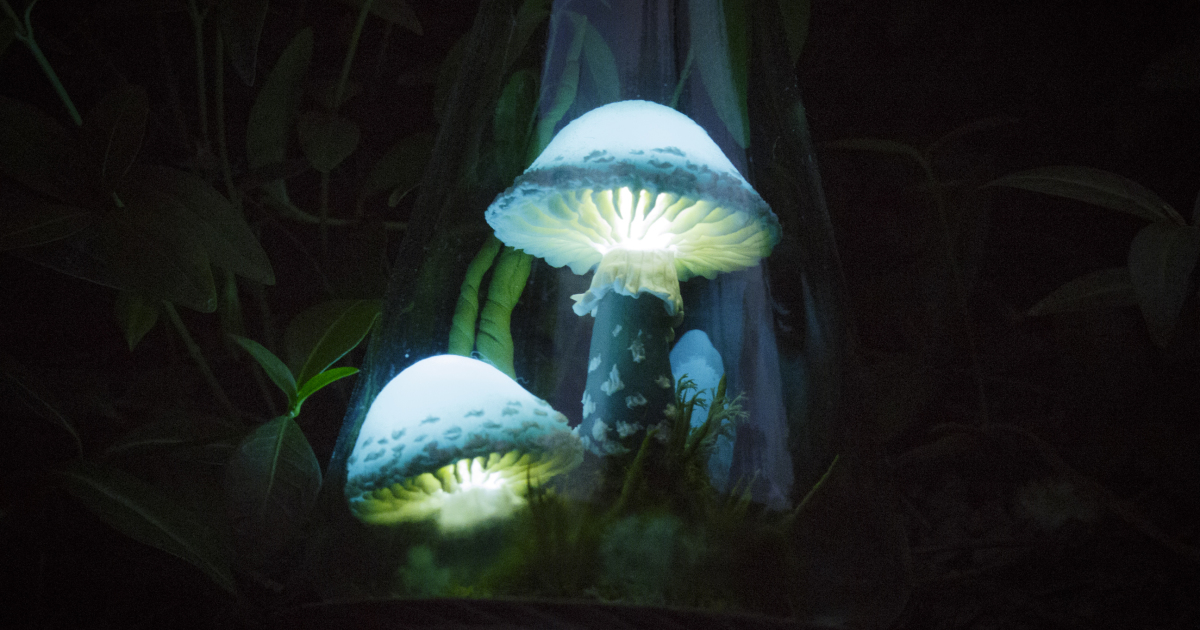
Somewhere between a fairy tale, a science lab, and a damp log that nobody noticed until midnight, there are mushrooms that glow in the dark. Not metaphorically. Not because someone sprinkled craft glitter on them after too much coffee. Real mushrooms. Real light. Real forest-floor wizardry.
Glowing mushrooms made of pure magic may sound like the title of a children’s fantasy book, but bioluminescent fungi are very much part of the natural world. They have been found in tropical forests, temperate woodlands, decaying tree trunks, humid valleys, and even in places where a nighttime walk can suddenly feel like stepping into an enchanted video game. Their light is usually soft, greenish, and strangely calmthe kind of glow that makes you lower your voice even if nobody told you to.
Of course, the “magic” has chemistry behind it. These mushrooms shine because of bioluminescence, a process in which living organisms produce visible light through internal chemical reactions. Fireflies do it. Some deep-sea creatures do it. Certain bacteria do it. And yes, some fungi do it too, proving once again that nature never runs out of party tricks.
What Are Glowing Mushrooms?
Glowing mushrooms are fungi capable of producing their own light. Scientists often call this phenomenon fungal bioluminescence. The glow can appear in the mushroom cap, gills, stem, mycelium, or the decaying wood where the fungus is growing. To the human eye, the color is often green, blue-green, or yellow-green, depending on the species and viewing conditions.
The most famous glowing fungi include jack-o’-lantern mushrooms, bitter oyster mushrooms, ghost fungi, and several species from the genus Mycena. Some are small and delicate, like tiny lampshades built for forest elves. Others grow in clusters on wood and look ordinary in daylight, only to reveal their secret identity after dark. Basically, they are the superheroes of the mushroom world, except their cape is a rotting log.
Bioluminescent Fungi vs. Glow-in-the-Dark Decorations
It is important to separate true bioluminescent mushrooms from glow-in-the-dark décor. A plastic mushroom garden stake absorbs light and releases it later through phosphorescence. A real glowing mushroom produces light through a living chemical reaction. That difference matters. One belongs in a novelty aisle. The other belongs in a rainforest, a mycology journal, and possibly a poem written by someone wearing hiking boots.
Real bioluminescent fungi do not need batteries, paint, or hidden LEDs. They need the right biology, the right chemistry, enough moisture, oxygen, and a suitable habitat. That is why glowing mushrooms often appear on damp deadwood or in humid forests where fungal life is busy recycling fallen trees into soil.
The Science Behind the “Magic” Glow
The glow of bioluminescent mushrooms comes from a reaction involving luciferin, a light-producing molecule, and luciferase, an enzyme that helps trigger the reaction. In fungi, research has shown that a compound called 3-hydroxyhispidin acts as the fungal luciferin. When it reacts with oxygen through the mushroom’s biochemical pathway, light is released.
That may sound less romantic than “enchanted moon dust,” but the chemistry is arguably more impressive. The mushroom does not merely reflect light. It manufactures a gentle glow from within. The result is cold light, meaning very little energy is wasted as heat. A glowing mushroom will not warm your hands, toast your marshmallows, or help you find your keys unless your keys are very close and you are extremely patient.
Scientists have also found that the fungal glow can be part of a repeating biochemical cycle. Certain enzymes convert natural compounds into luciferin, the luciferin emits light during oxidation, and related molecules can be recycled back into the pathway. In simpler terms, the mushroom has its own tiny light factory. No extension cord required.
Why Do Some Mushrooms Glow?
For years, researchers wondered why fungi would spend energy making light. Mushrooms do not need to impress dates with mood lighting. They do not host tiny forest dinner parties, as far as science currently knows. So what is the point?
One major theory is that glowing mushrooms use light to attract insects and other small animals that can help spread fungal spores. Spores are how many fungi reproduce and colonize new places. Since mushrooms cannot walk over to a better log and say, “Excuse me, I’ll be decomposing here now,” they rely on wind, water, insects, and animals to help move their spores around.
Studies on species such as Neonothopanus gardneri, a glowing mushroom from Brazil, suggest that bioluminescence can attract nighttime insects. Some research has also shown that the glow may follow a circadian rhythm, meaning the mushroom’s light production increases at night when it is most useful. That is not just magical. That is scheduling. The mushroom basically has a calendar reminder that says: “Glow after sunset. Bring bugs.”
Where Glowing Mushrooms Grow
Bioluminescent fungi are found in different parts of the world, especially in moist forests where deadwood is abundant. Tropical regions are especially famous for glowing mushrooms because warmth and humidity create excellent conditions for fungal growth. Brazil’s Atlantic Forest, parts of Southeast Asia, Japan, Australia, and other biodiverse regions have all produced remarkable glowing fungi records.
But you do not always need a passport to appreciate the idea. North America has its own glowing fungi, including the jack-o’-lantern mushroom and certain populations of Panellus stipticus, commonly called bitter oyster or luminescent panellus. These fungi can grow on decaying hardwood, especially in damp woodland environments.
Foxfire: The Old Forest Glow
Long before modern chemistry explained fungal bioluminescence, people noticed eerie glowing wood in forests. This phenomenon is often called foxfire or fairy fire. It happens when bioluminescent fungi grow through decaying wood, causing the wood itself to appear faintly illuminated.
Imagine walking through a dark forest and seeing a fallen branch glowing like it has been quietly plugged into another dimension. It is easy to understand why old stories connected foxfire with spirits, fairies, ghosts, and other supernatural possibilities. Before microscopes and molecular biology, “tiny fungus chemistry” was probably not the first explanation that came to mind.
Famous Types of Glowing Mushrooms
Jack-o’-Lantern Mushrooms
Jack-o’-lantern mushrooms are among the best-known bioluminescent fungi in North America. They are bright orange, grow in clusters, and can glow from their gills. Their name is charming, seasonal, and slightly misleading if it makes anyone think they are friendly snacks. They are not.
Jack-o’-lantern mushrooms are poisonous and are sometimes confused with edible chanterelles. That confusion is risky because the two can share orange coloring. A useful warning for any mushroom lover: glowing does not mean edible. In fact, “it glows in the dark” should probably move a mushroom into the “admire respectfully” category, not the “throw it in butter” category.
Panellus Stipticus
Panellus stipticus, often called bitter oyster, is a small shelf-like mushroom that grows on deadwood. By day, it may look modest, beige, and easy to miss. At night, some North American strains can glow softly from their gills. Its common name gives away another clue: bitter. This is not a gourmet mushroom waiting for a cooking show debut. It is more of a woodland lantern with a bad attitude toward taste buds.
Mycena Species
Many glowing mushrooms belong to the genus Mycena, a group known for small, delicate mushrooms with thin stems and caps. Some species look almost fragile enough to be made of glass. In dark, humid forests, glowing Mycena mushrooms can appear like tiny green lamps scattered across bark and leaf litter.
Several new bioluminescent Mycena species have been documented in highly biodiverse regions. This is one reason fungal research remains so exciting: there are still species waiting to be described, named, photographed, and properly admired by people who enjoy saying, “Look, science found another glowing forest goblet.”
Are Glowing Mushrooms Rare?
They are uncommon in everyday experience, but not mythical. More than a hundred species of bioluminescent fungi have been reported worldwide, though estimates vary as researchers continue studying fungal biodiversity. The challenge is that glowing mushrooms are easy to miss. Many are small, seasonal, and visible only under the right conditions. Some glow faintly enough that your eyes need time to adjust to darkness before you can see them.
There is also the simple issue of timing. A glowing mushroom is not going to send you a calendar invitation. You need moisture, darkness, the right habitat, the right season, and a willingness to look carefully at logs without feeling ridiculous. The forest rewards patient weirdos. That may be one of its finest qualities.
How to See Glowing Mushrooms Safely
If you want to experience glowing mushrooms, the first rule is simple: look, do not snack. Many wild mushrooms are difficult to identify, and some poisonous species resemble edible ones. Bioluminescent mushrooms should be treated as natural wonders, not ingredients.
The best chance of seeing fungal glow is usually after wet weather in a humid forest with plenty of decaying wood. Go after sunset, bring a reliable flashlight for walking safely, and then turn it off only when you are standing still in a safe place. Give your eyes several minutes to adjust. Fungal bioluminescence can be subtle, and a bright phone screen can ruin your night vision faster than you can say, “Wait, was that log glowing?”
It is also smart to stay on trails, avoid damaging mushrooms or logs, and follow local rules in parks or protected areas. Fungi play an important ecological role by decomposing organic matter and returning nutrients to the soil. In other words, that glowing mushroom is not just a pretty nightlight. It is part of the forest’s cleanup crew.
The Ecological Role of Glowing Fungi
Fungi are some of nature’s great recyclers. Many glowing mushrooms grow on deadwood, helping break down tough plant material and return nutrients to the ecosystem. Without fungi, forests would be buried under a dramatic amount of fallen branches, dead trunks, and leaf litter. Fungi are the quiet workers turning yesterday’s tree into tomorrow’s soil.
Bioluminescent fungi add another layer of fascination because their light may influence relationships with insects and other organisms. If the glow attracts insects, and those insects help carry spores, then fungal light becomes part of a reproductive strategy. The mushroom is not glowing for our Instagram feed. It is glowing because evolution may have found a practical use for beauty.
That is the wonderful contradiction of glowing mushrooms: they look unreal, but their glow may be deeply functional. Nature often does that. It creates something useful and accidentally makes it look like it belongs on the cover of a fantasy novel.
Glowing Mushrooms and Human Imagination
Humans have always been drawn to light in darkness. Campfires, candles, stars, lanterns, city windows, fireflies, and glowing mushrooms all tug on the same emotional thread. We see light in a dark place and immediately feel curiosity, comfort, mystery, or all three at once.
That is why glowing mushrooms appear so often in fantasy art, video games, children’s books, and dreamlike photography. They suggest secret paths, hidden kingdoms, ancient forests, and slightly suspicious fairies with excellent interior design taste. A cluster of glowing mushrooms instantly tells the viewer, “You have entered somewhere unusual. Please keep your hands inside the magical vehicle.”
The Aesthetic Power of the Forest Glow
From an artistic perspective, glowing mushrooms work because they combine contrast and surprise. Mushrooms are usually associated with dampness, decay, and earthiness. Light is associated with energy, guidance, and wonder. Put them together and you get a visual paradox: decay that shines, darkness that blooms, the forest floor behaving like a sky full of tiny green stars.
This is why the phrase “glowing mushrooms made of pure magic” feels emotionally true, even though the glow is biochemical. The magic is not the absence of science. The magic is that science can produce something so elegant, strange, and tender.
From Forest Magic to Biotech Inspiration
Fungal bioluminescence is not only beautiful; it has inspired modern biotechnology. Researchers have studied the fungal glow pathway to understand how organisms can produce light continuously. This knowledge has helped scientists explore glowing plants, biosensors, and imaging tools that could make biological processes easier to observe.
One of the most public examples is the development of bioluminescent petunias using genes related to fungal light production. These plants are designed to emit a soft glow without needing external chemicals or ultraviolet charging. For many people, the idea of a glowing flower feels like science fiction that escaped the lab and moved into a flowerpot.
Still, glowing gardens will not replace streetlights anytime soon. Biological light is often gentle, not blazing. It is better suited to wonder, research, design, and specialized uses than lighting up a parking lot. But as a glimpse of what biotechnology can do, it is undeniably captivating. A glowing petunia is basically a polite houseplant saying, “The future is weird, but tasteful.”
Myths, Misunderstandings, and Mushroom Safety
Because glowing mushrooms look magical, they attract myths. Some people assume bioluminescent fungi must be extremely rare, toxic by default, edible because they are natural, or supernatural because they look like props from a wizard’s pantry. The truth is more nuanced.
Some glowing mushrooms are poisonous. Some are not known to be dangerously toxic but still are not considered food. Some glow brightly enough to photograph with careful technique; others glow so faintly that you may wonder whether your eyes are playing tricks. Identification can require expert knowledge, microscopy, and attention to habitat, gill structure, spore print, and other details.
The safest approach is to admire wild glowing mushrooms without touching, picking, or eating them. Take photos if conditions allow. Bring a mycology guide or join a local mushroom club if you want to learn more. The forest is generous with wonder, but it expects you to bring common sense.
Why Glowing Mushrooms Feel Like Pure Magic
Glowing mushrooms feel magical because they break an everyday rule we carry in our heads: plants and fungi do not act like lamps. We expect light from the sky, from fire, from screens, from bulbs, and from the occasional lightning bug drifting through a summer yard. We do not expect a mushroom on a log to glow like it has a tiny emerald soul.
But that is the joy of the natural world. It keeps reminding us that our expectations are too small. Mushrooms can glow. Wood can shimmer. Chemistry can look like folklore. A dark forest can hold quiet lights that ask for nothing except attention.
In a world overflowing with artificial brightness, bioluminescent fungi offer a different kind of illumination. They are not loud. They do not flash advertisements. They do not demand that you update their software. They simply glow, softly and briefly, doing whatever fungi need to do while humans stand nearby whispering, “That is absolutely unreal.”
Experience: A Night Walk With Glowing Mushrooms
The first time you imagine seeing glowing mushrooms, you might picture a cinematic scene: mist curling between trees, moonlight dripping through branches, and a perfect ring of emerald mushrooms waiting beside a mossy stone. Real life, naturally, is less organized. It usually involves mud, mosquitoes, a flashlight with questionable battery life, and at least one moment where you ask yourself why you are staring at a log in the dark like it owes you money.
But then your eyes adjust.
At first, nothing happens. The forest looks black and layered, full of shapes that may be branches or may be your imagination auditioning for a horror movie. You turn off the flashlight. You stand still. The loudest sound is your own jacket moving. Then, slowly, a faint green glow appears along a piece of deadwood. It is not bright like a neon sign. It is softer than that, almost shy. You lean closer, careful not to step on anything living, and the glow becomes clearer.
That is the strange beauty of bioluminescent fungi: they make you slow down. You cannot rush them. You cannot scroll past them. You have to let darkness do its work before the light reveals itself. In that way, glowing mushrooms feel like a tiny lesson in attention. The forest does not shout, “Look at me!” It whispers, “Are you still watching?”
Standing near glowing fungi also changes how you think about decay. A fallen log can look lifeless in daylight, but at night it may become a glowing ecosystem. Inside and around it, fungi are digesting wood, insects are moving, moisture is gathering, and nutrients are slowly cycling back into the soil. The glow makes invisible work visible. It turns decomposition into a light show, which is both scientifically accurate and emotionally rude. Who gave rot permission to be beautiful?
For photographers and nature lovers, glowing mushrooms can be both thrilling and humbling. They are difficult to capture because the light is faint. Long exposures, tripods, and very dark conditions help, but the best experience may still be the one your camera cannot fully keep. A photograph can show the glow, but it rarely captures the quiet feeling of being there: the damp smell of leaves, the hush of the woods, the careful excitement of realizing the ground has secrets.
There is also a charming comedy to the whole adventure. You may spend an hour searching and find nothing but ordinary bark. You may mistake a reflective beetle for fungal magic. You may discover that your “mystical forest shoes” are not waterproof. Yet the possibility of seeing a living thing make its own light keeps the search exciting. Glowing mushrooms turn a walk in the woods into a treasure hunt where the treasure is not gold, but a fungus behaving like a tiny lantern.
The experience is not about collecting or conquering nature. It is about witnessing. The best thing to do is leave the mushrooms exactly where they are, glowing in peace, continuing their quiet fungal business. Let them keep their mystery. Let the insects find them. Let the log become soil. Let the forest have its nightlights.
And when you walk away, flashlight back on, shoes muddy, hair possibly decorated with spiderwebs, you carry a small new knowledge with you: magic does not always need castles, dragons, or dramatic background music. Sometimes it grows on deadwood after rain, glows green in the dark, and reminds you that the world is much strangerand much more delightfulthan it first appears.
Conclusion
Glowing mushrooms made of pure magic are not imaginary, even if they look like they were designed by a fantasy illustrator with a biology degree. They are real bioluminescent fungi powered by elegant chemical reactions, shaped by evolution, and woven into forest ecosystems as decomposers, spore producers, and possible insect attractors.
Their glow teaches us that science and wonder are not opposites. Understanding luciferin, luciferase, oxygen, enzymes, and fungal pathways does not make the experience less magical. It makes it more astonishing. A mushroom that glows is beautiful. A mushroom that glows because of a finely tuned biochemical system inside a living organism is almost unfairly impressive.
Whether you meet them through research, photography, a night hike, a nature documentary, or the growing world of bioluminescent design, glowing mushrooms invite the same response: slow down, look closer, and let the forest surprise you.











