Some places announce themselves with marble foyers, velvet ropes, and a host stand that appears to be judging your shoes. Rory’s Other Place in Ojai, California, takes a friendlier route. It welcomes visitors with handmade details, market shelves, excellent coffee, colorful food, and soft serve that has developed the sort of following usually reserved for rock bands and sourdough starters.
Located on Ojai Avenue beside its evening sibling, Rory’s Place, this daytime cafe and provisions shop feels less like a spinoff than a wonderfully independent younger sister. It has its own rhythm, playful design language, and simple proposition: happiness can be assembled from small, well-made things. A warm pastry helps. So does a good sandwich. A beautifully imperfect mug does more emotional heavy lifting than it receives credit for.
A Bright Second Chapter Born From a Difficult Moment
Rory’s Other Place emerged during an unexpectedly hard chapter for sisters Rory and Meave McAuliffe. Their original restaurant, Rory’s Place, had become an Ojai favorite for seasonal California cooking, seafood, live-fire dishes, natural wine, and an atmosphere that was stylish without behaving as though it knew it. Then a fire damaged the restaurant in late December 2023 and forced it to close temporarily.
Rather than disappear while repairs moved forward, the team expanded into the neighboring space, formerly occupied by a longtime gourmet deli. The result was Rory’s Other Place: an all-day cafe, neighborhood market, provisions counter, and cheerful holding pattern that quickly became a destination in its own right.
The original restaurant eventually reopened, but the “other” place remained. That survival story gives the cafe a deeper personality. It is not merely a polished concept developed on a branding spreadsheet. It is a practical and creative response to disruption.
Why the Origin Story Changes the Mood
Hospitality is often described as effortless, though anyone who has carried twelve plates through a crowded dining room knows that “effortless” is a charming lie. At Rory’s Other Place, the ease comes from resilience made visible. The cafe feels optimistic because it was built while the owners and staff were solving a real problem. It quietly says, “We are still here, and we made snacks.”
That spirit fits Ojai. The small valley city has long attracted farmers, artists, craftspeople, seekers, weekend escapees, and people who own at least one hat with a very serious brim. Its food culture is closely connected to citrus groves, ranches, local markets, nearby fisheries, and a community that notices where ingredients come from. Rory’s Other Place turns those regional values into an appealing daily ritual.
California Cafe Design With a Handmade Pulse
The design of Rory’s Other Place is one of its strongest ingredients, and fortunately it contains no gluten. Rory McAuliffe collaborated with Winston Morris and Ted Christensen of Dusk.Co, whose custom contributions include woodwork, a concrete bar facade, stone tables, shelving, and banquette seating.
The space is earthy but not beige into submission. Dark wood and substantial materials are balanced by flashes of red, quirky graphics, ceramics, and a sense of humor. It feels collected rather than installed. Surfaces show the hands of their makers, and decorative choices reward anyone who looks up, down, or sideways instead of staring exclusively at a phone.
Details That Turn Customers Into Amateur Detectives
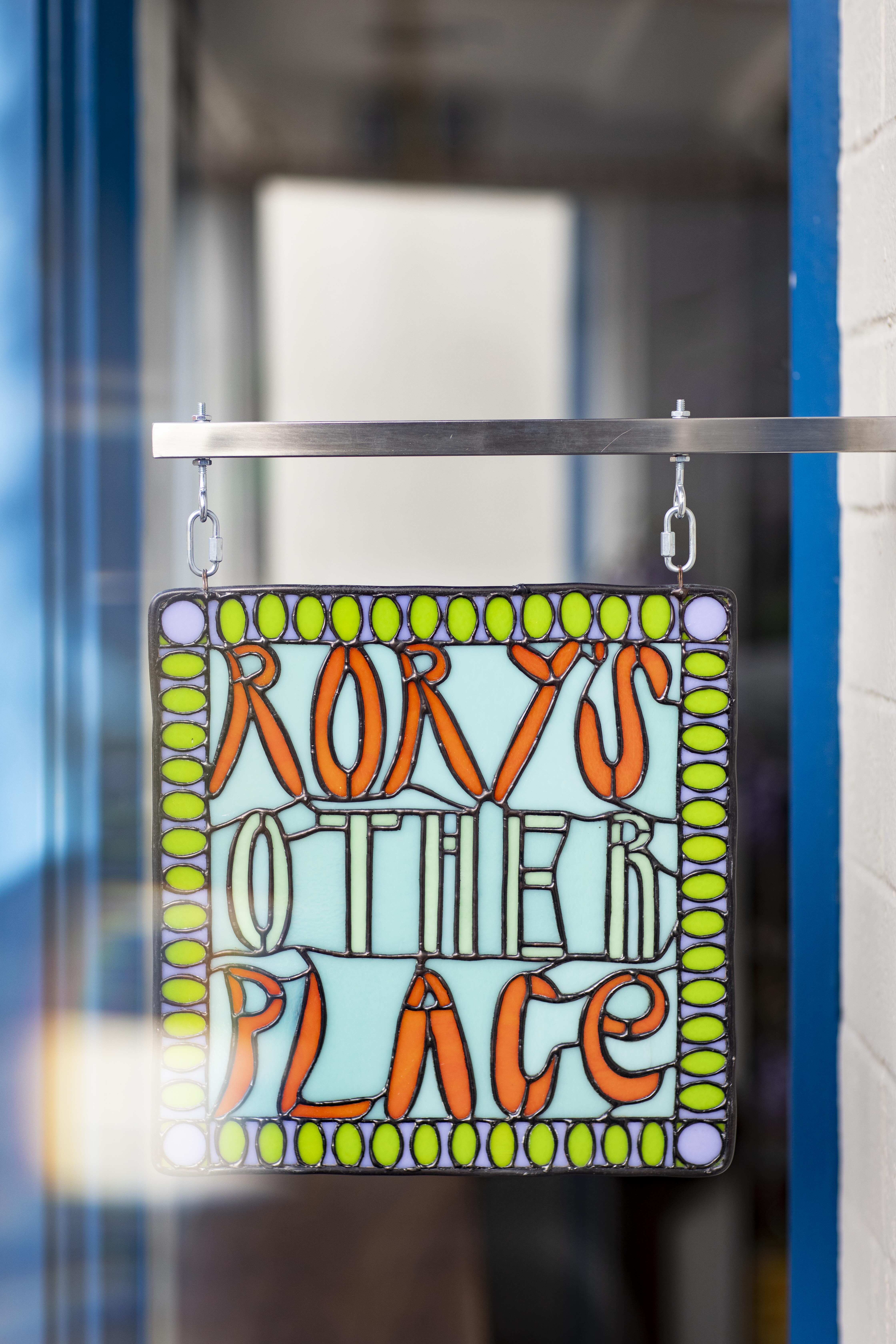
A stained-glass sign by Sophia Bellini gives the storefront an artisanal identity before the first sip of coffee. Inside, an upside-down soft-serve cone becomes a light fixture, because ordinary pendant lamps apparently were not having enough fun.
Red mugs created by ceramicist Phill Kim add warmth to the drinking experience. Broken handmade ceramic pieces incorporated near the entrance make the floor itself part of the story, while plates made by chef Meave McAuliffe add another layer of intimacy. Whimsical fruit-and-vegetable signage reinforces the provisions-shop character.
The message is consistent: food, craft, and design are not separate departments. They are collaborators. A shelf of pantry goods can be useful and attractive. A mug can be both equipment and sculpture. A floor can quietly tell a joke.
Why Imperfection Feels So Good Here
Handmade objects introduce tiny variations that mass-produced environments usually eliminate. The rim of one ceramic cup may differ slightly from the next. Wood grain changes from panel to panel. Concrete has texture. These are not flaws waiting for a manager; they are evidence that people made the place.
This is a major reason the cafe feels happy rather than merely photogenic. Perfect spaces can make visitors nervous. They whisper, “Do not move the chair.” Rory’s Other Place suggests the opposite: sit down, order something, break into the pastry, and let a few crumbs experience freedom.
What to Eat and Drink at Rory’s Other Place
The menu operates in the sweet spot between neighborhood usefulness and destination-worthy pleasure. Depending on the day and season, visitors may find breakfast pastries, scones, granola, breakfast burritos, salads, quiche, carefully constructed sandwiches, charcuterie, cheese boards, and produce-driven specials.
The provisions side extends the experience with wine, pantry items, tinned seafood, local produce, and picnic-friendly food. It is dangerously easy to walk in for a cappuccino and leave carrying orange wine, cheese, sardines, and an entirely unplanned outdoor lunch.
Coffee is treated seriously but not solemnly. Espresso drinks share the menu with cold brew, tea, matcha, chai, citrusy refreshers, shrubs, and sparkling beverages. Wine is also central to the identity, particularly thoughtfully selected natural wines from New World and Old World producers.
Breakfast That Understands the Assignment
Rory’s Other Place works especially well in the morning, when Ojai is still stretching and the valley light makes everyone believe they might finally become a person who journals. A tender scone, substantial breakfast burrito, or granola bowl with fruit offers enough comfort to count as breakfast and enough character to feel like travel.
The appeal is not excess. It is attention. Good pastry should be crisp where it needs to be crisp, soft where it needs to be soft, and generous enough to leave a few flakes on your shirt. A breakfast burrito should be balanced rather than shaped like a sleeping bag. The cafe’s strongest dishes appear to understand the distinction.
Lunch, Provisions, and the Picnic Possibility
At lunch, sandwiches and salads become the practical stars. A well-made tuna conserva sandwich, for example, suits the cafe’s coastal California character: savory, bright, portable, and far more interesting than the emergency snack hiding in your car.
Quiche, crudites, cheeses, charcuterie, and seasonal produce can turn a casual stop into a complete picnic kit. This dual identity matters. Rory’s Other Place is not only somewhere to sit; it is somewhere to gather supplies for the next part of the day, whether that means a downtown bench, a shaded patio, a valley drive, or a quiet afternoon with a book.
The Soft Serve Has Main-Character Energy
Then there is the soft serve. Buffalo milk vanilla bean and malted chocolate have been among the flavors associated with the cafe, sometimes twisted together into the kind of cone that causes adults to stop speaking for thirty seconds.
Buffalo milk contributes richness while soft serve keeps the mood relaxed. This is not a plated dessert requiring a diagram. It is joyful, immediate, and structurally vulnerable to warm weather.
The upside-down cone light fixture now makes perfect sense. Soft serve is not an afterthought here. It is part dessert, part design mascot, and part proof that sophisticated taste does not require abandoning childhood pleasures.
How Rory’s Other Place Captures the Ojai Spirit
Ojai is often marketed through sunsets, mountains, citrus groves, wellness retreats, and the famous pink glow that can wash across the Topatopa Mountains. Those images are real, but the city’s appeal also lives in ordinary social spaces: farmers markets, coffee counters, independent bookstores, patios, and restaurants where local growers are known by name.
Rory’s Other Place belongs to this less dramatic and more durable version of Ojai. It translates the valley’s agricultural abundance into food without turning every radish into a press release. Local produce appears because it tastes good and because relationships with farmers matter. Bottles and provisions feel selected rather than accumulated. The cafe presents California living as participation, not scenery.
A Small Business That Feels Genuinely Local
Ojai’s downtown has remained unusually independent, with locally owned businesses giving its central streets much of their personality. Rory’s Other Place contributes to that ecosystem by filling a useful daytime role while supporting makers, producers, and hospitality jobs.
It also complements the evening restaurant next door: coffee and breakfast first, oysters and dinner later, with enough time between them to pretend you went hiking.
The sisters’ backgrounds help explain the warmth. Rory and Meave grew up around their mother’s bakery in Santa Monica, and their work draws on that early experience as well as Ojai’s network of farmers, ranchers, foragers, and fishers. Their complementary talentsMeave leading the culinary side and Rory shaping wine, design, and hospitalitycreate a place where the food and room speak the same language.
Happiness Is a System of Small Decisions
The title “Happiness in Ojai” is not merely decorative optimism. The cafe demonstrates how pleasant places are built: one thoughtful decision at a time. Choose a cup that feels good in the hand. Make the sign memorable. Buy from people nearby. Offer breakfast that respects hunger. Let the room be beautiful but not precious.
None of these choices is enormous. Together, they create belonging. That may be the real luxury of Rory’s Other Place. It makes visitors feel as though they have discovered something special while allowing regulars to use it as part of everyday life.
A 500-Word Experience: One Happy Morning at Rory’s Other Place
Begin early enough that downtown Ojai still feels half-awake. The sidewalks are quiet, the air is cooler, and the mountains sit around the valley like patient chaperones. Walk along Ojai Avenue without rushing. This is important. Speed-walking toward relaxation is one of modern life’s better jokes.
When you reach Rory’s Other Place, pause outside and look at the stained-glass sign. The storefront gives you a preview of what is coming: serious craft with an unserious grin. Step inside and resist the reflex to order immediately.
First, notice how the dark wood grounds the room, how concrete and stone add texture, and how the red ceramics brighten everything. Look for the soft-serve-cone light hanging upside down. It is difficult to remain dramatically stressed beneath an illuminated ice cream cone.
Order coffee according to your actual personality, not the personality you hoped to develop during the drive. Choose espresso for focus, a latte for comfort, matcha for grassy optimism, or a cold drink if the Ojai sun is already making decisions on your behalf.
Pair it with a pastry or breakfast item. A blueberry scone is a strong choice when available: familiar, generous, and ideally messy enough to mark your table territory with crumbs.
Choose a seat where you can observe the cafe without turning the morning into surveillance. Hold the handmade mug and notice its small irregularities. Watch regulars greet staff, travelers inspect the provisions shelves, and someone inevitably debate whether 9:15 a.m. is too early to buy wine. In a vacation town, the answer is usually “not if it is for later,” a phrase with excellent legal and emotional flexibility.
After breakfast, browse the market section. Look at the natural wines, tinned seafood, produce, and picnic-ready items. Instead of treating shopping as an Olympic event, choose one or two things that will extend the experience. A bottle for dinner, cheese for a picnic, or a sandwich for the road is enough. Happiness becomes less convincing when it requires six tote bags.
Next, walk through downtown. Visit an independent shop or browse at Bart’s Books, Ojai’s celebrated outdoor bookstore. Let the morning expand naturally. You could continue to a farmers market when schedules align, take an easy walk, or find a shaded place to read. The point is not to conquer Ojai before lunch. The point is to inhabit it.
Return to Rory’s Other Place later for lunch or soft serve. A sandwich gives the day structure; a twist of buffalo milk vanilla bean and malted chocolate gives it a finale. Take the cone outside and accept that it may melt faster than your dignity can manage. Eat decisively.
By then, the cafe’s central lesson becomes clear. The happiest travel experiences are often not grand events. They are sequences: morning light, a good cup, a handmade object, a friendly room, something delicious, and enough time to notice all of it. Rory’s Other Place does not manufacture happiness. It arranges favorable conditions and lets you handle the rest.
Conclusion: The “Other” Place That Became Essential
Rory’s Other Place began as a creative answer to a crisis, but it grew into something more enduring: an Ojai cafe that makes resilience taste like coffee, seasonal lunch, natural wine, and excellent soft serve. Its custom woodwork, concrete surfaces, handmade ceramics, playful signage, and provisions shelves create a room with depth rather than decoration for decoration’s sake.
Most importantly, the cafe understands that hospitality is not about showing guests how stylish a business can be. It is about making style useful. A beautiful counter should help serve lunch. A charming market should help assemble a picnic. A memorable cup should hold very good coffee.
Rory’s Other Place succeeds because every delightful detail eventually leads back to eating, drinking, gathering, and feeling welcome. In a town already famous for restorative scenery, it offers another form of Ojai happinessone served in a handmade mug, wrapped in sandwich paper, or melting cheerfully down the side of a cone.