
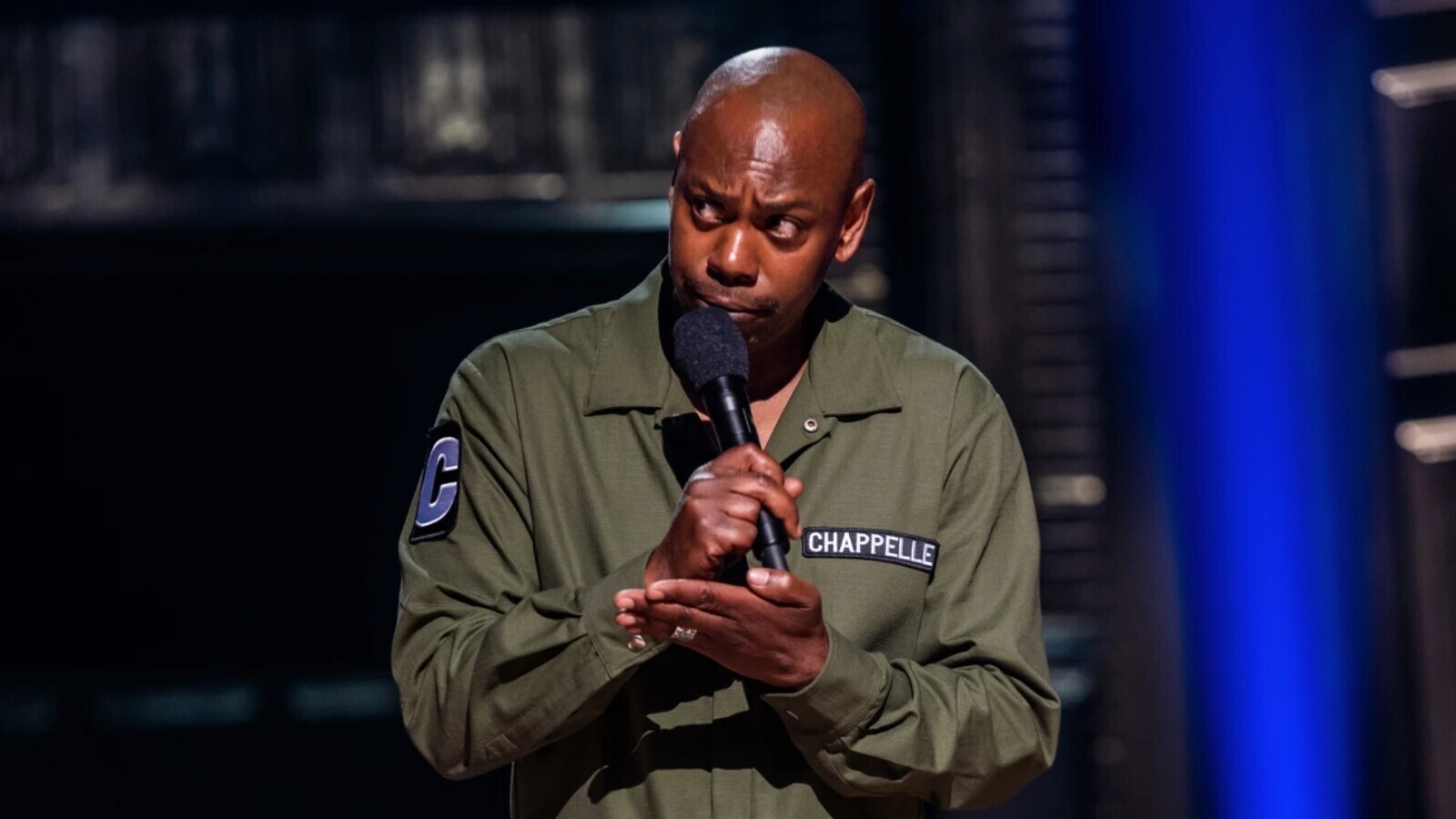
There are bad comedy nights, and then there are nights that feel like the universe personally tripped over the microphone cable. Dave Chappelle’s December 2025 stop in Edmonton appears to have landed in the second category. What should have been a high-profile arena comedy event at Rogers Place reportedly turned into a noisy, sweaty, stop-and-start mess, with hecklers, technical complaints, and even a crowd scuffle helping turn the evening into a cautionary tale about what happens when a live show loses control of the room.
That is why the phrase “Hecklers may have just chased Dave Chappelle out of Edmonton forever” stuck. It is dramatic, sure. It is also the kind of dramatic that comedy fans understand immediately. One terrible room can haunt a comic longer than a glowing review. And when the comic is Dave Chappelle, a performer whose style depends on timing, control, silence, and the occasional perfectly placed pause, a chaotic audience is not just annoying. It is sabotage wearing event wristbands.
This article looks at what reportedly happened in Edmonton, why the moment mattered beyond one ugly night, and what the whole fiasco says about Chappelle, modern live comedy, audience behavior, and the increasingly fragile contract between performer and crowd. Spoiler alert: when thousands of people buy tickets to hear a comedian speak, letting the comedian speak is still a surprisingly strong strategy.
What Actually Happened in Edmonton?
By the accounts that circulated after the show, Chappelle’s Edmonton performance unraveled for several reasons at once. That combination matters. A comedy show can survive one drunk guy. It can survive a weak opener. It can even survive weird acoustics if the audience is patient. But stack heckling on top of sound issues, sprinkle in venue discomfort, and add a little crowd aggression, and suddenly the whole night starts wobbling like a folding chair on gravel.
Hecklers, Noise, and a Comedy Show That Lost Its Shape
Multiple post-show reports described an audience that would not settle down. Some attendees reportedly yelled because they could not hear parts of the set. Others, apparently inspired by the old and terrible idea that buying a ticket also buys partial ownership of the stage, kept shouting anyway. Several reactions shared after the event painted the same picture: Chappelle repeatedly had to stop, address the room, and acknowledge how little time remained because the crowd would not let the set breathe.
That matters because Dave Chappelle live is not simply a comedian reading punchlines off an invisible teleprompter in the sky. He works rhythm. He works reaction. He stretches tension. He leans on silence the way some musicians lean on bass. When the room becomes a shouting match, his style cannot function the way it is built to function. A Chappelle set in a broken room is like a Ferrari in bumper-to-bumper traffic: still expensive, still famous, and absolutely not doing what it was made to do.
Reports also suggested that sound quality issues aggravated the audience mood early. That is the worst kind of venue problem because it turns regular ticket buyers into frustrated amateur acoustics consultants. Once people start yelling “we can’t hear,” the atmosphere shifts from performance to complaint desk. At that point, the comedian is not just doing material anymore. He is trying to out-funny a building.
When One Bad Night Becomes a City-Wide Reputation Problem
What made the Edmonton story stand out was not merely that the show stumbled. It was the reaction afterward. Instead of defending the city or brushing off the chaos as one weird night, many people publicly described the crowd as embarrassing. That is how a rough performance becomes a reputation story. Suddenly, the discussion is not “Did Chappelle have a bad set?” It becomes “Did Edmonton prove it cannot handle a major comedy event?”
That distinction is huge. Comics remember cities. Touring teams remember buildings. Promoters remember difficult rooms. Nobody wants a stop on the calendar that feels like a gamble. Even if Chappelle never publicly says, “I am done with Edmonton,” the audience narrative after the show did the damage all by itself. Once enough people start saying, “He is never coming back,” the city gets branded as a place where the crowd fumbled the privilege of a big event.
To be fair, the word forever is likely rhetorical. Entertainment history is full of people swearing they will never return somewhere and then reappearing the moment time, money, or curiosity smooths over old feelings. But emotionally? In the short term? It is not hard to imagine Chappelle looking at Edmonton the way a cat looks at a bathtub.
Why This Night Hit Harder Than a Typical Comedy Mishap
Not every disrupted show becomes a headline. This one did because Chappelle is not just another touring comic. He is one of the biggest stand-up names in America, a performer who still draws massive interest, heated debate, premium ticket demand, and serious cultural attention every time he steps onstage.
Dave Chappelle Is Still a Giant, Even When He Divides the Room
Over the last several years, Chappelle has occupied a strange but powerful place in comedy. He remains commercially enormous, culturally influential, and critically impossible to ignore. At the same time, he has drawn repeated backlash, especially over material about transgender people in specials like The Closer and The Dreamer. The criticism has not been minor. It has triggered protests, employee walkouts, venue controversy, and intense press scrutiny.
And yet the other half of the story is just as real: Chappelle continues to sell tickets, land major specials, win awards, and command attention in a way most comics would mortgage a lake house to achieve. That paradox is central to understanding Edmonton. This was not the collapse of a fading performer. It was the derailing of a still-major act. The gap between expectation and outcome made the failure feel bigger.
In other words, fans did not show up expecting a curious nostalgia act. They showed up to see a comedy heavyweight. When a heavyweight gets drowned out by audience noise, the story becomes part spectacle, part civic self-own.
Live Comedy Is Much More Fragile Than People Think
People often talk about stand-up as if it is casual. One person, one mic, maybe a stool if the comedian wants to look philosophically exhausted. But the art form is far more delicate than it looks. Good stand-up relies on a shared social agreement: the comic leads, the audience reacts, and nobody tries to become the surprise co-headliner after three beers and a half-eaten pretzel.
Arena comedy makes that even trickier. The larger the room, the harder it is to maintain intimacy. Bad acoustics become worse. Small disruptions multiply. One loud voice can trigger another, and then another, until the room starts behaving less like an audience and more like a malfunctioning group chat. That seems to be what made Edmonton such a mess. The venue was big, the expectations were high, and once the night started slipping, the crowd apparently helped push it downhill.
The Dave Chappelle Context You Cannot Ignore
Any serious article about Dave Chappelle Edmonton also has to address the broader backdrop. Chappelle has been one of the most talked-about comedians of the last decade not only because of his talent, but because of the culture wars that now trail his work like an expensive, controversial fog machine.
From “The Closer” to “The Dreamer”
The Closer sparked a major backlash when it premiered, especially over jokes and remarks about transgender people. Critics argued he was punching down. Supporters argued he was defending free speech and refusing ideological policing. Netflix employees and allies protested. The controversy expanded from “Was the special funny?” to “What responsibility do platforms have when a hugely popular comic targets marginalized groups?” That is no small leap. That is comedy becoming a full-blown corporate and cultural flashpoint.
Then came The Dreamer, which showed that Chappelle had no interest in retreating into safe, beige, conflict-free comedy. He remained defiant, provocative, and polarizing. The reaction followed the same split pattern: condemnation from critics and activist voices, but continued market success and strong audience interest. That is the Chappelle brand in 2025: admired, challenged, debated, and still very much in business.
So when Edmonton melted down, it fed directly into a larger story already surrounding him. Chappelle does not walk into neutral spaces. He walks into rooms charged with anticipation, loyalty, skepticism, and opinion. The audience has to be especially disciplined in that kind of environment. Based on the reporting from Edmonton, discipline packed up and left early.
He Has Dealt With Disruption Before
This is also not the first time a Chappelle performance has become more famous for the noise around it than for the jokes themselves. In 2022, he was attacked onstage at the Hollywood Bowl. That same year, a scheduled Minneapolis show was moved after venue backlash. He has also continued to spark headlines through live appearances, television spots, and awards season mentions.
That history matters because it means Edmonton did not happen in a vacuum. For Chappelle, public performance now comes with a built-in layer of volatility. Some of that volatility comes from critics. Some comes from supporters. Some comes from the weird internet-era habit of treating every live event like a chance to perform your own reaction in public. Edmonton was another reminder that comedy is no longer just comedy once fame, controversy, and social media get in the car together.
Could Edmonton Really Be Off the Tour Map?
Maybe. Maybe not. But the possibility is not silly.
Comedians are practical creatures. They go where demand exists, but they also remember where the vibe went rotten. A bad club can be forgiven if the set still works. A rough theater can be forgiven if the staff is sharp and the audience settles down. An arena where heckling, technical issues, and crowd chaos crush the flow of the show? That is much harder to romanticize later.
From a business perspective, returning only makes sense if the city can promise a better room, better production, and better crowd management. From an ego perspective, well, let us just say world-famous comedians do not typically enjoy revisiting nights where the audience made them look like substitute teachers during the last ten minutes before summer break.
So the more honest answer is this: Edmonton may not have lost Dave Chappelle forever in a literal sense, but it may have made itself a much less attractive stop. That is still a serious loss. Cities do not need to be blacklisted officially to get quietly downgraded in a star’s head.
What Fans and Venues Should Learn From the Edmonton Disaster
Audience Etiquette Is Not Optional
Let us say this clearly for the people in the cheap seats and the expensive ones: a comedy show is not an open mic for the audience. You are there to laugh, not to audition. If you cannot hear, venue staff should handle it. If you dislike a joke, you can stay quiet, leave, or complain later like a civilized modern mammal. Yelling over the performer helps no one. Not the comic. Not the people around you. Not your city’s reputation.
Venues Cannot Treat Comedy Like Just Another Booking
Big-name stand-up requires strong sound, crowd management, and quick response to disruptions. Arena comedy is especially unforgiving because every flaw gets magnified. If the sound slips, annoyance spreads. If the room gets uncomfortable, patience evaporates. If security is slow, hecklers become contagious. A venue can accidentally become a villain in the story without ever saying a word.
That is why the Edmonton story resonates beyond celebrity gossip. It is really a case study in live-event fragility. The performer matters. The material matters. But the room matters just as much. And on this night, the room seems to have face-planted.
Experiences Related to the Edmonton Blowup: What a Derailed Comedy Night Feels Like
Anyone who has sat through a live show gone sideways knows the feeling. At first, it is almost funny. A random yell gets ignored. A small technical glitch becomes part of the bit. The performer smirks, tosses off a line, and the crowd assumes the bump in the road is temporary. Then the interruptions keep coming. The comic has to stop again. The people near the heckler start turning around. The people farther away start asking each other what was said. Laughter becomes thinner. Attention splinters. The mood changes from excitement to irritation with shocking speed.
That is probably why the Edmonton story hit so hard online. Fans were not just reacting to a headline. They were reacting to a painfully recognizable live-event experience: paying premium money for something special, only to watch a minority of loud people hijack it. There is a specific kind of frustration in that. You are stuck in a seat, the ticket is already bought, and the event you came for slowly gets replaced by a social breakdown with punchlines trying to survive inside it.
There is also the strange embarrassment that comes from being part of a bad crowd even when you did nothing wrong. People often leave those nights talking as if they personally owe the performer an apology. That sounds dramatic until you have been there. When enough people in the room behave badly, everyone else gets painted with the same giant sloppy brush. That is how attendees end up posting things like “our city embarrassed itself.” They are not being theatrical. They are describing the oddly communal shame of watching a big moment get trashed in real time.
For comedians, the experience is different but just as intense. A comic can handle silence better than noise. Silence gives you room to reset. Noise steals the steering wheel. Every interruption breaks timing, and timing is the whole engine. A joke that lands in a clean room might die in a chaotic one. A thoughtful setup starts feeling too slow. A callback loses its thread. Even a veteran performer ends up spending energy managing the room instead of building momentum. That is why a bad crowd does more than “hurt feelings.” It can fundamentally alter the set.
For the better-behaved fans, a derailed show often becomes memorable for all the wrong reasons. Weeks later, they do not remember the sharpest joke. They remember the guy yelling. They remember the awkward pauses. They remember the sense that the room never recovered. Live comedy is supposed to feel shared in the best way. On a night like Edmonton, it becomes shared in the worst way: thousands of strangers participating in the same disappointment.
And yet there is a lesson in that experience. Great live comedy is not created by the comic alone. It is co-produced by the audience, the venue, and the invisible discipline of people agreeing not to make the night about themselves. When that agreement holds, a performance can feel electric. When it breaks, even a superstar can look stranded. Edmonton, by most accounts, became a master class in that difference.
Final Thoughts
The phrase “Hecklers may have just chased Dave Chappelle out of Edmonton forever” works because it captures both the absurdity and the seriousness of what reportedly happened. On one level, it is funny in a dark, eye-rolling way: imagine finally getting a superstar comic into town only to collectively behave like the audience lost a bet. On another level, it is a reminder that live comedy remains one of the most vulnerable art forms around. It can soar because of a room, and it can collapse because of one too.
Dave Chappelle will be fine. His career has weathered backlash, controversy, protest, disruption, and the strange modern economy of outrage and applause. Edmonton, however, may have created a problem for itself. Whether Chappelle returns next year, in five years, or never at all, the city now owns a story it did not want: the night it got the comedy legend and forgot how to be an audience.











