There comes a moment every holiday season when the Christmas tree stops looking magical and starts looking like it is silently judging your January laundry pile. The presents are opened, the cookies are crumbs, the dog has discovered the tree skirt, and one brave ornament is still hanging on for dear life. So, when should you take your Christmas tree down?
The clearest traditional answer is January 6, Epiphany. Many people also choose January 5, Twelfth Night, depending on how they count the Twelve Days of Christmas. But the practical answer depends on your tree type, your home, your schedule, and whether your real tree has become a crispy indoor campfire waiting for an invitation.
In simple terms: take an artificial Christmas tree down around January 5 or 6 if you follow tradition, or during the first weekend after New Year’s Day if convenience matters more. For a real Christmas tree, take it down after Christmas or as soon as it becomes dry. A dry live tree should not linger in the living room like a festive porcupine.
The Exact Best Date: January 6, With One Important Exception
If you want one date to circle on the calendar, choose January 6. This day is known as Epiphany or Three Kings Day, and it marks the traditional end of the Twelve Days of Christmas in many Christian customs. That makes it the classic day to take down the Christmas tree, pack away the ornaments, and officially tell the holiday season, “Thank you for your service.”
Some families take the tree down on January 5, known as Twelfth Night. This is the evening before Epiphany and is often treated as the final night of Christmas celebration. If your grandmother insisted decorations had to come down on Twelfth Night or bad luck would sneak in wearing slippers, this is probably the tradition she meant.
Here is the practical exception: if you have a real Christmas tree and it is dry, brittle, shedding heavily, or no longer drinking water, take it down immediately. Tradition is lovely. Fire safety is lovelier.
Why January 5 or January 6 Became the Traditional Tree-Takedown Date
The custom comes from the Twelve Days of Christmas, which begin on Christmas Day and end around Epiphany. Contrary to what shopping malls may suggest, Christmas does not historically begin the day after Halloween and collapse at midnight on December 25. In older Christian calendars, Christmas Day starts the season, and Epiphany closes it.
That is why many households keep the tree up beyond New Year’s Day. The glowing lights still feel appropriate, the house feels warm, and nobody has to face the emotional weight of putting the tiny snowman mug back in storage quite yet.
January 5: Best for Twelfth Night Traditionalists
Take the tree down on January 5 if your family follows Twelfth Night customs. This option is especially popular with people who like a clean break before Epiphany morning. It also works well if January 6 falls on a busy weekday and you would rather not wrestle a seven-foot fir into a storage bag after dinner.
January 6: Best for Epiphany Observers
Take the tree down on January 6 if you want to observe the full Christmas season. This date is easy to remember and widely recognized as the traditional finish line for holiday decorations. It is also a polite compromise between “Christmas forever!” and “Why is there still a reindeer in the hallway?”
The First Weekend After New Year’s: Best for Busy Households
For many American families, the most realistic date is the first weekend after New Year’s Day. This gives you time to enjoy the holiday glow, recover from travel, and avoid turning tree removal into a rushed weeknight crisis. If January 6 lands near that weekend, perfect. If not, aim for the closest practical day.
When to Take Down a Real Christmas Tree
A real Christmas tree has charm, fragrance, texture, and one major personality flaw: eventually, it dries out. Once that happens, the tree becomes messy and unsafe. Dry needles, brittle branches, and poor water absorption are all signs that your tree is ready to leave the building.
Most real trees look their best for several weeks when properly watered and kept away from heat sources. But the timeline varies. A tree bought early in December may not safely last until mid-January. A freshly cut tree placed in water right away may hold up beautifully through Epiphany. The tree will tell you. Unfortunately, it mostly communicates by dropping needles into your socks.
Signs Your Real Tree Needs to Come Down Now
Take your Christmas tree down immediately if the needles fall off in large amounts when touched, branches snap instead of bending, the tree has stopped taking up water, the color looks dull or gray-green, or the tree smells musty instead of fresh. Also remove it if it is leaning dramatically, blocking an exit, touching heat sources, or becoming irresistible to pets who believe ornaments are a personal challenge.
A dry tree should not be stored in the garage, leaned against the house, or left near outdoor heat sources. Once it is done, move it out safely and follow your local tree recycling instructions.
When to Take Down an Artificial Christmas Tree
An artificial Christmas tree gives you more flexibility. It will not dry out, shed needles, or turn your rug into a tiny forest floor. That means the timing is mostly about tradition, mood, and household organization.
For artificial trees, January 5 or January 6 is still the best traditional answer. If you prefer a fresh start, New Year’s Day or the weekend after New Year’s is completely reasonable. Some people even keep winter-themed trees up later by removing overtly Christmas ornaments and leaving white lights, snowflakes, pinecones, or neutral ribbon. That is less “forgot to undecorate” and more “cozy seasonal styling,” which sounds much better at brunch.
However, do not leave an artificial tree up so long that it becomes background clutter. If it no longer makes the room feel festive, it is time. The goal is joy, not a decorative hostage situation.
Should You Take the Tree Down Before New Year’s Day?
Some people take the Christmas tree down on December 26. They wake up, sip coffee, look at the tree, and suddenly become a professional organizer with a label maker. There is nothing wrong with that. If the decorations feel overwhelming, if you are traveling, or if your real tree is drying out, taking it down before New Year’s can be the smartest choice.
Others prefer to keep the tree up through New Year’s Eve because the lights make the house feel celebratory. This is especially nice if you host friends, enjoy a quiet countdown at home, or want the living room to sparkle while everyone pretends they will stay awake until midnight.
The best rule is this: take the tree down when it no longer feels safe, joyful, or useful. Tradition can guide you, but your home gets the final vote.
Is It Bad Luck to Leave a Christmas Tree Up Too Long?
The “bad luck” idea comes from old customs around Twelfth Night and Epiphany. Some traditions say decorations should be removed by January 5 or January 6 to avoid carrying the old year’s energy into the new one. Whether you believe that or not, the idea has stuck because it gives people a deadline.
In modern life, the real bad luck is usually more practical: a dry tree, tangled lights, broken ornaments, missed recycling pickup, or a storage bin labeled “misc holiday stuff” that becomes impossible to understand next December. A deadline helps you avoid all of that.
How to Take Down Your Christmas Tree Without Creating Chaos
Tree takedown does not have to feel like the least cheerful part of the season. With a simple plan, you can make the process quick, clean, and almost satisfying. Almost.
Step 1: Take a Photo First
Before removing anything, take a quick photo of the tree. This helps you remember what worked: ribbon placement, ornament balance, light coverage, or the exact corner where the tree looked best. Next year, you will thank yourself instead of staring at a bare tree with the confidence of a confused raccoon.
Step 2: Remove Fragile Ornaments First
Start with glass, ceramic, heirloom, handmade, or sentimental ornaments. Wrap them in tissue, paper towels, cloth, or divided storage boxes. Label the container clearly. “Christmas” is fine. “Fragile ornaments, do not stack under lawn tools” is better.
Step 3: Work From Top to Bottom
Remove the topper, upper ornaments, garlands, ribbon, and lights in order. Working top to bottom keeps you from knocking decorations loose and helps control the mess. If you have children helping, give them non-breakable ornaments and a specific bin. If you have cats helping, good luck.
Step 4: Untangle and Test Lights Before Storing
Do not throw lights into a box like holiday spaghetti. Wrap each strand around a cord reel, cardboard square, or storage spool. Test lights before packing them away and discard damaged strands. Future-you deserves better than discovering dead lights after the tree is already up.
Step 5: Clean the Area Immediately
Vacuum needles, glitter, ornament hooks, and mystery crumbs as soon as the tree is removed. This is especially important with real trees, because needles migrate. One day they are under the tree. The next day they are in the bathroom, the car, and possibly your soul.
How to Dispose of a Real Christmas Tree
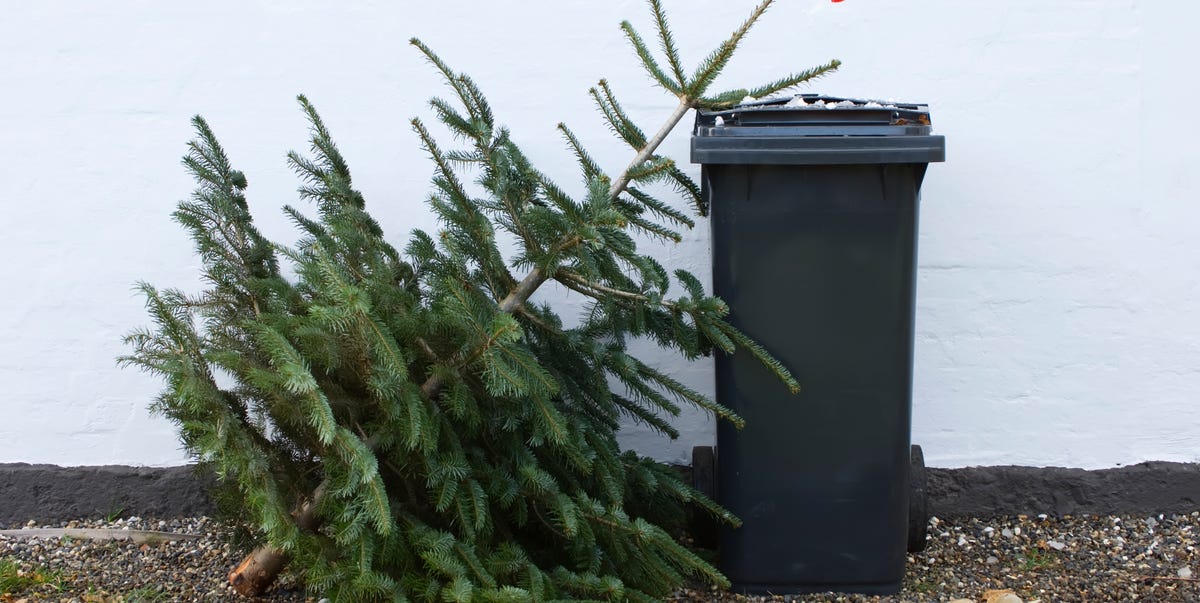
Before disposing of a real tree, remove all ornaments, hooks, lights, ribbon, garland, tinsel, and stands. Many recycling programs will not accept trees that are flocked, painted, glittered, bagged in plastic, or still decorated. Local rules vary, so check your city or county instructions.
Common disposal options include curbside pickup, community drop-off sites, tree-chipping events, composting, and mulch programs. Some areas use recycled trees for erosion control, fish habitats, or public landscaping projects. That means your Christmas tree may get a second life instead of simply becoming trash. Not bad for something that spent December holding candy canes.
Avoid burning a Christmas tree indoors in a fireplace or wood stove. Dry evergreen branches can burn quickly and produce sparks. If you want to use the tree outdoors, follow local fire rules and safety guidance.
What About Outdoor Christmas Decorations?
Outdoor lights and decorations can usually come down around the same time as the tree: January 5, January 6, or the first mild weekend after New Year’s. Weather matters. If your roof is icy, your ladder is wobbly, or the wind is acting dramatic, wait for safer conditions.
Bring outdoor lights and extension cords inside once the season is over. Long exposure to winter weather can damage cords, clips, and bulbs. Wipe decorations dry before storing them to prevent mildew, rust, and that strange “basement holiday box” smell.
How to Store Christmas Decorations the Smart Way
The best time to improve your holiday storage system is while you are taking everything down. You already know what broke, what you used, what stayed in the box, and what made you mutter “why do we own six glitter owls?”
Use clear bins when possible, and label each one by category: tree ornaments, lights, stockings, tabletop decor, outdoor decorations, gift wrap, wreaths, and sentimental items. Store heavy items at the bottom and fragile items at the top. Keep hooks, batteries, clips, and replacement bulbs in small labeled bags.
If you did not use certain decorations this year or last year, consider donating them if they are in good condition. Holiday clutter grows quietly. One minute you own a wreath. The next minute you have an entire storage closet that jingles when opened.
Christmas Tree Takedown Timeline by Household Type
For Tradition Lovers
Take the tree down on January 5 or January 6. Enjoy the full Christmas season, then make the takedown feel ceremonial. Play music, light a winter candle, and say goodbye to the season with intention.
For Safety-First Real Tree Owners
Take the tree down after Christmas or whenever it starts to dry out. If the tree is brittle, shedding heavily, or no longer drinking water, do not wait for Epiphany.
For Minimalists
Take the tree down between December 26 and New Year’s Day. This gives your home a clean, calm feeling before January begins. It also prevents holiday items from blending into everyday clutter.
For Busy Families
Choose the first available weekend after New Year’s Day. Put it on the calendar like an appointment. Add snacks. Everything is better with snacks.
For Artificial Tree Owners
Use January 6 as a traditional guideline, but feel free to adapt. If the lights still make your home feel cozy, keep them a few extra days. If the tree feels like visual noise, pack it away.
Common Mistakes to Avoid When Taking Down the Tree
One common mistake is waiting too long with a real tree. Once the tree is dry, it should go. Another mistake is packing decorations randomly. A rushed cleanup in January becomes a frustrating decorating day in December.
People also forget to label boxes, store lights tangled, leave batteries inside decorations, or pack damp outdoor items. Remove batteries from light-up decor to prevent corrosion. Let wreaths, garlands, and outdoor figures dry fully before storage. Wrap delicate items carefully and avoid stacking heavy bins on top of fragile keepsakes.
Finally, do not treat tree takedown as a punishment. It is not the end of joy. It is the beginning of a calmer home, a cleaner room, and a new season that does not require vacuuming pine needles from your slippers.
Experience Notes: What Tree Takedown Really Feels Like
The funny thing about taking down a Christmas tree is that it rarely feels like one simple chore. It feels like closing a tiny glowing chapter of the year. The tree has been standing there through gift wrapping, late-night snacks, family photos, movie marathons, and at least one moment when someone said, “We should really get more ornament hooks,” and then nobody did.
Many households discover that the best takedown day is not always the most traditional day, but the day that fits the emotional rhythm of the home. Some people are ready on December 26. They want clean counters, fresh sheets, empty floors, and a living room that no longer contains a forest. For them, removing the tree feels energizing. It is part of stepping into the new year with clear surfaces and big “I might finally organize the pantry” energy.
Other people need a slower goodbye. They like waking up in early January, turning on the tree lights, and enjoying one last cup of coffee beside the glow. For them, January 6 feels right because it gives the season a proper ending. There is no rush, no guilt, and no dramatic farewell. Just a peaceful moment to appreciate the decorations before they go back into hibernation.
Real tree owners often have a more urgent experience. The first week may be charming. The second week may still smell like pine. By the third or fourth week, the tree may begin dropping needles with the enthusiasm of a confetti cannon. That is when practicality takes over. You can love tradition and still admit that your tree has become crunchy. A dry tree changes the mood from “holiday magic” to “please remove this immediately.”
Families with kids often turn tree takedown into a memory without meaning to. Children may want to keep every ornament out forever, especially the handmade ones involving popsicle sticks, school photos, and suspicious amounts of glitter. Letting them choose one favorite ornament to pack last can make the process easier. It gives them a small ritual and helps them understand that packing something away does not erase it.
Pet owners have their own version of the experience. Cats may treat the tree’s departure as the loss of a personal climbing gym. Dogs may be thrilled because the furniture layout finally returns to normal. Either way, cleaning the tree area usually reveals forgotten toys, ornament hooks, ribbon scraps, and at least one mystery object that no one in the house claims.
The most satisfying part comes after the tree is gone. The room looks bigger. The floor is clean. The boxes are labeled. The holiday lights are no longer competing with email notifications and back-to-work schedules. There is a quiet relief in restoring the space. The season has been enjoyed, honored, and packed away with care.
So, the best experience-based advice is this: do not wait until the tree annoys you. Take it down while you can still feel grateful for it. Put on music, pour a warm drink, use the good storage bins, and give yourself permission to be a little sentimental. Christmas decorations are not just objects; they are annual reminders of who gathered, what changed, what stayed sweet, and what you hope to carry into the next year.
Conclusion: So, When Should You Take Your Christmas Tree Down?
The best traditional date to take your Christmas tree down is January 6, Epiphany. If your family observes Twelfth Night, choose January 5. If you need a practical household rule, aim for the first weekend after New Year’s Day.
For artificial trees, timing is flexible. For real trees, safety comes first: remove the tree after Christmas or whenever it becomes dry, brittle, or messy. A beautiful tradition should never become a household hazard.
Ultimately, the right date is the one that respects your tradition, protects your home, and helps you start the new year feeling refreshed instead of buried under garland. Whether you take your tree down on December 26, January 1, January 6, or the closest weekend, do it with a plan. Your future December self will be delighted.
Note: Local Christmas tree recycling rules vary by city and county. Always remove decorations, lights, tinsel, hooks, stands, and non-natural materials before placing a real tree out for pickup or drop-off.