Every fall, millions of Americans perform the same tiny ritual: they change the clocks, enjoy the idea of “one extra hour,” and then, by 5 p.m. the next day, wonder why the sky looks like it has already put on pajamas. When daylight saving time ends, the sun does not actually change its schedule out of spite. Our clocks simply move back one hour, making sunrise and sunset appear about an hour earlier by the time printed on your phone, oven, car dashboard, and that one microwave nobody in the house knows how to reset.
In 2026, daylight saving time in most of the United States ends on Sunday, November 1, at 2:00 a.m. local time. At that moment, clocks “fall back” one hour to 1:00 a.m. standard time. The practical result is easy to feel: mornings get brighter earlier, while evenings get darker earlier. For many U.S. cities, sunset on the first evening after the time change lands somewhere between about 4:30 p.m. and 5:45 p.m., depending on location.
So, what time will the sun set after daylight saving time ends? The simple answer: in much of the country, expect the sun to set roughly one hour earlier on the clock than it did the day before. The more useful answer depends on where you live, because geography, time zones, and latitude all play starring roles in the annual “why is it dark before dinner?” drama.
When Does Daylight Saving Time End?
In the United States, daylight saving time currently begins on the second Sunday in March and ends on the first Sunday in November. For 2026, that means DST begins on March 8 and ends on November 1. The switch happens at 2:00 a.m. local time, when clocks are set back one hour.
Most Americans call this the “fall back” time change. Technically, the phrase is daylight saving time, not “daylight savings time,” although the extra “s” is so common that it has basically moved into the neighborhood and started collecting mail. Search engines understand both versions, but the official term is singular.
Not every place in the United States observes daylight saving time. Hawaii and most of Arizona stay on standard time year-round. U.S. territories such as Puerto Rico, Guam, American Samoa, the Northern Mariana Islands, and the U.S. Virgin Islands also do not follow the twice-yearly clock change. The Navajo Nation, however, does observe daylight saving time, even though much of Arizona does not.
What Time Will the Sun Set After Daylight Saving Time Ends?
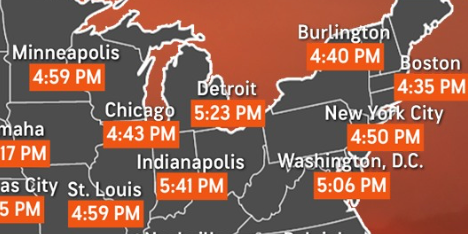
On the first evening after daylight saving time ends in 2026, sunset times across major U.S. cities will vary widely. Below are approximate local sunset times for Sunday, November 1, 2026, the day clocks fall back in most of the country.
| City | Approximate Sunset After DST Ends | What It Feels Like |
|---|---|---|
| New York, NY | 4:52 p.m. | Evening arrives before the workday fully lets go. |
| Boston, MA | 4:38 p.m. | One of the earliest big-city sunsets in the East. |
| Washington, DC | 5:08 p.m. | Still early, but not quite “dinner in the dark” early. |
| Atlanta, GA | 5:45 p.m. | A little more evening light thanks to southern latitude and location. |
| Miami, FL | 5:39 p.m. | Shorter days, but winter still feels softer. |
| Chicago, IL | 4:45 p.m. | The commute home may suddenly look like nighttime. |
| Dallas, TX | 5:36 p.m. | Noticeably earlier, but not extremely early. |
| Houston, TX | 5:35 p.m. | A later sunset than many northern cities. |
| Denver, CO | 4:58 p.m. | A crisp mountain evening arrives fast. |
| Los Angeles, CA | 5:00 p.m. | The golden hour moves into late afternoon. |
| San Francisco, CA | 5:11 p.m. | Early sunsets meet cool coastal evenings. |
| Seattle, WA | 4:52 p.m. | Clouds can make it feel darker even earlier. |
These times show why the time change feels more dramatic in some regions than others. A person in Boston may be looking at sunset before 4:40 p.m., while someone in Atlanta or Houston still has light until around 5:35 to 5:45 p.m. The clock change is the same, but the sunset experience is not.
Why Does Sunset Suddenly Feel So Early?
The quick answer is that the clock moves backward, but the sun keeps following the same seasonal path. In late fall, days are naturally getting shorter in the Northern Hemisphere. The time change simply makes that seasonal shift much more obvious.
On the Saturday before daylight saving time ends, a city might see sunset around 5:50 p.m. daylight time. On Sunday, after clocks have moved back, sunset may happen around 4:50 p.m. standard time. The amount of daylight does not drop by a full hour overnight. The clock label changes. Still, for anyone trying to walk the dog, commute home, photograph fall leaves, or squeeze in a pickup basketball game, the difference feels very real.
Latitude Matters
Cities farther north tend to lose daylight faster in autumn. That is why Boston, Seattle, Chicago, and Minneapolis can feel dramatically darker after the time change. Southern cities such as Miami, Houston, and Phoenix have less extreme seasonal daylight swings, so the transition may feel less severe.
Time Zone Position Matters Too
Where a city sits inside its time zone also affects sunset. Cities on the eastern edge of a time zone often see earlier clock-time sunsets than cities farther west in the same zone. This is one reason sunset in Boston can be much earlier than sunset in western parts of the Eastern Time Zone.
Does Daylight Saving Time Ending Mean More Morning Light?
Yes. When clocks fall back, sunrise also appears about one hour earlier by the clock. That is the trade-off: more light in the morning, less light in the evening. For early risers, school drop-offs, outdoor workers, and morning commuters, the first week after the change can feel brighter and more manageable.
For evening people, however, the adjustment can be rough. You may leave work or school under a darkening sky. Outdoor activities need to move earlier. Patio dinners become “bring a jacket and possibly a flashlight” events. Even your houseplants may look like they are judging the situation.
How Long Will Sunsets Keep Getting Earlier?
After daylight saving time ends, sunsets continue to get earlier for several weeks in many parts of the United States. The earliest sunset of the year usually happens in early to mid-December, depending on location. Interestingly, the earliest sunset does not happen exactly on the winter solstice. The winter solstice brings the shortest total day length, but the timing of solar noon shifts, which means the earliest sunset often arrives before the solstice.
For example, a city might have its earliest sunset around the first or second week of December, while sunrise continues getting later until early January. That is why winter mornings can still feel darker even after evening light slowly starts returning.
Why the Time Change Feels Bigger Than One Hour
On paper, moving the clock back one hour seems harmless. In real life, it can affect routines, sleep timing, mood, traffic patterns, and how people use the end of the day. Sleep experts often point out that human bodies respond strongly to light. Morning light helps signal wakefulness, while evening darkness nudges the brain toward rest. When the social clock changes suddenly, your internal clock may need a few days to catch up.
The fall time change is usually easier than the spring switch because people are not losing an hour of sleep. Still, it can feel disorienting. Darkness at 5 p.m. can make the day feel shorter even when your schedule has not changed. That “where did the afternoon go?” feeling is common, especially during the first week after the clocks move back.
Tips for Adjusting After Daylight Saving Time Ends
Get Morning Light Early
Open the curtains, take a short walk, or drink your coffee near a bright window. Morning light helps your body understand that the day has started. It is a small habit, but it can make the darker evenings feel less heavy.
Move Outdoor Plans Earlier
If you normally run, walk, garden, or play sports after work, try shifting the activity earlier when possible. A 4:30 p.m. walk may suddenly become the new 5:30 p.m. walk. Your sneakers will survive the schedule change.
Make Evenings Feel Intentional
Early darkness can trick the brain into thinking the productive part of the day is over. Add small anchors to your evening: turn on warm lighting, cook something simple, stretch, read, or plan a cozy routine that does not feel like surrendering to winter at 6 p.m.
Be Extra Careful on the Road
The first week after the time change can mean darker evening commutes and changing visibility for drivers, cyclists, and pedestrians. Reflective clothing, working headlights, and slower turns near crosswalks are not glamorous, but they are useful.
Why Some People Want to Stop Changing the Clocks
The daylight saving debate returns almost every year. Some people prefer permanent daylight saving time because it would keep more light in the evening. Others prefer permanent standard time because it better matches natural morning light patterns and human circadian rhythm. Many sleep and medical organizations have argued that standard time is healthier because morning light supports biological alignment.
Supporters of permanent daylight saving time often mention recreation, shopping, tourism, and the simple pleasure of having light after work. Critics worry about dark winter mornings, especially for children waiting for buses and commuters starting the day before sunrise. For now, most of the United States still changes clocks twice a year, which means the annual November sunset shock remains part of the seasonal package.
What This Means for Your Daily Routine
If you are planning around sunset after daylight saving time ends, check your exact local sunrise and sunset time rather than relying only on national averages. A few miles will not usually change the time much, but being in a different part of the same time zone can. The biggest pattern remains simple: after clocks fall back, evening daylight becomes precious.
Parents may need to adjust outdoor playtime. Runners may need reflective gear. Photographers may need to chase golden hour before work ends. Restaurants with patios may start lighting heaters and string lights earlier. Homeowners may suddenly remember that porch lights exist. Even pets notice. Dogs do not understand federal time policy; they only know dinner appears to be late or early, and they will be filing a complaint with management.
Personal Experiences: What Early Sunsets Really Feel Like
The first evening after daylight saving time ends always feels a little theatrical. One day, the afternoon stretches comfortably into dinner territory. The next, you glance out the window at 5:15 p.m. and wonder whether you accidentally slept through an entire chapter of the day. The sky turns dark, streetlights blink on, and the neighborhood suddenly feels quieter, even if everyone is still doing the same normal Sunday tasks.
For many people, the biggest adjustment is psychological. The clock says there is plenty of day left, but the window says, “Absolutely not.” That mismatch can make ordinary routines feel heavier. Going to the grocery store after work feels more like a late-night mission. Taking out the trash feels strangely dramatic. Walking the dog requires a jacket, a light, and the emotional readiness of someone entering a mystery novel.
Families often notice the change during after-school hours. Kids may come home with energy to burn, but the backyard window is smaller. A bike ride that was easy in September now needs to happen quickly, before the sun drops. Parents may find themselves saying things like “hurry, before it gets dark,” which is basically the official slogan of November.
Commuters feel it too. Driving home in darkness can make the day seem longer, even if the actual workday is identical. In cities such as Chicago, Boston, New York, and Seattle, the first post-DST week can feel like someone pulled the curtain on the evening too soon. People who work indoors may especially notice that they arrive at work in the morning and leave after sunset, creating the classic winter complaint: “Did I personally see the sun today, or did I just hear rumors?”
Still, early sunsets are not all bad. They can also create a seasonal reset. Dinner feels cozier. Soup suddenly makes sense. Candles, warm lamps, soft blankets, and evening routines become more appealing. The same darkness that feels inconvenient can also invite rest, reflection, and slower nights. Not every hour needs to be optimized. Sometimes the sun setting early is nature’s way of saying, “Please stop pretending you can run twelve errands after work.”
Outdoor lovers often learn to adapt quickly. Runners switch to morning routes. Walkers choose well-lit paths. Photographers chase sunset earlier and discover that late fall light can be stunning: low, golden, crisp, and flattering enough to make even a parking lot look poetic. Gardeners use weekends more strategically. Homeowners install timers on porch lights. People who once ignored sunrise may start appreciating it, because after the clock change, mornings often become brighter and easier to enjoy.
The best approach is not to fight the season but to plan with it. Check sunset times for your city. Move outdoor activities earlier. Create a pleasant evening routine. Use light intentionally inside your home. Give your body a few days to adjust. And when the sun sets before dinner, remember: it is not disappearing forever. It is just winter’s opening act, and eventually, minute by minute, the evening light comes back.
Conclusion
After daylight saving time ends, the sun will set about one hour earlier by the clock in most U.S. cities. In 2026, the change happens on Sunday, November 1, and many Americans will see sunset between roughly 4:30 p.m. and 5:45 p.m. local time that evening. Northern and eastern cities often feel the shift most sharply, while southern cities usually keep a bit more evening light.
The time change may be small on paper, but it reshapes daily life quickly. Mornings brighten, evenings shrink, and routines need a little adjustment. Whether you love the cozy darkness or immediately begin counting the days until spring, knowing your local sunset time can help you plan smarter, drive safer, and enjoy the season without being ambushed by a 5 p.m. nightfall.