
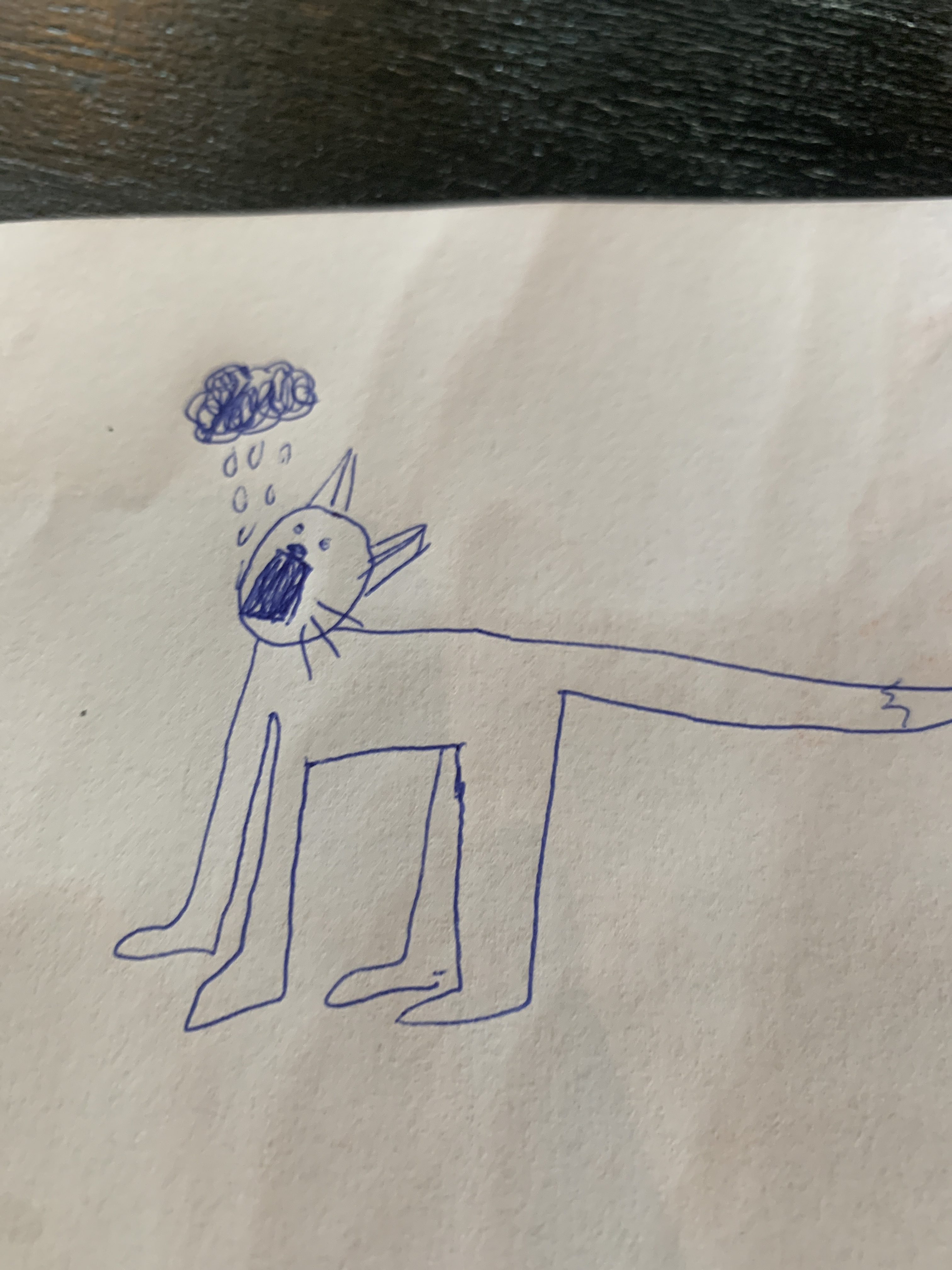
There is something wonderfully mischievous about an unfinished invitation. “Hey Pandas, draw something and make…” Make what? A masterpiece? A mess? A tiny dragon banned from three libraries for roasting the return desk? The missing ending is not a flaw. It is the doorway.
Community drawing prompts replace the intimidating command to “be artistic” with a friendlier request: make one mark, follow it with another, and see what happens. Bored Panda’s “Hey Pandas” drawing challenges invite people to contribute at their own skill level, making participation more important than professional polish. A challenge becomes interesting not because everyone draws perfectly, but because everyone interprets the same invitation differently.
This guide explores how to turn “Hey Pandas, Draw Something And Make…” into a playful exercise, a learning tool, and a reason to connect with other creative people. No beret is required. Your pencil does not need a dramatic origin story.
Why the Unfinished Drawing Prompt Works
A rigid assignment can make the brain search for the “correct” answer. An open prompt gives direction without locking the door. MoMA’s at-home creativity activities encourage people to see ordinary surroundings as sources of possibility, while Adobe’s prompt collections use simple, vivid subjects to help artists begin instead of waiting for inspiration to arrive wearing a cape.
The word “make” adds the useful twist. You can draw a coffee mug and make it lonely. Draw your neighborhood and make it float. Draw a sandwich and make it the newly elected mayor of Lunch County. The second half asks you to transform, exaggerate, combine, or tell a story.
It Shrinks the Blank Page
The blank page feels enormous because it contains every possible picture at once. One constraint reduces infinity to a manageable decision: use one continuous line, draw only with circles, or turn the nearest object into a villain. Once your hand moves, your brain has something concrete to answer.
It Makes Mistakes Useful
A crooked line can become a branch, wrinkle, lightning bolt, or suspicious eyebrow. Instead of erasing every surprise, ask, “What could this become?” That question builds creative flexibility and keeps perfectionism from confiscating the pencils.
Drawing Is Not a Talent Test
People often say, “I can’t draw,” when they mean, “My drawing does not match the image in my head.” That gap is normal. Even skilled artists spend years training their eyes and hands to cooperate, and the negotiations remain tense.
Observation is one of the most practical drawing skills. Getty teaching materials emphasize looking repeatedly between the subject and the paper instead of relying only on memory. Try it with a shoe, spoon, plant, or sleeping pet. Notice angles, shadows, negative spaces, and proportions. The goal is not to become a photocopier with feelings. It is to notice more than you noticed before.
Drawing can also support learning because it makes you process information visually, physically, and conceptually. Research summarized by Edutopia found that drawing information improved recall compared with simply reading or writing it. That does not mean your grocery list needs a Renaissance mural, although a tiny portrait of broccoli would add suspense.
What Drawing Can Do for Your Mind
Casual drawing, professional art practice, and clinical art therapy are different activities. Cleveland Clinic describes art therapy as an evidence-based practice led by credentialed art therapists, not simply coloring or crafting at home. Ordinary art-making can still be calming, absorbing, expressive, and fun without being called therapy.
It Gives Attention Somewhere to Land
When you shade a form, repeat a pattern, or work out how to fit a giraffe into a compact car, attention narrows. Harvard Health has discussed how doodling may help some people remain mentally engaged during low-stimulation moments. It is a tool, not a universal brain cheat code, but it can give restless hands and wandering thoughts a small job.
It Gives Feelings a Shape
Not every emotion arrives with a tidy label. Frustration may look like tangled wire; relief may look like an open window. The American Psychological Association reports that engagement with the arts can support expression, connection, and psychological well-being, while the exact effects vary by person and context.
It Can Become a Sustainable Hobby
A hobby does not need to become a side hustle or a six-part documentary titled The Sketchbook Within. Harvard Health notes that hobbies may support well-being through creativity, relaxation, stimulation, and social connection. Smithsonian reporting has also covered emerging research associating creative hobbies with healthier patterns of brain aging, although association is not a personal guarantee.
Draw Something and Make It More
The strongest response is not necessarily the most technically advanced. It is the one that makes a clear creative choice. Begin with something simple, then push it in one direction.
Make an Ordinary Object Unreasonably Important
Choose a stapler, sock, lamp, or banana. Draw it as a royal portrait, movie poster, archaeological discovery, or dangerous creature observed from a safe distance. Suddenly the toaster has enemies, the sock has a prophecy, and the lamp knows what you did last Tuesday.
Make a Character From Three Shapes
Combine a circle, triangle, and rectangle into a character. Decide what it wants, fears, hides, and carries in its pockets. A simple silhouette becomes memorable when it appears to have a life beyond the page.
Make a Tiny Story
Divide the page into four panels. Establish a normal situation, introduce a problem, make it worse, and then resolve itor make it spectacularly worse. This structure works for an astronaut missing the bus, a cat chasing a laser, or a houseplant discovering taxes.
Make Two Unrelated Things Cooperate
Combine a whale with a library, a cactus with a ballroom gown, or a vending machine with a haunted forest. Adobe’s drawing resources use surprising combinations, altered viewpoints, invented objects, and visualized idioms to create momentum. Familiar ingredients become a picture nobody has seen before.
Make a Collaborative Creature
Fold a page into sections. One person draws the head and hides most of it; others add the body and legs. The final reveal may produce an eagle in business attire with eight elegant frog feet. This game resembles the Surrealist “exquisite corpse,” which MoMA uses in creative activities. Nobody controls the whole result, so surprise does the heavy lifting.
A Five-Step Method for the Challenge
1. Choose One Constraint
Set a ten-minute limit, use one pen, avoid erasing, or work only with geometric shapes. A constraint prevents endless planning and gives the piece an identity.
2. Warm Up Privately
Fill a corner with blobs, textures, faces, or badly drawn hands. Decide that the warm-up will not be shared. Low stakes help the awkward first marks leave the building.
3. Build Large Shapes First
Block in the major forms before adding eyelashes to a character whose head is still near its knee. Large shapes establish composition; details arrive last.
4. Add One Unexpected Choice
Change the scale, setting, shadow, or story. Put the fish in the sky or give the castle wheels. One surprise can turn a sketch into an idea people remember.
5. Add a Short Caption
Name the character, explain the prompt, or ask viewers a question. “Greg realized too late that the moon was not dishwasher-safe” is enough.
Sharing Art Without Turning It Into a Contest
Online communities can provide inspiration, visibility, feedback, and connection. Pew Research found that artists use the internet to find ideas, communicate, collaborate, and distribute work. UC Berkeley research on deviantART showed that online art spaces also shape creative identities while creating tensions around recognition, seriousness, ownership, sharing, and theft. The internet can be a studio, gallery, classroom, and occasionally a raccoon loose in the supply closet.
Ask for Focused Feedback
“Thoughts?” may produce everything from useful advice to a stranger declaring that your rabbit looks politically suspicious. Ask whether the pose reads clearly, which color version works better, or whether the joke makes sense without the caption. Stanford’s d.school recommends “benevolent critique”: feedback intended to help rather than flatten the creator.
Credit, Protect, and Describe
Mention references, credit collaborators, and ask before reposting another person’s art. Check photos for addresses, documents, school names, or reflections. Add useful alt text when possible so screen-reader users can understand the subject, mood, action, and important visual details.
Experiences Related to “Hey Pandas, Draw Something And Make…”
The following experiences are composites based on common patterns in casual drawing challenges, not quotations from specific participants.
The First Five Minutes: Negotiating With the Inner Critic
The usual first experience is not inspiration. It is bargaining. You draw a circle, dislike the circle, and consider moving to an island where circles have never been invented. The inner critic asks why the line is uneven and whether a responsible adult would be doing something more productive.
Then the circle becomes a moon, face, or portal through which an exhausted wizard commutes to work. The drawing stops being a performance and becomes a problem to solve. You are no longer asking whether the picture proves you are talented. You are deciding what the next mark should do.
The Middle: Losing Track of Time
Once the image develops, attention becomes pleasantly narrow. You adjust a curve, darken a shadow, and decide that the wizard’s briefcase needs teeth. Ten minutes become thirty. This may not be dramatic creative “flow.” Sometimes it is simply relief from switching tabs and carrying fourteen unfinished thoughts around like grocery bags with weak handles.
Limitations often make this stage easier. One pen removes color decisions. A fifteen-minute deadline blocks microscopic perfectionism. A ridiculous prompt makes failure less personal. Nobody has a sacred duty to draw the world’s most anatomically accurate roller-skating turnip.
The Reveal: Surprise Beats Perfection
The creator usually sees every wobble. Viewers may notice the expression, story, joke, or hidden detail first. That gap can be encouraging: the artist evaluates execution, while the audience experiences communication.
Collaborative drawings make this especially clear. A beautifully rendered eagle head may connect to a business-casual torso and eight frog legs. The result is objectively incorrect and emotionally excellent because it contains several imaginations, none fully in charge.
The Sharing Stage: Vulnerability in a Small Package
Posting a drawing can feel personal even when the subject is a furious microwave. A supportive comment may motivate you; a specific suggestion may reveal what to practice. Silence can disappoint, but it often reflects timing, algorithms, or audience size rather than artistic value.
The healthiest approach treats sharing as participation, not judgment. You add your strange contribution to a larger gallery and see how differently people answer the same prompt. Someone uses watercolor, someone uses ballpoint pen, and someone creates a digital painting so polished that your pencil quietly updates its résumé.
The Aftereffect: Seeing More Things to Draw
After one challenge, ordinary objects begin volunteering. A receipt resembles a mountain range. A stain looks like a map. Two parked bicycles appear to be discussing you. Drawing changes the relationship between looking and seeing.
The final image may be framed, posted, forgotten, or recycled beneath a shopping list. Its value also lives in the observation, choices, mistakes, jokes, concentration, and willingness to let others witness an imperfect idea. A casual prompt becomes a practice through repeated invitations to begin.
Conclusion: Finish the Sentence Your Way
“Hey Pandas, Draw Something And Make…” works because nobody else gets to complete the sentence for you. Make a character, memory, comic, visual joke, collaborative monster, or quiet sketch of something you love.
You do not need expensive materials or a dramatic creative identity. Start with the nearest tool and the smallest interesting idea. Look carefully, draw loosely, transform one element, and share kindly when you are ready. The page is not asking whether you deserve to be creative. It is waiting for evidence that you showed up.











