
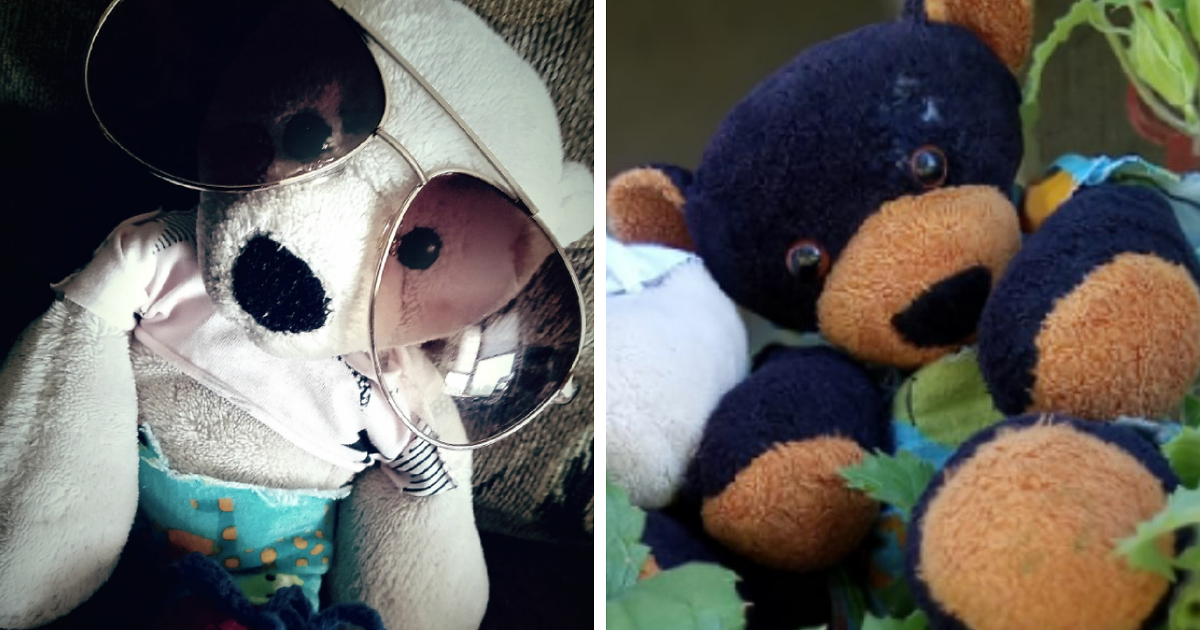
Some treasures live in jewelry boxes. Others sit slightly crooked on a bedroom shelf, missing one eye and wearing a sweater that was clearly designed by someone who had never met a sewing machine.
A treasured stuffed animal does not need to be rare, expensive, or remotely clean enough to impress a museum curator. Its value comes from the life it has witnessed. It may have survived childhood vacations, thunderstorms, hospital visits, college dorm rooms, family moves, breakups, and one unfortunate encounter with an overly enthusiastic washing machine.
So, Pandas, it is time to introduce the plush companions that have quietly followed us through life. Show us your oldest teddy bear, your floppy rabbit, your suspiciously shaped mystery creature, or the stuffed dinosaur you still rescue first during a fire drill.
Why a Treasured Stuffed Animal Can Mean So Much
It Is More Than Fabric and Filling
To an outsider, a beloved plush toy may appear to be a collection of polyester fibers held together by optimistic stitching. To its owner, however, it can represent safety, family, imagination, and an entire chapter of life.
Psychologists often use the term transitional object for a blanket, doll, stuffed animal, or similar possession that helps a young child feel secure while becoming more independent. The concept is associated with pediatrician and psychoanalyst D. W. Winnicott, who described these special belongings as early possessions that help children navigate the space between dependence and independence.
A favorite stuffed animal may make bedtime less intimidating, provide familiarity in an unfamiliar room, or become a dependable companion during separation from a parent. Cleveland Clinic guidance also notes that familiar sleep-association objects, including stuffed animals, can comfort older children when they feel frightened at night.
It Becomes a Physical Bookmark in Your Life
Objects can act as powerful memory cues. A particular texture, scent, faded ribbon, or repaired seam may bring back details that seemed long forgotten: the wallpaper in a childhood bedroom, the sound of a grandparent’s voice, or the nervous excitement of a first overnight trip.
Research has repeatedly connected emotion with stronger or more vivid memory formation, although emotional memories are not necessarily perfect recordings of events. They are personal reconstructions, colored by meaning and feeling.
Smell may be especially evocative. Harvard Medicine has highlighted the close relationship between odor and the recall of past experiences, which may explain why the familiar scent of an old plush companion can produce an almost immediate trip back in time.
The Surprisingly Dramatic History of the Teddy Bear
A Presidential Hunting Trip Started It All
The teddy bear’s origin story contains politics, a hunting trip, a newspaper cartoon, and an ending no marketing department could have planned more effectively.
In November 1902, President Theodore Roosevelt joined a bear hunt in Mississippi. After members of the hunting party cornered and restrained a bear, Roosevelt refused to shoot it under those conditions. Political cartoonist Clifford Berryman illustrated the event, helping transform the bear into a recognizable symbol associated with the president.
Brooklyn shopkeepers Morris and Rose Michtom reportedly created a small stuffed bear inspired by the story. After receiving permission to use Roosevelt’s nickname, they called it “Teddy’s Bear.” The toy became a sensation and helped launch what developed into the Ideal Toy Company.
Early critics assumed the teddy bear was merely a passing fad. More than a century later, that prediction looks about as accurate as declaring that people would soon lose interest in snacks.
Some Stuffed Animals Become Cultural Treasures
A stuffed animal can begin as one child’s toy and eventually become part of literary history. The original Winnie-the-Pooh and several of Christopher Robin Milne’s other stuffed companions have been preserved by The New York Public Library. Pooh, Eeyore, Piglet, Kanga, and Tigger have lived at the library since 1987 and are displayed as part of its treasured collections.
The lesson is obvious: never underestimate the career potential of a stuffed bear. Today’s bedtime companion could become tomorrow’s international literary celebrity.
What Makes a Stuffed Animal Truly Treasured?
The Childhood Survivor
This is the stuffed animal that has endured everything. Its fur has been hugged flat. Its original color is now a matter of historical debate. One ear is attached at an angle that would concern a veterinarian.
Its imperfections are not flaws. They are evidence. Every repaired paw and worn patch records years of affection more accurately than a receipt ever could.
The Gift From Someone Special
Sometimes the person behind the gift matters more than the toy itself. A teddy bear from a late grandparent, a rabbit given by a childhood friend, or a plush dog from a partner can become a tangible reminder of that relationship.
Even after circumstances change, the object preserves a moment when someone chose it, wrapped it, carried it home, and said, “This made me think of you.” That sentence can remain emotionally powerful decades later.
The Travel Companion
Some stuffed animals have better travel histories than most humans. They appear in airport photos, sit beside hotel pillows, peek from backpacks, and pose in front of landmarks with the expressionless confidence of seasoned influencers.
A travel plush can create continuity between places. No matter how unfamiliar the room, the language, or the breakfast buffet, one familiar face is waiting at the end of the day.
The Unexpected Rescue
Not every treasured stuffed animal begins as a carefully planned gift. Some are won at carnivals, discovered at thrift stores, rescued from a donation pile, or adopted because they looked lonely on a clearance shelf.
Their origin stories often make them more lovable. Perhaps the toy had crooked stitching or an accidentally grumpy expression. Perhaps no one else wanted it. Then one person noticed it, and suddenly the imperfect plush had a name, a home, and a retirement plan.
The Adult Comfort Companion
Adults sometimes hide their attachment to stuffed animals because they fear it will look childish. Yet many adults use familiar comfort objects during periods of anxiety, loneliness, grief, illness, or major change. Reporting on comfort objects has described adults who find reassurance in stuffed animals, weighted plush toys, and similarly familiar items.
Keeping a stuffed animal does not automatically mean a person is trapped in childhood. It may simply mean they have discovered a harmless source of comfort that does not require batteries, a subscription, or an update to the terms of service.
How to Introduce Your Most Treasured Stuffed Animal
A great stuffed animal story is rarely limited to, “Here is Bear. Bear is brown.” Give your plush companion the grand introduction it deserves.
Share the Essential Details
- Name: Include formal titles, nicknames, and unexplained spelling choices.
- Age: An exact year is helpful, but “older than my ability to make responsible decisions” is also acceptable.
- Origin: Explain who gave it to you or where you found it.
- Species: Be honest when identification remains uncertain.
- Distinguishing features: Mention repairs, stains, replacement eyes, homemade clothing, or unusual proportions.
- Current occupation: Bed guardian, shelf supervisor, travel consultant, emotional support dinosaur, or chief nap officer.
Tell the Story Behind the Damage
Do not apologize for a worn-out appearance. A perfectly preserved toy may be beautiful, but a deeply loved stuffed animal often looks as though it has completed several tours of duty.
That crooked nose may have resulted from a childhood repair performed with craft glue. The bald patch may come from years of rubbing the same spot during bedtime. The missing tail may involve a dog, a sibling, and a family story in which every witness offers a completely different version.
These details turn a simple photograph into a memorable narrative.
Include Then-and-Now Photos
If possible, pair a current image with an older photograph. A childhood picture showing a brand-new stuffed animal beside its tiny owner can be especially touching when compared with the same pair decades later.
The human may now have a mortgage and lower-back pain. The stuffed animal may have lost 40 percent of its fur. Somehow, both are still recognizable.
How to Care for an Irreplaceable Stuffed Animal
Inspect Before Cleaning
Before putting an old plush toy anywhere near water, examine its seams, fabric, decorations, eyes, filling, and previous repairs. Look for loose threads, weak areas, exposed stuffing, or glued parts that may not survive washing.
Check the manufacturer’s care label when one still exists. If the label has faded into a tiny white flag of surrender, proceed cautiously. Modern machine-washable toys may tolerate a gentle cycle inside a protective laundry bag, but an older handmade or fragile stuffed animal may require careful surface cleaning instead.
Use the Gentlest Method Possible
Begin with light dusting or gentle vacuuming through a protective screen when appropriate. Test any cleaning solution on a hidden area first. Avoid soaking a treasured toy unless its construction and care instructions clearly allow it.
Stain removal can be more complicated than it appears because different fibers, dyes, fillings, and adhesives react differently. Smithsonian conservation guidance emphasizes patience, suitable supplies, and cautious testing rather than aggressive scrubbing.
After cleaning, allow the toy to dry completely in a well-ventilated area. High heat can damage synthetic fibers, distort plastic components, or turn a beloved bear into something resembling a surprised raisin.
Store It Like a Family Keepsake
For long-term storage, keep the stuffed animal away from direct sunlight, moisture, pests, and extreme temperature changes. Do not crush it beneath heavy boxes. Support fragile shapes with clean, acid-free materials when appropriate.
Smithsonian preservation resources recommend neutral, unbuffered, acid-free tissue for many textile-storage purposes and advise avoiding damaging storage materials, excessive light, unstable humidity, and careless repairs involving tape or glue.
Take several clear photographs and write down the toy’s history. Record its name, original owner, approximate date, and the stories connected to it. This documentation protects something cleaning cannot preserve: context.
Repair Without Erasing Its Character
A repair should stabilize the toy, not necessarily make it look factory-new. Matching every thread perfectly may be less important than preserving the features the owner recognizes.
For valuable, antique, unusually fragile, or emotionally irreplaceable pieces, consult a textile conservator or an experienced stuffed-animal restoration specialist. A professional can help prevent a minor loose seam from becoming a full-scale stuffing emergency.
An Important Safety Note for Parents
Stuffed animals may be comforting companions for older children, but they should not be placed in an infant’s crib or bassinet. The American Academy of Pediatrics recommends keeping pillows, blankets, stuffed toys, and other soft objects out of an infant’s sleep space because they can obstruct airflow or create suffocation and entrapment hazards.
Parents should also inspect children’s plush toys regularly for detachable eyes, noses, buttons, bells, batteries, magnets, or other small components. The U.S. Consumer Product Safety Commission maintains toy-safety information and recall notices, including plush-toy recalls involving parts that could detach and become choking hazards.
Why Adults Do Not Need to Be Embarrassed
There is no official ceremony at which adulthood requires everyone to surrender their stuffed animals in exchange for tax forms and a neutral-colored sofa.
People keep childhood possessions for many reasons. Some objects represent important relationships. Others provide continuity between earlier and present versions of the self. A stuffed animal may remind its owner of being cared for, surviving a difficult period, or belonging somewhere.
The healthiest question is usually not, “Am I too old for this?” A better question is, “What role does this object play in my life?”
If it offers comfort, preserves meaningful memories, and does not interfere with daily responsibilities, there is little reason for shame. Adulthood already contains bills, deadlines, traffic, and emails beginning with “Just circling back.” Keeping one soft thing nearby seems entirely reasonable.
Five Experiences Behind Treasured Stuffed Animals
The following composite experiences are inspired by the kinds of stories people commonly share about beloved plush companions. They illustrate why ordinary toys can become extraordinary keepsakes.
1. The Bear That Waited Through Surgery
When Maya was seven, she brought a small yellow bear named Buttons to the hospital for minor surgery. Buttons wore a paper wristband made by a nurse and remained beside her until she fell asleep. The original wristband disappeared years ago, but Maya’s mother later stitched a tiny fabric version around the bear’s paw. Maya is now an adult and keeps Buttons in a bedroom cabinet to protect his thinning fur. She does not remember every medical detail from that day. She remembers the cold room, her mother’s hand, and the bear waiting exactly where she had left him.
2. The Rabbit With Too Many Repairs
Daniel’s stuffed rabbit, Nibbles, has undergone so many repairs that very little of the original rabbit may remain. His grandmother replaced one ear. His father patched the stomach. Daniel himself attempted to fix a leg at age nine using bright orange thread and the confidence of a surgeon who had skipped medical school. Every patch marks a different period of family life. Replacing Nibbles with a newer rabbit would miss the point. The crooked repairs are the point. They show how several people repeatedly chose to save something because Daniel loved it.
3. The Plush Fox Who Traveled the World
At eighteen, Lena packed a palm-sized fox named Copper for her first solo flight. Copper later appeared in photographs from Chicago, Seattle, Tokyo, Paris, and a rainy campsite where neither traveler looked particularly delighted. Taking pictures of the fox helped Lena feel less awkward when traveling alone. It also created a playful record of her journeys. Copper now sits beside her passport at home. His fur is faded from sunlight, and one ear leans backward permanently, giving him the expression of someone who has heard an alarming boarding announcement.
4. The Thrift-Store Creature Nobody Could Identify
Marcus found a strange stuffed animal in a thrift-store bin during college. It had a rabbit’s ears, a bear’s body, and a tail that suggested the designer had briefly considered making a squirrel. He bought it for one dollar and named it Professor Wobble. During stressful exam weeks, his roommates began moving the professor around the apartment and leaving handwritten advice beside him. “Drink water.” “Submit the paper.” “Stop microwaving fish.” Years later, Professor Wobble remains a symbol of friendship and the chaotic little household they built together.
5. The Dog That Carried a Grandmother’s Voice
Before Elena’s grandmother died, she recorded a message inside a plush dog: “I love you today, tomorrow, and always.” Elena avoided pressing the button for months because hearing the voice felt too painful. Eventually, she listened again. The recording did not erase her grief, but it made the distance feel smaller. As the sound mechanism aged, Elena transferred a digital copy of the message for safekeeping. The plush dog still sits on her bookshelf, not as a substitute for her grandmother, but as a reminder of the love that remained after the loss.
Now It Is Your Turn, Pandas
Show us the stuffed animal you would never willingly throw away. Tell us its name, age, origin story, and current condition. Explain why it matters, who gave it to you, and what adventures it survived.
Has it traveled across the country? Was it repaired by someone you loved? Does it still sleep beside you, guard a shelf, or live inside a carefully labeled storage box? Is it adorable, terrifying, or charmingly stuck somewhere between the two?
There is no competition for the newest fur or the straightest seams. The most treasured stuffed animal is usually the one carrying the richest story. Its stuffing may be lumpy and its face may lean slightly to the left, but it has been present for moments no replacement could recreate.
After all, some of the world’s most meaningful objects are not valuable because they remained perfect. They are valuable because they stayed.














