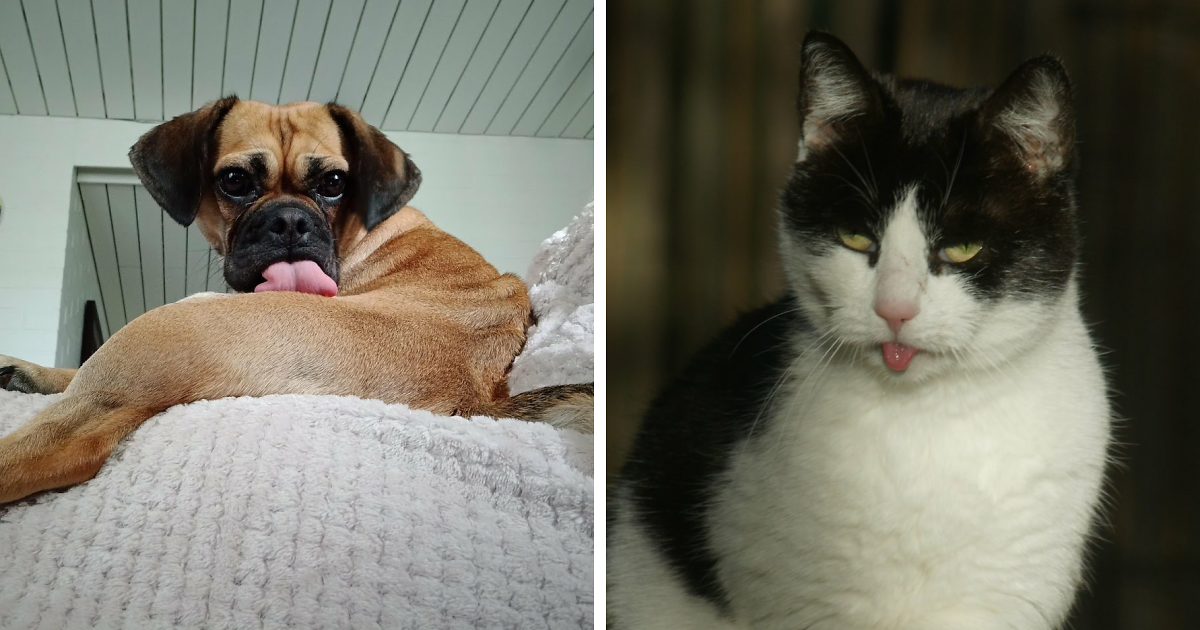
There are elegant pet portraits, and then there are photos in which an animal looks as though it has temporarily forgotten how mouths work. Today, we are celebrating the second category.
Perhaps your dog produces a magnificent pink flag after zooming around the yard. Maybe your cat pauses halfway through grooming and leaves one millimeter of tongue hanging out like an unfinished sentence. You might even live with a tiny four-legged comedian whose tongue appears whenever a camera is nearby.
Whatever the circumstances, Pandas, this is your invitation to share your funniest, sweetest, strangest, and most gloriously unprofessional tongue-out pet photos. Behind those silly expressions, however, there is often more happening than simple photogenic chaos. Tongues help pets eat, drink, groom, explore, communicate, and regulate body temperature. In other words, that goofy picture may also capture a fascinating piece of animal behavior.
Welcome to the Tongue-Out Pet Hall of Fame
A tongue-out photo rarely feels staged. It catches a pet between respectable moments: immediately after a yawn, halfway through a lick, following an enthusiastic game of fetch, or during a nap so deep that facial muscles have apparently clocked out for the afternoon.
That spontaneity is why these pictures are so entertaining. A perfectly posed pet may look majestic, but a pet with its tongue accidentally stuck outside its mouth looks relatable. We have all entered a room and forgotten why. Pets simply express the same confusion with better lighting and more fur.
The ideal submission does not require a professional camera, a scenic background, or an animal trained to model. A blurry phone photo of your cat blepping on top of the laundry can be more memorable than a studio portrait. Personality matters more than polish.
Why Do Dogs Stick Their Tongues Out?
They May Be Cooling Down
Dogs rely heavily on panting to release heat. Air moving over moist surfaces in the mouth supports evaporation, while increased circulation around the tongue and gums helps the body manage rising temperature. Dogs do have sweat glands in their paw pads, but they do not cool themselves by sweating across the body as people do. That is why a dog’s tongue often appears after exercise, during warm weather, or following a particularly intense argument with the backyard sprinkler.
Normal post-play panting should gradually settle once the dog rests in a comfortable environment. A tongue hanging casually to one side after a short game may be nothing more than evidence that your dog has spent the last five minutes achieving maximum happiness at maximum speed.
They May Be Excited
Dogs also pant when they are excited. A leash appearing, a visitor arriving, or the distant sound of a treat bag can transform an otherwise dignified animal into a bouncing tongue-delivery system. Body language provides useful context. Loose posture, relaxed eyes, playful movement, and an easy open mouth generally create a different picture from pacing, hiding, trembling, or tense facial muscles.
Rapid or shallow panting can also accompany stress, fear, discomfort, or pain. Rather than interpreting every open mouth as a “smile,” consider the whole animal and the situation around it. A tongue-out dog at the park may be thrilled, hot, tired, overwhelmed, or some combination of all four.
Some Tongues Simply Refuse to Stay Inside
Facial structure, missing teeth, age, previous dental procedures, or individual anatomy can make some dogs more likely to display a permanent tongue tip. For certain pets, the little pink corner sticking out during naps is not an event. It is the default setting.
That can be charming, especially when the tongue emerges from an otherwise serious face. Still, a new or suddenly persistent change deserves attention, particularly when it appears with drooling, bad breath, trouble eating, mouth sensitivity, or pawing at the face. Dental disease, oral injuries, foreign material, and other mouth problems can affect how a dog holds its tongue.
Why Do Cats “Blep”?
A “blep” is the tiny tongue tip a cat leaves exposed, usually while looking completely unaware that it has become internet royalty. Unlike a dog’s enthusiastic pant, a classic cat blep is often subtle. It is less “I have conquered the tennis ball” and more “I was grooming, heard a suspicious noise, and forgot to finish closing my face.”
The Interrupted Grooming Blep
Cats use their rough tongues as highly specialized grooming tools. Backward-facing structures called papillae help move through fur, collect loose hair, and distribute saliva. Research examining feline tongues has shown that some papillae are hollow and help wick saliva into the coat. High-speed observations have also demonstrated how these structures change position as a cat’s tongue moves through fur. It is essentially a flexible, self-cleaning hairbrush attached to a creature that still knocks cups off tables for entertainment.
If a cat becomes distracted during grooming, the tongue may remain slightly exposed. A passing bird, a crinkling wrapper, or a human opening the refrigerator can interrupt the process before the tongue returns to storage.
The Relaxed and Sleepy Blep
A deeply relaxed cat may loosen its jaw enough for the tongue to slip forward. This can happen while resting or sleeping and is frequently harmless when the cat otherwise behaves normally. Some older cats and cats missing teeth may also have more difficulty keeping the tongue fully contained.
The result is one of nature’s finest visual contradictions: a powerful miniature predator sleeping with the expression of someone who has just remembered an embarrassing conversation from 2017.
The “What Is That Smell?” Face
Cats sometimes open their mouths after encountering an interesting odor. This behavior, called the flehmen response, helps direct scent information toward a specialized organ in the roof of the mouth. The expression may involve curled lips, exposed teeth, a partially visible tongue, and the unmistakable appearance of a cat reviewing a restaurant it intends to rate poorly.
Why Tongue-Out Pet Photos Make Us Laugh
Great pet pictures reveal character. A tongue adds instant disorder to an otherwise ordinary scene. A formal-looking cat becomes a distracted professor. A muscular dog becomes a cheerful sock puppet. A tiny puppy appears to be tasting the atmosphere.
These photos also invite stories. Perhaps the picture was taken after your pet stole a seat, discovered snow, licked a window, interrupted a video meeting, or attempted to eat a leaf that turned out to be emotionally complicated. The expression becomes funnier when readers know what happened one second before and one second after.
That is why the best tongue-out submissions should include a caption. Tell us the pet’s name, age, personality, and the circumstances behind the photograph. “This is Muffin” is good. “This is Muffin realizing the vacuum cleaner has returned from exile” is better.
How to Capture the Perfect Tongue-Out Pet Photo
Keep the Moment Natural
Never make an animal hot, frightened, or exhausted just to produce a dramatic tongue-out picture. The goal is to document a harmless moment, not manufacture one. Photograph your dog after normal play in a safe environment, or keep your phone ready when your cat begins grooming. Pets provide enough accidental comedy without requiring a director.
Use Play Instead of Pressure
A favorite toy, a gentle game, or an approved treat can encourage expressive behavior. Keep sessions brief and stop when your pet loses interest. Do not repeatedly tease an animal with food or hold an object close enough to cause frustration.
Focus on the Eyes
The tongue may be the star, but the eyes usually tell the story. Tap your pet’s eye on your phone screen to set the focus. If your camera offers burst mode, use it. A tongue can appear and disappear faster than your ability to say, “Please do that again, but near the window.”
Get Down to Their Level
Photographs taken near a pet’s eye level feel more personal and reduce the distorted “tiny body, enormous forehead” effect caused by shooting directly from above. Unless enormous forehead energy is exactly what you are trying to document, in which case proceed with confidence.
Choose Soft, Comfortable Light
Window light or outdoor shade is usually more flattering than a bright flash. Flash can produce harsh reflections in the eyes and may startle sensitive animals. A simple background also keeps attention on the face, although a chaotic pile of laundry can contribute important documentary realism.
Ideas for Your “Hey Pandas” Submission
Need help searching your camera roll? Look for one of these classic categories:
- The Micro-Blep: Only the smallest pink triangle is visible.
- The Full Flop: The tongue has abandoned structural discipline.
- The Post-Zoomies Portrait: Wild eyes, open mouth, no regrets.
- The Interrupted Groomer: Your cat has paused mid-bath to judge you.
- The Sleepy Slip: A peaceful nap featuring one escaped tongue.
- The Sideways Special: The tongue exits from a surprising location.
- The Snack Detective: The pet is licking its lips after investigating the kitchen.
- The Double Feature: Two pets, two tongues, one miraculous photograph.
Caption Prompts That Add Personality
Tell readers what makes the picture special. You could explain what your pet had been doing, what caused the expression, how long the tongue stayed out, or whether this is a regular habit. A few playful caption starters include:
- “Seconds before this photo, my pet…”
- “This is the face of someone who…”
- “The tongue appears whenever…”
- “No treats were harmed, but…”
- “My pet would like everyone to know…”
Avoid sharing sensitive personal details that appear on tags, documents, computer screens, house numbers, or location markers in the background. The internet needs your pet’s tongue. It does not need your home address.
When a Tongue-Out Moment Is Not Just Cute
Most brief tongue appearances are harmless, but context matters. Excessive panting, unusual drooling, weakness, vomiting, confusion, collapse, breathing difficulty, or a tongue and gums that appear blue, purple, gray, very pale, or intensely red can indicate an emergency. Heat-related illness and respiratory distress require prompt veterinary care. Flat-faced dogs and cats can be especially vulnerable to airway and overheating problems.
Open-mouth breathing is far less typical in cats than panting is in dogs. A cat that is panting unexpectedly, breathing with effort, collapsing, coughing, or acting distressed should be assessed urgently. A tongue that suddenly remains outside the mouth can also accompany dental pain, oral inflammation, injury, poisoning, or neurological trouble, especially when paired with appetite changes, bad breath, bleeding, or excessive saliva.
In simple terms: take the funny picture when your pet is comfortable, but put the camera down and contact a veterinarian when the behavior is sudden, persistent, or accompanied by signs of illness.
Share the Face That Made Your Camera Roll Better
Now it is your turn, Pandas. Dig through the thousands of pet photos you definitely intended to organize. Find the bleps, the flops, the post-play panting grins, and the expressions that make your animal look as though it has briefly lost contact with mission control.
Share your favorite tongue-out pet photo and include the story behind it. Is your pet a repeat blepper? Does the tongue appear only during naps? Is there a dog in your home who greets every visitor with an expression that says, “Welcome, I have already inspected your snacks”?
Let the world meet the animal responsible for filling your phone, stealing your seat, supervising your meals, and improving even the most ordinary day with one perfectly timed pink tongue.
Tongue-Out Tales: Relatable Pet-Parent Experiences
The following composite stories reflect familiar experiences shared by many pet owners. Names and details are illustrative, but the emotional truth is universal: pets have impeccable timing whenever humans are trying to take a serious photograph.
The Portrait That Immediately Fell Apart
Imagine taking your dog, Benny, to a park just before sunset. The lighting is warm, the grass is glowing, and Benny is sitting beside a tree with the posture of a pet-food model. For three miraculous seconds, everything is perfect.
You raise the phone. Benny looks directly into the lens. Then a squirrel moves somewhere in another postal district.
His ears rotate, his eyes widen, and his tongue slides dramatically out of the side of his mouth. You press the button at exactly the wrongor perhaps exactly the rightmoment. The final photograph contains no dignity whatsoever. It does, however, look completely like Benny: enthusiastic, distracted, and prepared to investigate wildlife without the burden of a plan.
The Cat Who Forgot the Final Grooming Step
Another familiar scene begins with a cat named Olive bathing on the couch. She has completed one shoulder and is moving toward a back paw when someone opens a snack in the kitchen. Olive freezes. One paw remains suspended in the air. Her eyes lock onto the doorway. Her tongue remains outside.
The blep lasts perhaps two seconds, but the owner already has the camera open because living with a cat teaches excellent emergency response skills. The photo becomes a family favorite, not because it is technically beautiful, but because Olive appears to be processing several urgent questions: What was opened? Who opened it? Why was she not consulted?
The Senior Pet With a Signature Expression
Some tongue-out habits become part of a pet’s identity. Consider Rosie, an older rescue dog whose tongue began peeking from one corner of her mouth after dental treatment. Her veterinarian confirmed that she was comfortable, eating normally, and healing well. The tiny tongue simply became part of her resting face.
Rosie’s family started collecting pictures of the expression: Rosie asleep under a blanket, Rosie monitoring dinner preparation, Rosie wearing a birthday hat she did not approve, and Rosie sitting in the car as though she had personally planned the route.
The photographs document more than a funny physical feature. They show an older pet feeling safe enough to sleep deeply, demand snacks, and occupy increasingly unreasonable portions of the couch.
The Photo Session With Zero Cooperation
Pet owners sometimes imagine a carefully planned portrait session. The pet will sit beside a neat background, look at the camera, and perhaps tilt its head. Reality usually provides a different production.
The blanket wrinkles. The toy rolls away. The dog investigates the photographer’s shoe. The cat leaves the room. Someone returns with fur stuck to an eyebrow. After twenty minutes, the “best” picture is a crooked close-up taken while the animal licks its nose.
Yet that accidental image often becomes the keeper. It contains movement, curiosity, and the pet’s actual personality. The experience offers a useful lesson: memorable pet photography is less about controlling the scene and more about noticing what the animal naturally gives you.
A tongue-out picture is rarely perfect by conventional standards. That is precisely its charm. It preserves a fraction of a second in which a beloved animal was playful, comfortable, curious, sleepy, or wonderfully ridiculous. Years later, the blur and awkward angle may matter far less than the memory attached to them.
Conclusion
Pets with their tongues out remind us why animal photos are so endlessly entertaining. A dog’s post-play pant, a cat’s interrupted-grooming blep, or a sleepy tongue tip can transform an ordinary moment into a photograph worth sharing. The funniest images are usually natural, safe, and full of personality.
So check your camera roll, choose the picture that makes you laugh every time, and introduce your tongue-out superstar. Just remember to observe the whole pet rather than the tongue alone. A relaxed, temporary expression can be adorable; persistent panting, breathing trouble, unusual drooling, appetite changes, or abnormal gum and tongue colors require professional attention.
Note: This article is intended for general education and entertainment. A pet experiencing breathing difficulty, collapse, excessive drooling, unusual tongue or gum color, sudden persistent tongue protrusion, or other signs of distress should receive prompt veterinary attention.