
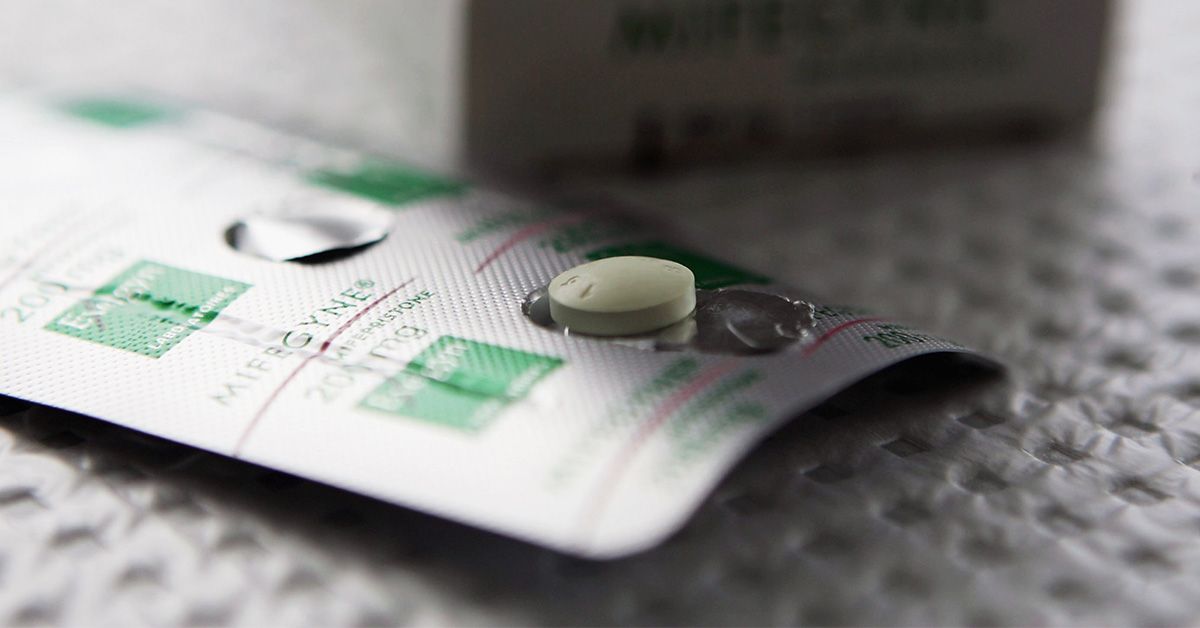
After taking abortion pills, it is completely understandable to wonder whether the process actually worked. Unfortunately, the body rarely sends a neat push notification saying, “Pregnancy successfully ended.” Instead, you usually have to look at several clues: bleeding and cramping after misoprostol, passing clots or tissue, pregnancy symptoms fading, and follow-up testing at the correct time.
The most important point is that symptoms can suggest that the abortion pill worked, but symptoms alone cannot prove it. Some people bleed heavily and still have an incomplete or continuing pregnancy. Others have less bleeding than expected and complete the abortion successfully. A correctly timed pregnancy test, blood test, ultrasound, or follow-up assessment provides the most reliable confirmation.
Clinical basis:
What Happens When the Abortion Pills Work?
Medication abortion commonly involves two medicines. Mifepristone blocks progesterone, a hormone needed for a pregnancy to continue. Misoprostol then causes the uterus to contract and empty. Some protocols use misoprostol alone, so the exact timeline can vary depending on the medications, pregnancy duration, dosage, and instructions you received.
After taking misoprostol, most people experience cramping and vaginal bleeding. The bleeding may be heavier than a normal period and may include blood clots or pregnancy tissue. For many people, the most intense part occurs over several hours. Cramping and bleeding usually become lighter after the pregnancy passes, although spotting may continue on and off for several weeks.
Clinical basis:
Signs the Abortion Pill Probably Worked
1. You Had Bleeding and Cramping After Misoprostol
Bleeding and cramping are among the most common signs that misoprostol is causing the uterus to empty. They frequently begin within a few hours, although some people start sooner and others take longer.
The bleeding may be heavier than your usual menstrual flow. Strong cramps, a gush of blood, or a temporary increase in bleeding can occur as the pregnancy passes. The intensity should eventually decrease rather than remain at its peak indefinitely.
Remember that heavier does not automatically mean more successful. You do not need to compete in an imaginary “most dramatic bleeding” contest. The amount varies considerably from person to person and can depend on how far along the pregnancy was.
Clinical basis:
2. You Passed Blood Clots or Tissue
Passing clots or tissue is another reassuring sign. Clots may be small, medium-sized, or occasionally larger. Earlier in pregnancy, the pregnancy tissue is small and may be mixed with blood and uterine lining, so you might not recognize anything specific.
Not seeing an identifiable gestational sac or embryo does not mean the abortion failed. Many people never see anything that clearly looks different from an ordinary blood clot, particularly during a very early medication abortion.
Clinical basis:
3. The Bleeding and Cramping Became Lighter
Once the main part of the process is over, bleeding and cramps usually become less intense. You may continue to have period-like bleeding, lighter spotting, or occasional small clots. The pattern can stop and start rather than declining in a perfectly straight line.
Activity may temporarily make the bleeding seem heavier. Rest can make it lighter. What matters is the overall direction: the most intense symptoms should pass, and you should gradually feel more physically stable.
Clinical basis:
4. Pregnancy Symptoms Started Going Away
Early pregnancy symptoms generally improve after a successful medication abortion because pregnancy hormone levels begin to fall. Nausea, vomiting, food aversions, and fatigue may improve within several days. Breast tenderness can take longer, sometimes one or two weeks.
Symptoms do not disappear on a universal schedule. Your breasts may remain tender even after the pregnancy has ended, and fatigue can hang around after a physically and emotionally demanding experience. Still, pregnancy symptoms that remain strong, increase, or continue beyond one to two weeks deserve a conversation with a health care professional.
Clinical basis:
5. You No Longer Feel Pregnant
“Not feeling pregnant anymore” is not a laboratory test, but it can be meaningful when combined with bleeding, cramping, and fading symptoms. Many people notice that their nausea disappears, their appetite returns, or their body simply feels different.
Trust your observations, but do not rely on intuition alone. A continuing pregnancy can occasionally produce subtle symptoms, and hormone changes may take time. Confirmation testing is still important.
How to Confirm That the Abortion Pill Worked
Follow the Testing Plan You Were Given
Your provider may recommend a follow-up phone call, symptom questionnaire, special pregnancy test, blood test, ultrasound, or a combination of these methods. The FDA medication guide for mifepristone describes follow-up approximately 7 to 14 days after treatment. Many modern clinical programs also use remote follow-up and appropriately timed home testing for patients without concerning symptoms.
Clinical basis:
Home Pregnancy Testing
A normal store-bought pregnancy test can remain positive for several weeks after a successful abortion. That happens because human chorionic gonadotropin, or hCG, does not disappear immediately. The test may detect leftover hormone even though the pregnancy is no longer continuing.
Follow the timing in your provider’s instructions. Some programs supply a special low-sensitivity pregnancy test designed for earlier follow-up. When using a standard home test, many providers recommend waiting about four weeks, while some advise testing at four to six weeks.
If a standard pregnancy test is still positive, do not immediately assume the abortion failed. Contact your provider or hotline for guidance. You may be advised to repeat the test, have a quantitative hCG blood test, or obtain an ultrasound. A positive test combined with persistent pregnancy symptoms is more concerning than a faint positive result with symptoms that have resolved.
Clinical basis:
Blood Tests for hCG
Quantitative blood tests measure the amount of hCG rather than simply producing a positive or negative result. A clinician can compare a test taken before treatment with another taken afterward. A substantial decline supports that the pregnancy has ended, while levels that do not fall as expected may require additional evaluation.
A single hCG number is often less helpful than the pattern over time. Your clinician will interpret the results based on the original level, timing, pregnancy duration, and symptoms.
Clinical basis:
Ultrasound Confirmation
An ultrasound can check whether the pregnancy is still developing and whether additional treatment may be needed. However, routine ultrasound is not necessary for every uncomplicated medication abortion. It is more likely to be recommended when symptoms are unclear, pregnancy symptoms continue, testing remains positive, bleeding is unusual, or an ectopic pregnancy is possible.
Clinical basis:
What If You Did Not Bleed Much?
Light bleeding does not always mean the medication failed, especially very early in pregnancy. However, no bleedingor only a few spotswithin 24 hours after completing the instructed misoprostol regimen is a reason to contact your provider.
Possible explanations include delayed response, incorrect administration, vomiting before the medication was absorbed, an ongoing pregnancy, or an ectopic pregnancy. A clinician may recommend additional misoprostol, testing, an ultrasound, or another form of treatment. Do not take extra medication unless your provider or trusted clinical resource advises it.
Clinical basis:
Signs the Abortion May Not Be Complete
Contact a health care professional when any of the following occurs:
- You had no meaningful bleeding after misoprostol.
- Pregnancy symptoms remain strong after one to two weeks.
- Pregnancy symptoms disappear and then return.
- A pregnancy test remains positive at the time your provider told you to test.
- Heavy or moderate bleeding continues without becoming lighter.
- You have persistent pelvic pain or cramping that does not improve.
- You continue to feel generally unwell instead of gradually recovering.
An incomplete abortion means that some pregnancy-related tissue remains in the uterus. Treatment may involve waiting, another dose of misoprostol, or an aspiration procedure. A continuing pregnancy means the pregnancy is still developing and requires prompt clinical follow-up to discuss treatment options.
Clinical basis:
When to Seek Urgent Medical Care
Medication abortion is highly effective and serious complications are uncommon, but urgent warning signs should never be ignored. Contact emergency services or seek immediate care if you experience:
- Bleeding that soaks through two full-size sanitary pads per hour for two consecutive hours.
- Fainting, confusion, severe weakness, or difficulty staying awake.
- Severe abdominal or pelvic pain that does not improve with the pain medicine recommended to you.
- Sudden, severe, or one-sided abdominal pain.
- Shoulder pain, dizziness, shortness of breath, or faintness, especially with one-sided pain.
- A fever of 100.4°F or 38°C that persists, begins more than 24 hours after misoprostol, or occurs with worsening illness.
- Foul-smelling vaginal discharge.
- Vomiting or diarrhea that continues for more than 24 hours and prevents you from keeping down fluids.
One-sided pain, shoulder pain, dizziness, or fainting may indicate an ectopic pregnancy. Abortion pills do not treat an ectopic pregnancy, which develops outside the uterus and can become life-threatening if it ruptures. Seek emergency care rather than waiting for a pregnancy test.
Clinical basis:
Common Questions About Knowing Whether It Worked
Can You Still Be Pregnant After Bleeding Heavily?
Yes, although it is uncommon. Bleeding indicates that the medications affected the uterus, but it does not guarantee that the pregnancy ended completely. This is why follow-up testing matters even when the physical process seemed unmistakable.
Does a Positive Pregnancy Test Mean the Abortion Failed?
Not necessarily. A standard urine test may remain positive for four to six weeks because hCG declines gradually. Follow your provider’s testing schedule and ask for additional evaluation if the result remains positive, especially if pregnancy symptoms continue.
Is It Normal to Keep Spotting?
Yes. Light bleeding or spotting can continue intermittently for several weeks. Seek advice when bleeding becomes progressively heavier, is accompanied by severe pain or fever, or continues in a way that concerns you.
When Should Your Next Period Arrive?
A menstrual period often returns within four to eight weeks. Ovulation can happen before that first period, meaning pregnancy is possible again fairly quickly. A missed period does not automatically prove an ongoing pregnancy, but testing is sensible when your period does not return within the expected window.
Can You Tell by Looking at the Tissue?
Usually not with certainty. Early pregnancy tissue may be tiny and difficult to distinguish from blood clots or uterine lining. Visual inspection is not a reliable substitute for follow-up testing.
Experiences: What the Process Can Feel Like in Real Life
The following examples are fictional composites based on commonly reported experiences. They are not individual medical histories, and every person’s experience can be different.
Experience One: More Intense Than Expected, Then Suddenly Quieter
One person takes misoprostol in the afternoon after preparing pads, water, a heating pad, and the pain medication recommended by the clinic. For the first hour, very little happens. That quiet stretch creates anxiety: Was the medication absorbed? Did something go wrong? Then the cramps arrive quickly and feel much stronger than ordinary menstrual cramps.
Bleeding starts soon afterward. Over the next few hours, the person passes several clots and notices that the bleeding temporarily becomes quite heavy. They cannot identify pregnancy tissue, which causes another wave of worry. However, the cramps become noticeably lighter later that evening, the bleeding slows, and the nausea that had been present every morning is gone two days later.
Four weeks afterward, the person takes the home pregnancy test specified by the provider, and the result is negative. In this experience, the combination of bleeding, clots, fading pregnancy symptoms, symptom improvement, and correctly timed testing supports that the abortion was complete.
Experience Two: Less Bleeding Than the Internet Suggested
Another person expects a dramatic scene after reading dozens of personal stories online. Instead, the bleeding resembles a heavy period, and the clots are small. The cramps are uncomfortable but manageable. Because the experience does not match the most intense accounts, the person assumes the medication may have failed.
A follow-up conversation with the provider offers reassurance that bleeding amounts vary, particularly in very early pregnancy. The person’s breast tenderness gradually decreases, and a follow-up test completed according to the provider’s instructions confirms that the pregnancy ended.
This example illustrates why online comparisons can create unnecessary panic. People are more likely to post experiences that were unusually painful, confusing, or dramatic. A quieter experience is not automatically an unsuccessful one.
Experience Three: A Positive Test That Needs More Context
A third person has several hours of bleeding and cramping, followed by a steady improvement. Three weeks later, curiosity wins, and they take a highly sensitive store-bought pregnancy test. The test shows a faint positive line. Understandably, this feels alarming.
The provider explains that pregnancy hormone can remain detectable for several weeks. Because pregnancy symptoms have disappeared and there are no warning signs, the provider recommends another test at the appropriate follow-up time. The next result is negative.
A different outcome would require a different response. If the test stayed positive, the line became darker, or nausea and breast tenderness remained strong, blood testing or ultrasound could be needed to rule out a continuing or incomplete pregnancy.
Experience Four: When Calling for Help Is the Right Choice
Another person takes misoprostol but has almost no bleeding by the following day. They also notice persistent one-sided pelvic pain. Rather than taking more pills independently or waiting several days, they contact a clinician and are advised to receive urgent evaluation.
This is an important reminder that “wait and see” is not always the best approach. No bleeding combined with one-sided pain requires professional assessment because an ectopic pregnancy cannot be treated with abortion pills. Asking for help is not overreacting; it is exactly what safety instructions are for.
Conclusion
You probably know the abortion pill worked when you experienced bleeding and cramping after misoprostol, possibly passed clots or tissue, noticed that the bleeding and pain later became lighter, and felt pregnancy symptoms fade. However, the most dependable confirmation comes from following the testing plan supplied by your provider.
Do not judge the outcome by comparing your bleeding with someone else’s story. Bodies are spectacularly bad at following identical scripts. Focus instead on the overall pattern, correctly timed testing, and the absence of warning signs. When something feels wrongor you simply remain unsurecontact your provider, a qualified clinician, or the U.S. Miscarriage and Abortion Hotline at 1-833-246-2632.
Support information and clinical basis:













