
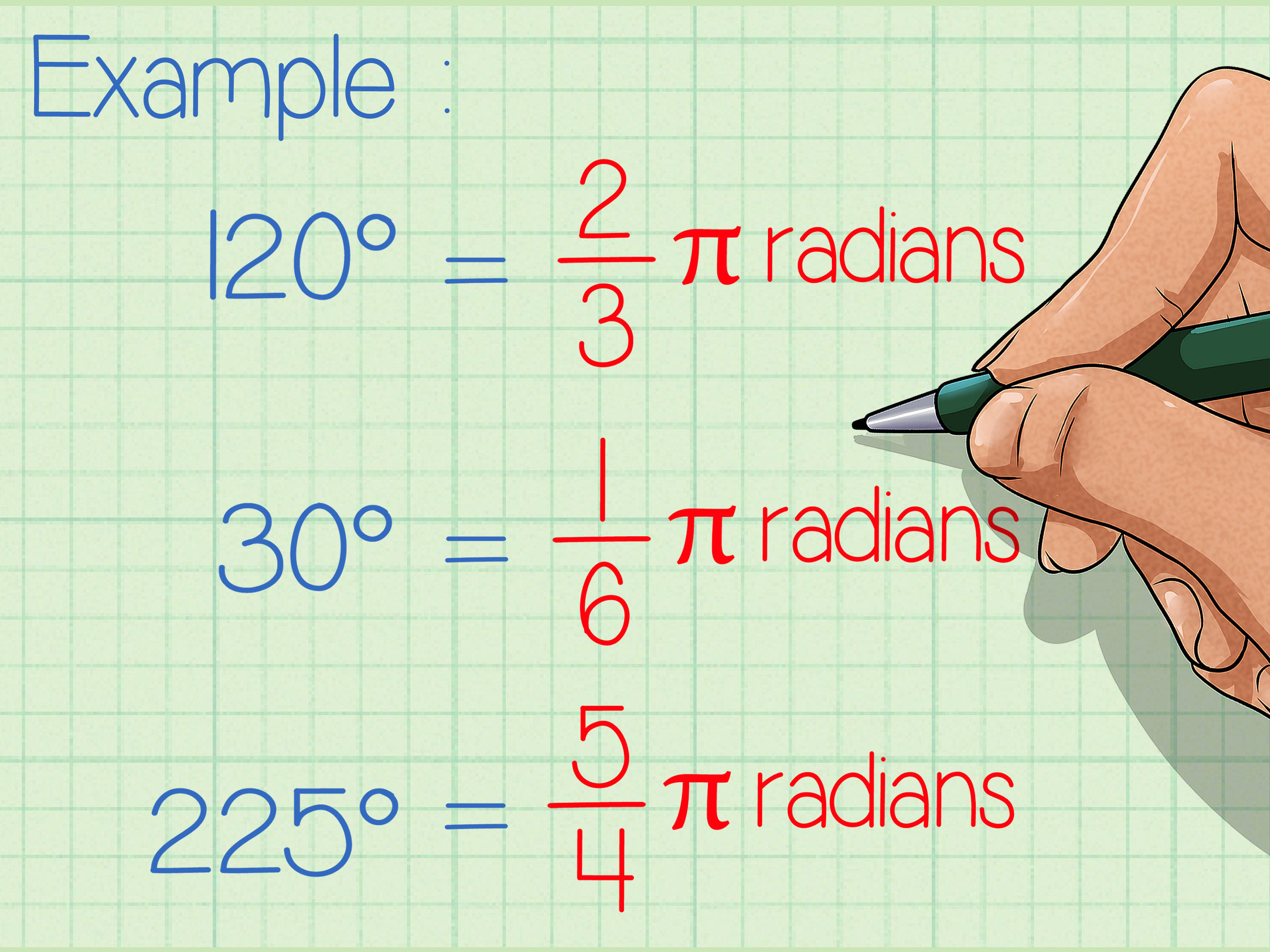
Some math skills feel like they were invented just to make students squint at the page and whisper, “Why is there a pi in this now?” Converting degrees to radians is one of those topicsuntil it suddenly clicks. Then it becomes one of the most useful shortcuts in trigonometry, geometry, physics, calculus, and any situation where circles are being dramatic.
If you have ever looked at 45° and wondered how it magically becomes π/4, you are in the right place. This guide breaks the process into five easy steps, explains why radians matter, shows worked examples, highlights common mistakes, and gives you enough practice to stop treating this conversion like a tiny math ambush.
By the end, you will know the exact degrees to radians formula, how to simplify your answers cleanly, how to check your work, and why radians are not just degrees wearing a fancy hat.
What Is the Difference Between Degrees and Radians?
Degrees and radians are both units for measuring angles. Degrees are the familiar option: a full circle is 360°. Radians measure angles in a way that connects directly to the geometry of a circle. A full circle is 2π radians, which means a half-circle is π radians.
That one fact does a lot of heavy lifting:
- 180° = π radians
- 90° = π/2 radians
- 360° = 2π radians
Radians are especially useful because they work naturally with the unit circle, arc length, angular velocity, and trigonometric functions. In other words, radians are not math trying to be mysterious. They are math trying to be efficient.
Why You Need to Know How to Convert Degrees to Radians
Learning how to convert degrees to radians is not just a homework requirement. It shows up everywhere once you move beyond basic angle problems.
Radians make trigonometry cleaner
Many important trig values are traditionally written in radians. For example, the unit-circle angle for 60 degrees is usually written as π/3, not just 60°.
Calculus prefers radians
In calculus, derivatives and integrals involving sine and cosine behave correctly in their standard forms when angles are measured in radians. Degrees are welcome at the party, but radians get the VIP wristband.
Science and engineering use radians constantly
Rotational motion, oscillation, wave behavior, and circular measurement often rely on radians because the formulas are more direct and less cluttered.
Degrees to Radians Formula
The formula is simple:
Radians = Degrees × (π / 180)
That is the whole conversion in one line. Multiply the degree measure by π/180, then simplify.
Think of it as a unit conversion, just like converting inches to feet or minutes to hours. You are swapping one angle unit for another.
How to Convert Degrees to Radians: 5 Steps
Step 1: Write the angle in degrees
Start with the angle exactly as given. Keep the degree symbol in mind because it tells you what unit you are converting from.
Example: 120°
This may sound almost insultingly obvious, but it matters. Many mistakes happen because students rush and forget whether they started in degrees or radians. Math loves confidence, but it rewards carefulness.
Step 2: Multiply by π/180
Take the degree measure and multiply it by the conversion factor π/180.
120° × (π/180)
This works because 180° = π radians. So multiplying by π/180 changes the unit from degrees to radians.
Step 3: Cancel and simplify the numbers
Now simplify the fraction. For 120 degrees:
120π/180 = 2π/3
Reduce the numerical fraction first, then attach the π. The cleaner your fraction, the cleaner your final answer.
Step 4: Write the answer in radians
Your simplified result is now the radian measure:
120° = 2π/3 radians
You can include the word “radians” if your teacher, class, or website style guide wants complete labeling. Otherwise, the presence of π usually makes the unit obvious.
Step 5: Check against common angle values
This is the underrated step. Quick mental checks can catch a lot of errors.
- 30° should be π/6
- 45° should be π/4
- 60° should be π/3
- 90° should be π/2
- 180° should be π
If your answer says 90° equals 90π, something has gone terribly wrong and the fraction needs adult supervision.
Examples of Converting Degrees to Radians
Example 1: Convert 45° to radians
45 × (π/180) = 45π/180 = π/4
Answer: 45° = π/4
Example 2: Convert 150° to radians
150 × (π/180) = 150π/180 = 5π/6
Answer: 150° = 5π/6
Example 3: Convert 270° to radians
270 × (π/180) = 270π/180 = 3π/2
Answer: 270° = 3π/2
Example 4: Convert -225° to radians
-225 × (π/180) = -225π/180 = -5π/4
Answer: -225° = -5π/4
Example 5: Convert 12.5° to radians
12.5 × (π/180) = 12.5π/180 = 25π/360 = 5π/72
Answer: 12.5° = 5π/72
Common Degrees to Radians Chart
| Degrees | Radians |
|---|---|
| 0° | 0 |
| 30° | π/6 |
| 45° | π/4 |
| 60° | π/3 |
| 90° | π/2 |
| 120° | 2π/3 |
| 135° | 3π/4 |
| 150° | 5π/6 |
| 180° | π |
| 270° | 3π/2 |
| 360° | 2π |
Memorizing these common angles can save you time, especially in trigonometry and precalculus. They appear so often that ignoring them is like refusing to learn where the light switch is in your own room.
How to Convert Degrees to Radians Without Panic
If you want the quick version, here it is:
- Take the angle in degrees.
- Multiply by π/180.
- Reduce the fraction.
- Keep the π.
- Check whether the answer matches a known angle if possible.
That is the process in its simplest form. Once you do it a few times, it becomes automatic.
Common Mistakes to Avoid
Forgetting the conversion factor
The most common mistake is using the wrong factor. To convert degrees to radians, multiply by π/180. Not 180/π. That one goes the other way.
Not simplifying the fraction
Leaving an answer as 90π/180 is technically on the road to the right place, but it is not finished. Simplify to π/2.
Dropping the negative sign
If the angle is negative, the radian answer stays negative. Math notices this kind of thing, and unfortunately, so do teachers.
Turning on the wrong calculator mode
When evaluating trig functions after converting, make sure your calculator is set to the correct mode. If the input is in radians, the calculator must be in radian mode.
When Radians Show Up in Real Life
You may not casually tell your friends, “This pizza slice subtends an angle of 0.785 radians,” but radians are genuinely useful in real-world math.
Physics
Angular velocity and circular motion formulas usually use radians. A spinning wheel, fan blade, or orbiting object is much easier to analyze with radian measure.
Engineering
Rotational systems, gears, turbines, robotics, and waves often rely on radians because formulas are cleaner and more consistent.
Computer graphics and programming
Many programming languages and graphics engines expect angles in radians when rotating objects, drawing arcs, or working with trig functions.
Higher math
Precalculus, calculus, differential equations, and beyond all treat radians as the standard unit for angle measure.
Practice Problems
Try these on your own
- Convert 30° to radians
- Convert 210° to radians
- Convert -60° to radians
- Convert 315° to radians
- Convert 22.5° to radians
Answers
- 30° = π/6
- 210° = 7π/6
- -60° = -π/3
- 315° = 7π/4
- 22.5° = π/8
Final Thoughts
Once you understand that 180 degrees equals π radians, the entire process becomes a straightforward unit conversion. Multiply by π/180, simplify, and check whether your result makes sense. That is it. No secret handshake. No mystical spiral of doom. Just a reliable math skill that becomes more useful the further you go.
If you are learning trigonometry, this conversion is worth practicing until it feels ordinary. The more comfortable you are with radians, the easier the unit circle, trig identities, graphing, and calculus will become. In other words, mastering this now saves Future You from giving Present You a very disappointed look.
Experiences Related to Learning How to Convert Degrees to Radians
One of the most common experiences students have when learning how to convert degrees to radians is that the topic seems harder than it really is at first. The presence of π makes the whole thing look more advanced, even though the actual process is just a conversion. Many students are comfortable with degrees because they have seen them for years in geometry, clocks, maps, and everyday life. Radians feel unfamiliar, almost like someone replaced a simple measuring cup with a tiny scientific beaker and expected nobody to react.
Then the first breakthrough usually happens when students realize that radians are tied to the circle itself. Instead of being an arbitrary unit, radians connect angle measure to arc length and radius. That moment matters. It turns radians from “weird trig notation” into “oh, this is actually a logical system.” Teachers often notice that once students see 180° = π and 360° = 2π, the mental resistance starts to fade.
Another common experience is the discovery that memorizing a few benchmark angles makes everything easier. Students who repeatedly convert 30°, 45°, 60°, 90°, and 180° start recognizing patterns instead of doing every problem from scratch. At that stage, conversions become faster and more intuitive. A student sees 270 degrees and almost immediately thinks 3π/2. That is usually the point where confidence begins to replace guesswork.
Of course, there are also the classic mistakes. Many learners remember the formula backward and multiply by 180/π instead of π/180. Others forget to simplify. Some do the arithmetic correctly, then lose points because their calculator is still set to degree mode when the next problem expects radians. These are normal experiences, not signs that someone is bad at math. In fact, nearly everyone who learns trigonometry has at least one “Why is my calculator giving me nonsense?” moment. It is practically a rite of passage.
Students also tend to report that conversions make more sense once they are used in a larger context. When radians show up in the unit circle, graphing sine and cosine, or solving physics problems involving rotation, the purpose becomes clearer. The skill stops feeling like an isolated rule and starts feeling like part of a toolkit. That shift is huge. It is one thing to memorize a formula. It is another to recognize why the formula matters.
For many people, the best learning experience comes from repetition with variety: positive angles, negative angles, common angles, and decimal degree measures. The repeated structure builds speed, while the different examples build flexibility. Over time, students stop seeing radians as the villain of the chapter and start seeing them as the language the chapter was speaking all along. That is usually when the topic clicks for good.












