Entering writing contests online sounds simple: find a contest, upload your masterpiece, click submit, and wait for fame to arrive wearing sunglasses. In reality, internet writing contests are a little more like airport security for your imagination. There are rules, forms, word counts, file formats, eligibility limits, deadlines, entry fees, rights clauses, blind judging requirements, and that one tiny checkbox you almost miss because it is hiding like a raccoon in the bushes.
The good news? Once you understand how online writing competitions work, the process becomes much less mysterious. Whether you write short stories, poetry, personal essays, flash fiction, memoir, novel chapters, screenplays, or creative nonfiction, there are legitimate contests on the internet that can help you build confidence, gain publication credits, win prize money, and get your work in front of editors or judges.
This guide explains how to enter writing contests on the internet the smart way: how to find reputable opportunities, choose the right contests, polish your submission, follow guidelines, avoid scams, track results, and keep your writerly sanity intact. Because yes, you can be ambitious and organized at the same time. Shocking, but legal.
Why Online Writing Contests Are Worth Considering
Online writing contests can be useful for writers at almost every stage. Beginners get a deadline, a clear goal, and a reason to finish something instead of letting a half-written story live forever in a folder named “Final_FINAL_really_final_maybe.docx.” More experienced writers can use contests to build a publication record, test new material, and reach editors who may not otherwise see their work.
A good writing contest may offer cash prizes, publication, feedback, mentorship, agent attention, or simply the credibility of placing in a respected competition. Some contests are attached to literary magazines, universities, writing organizations, publishers, conferences, or professional associations. Others are run by independent journals, nonprofit groups, or online writing communities.
That said, not every contest is worth entering. A contest is only valuable if it fits your goals, respects your rights, explains its rules clearly, and treats writers fairly. The internet contains golden opportunities, questionable “awards,” and a few digital goblins wearing fake literary hats. Your job is to tell the difference.
Step 1: Know What Kind of Writing Contest You Want
Before searching, decide what you are trying to accomplish. This prevents you from entering every contest that blinks at you from the search results like a carnival sign.
Choose by genre
Most writing contests are organized by genre. Common categories include fiction, nonfiction, poetry, memoir, flash fiction, short story, essay, novel manuscript, chapbook, screenplay, playwriting, children’s literature, young adult fiction, translation, and hybrid writing. If you write literary short stories, a poetry chapbook prize probably is not your lane. If you write personal essays, look for nonfiction or essay contests rather than general fiction competitions.
Choose by career stage
Some contests are open to everyone. Others are designed for emerging writers, unpublished authors, students, residents of certain regions, debut book authors, writers over a certain age, or writers from specific communities. Read eligibility rules carefully. If a contest says “unpublished writers only,” it may define “published” in a very specific way. A blog post, self-published book, anthology appearance, or paid magazine publication could matter.
Choose by reward
Ask what you want from the contest. Cash is nice, because writers enjoy food and electricity. Publication can be even more useful if the journal or publisher has a strong reputation. Feedback may help if you are learning. A low-cost contest with thoughtful notes can be more valuable than an expensive contest with a shiny trophy and the emotional warmth of a parking meter.
Step 2: Find Legitimate Writing Contests Online
Start with reputable directories and organizations instead of random ads. Reliable places often review listings, provide basic details, and point you toward contests with published guidelines. Writers commonly use databases and resources from literary organizations, writing magazines, contest platforms, literary magazine directories, professional associations, and university-affiliated publications.
Search using specific terms such as “short story contest,” “poetry contest no fee,” “creative nonfiction contest,” “flash fiction contest,” “essay contest,” or “writing contest for emerging writers.” Add the current year if you want active deadlines. For example, “2026 short story contest online” is more useful than simply typing “writing contest” and hoping the internet has had coffee.
Good contest listings usually include the sponsor name, genre, deadline, entry fee, prize amount, eligibility rules, word count, submission method, judge name if available, and a link to full guidelines. If the listing is vague, go directly to the sponsor’s official website before submitting.
Step 3: Research the Contest Before Paying Anything
Entry fees are common in literary contests, especially those run by magazines, presses, and writing organizations. A fee does not automatically mean a contest is bad. Many legitimate contests use fees to pay judges, fund prizes, support publication costs, or keep a nonprofit journal alive. However, the fee should make sense compared with the prize, sponsor reputation, and benefits.
Before entering, check the sponsor’s history. Have they announced past winners? Are the winning pieces published or easy to verify? Do known writers, editors, or organizations recognize the contest? Does the sponsor clearly identify its staff, judges, or editorial team? Does the website look professional enough, or does it resemble a pop-up shop built during a thunderstorm?
Also study the rights language. A trustworthy contest should not demand ownership of all entries. Usually, only winners or published finalists grant limited publication rights. Be cautious if simply entering gives the sponsor broad rights to publish, sell, adapt, or reuse your work forever. Your writing is not a free buffet.
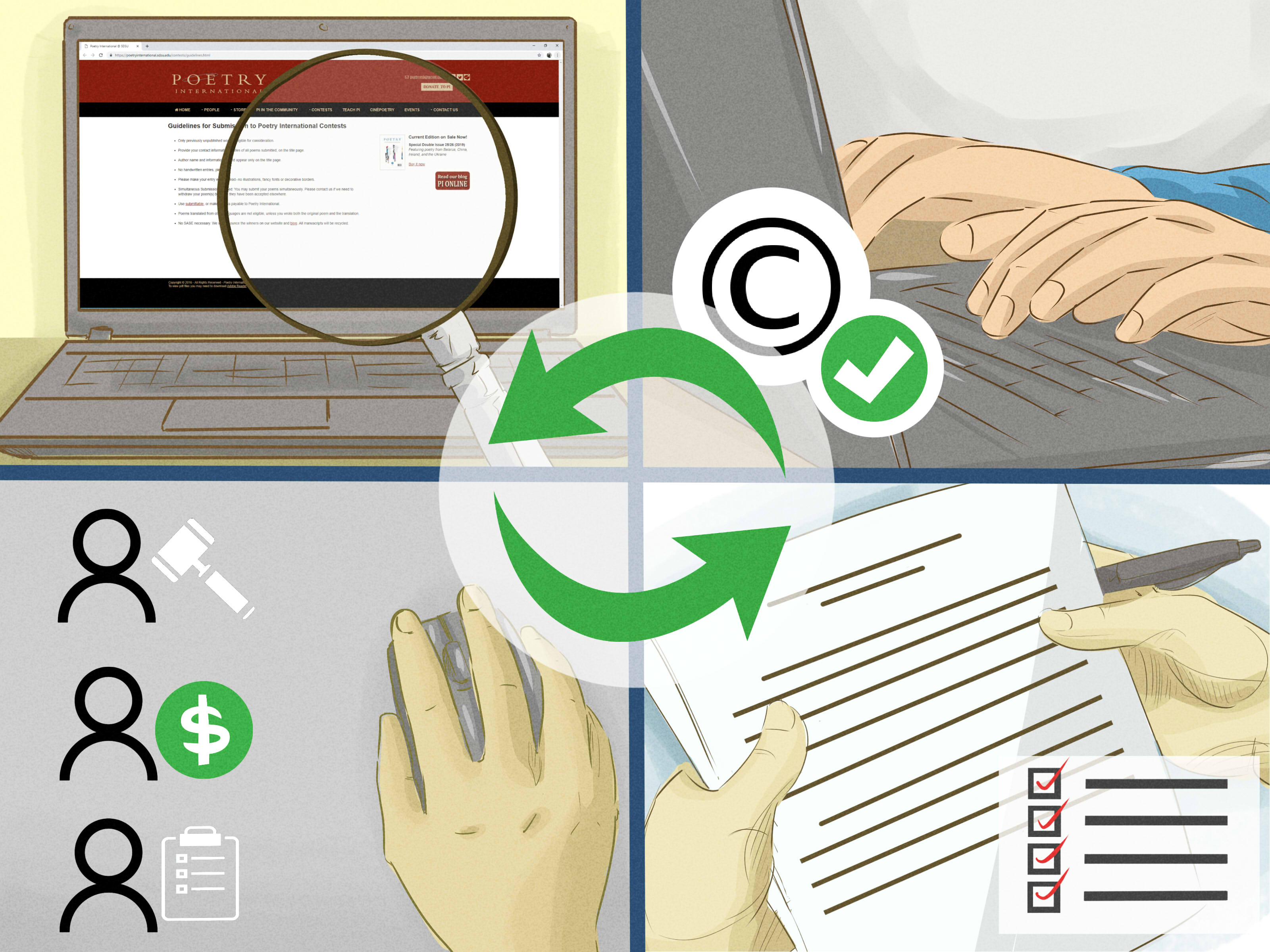
Step 4: Read the Submission Guidelines Like a Detective
Guidelines are not decorative. They are the rulebook, the map, and sometimes the trapdoor. Many writers are rejected before their work is seriously considered because they ignore basic instructions. That is painful, avoidable, and a little tragic, like wearing a tuxedo to a beach volleyball tournament.
Look for these details:
- Deadline: Note the date, time, and time zone.
- Word count or page limit: Do not assume “close enough” is close enough.
- Genre: Submit the correct kind of work to the correct category.
- File format: Common formats include DOC, DOCX, PDF, or plain text.
- Formatting: Some contests require double spacing, 12-point font, one-inch margins, numbered pages, or standard manuscript format.
- Blind judging rules: Your name may need to be removed from the manuscript and file name.
- Eligibility: Check age, location, publication history, membership, and conflict-of-interest rules.
- Simultaneous submissions: Some contests allow you to submit the same work elsewhere; others do not.
- Previously published work: Many contests require unpublished writing.
- Rights: Understand what happens if you win, place, or are selected for publication.
Make a checklist for each contest. Then follow it with the loyalty of a golden retriever. Contest administrators are often sorting hundreds or thousands of entries. If your submission ignores the rules, you are making it easy for them to say no before your brilliant metaphor even gets warmed up.
Step 5: Prepare Your Best Work, Not Your Almost-Best Work
Writing contests are competitive. That does not mean you need to be famous, but it does mean you need to submit polished work. A strong contest entry feels complete, intentional, and carefully revised. It has a clear opening, controlled pacing, specific language, and an ending that earns its emotional or intellectual impact.
For fiction, focus on character, conflict, voice, and movement. A story does not need explosions, dragons, or a detective named Brick Danger, but it does need pressure. Something should matter. For nonfiction, make sure the piece offers insight, not just a sequence of events. The reader should finish with a deeper understanding of the subject, the narrator, or the world. For poetry, every line should earn its place. Remove filler words, predictable images, and dramatic fog machines unless they truly serve the poem.
Read your piece aloud before submitting. This catches awkward sentences, repeated words, missing transitions, and dialogue that sounds like two robots arguing over soup. If possible, ask a trusted reader to review it. Do not ask ten people and then attempt to obey every suggestion. That way lies madness and a 47-page poem about a refrigerator.
Step 6: Format the Manuscript Correctly
Formatting is not glamorous, but it matters. Many contests request standard manuscript formatting: readable font, simple spacing, clean margins, page numbers, and a title. If the contest gives specific formatting rules, follow those instead. The sponsor’s instructions always beat general advice.
For blind contests, remove your name, email address, bio, acknowledgments, website, and identifying information from the manuscript. Check the file name too. A document called “Sarah-Loves-Dragons-Final.docx” is not anonymous if your name is Sarah and your story is about dragons. Use something simple like “The Glass Orchard.docx” or “ContestEntry.docx” if the rules allow it.
Double-check metadata if you are extremely cautious, especially for competitive blind submissions. Some word processors store author names in file properties. Most contests are not trying to run a spy agency, but clean files show professionalism.
Step 7: Write a Simple Cover Letter or Bio
Some online writing contests ask for a cover letter, author bio, or statement. Keep it short unless the guidelines request something detailed. A basic cover letter can include the title of your piece, genre, word count, and a polite thank-you. If the contest asks for a third-person bio, write two to four sentences about your writing background, publications, education, location, or interests.
Do not apologize for being unpublished. Do not explain that your cat loved the story. Do not mention that you wrote the poem at 3:00 a.m. while eating cereal from a mug. Charming? Maybe. Useful? Probably not. Professional, concise, and warm usually wins.
Step 8: Submit Through the Correct Online Portal
Many contests use online submission managers. These systems typically ask you to create an account, choose a category, upload your file, enter contact details, pay a fee if required, and confirm your submission. Take your time. A rushed submission is where mistakes breed like rabbits with laptops.
Before clicking the final button, review everything: category, title, file, word count, contact email, fee amount, and confirmation screen. Save the receipt or confirmation email. If the portal allows edits before the deadline, note that too. Some systems lock the submission immediately.
If payment fails, do not submit multiple times unless instructed. Contact the contest administrator if necessary. If you submit to the wrong category, politely ask whether it can be corrected. Contest teams are human. They appreciate clear, respectful emails more than panic messages written entirely in capital letters.
Step 9: Track Every Submission
Keep a spreadsheet or submission tracker. Include the contest name, sponsor, genre, title submitted, date submitted, deadline, fee, prize, response date, result, and whether simultaneous submissions are allowed. This habit saves you from accidentally submitting the same story to a contest that forbids it or forgetting where your work is currently under consideration.
Tracking also helps you understand your writing strategy. You may discover that your flash fiction places more often than your essays, or that certain journals respond quickly, or that you are spending too much on contests with little return. Data is not romantic, but neither is losing a deadline because your notes are scattered across sticky pads, emails, and the mysterious back of a grocery receipt.
Step 10: Handle Rejections Like a Working Writer
Most contest entries do not win. That is normal. Rejection does not mean your writing is worthless. It may mean the piece was not the judge’s taste, the competition was unusually strong, the category was crowded, or your work needed another revision. Sometimes the difference between finalist and form rejection is a matter of preference so tiny it could ride a flea.
When you receive a rejection, record it, take a breath, and decide what to do next. If the piece is strong, send it elsewhere. If multiple contests reject it and you sense a pattern, revise. If you receive personal feedback, read it after your emotions cool down. Feedback is easier to use when your ego is not standing on a chair waving a frying pan.
How to Avoid Online Writing Contest Scams
Scammy or low-value contests often share warning signs. Be cautious if a contest has a high entry fee but vague prizes, no clear judges, no past winners, confusing rights language, unrealistic promises, or pressure to buy certificates, anthologies, stickers, editing packages, or expensive “winner” services. Also be careful if the sponsor claims every entry is a winner. That is not a contest; that is a participation confetti machine.
A legitimate contest should explain who can enter, what it costs, what winners receive, how judging works, when results will be announced, and what rights the sponsor receives. If the rules say the sponsor can change anything at any time, use your judgment. If the rights clause feels too broad, skip it. There will always be another contest.
You should also understand basic copyright. In the United States, copyright protection exists when an original work is fixed in a tangible form, such as being written down or saved in a file. Registration is not required for protection, though it can provide important legal benefits. For contest purposes, the key point is this: do not casually give away rights you do not understand.
Examples of Smart Contest Strategy
The emerging fiction writer
Suppose you have three polished short stories. Instead of entering every expensive contest you find, choose a mix: one respected national contest, two literary magazine contests with publication opportunities, and two no-fee or low-fee contests. Track the results. If one story receives finalist recognition, submit it next to selective magazines. If another gets no response after several tries, revise the opening and ending.
The poet with a chapbook
If you have a 24-page poetry manuscript, look for chapbook contests from independent presses and literary organizations. Compare fees, prize amounts, publication terms, distribution, and judge reputation. Make sure the manuscript follows page limits and remove identifying information if judging is blind. A chapbook contest is not only about winning; it can push you to shape scattered poems into a coherent collection.
The essayist building credits
For personal essays, search for contests that accept creative nonfiction, memoir, or narrative nonfiction. Pay attention to theme. A general essay contest may welcome many subjects, while a themed contest may require work about place, identity, food, family, science, humor, or travel. Submit essays that match the contest’s tone. A deeply serious essay may not fit a humor contest, unless the humor is hiding very elegantly under the floorboards.
Common Mistakes Writers Make When Entering Online Contests
The first common mistake is submitting too early. Excitement is wonderful, but revision is where the magic gets its shoes on. Give your work time to rest, then read it again with fresh eyes. The second mistake is ignoring rules. If the limit is 3,000 words, a 3,700-word entry is not “ambitious.” It is disqualified wearing a fake mustache.
The third mistake is entering contests that do not match your goals. A big prize may look attractive, but if the contest has poor visibility, questionable rights, or no meaningful publication path, it may not help your career. The fourth mistake is spending too much money. Set a monthly or yearly contest budget. Writing should not require financial acrobatics.
The fifth mistake is treating one result as a final judgment. A rejection is one outcome from one contest at one moment. Keep writing, revising, and submitting. Persistence does not guarantee a win, but quitting guarantees that your work stays invisible.
A Practical Checklist Before You Click Submit
- Confirm the contest is legitimate and currently open.
- Read the full guidelines on the official sponsor website.
- Check genre, eligibility, word count, fee, deadline, and rights.
- Revise and proofread your work carefully.
- Format the manuscript exactly as requested.
- Remove identifying information for blind judging.
- Prepare a brief cover letter or bio if required.
- Upload the correct file to the correct category.
- Save your confirmation email or receipt.
- Record the submission in your tracker.
Experience Notes: What Entering Writing Contests Teaches You
One of the best things about entering writing contests online is that the process teaches discipline without asking permission from your mood. A contest deadline gives your writing a finish line. Suddenly, that short story you have been “almost done” with for six months must either become done or continue haunting your desktop like a tiny literary ghost. This pressure can be useful. Writers often improve when they have a real reason to revise, proofread, and make decisions.
Experience also teaches you that not every contest is meant for every piece. A strange, voice-driven flash fiction story might be perfect for a small experimental magazine contest but wrong for a traditional short story award. A quiet personal essay may do better in a nonfiction contest that values reflection than in a broad competition looking for big dramatic arcs. The more you submit, the better you become at matching work to opportunity.
You also learn to respect guidelines. At first, rules may feel annoying. Why does one contest want a PDF while another wants DOCX? Why does one allow your name and another demand anonymity? Why are some deadlines at midnight Eastern time while others end at 11:59 p.m. Pacific time, as if time zones were invented by mischievous elves? After a few submissions, you realize guidelines are part of professionalism. Following them shows editors that you are careful, respectful, and easy to work with.
Another lesson is emotional balance. Winning feels fantastic, but it is not the only measure of progress. A finalist mention, a longlist placement, a kind note from an editor, or even the simple fact that you finished and submitted a polished piece can be meaningful. Rejections become less scary when you see them as part of the writing business rather than a cosmic review of your soul. The healthiest contest mindset is ambitious but not desperate.
Finally, online writing contests help you build a habit of finishing. Many writers have talent. Fewer writers complete drafts, revise them, research markets, submit carefully, track responses, and keep going after disappointment. That process is not glamorous, but it is powerful. Every contest entry gives you practice in presenting your work to the world. Sometimes you win a prize. Sometimes you win experience. Occasionally, you win both, which is the literary equivalent of finding fries at the bottom of the bag.
Conclusion: Enter Online Writing Contests With Skill, Not Panic
Learning how to enter writing contests on the internet is really learning how to act like a professional writer. You research opportunities, evaluate legitimacy, read guidelines, revise carefully, protect your rights, submit cleanly, and track your results. None of this requires secret connections or a velvet writing robe, although the robe is optional if it improves morale.
The smartest approach is selective and steady. Choose contests that fit your genre, goals, budget, and values. Submit polished work. Avoid contests with unclear rules or rights grabs. Keep records. Learn from each result. Over time, the process becomes less intimidating and more strategic.
Online writing contests will not magically build a writing career overnight, but they can open doors, sharpen your craft, strengthen your confidence, and help your work find readers. And that is the real prize: not just winning, but becoming the kind of writer who finishes, submits, improves, and keeps showing up.
Note: Contest details, deadlines, entry fees, judges, and eligibility rules can change quickly. Always verify the current guidelines on the official contest website before submitting your work.