
Hanging an American flag vertically looks simpleuntil you realize there’s a “right” way and a “why are the stars trying to escape?” way.
The good news: you don’t need a degree in Flagology (not a real major… yet). You just need a few minutes, the right hardware, and one crucial rule:
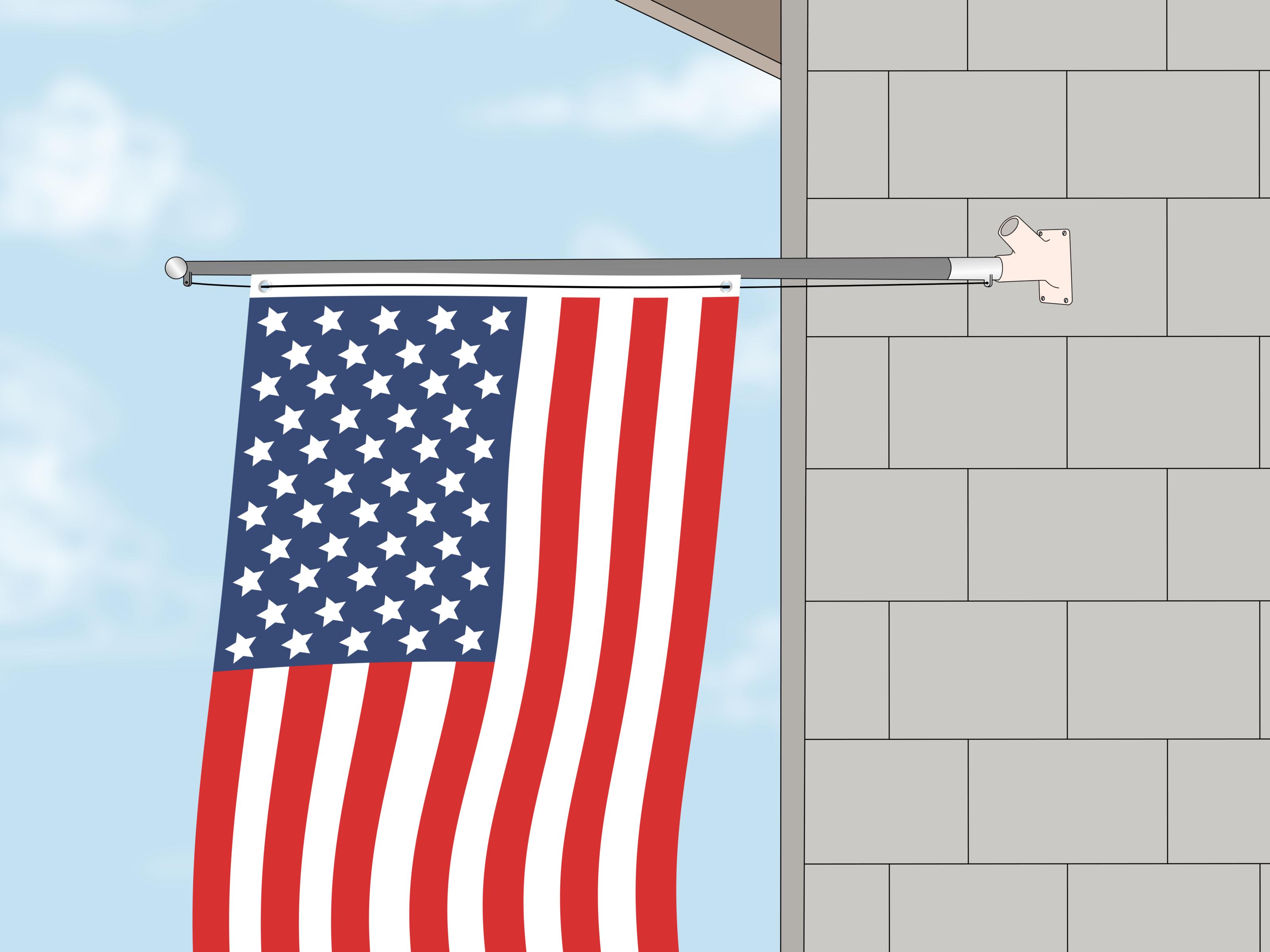
the union (the blue field with stars) belongs in the upper-left from the viewer’s perspective when the flag is displayed vertically on a wall, in a window, or on a door.
This guide synthesizes best-practice etiquette from the U.S. Flag Code plus guidance commonly published by U.S.-based authorities like veterans’ organizations,
flag foundations, and government protocol resources. No fluff, no guilt tripsjust clear steps, practical examples, and a couple jokes to keep your ladder anxiety under control.
Before You Start: The One Rule That Matters Most
If you only remember one thing from this entire article, make it this:
When you hang the U.S. flag vertically against a wall (or in a window), the union goes to the viewer’s left.
Another way to say it: the flag’s “own right” is the observer’s leftbecause the flag’s right side is the side it would use to write a strongly worded letter to gravity.
Why does this matter? Because the union is the position of honor. When displayed vertically, it still needs to be in the “upper-left” position from the viewpoint of the person looking at it.
That’s the standard etiquette guidance you’ll see repeated across reputable U.S. sources.
7 Steps to Hang an American Flag Vertically
-
Step 1: Confirm your flag type (grommets, sleeve, or banner)
Before you grab tools, check how your flag is designed to be mounted:
- Grommets: metal rings on one edge (usually meant for a pole or hooks).
- Sleeve/rod pocket: a stitched pocket along one side (meant for a rod).
- Banner-style vertical flag: already manufactured for vertical display (often a long “house banner” shape).
This matters because the mounting method changes how you keep the fabric flat, secure, and dignified (read: not flapping like a startled pigeon indoors).
-
Step 2: Pick the location and decide who the “viewer” is
“Observer’s left” depends on where people will mostly see the flag from:
- Wall in a room: the viewer is someone facing the wall.
- Window display: the viewer is typically outside on the street looking in.
- Door display: the viewer is someone approaching the door from the front.
- Lobby/corridor: the viewer is someone entering the space.
Decide this now. It prevents the classic mistake of hanging it perfectly… perfectly backward.
-
Step 3: Set the correct orientation (stars upper-leftalways)
Now the main event: rotate the flag so the union (stars) is uppermost and to the viewer’s left.
If your brain locks up, use this cheat:- Stand where the main viewer will stand.
- Hold the flag up.
- Make sure the stars are in the top-left corner from your viewpoint.
If the stars are on the top-right, you’ve basically turned the flag into a “mirror universe” version of itself. Easy fix: rotate or flip it until stars return to upper-left.
-
Step 4: Choose hardware that prevents sagging and fabric stress
Vertical display is tougher on fabric because gravity is relentless and has no respect for your aesthetic goals.
The best setups support the flag at multiple points (not just two sad hooks hoping for the best).- For grommets: use two hooks at minimum; consider additional clips along the edge to keep it flat.
- For sleeves: use a straight rod (wood, metal, or curtain rod) and mount the rod level.
- For banners: follow the built-in sleeve/grommets; many are designed to hang taut with a weighted bottom.
Bonus tip: if you’re hanging outdoors (porch or over a walkway), choose rust-resistant hardware and avoid anything sharp that can tear stitching.
-
Step 5: Measure, mark, and mount level (yes, level)
“Eyeballing it” is how you end up with a flag that looks like it’s sliding off the wall to go start its own independent nation.
- Measure the mounting points (distance between grommets or rod brackets).
- Use a level or a phone leveling app for straight brackets.
- Use anchors if you’re mounting into drywall and the flag is heavy or outdoors.
A level mount also helps the stripes hang cleanly and reduces wrinkling and twisting over time.
-
Step 6: Hang the flag flat and let it fall freely
The U.S. flag is intended to be displayed flat when not flown from a staff, and it should hang naturally (not bunched, knotted, or pinned into a swan shape).
After you mount it:- Secure the top edge first (grommets or rod).
- Adjust the fabric so the union is crisp and the stripes fall straight.
- If needed, add discreet bottom weights or gentle side clips to keep it from curling.
If you want decorative swags, bunting is the traditional substitutebecause the flag itself shouldn’t be used as drapery.
-
Step 7: Finish with respect: spacing, lighting, and routine care
Your final step is what separates “hung up” from “displayed well”:
- Spacing: keep it from touching the floor or getting jammed behind furniture.
- Lighting: if you display it outdoors at night, use proper illumination.
- Care: take it down in severe weather (outdoors), and repair small tears before they grow.
Think of it like owning a white couch: the nicest version requires a tiny bit of maintenance and a lot of optimism.
Quick Examples: Wall, Window, Door, Lobby, and Street
Vertical on an indoor wall
Stand facing the wall where most people will view it. Hang the flag so the stars are in the upper-left.
Use a rod pocket if possible, or use grommet hooks plus side clips for a flatter look.
Vertical in a window (viewed from outside)
The “observer” is typically outside on the street. That means when someone looks at your window from outdoors,
the union should appear on their left. Tape or suction-cup mounts can work temporarily, but a rod-and-bracket setup looks cleaner and reduces wrinkles.
Vertical on a door
Doors slam. Wind sneaks in. People grab things. Translation: use more than two attachment points.
A vertical banner designed for doors is easiest. If you’re using a standard flag, consider a top rod plus a bottom rod to keep it from flapping like a cape.
Vertical across a lobby or corridor
If it’s suspended in a building corridor, etiquette guidance commonly specifies the union placed to the observer’s left upon entering.
If there are multiple entrances, the “direction” details can get specificso default to the main entrance viewpoint unless your building has a complicated “choose your own adventure” entry plan.
Suspended over a street or walkway
The U.S. Flag Code includes special orientation guidance for flags suspended over a street, based on street direction (north/east placement of the union).
For a private home display over a sidewalk, guidance commonly notes the union should be hoisted out from the building union-first, so it faces outward correctly.
If that sounds like too much geometry for a Saturday, consider a wall bracket display instead.
Common Mistakes (and How to Fix Them Fast)
-
Mistake: Stars on the top-right.
Fix: Rotate the flag until stars are upper-left from the viewer’s perspective. -
Mistake: Hanging from two top corners only, causing a “U-shape” sag.
Fix: Use a rod pocket, add side clips, or use additional mounting points to keep it flat. -
Mistake: Using the flag as a curtain or decorative drape.
Fix: Swap in red/white/blue bunting and display the flag separately and flat. -
Mistake: Letting it drag the floor (or a plant, or a grill, or your dog).
Fix: Raise the mounting height; use bottom weights to keep the fabric controlled. -
Mistake: Outdoor vertical display with flimsy hardware.
Fix: Upgrade to weather-resistant hooks/brackets and take it down during severe weather.
FAQ
Is the U.S. Flag Code legally enforceable for regular people?
For civilians, the Flag Code is widely described as guidanceit uses “should” language and is commonly explained as a standard of etiquette rather than a set of penalties.
Some states may have their own rules, but the federal guidance is generally treated as advisory for private display.
Can I display the American flag vertically outside?
Yes, as long as the union is placed correctly (upper-left from the viewer’s perspective), the flag is secured safely, and you maintain it.
Outdoor sun and weather can fade fabric quicklyconsider a durable, outdoor-rated flag and replace it when it’s no longer in good condition.
What if my flag is printed double-sided?
Double-sided vertical banners are designed so the union appears correct from the primary viewing side.
Confirm which side is intended to face outward; manufacturers typically align the print so one side is the “front.”
Should I iron or steam the flag before hanging it vertically?
If it’s wrinkled from packaging, gentle steaming or low-heat ironing (following the fabric care label) can help it hang flat.
Avoid melting synthetics. The goal is “crisp,” not “accidentally invented modern art.”
Conclusion
Hanging an American flag vertically comes down to three things: orientation (stars upper-left to the viewer),
support (don’t let gravity turn it into a hammock), and respect (display it flat, cared for, and in good condition).
Do those well and you’ll have a vertical flag display that looks sharp, follows widely accepted etiquette, and avoids the most common facepalm mistakes.
And if you ever catch yourself debating left-versus-right while balancing on a chair: step down, breathe, and remember
the stars want the top-left like it’s their reserved parking space.
Real-World Experiences: What Actually Works (and What Doesn’t)
Let’s talk about the part most “official” guides don’t cover: the lived experience of trying to hang an American flag vertically in the real worldwhere walls aren’t always straight,
doors are basically wind machines, and your measuring tape disappears the moment you need it.
Experience #1: The dorm-room drywall dilemma. A classic. You want a clean vertical wall display, but the wall is made of something that feels like compressed hope.
The first time I saw someone hang a flag with two tiny pushpins, it sagged into a U-shape within an hour. The flag looked less “proud symbol” and more “tired superhero cape.”
What worked better: a lightweight curtain rod through a sleeve (or a DIY rod pocket using clips), plus two removable wall hooks rated for the weight. The big win wasn’t strength
it was distribution. Supporting the top edge evenly keeps the fabric flat, reduces stress on stitching, and looks intentionally displayed instead of accidentally draped.
Experience #2: The window display that started a neighborhood debate. Window flags are awesome… until the “observer” question hits you.
If the flag is meant to be viewed from outside, the union needs to be on the left from the street-facing view. People frequently get this backward because they set it up from inside
and assume “my left” is the same as “their left.” The easy fix is also the best trick: go outside, turn around, and check the stars. If they’re not upper-left, rotate it.
The most reliable mounting method I’ve seen is a tension rod or a thin banner rod with bracketsbecause tape eventually fails, usually at 2:00 a.m., with the drama of a tiny fabric landslide.
Experience #3: The front-door flag that fought back. Doors open, doors close, doors slam, doors catch gusts. Hanging a standard flag vertically on a door with two hooks
is basically asking for constant twisting. The solution that consistently works: a top rod plus a bottom rod (or discreet bottom weights). That extra stability prevents curling,
keeps the stripes straight, and stops the flag from flipping like it’s trying to signal a plane. If you do this outdoors, use weather-resistant hardware and check it occasionally.
Screws loosen. Wind is persistent. Gravity is undefeated.
Experience #4: The office lobby that turned into a geometry quiz. Some indoor etiquette guidance gets specific about corridors, lobbies, and multiple entrances.
In practice, what mattered most was choosing a clear “primary viewpoint” and being consistent. We picked the main entrance where visitors naturally entered and set the union to the observer’s left
from that direction. We also mounted it higher than we thought we neededbecause people carry boxes, move chairs, and accidentally “boop” fabric with corners.
Once the flag was up, we added gentle side clips to keep it flat and installed soft lighting so it looked intentional and respectful even after hours.
Experience #5: The outdoor porch display that faded fast. Even when you hang the American flag vertically perfectly, the sun can be a ruthless critic.
A lightweight indoor flag will fade outdoors faster than a cheap T-shirt in July. What worked best for long-term outdoor vertical display was choosing an outdoor-rated flag,
placing it where it got some shade during the harshest hours, and accepting that replacement is part of maintenance. It’s not “wasting” a flag; it’s keeping the display in good condition.
If the fabric starts shredding or the colors look washed out, retire it respectfully and replace it.
Experience #6: The “quick photo setup” that nearly became a myth. People love hanging a flag vertically for eventsgraduations, memorials, community gatherings, sports banquets.
The fastest way to get it wrong is rushing the orientation. The fastest way to get it right is the two-second test:
stand where the audience will stand and verify the stars are upper-left. Then secure it at more than two points.
When a flag is displayed flat, it should stay flatespecially in a photo, where every wrinkle becomes an artistic “statement” you didn’t authorize.
The bottom line from these experiences: the best vertical flag displays aren’t complicated; they’re just thoughtfully supported.
Get the union placement right, distribute the weight, keep it flat, and treat the flag like something you care aboutbecause you do.
Also, keep a level in your junk drawer. It’s not just for flags. It’s for saving future-you from the slow-burn embarrassment of “crooked stuff” syndrome.













