
Winter has a special talent for making every vehicle act a little dramatic. Gas cars grumble, diesel trucks sound like they woke up on the wrong side of the driveway, and electric or hybrid cars suddenly seem obsessed with range, battery temperature, tire pressure, and cabin heat. The good news? Your EV or hybrid is not fragile. It simply needs a smarter winter routine.
Keeping an electric or hybrid car in good shape in winter comes down to four big ideas: protect the battery, plan your charging, reduce wasted energy, and maintain the basics you should never ignore just because your car has fewer moving parts. Snow, ice, road salt, freezing rain, and short daylight hours all ask more from your vehicle. With a little preparation, your car can stay efficient, safe, and surprisingly calm while the weather outside behaves like it has a personal grudge.
This guide explains practical electric car winter maintenance, hybrid car winter care, EV battery winter tips, charging habits, tire checks, heating strategies, and real-world driving lessons that help you avoid the classic cold-weather panic: staring at the range estimate like it just delivered bad news from space.
Why Winter Affects Electric and Hybrid Cars
Cold weather affects all vehicles, but electric and hybrid cars show it more clearly because energy use is displayed in real time. In an EV, the same high-voltage battery powers movement, cabin heat, battery conditioning, lights, electronics, defrosting, and sometimes heated seats or steering wheel heat. When temperatures drop, the battery’s chemical reactions slow down, which can reduce available power and range. Add cabin heating, and the car has to work harder before it even leaves the driveway.
Hybrids and plug-in hybrids face a similar winter penalty, though it often shows up as lower fuel economy rather than a dramatic range drop. Gas engines take longer to warm up, lubricants are thicker, tires lose pressure, and the hybrid battery may contribute less electric assistance until the system reaches a comfortable operating temperature. In other words, winter does not “break” your hybrid; it simply makes the whole system less efficient for a while.
Precondition the Cabin and Battery Before You Drive
Preconditioning is one of the best winter habits for EV owners. It means warming the cabin, and in many models the battery, before you start driving. The key is to do it while the car is still plugged in. That way, your vehicle uses household or charging-station power instead of pulling energy from the battery you need for the road.
For example, if you leave for work at 7:30 a.m., set a scheduled departure time in your car’s app or infotainment system. The cabin can be warm, windows can be clearer, and the battery may be closer to its ideal operating temperature. You step into a comfortable car, not an ice cube with seat belts.
If your EV does not have automatic battery preconditioning, simply warming the cabin while plugged in can still help. Avoid blasting the heater after you unplug and drive away. That is like eating half your lunch before the hike begins.
Keep the Battery Charged, But Do Not Treat 100% Like a Religion
In winter, it is smart to keep more range in reserve than you would in mild weather. A battery that feels generous in October may feel less generous in January, especially during highway driving, snowstorms, or repeated short trips with lots of heating.
For daily EV driving, many owners follow a moderate charging habit, such as keeping the battery around 70% to 90%, depending on the vehicle’s recommendations. For long trips or severe weather, charging closer to 100% before departure may make sense. The point is not to obsess over one number. The point is to avoid leaving home with a low state of charge when the temperature is freezing and your route includes hills, wind, traffic, or limited chargers.
Plug-in hybrid owners should also charge regularly in winter. A PHEV that is never plugged in becomes a heavier hybrid carrying a battery backpack for no good reason. Charging overnight lets you use electric power for short trips and reduces fuel use, even if the electric range is lower than it is in warmer months.
Expect Slower Charging in Freezing Weather
Cold batteries do not accept energy as quickly as warm batteries. This is why DC fast charging can feel slower in winter, especially if you arrive at a charging station with a cold battery. Many newer EVs can warm the battery automatically when you set a fast charger as your navigation destination. That feature is worth using. Your car is not being fancy; it is preparing the battery so the charger can do its job.
At home, a Level 2 charger is a major winter advantage. It gives the car enough power to charge steadily overnight and support preconditioning in the morning. A standard household outlet can still help, but it may struggle to add meaningful range in very cold weather, especially if the car is also using energy to warm itself.
Use Seat Heaters and Steering Wheel Heat Wisely
Cabin heat is one of the biggest winter energy users in an electric car. Heating the entire cabin requires more energy than warming your body directly with seat heaters and a heated steering wheel. So, after the windshield is clear and the cabin is comfortable, lower the main heater a bit and let the heated surfaces do more of the work.
This does not mean driving around shivering heroically like you are training for an Arctic documentary. Comfort matters. Fog-free windows matter even more. But small adjustments can preserve range: preheat while plugged in, use auto climate settings, avoid maximum heat for the whole trip, and rely on heated seats when possible.
Check Tire Pressure More Often Than Usual
Cold air reduces tire pressure. Underinflated tires increase rolling resistance, reduce efficiency, wear unevenly, and can hurt winter traction. For EVs, which are often heavier than similar gas vehicles because of their battery packs, proper tire pressure is especially important.
Check tire pressure when the tires are cold, meaning the car has not been driven for several hours. Use the recommended pressure listed on the driver’s door placard or owner’s manual, not the maximum number printed on the tire sidewall. That sidewall number is not your target; it is more like the tire’s “please do not exceed this” warning label.
If you live where snow and ice are regular guests, consider winter tires. All-season tires are convenient, but winter tires use rubber compounds and tread designs made for cold pavement, snow, and slush. They can improve braking and control, which matters more than saving a few dollars when the road turns into a skating rink with lane markings.
Clean Snow, Ice, and Salt From the Car
Snow on the roof, hood, grille area, lights, cameras, and sensors is not harmless decoration. It adds weight, increases aerodynamic drag, blocks safety systems, and can fly off into traffic. Before driving, clear the whole vehicle, not just a tiny viewing slot in the windshield like you are piloting a submarine.
Electric and hybrid vehicles often rely on cameras, radar sensors, parking sensors, and driver-assistance systems. Ice or slush covering those sensors can reduce performance. Keep lights, charge ports, backup cameras, and sensor areas clean.
Road salt is another winter villain. It helps roads but attacks metal parts, brake components, suspension pieces, and underbody hardware. Rinse the car regularly, especially the lower panels and wheel wells. If you use an automatic car wash, choose one with an undercarriage rinse when possible.
Protect the Charge Port and Charging Cable
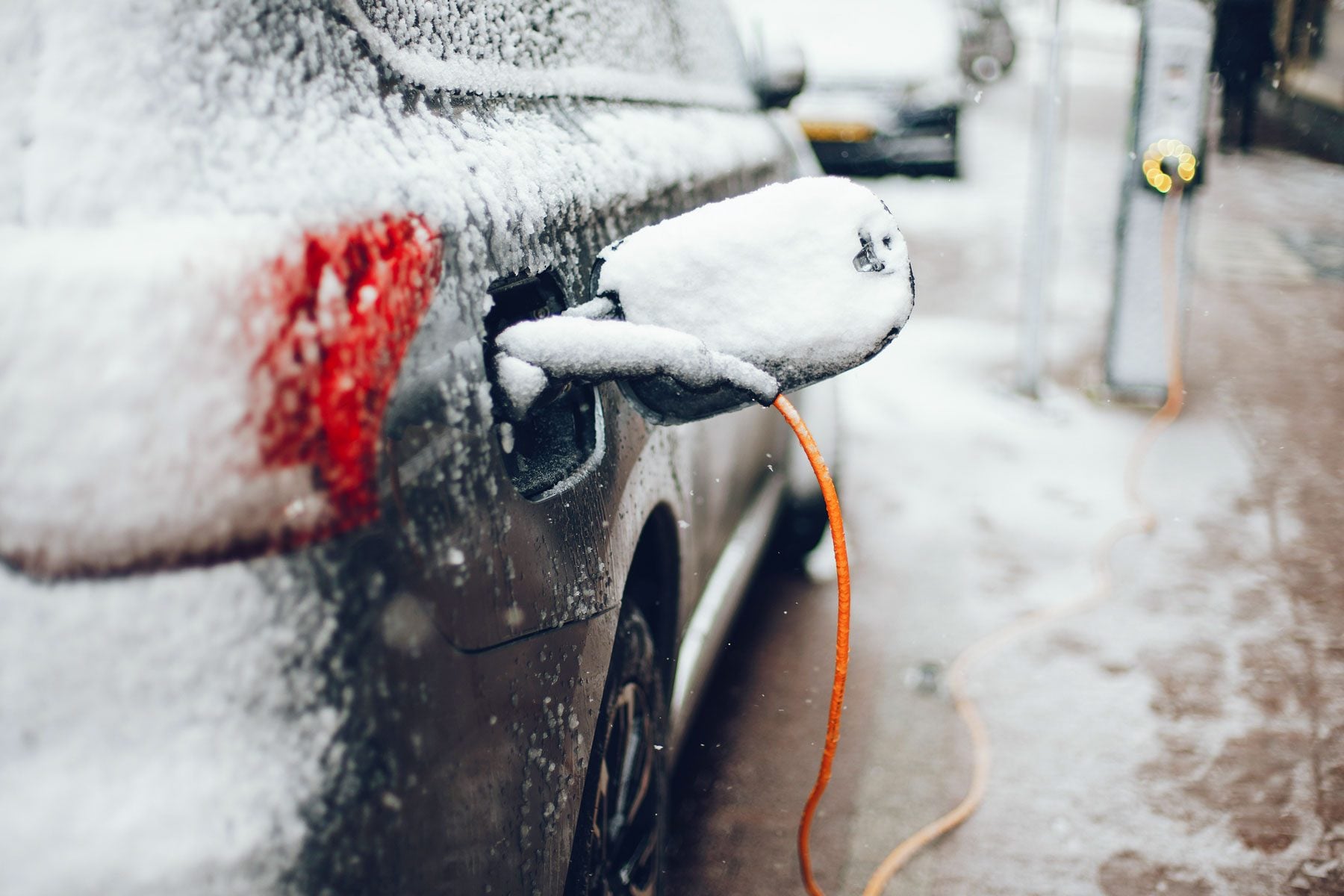
A frozen charge port can turn a normal morning into a comedy scene you did not audition for. Keep the charge port door clean and dry when possible. After charging in snow or freezing rain, gently remove moisture before closing the port. Do not force a stuck connector or pry aggressively at a frozen door. Use the vehicle’s recommended release method, remote app, defrost feature, or a safe warming approach.
Store the charging cable neatly and avoid dragging it through deep slush, mud, or road salt. Inspect it for cuts, cracked insulation, damaged plugs, or loose parts. Home charging equipment should be professionally installed, weather-rated, and kept clear of snow piles. Electricity and sloppy winter habits are not best friends.
Drive Smoothly to Save Range and Improve Control
Winter rewards calm drivers. Electric motors deliver instant torque, which feels wonderful on dry roads but can be too enthusiastic on icy pavement. Use gentle acceleration, longer following distances, and smooth braking. Many EVs and hybrids have eco modes, snow modes, or traction settings that soften throttle response and help manage slippery conditions.
Regenerative braking is useful, but strong regen can feel abrupt on slick roads. Some vehicles automatically adjust it in cold or slippery conditions. If your car lets you choose regen levels, consider using a lower setting on icy roads so deceleration feels more predictable. The goal is not maximum energy recovery at every second; the goal is staying in control.
Plan Longer Trips With Extra Range Buffer
Winter road trips in an EV are completely possible, but they demand better planning. Do not plan a charging stop that leaves you arriving with 2% battery and heroic optimism. Cold weather, wind, elevation changes, snow-covered roads, highway speeds, and cabin heat can all reduce efficiency.
A smart winter EV trip includes extra buffer, backup charging options, and realistic expectations. Check whether chargers are working before you arrive when your app provides live status. Build in time for slower charging. If you are driving a plug-in hybrid, make sure the gas tank is in good shape and the engine maintenance schedule is up to date. PHEVs are excellent winter road-trip companions when both sides of the powertrain are treated properly.
Do Not Ignore the 12-Volt Battery
Electric and hybrid cars still use a 12-volt battery for many basic systems. That little battery can cause big trouble if it gets weak. A high-voltage battery may have plenty of energy, but a failing 12-volt battery can prevent the car from waking up properly.
If your vehicle is several years old, ask a technician to test the 12-volt battery before deep winter arrives. Watch for warning signs such as slow startup, unusual error messages, flickering lights, or repeated accessory issues. This is one of the least glamorous maintenance items, but it can save you from standing in a freezing parking lot having a very one-sided conversation with your dashboard.
Keep Fluids, Wipers, and Brakes Winter-Ready
EVs need less routine maintenance than traditional gas cars, but they are not maintenance-free magic carpets. Use winter-rated windshield washer fluid, replace worn wiper blades, and make sure defrosters work well. Visibility is a safety system, not a luxury feature.
Brakes deserve attention too. Because EVs and hybrids use regenerative braking, the mechanical brakes may be used less often. That can reduce wear, but in wet, salty winter conditions, brake parts can still corrode. Occasional firm braking in a safe area can help keep the friction brakes clean, but follow your manufacturer’s guidance and have the system inspected if you hear grinding, feel vibration, or notice reduced braking performance.
Use the Garage, Even an Unheated One
Parking indoors helps. Even an unheated garage can protect the vehicle from wind, snow, ice buildup, and the coldest overnight temperatures. It also makes preconditioning more effective and keeps the charge port easier to use.
If you do not have a garage, park in a sheltered area when possible. Avoid parking where snowplows may bury the car. Keep a snow brush, scraper, gloves, small shovel, and portable tire inflator handy. Winter does not care how advanced your vehicle is; sometimes it still asks for a good old-fashioned scraper.
Special Winter Tips for Hybrid and Plug-In Hybrid Cars
Hybrid owners should remember that the gasoline engine still needs normal care. Follow oil-change intervals, use the manufacturer-recommended oil grade, keep coolant systems maintained, and do not ignore engine warning lights. A hybrid powertrain is efficient because its parts cooperate. If the engine, battery, tires, or brakes are neglected, the system loses its advantage.
For plug-in hybrids, charge whenever you can. Short winter trips are where PHEVs can shine, but only if the battery has charge. Precondition while plugged in, use electric mode for local driving when practical, and let hybrid mode handle longer routes or highway trips. Keep fuel fresh if you rarely use gasoline, and follow the owner’s manual for fuel-system maintenance.
Common Winter Mistakes to Avoid
The first mistake is treating the dashboard range estimate as a promise. It is an estimate based on conditions and driving history. In winter, it can change quickly. The second mistake is relying on fast charging without warming the battery first. The third is ignoring tire pressure until a warning light appears. By the time the light comes on, efficiency and traction may already be suffering.
Another common mistake is using maximum cabin heat for every drive. Precondition first, use heated seats, and adjust the climate system once the windows are clear. Finally, do not assume that because your car is electric, it does not need seasonal checks. Tires, wipers, brakes, fluids, software updates, lights, and the 12-volt battery still matter.
A Simple Winter Maintenance Checklist
Before Winter Arrives
Test the 12-volt battery, inspect tires, check tread depth, install winter tires if needed, refill washer fluid with winter-rated fluid, replace weak wiper blades, update vehicle software, and inspect charging equipment. If your car has scheduled departure or preconditioning features, learn how to use them before the first freezing morning.
Every Week in Winter
Check tire pressure, keep the charge port clean, rinse off road salt when possible, monitor charging speed, clear sensors and cameras, and keep extra range in reserve. If you drive mostly short trips, give the vehicle enough time to warm and recharge properly.
Before a Winter Road Trip
Charge higher than usual, map charging stops, check live charger availability, pack cold-weather gear, clear snow completely, inspect tires, and add a larger range buffer than you would in summer. For hybrids and plug-in hybrids, make sure the gas tank, engine fluids, and maintenance schedule are ready for the trip.
Real-World Experience: What Winter EV and Hybrid Ownership Teaches You
The first winter with an electric or hybrid car teaches you that efficiency is not a fixed number. It behaves more like a mood. On a mild fall afternoon, your EV may feel like it can glide forever. On a freezing morning with the defroster running, snow tires installed, and slush on the highway, that same car becomes more honest about physics. This is not failure. It is simply winter sending you the bill for heat, traction, and thicker air.
One practical experience many EV owners share is that preconditioning changes everything. Without it, the first 15 minutes of driving can consume energy quickly because the car is warming the cabin and battery at the same time. With preconditioning, especially while plugged in, the car starts the day already comfortable. The range estimate looks less alarming, windows clear faster, and the driver begins the trip relaxed instead of bargaining with the climate controls.
Another lesson is that tire pressure quietly becomes a big deal. A driver may notice the car feels slightly heavier, range drops, or the tire pressure warning appears after the first cold night. The solution is simple but often ignored: check pressure when the tires are cold and inflate them to the vehicle’s recommended level. It is not exciting. Nobody brags at dinner, “I had a fantastic PSI day.” But it works.
Winter also teaches EV drivers to respect charging strategy. A fast charger that works beautifully in September may feel slow in January if the battery arrives cold. Using navigation-based battery preconditioning before a charging stop can make a noticeable difference. So can arriving with enough charge to avoid stress. The calmest EV road trips are not the ones planned around perfect math; they are the ones planned with backup options.
Hybrid owners learn a different lesson: short winter trips can hurt fuel economy more than expected. The engine may run longer to warm itself and heat the cabin. A hybrid that normally delivers excellent mileage may temporarily look less impressive. The best response is not panic; it is smoother driving, proper tire pressure, regular maintenance, and, for plug-in hybrids, consistent charging.
There is also a comfort lesson. Heated seats and heated steering wheels are not just fancy features. They are efficient tools. Instead of heating every cubic inch of cabin air like you are warming a small apartment, heated surfaces warm the person who actually needs warming. Once the windshield is clear, dialing back the cabin temperature can save energy without turning the commute into a survival challenge.
Finally, winter ownership teaches humility. Technology is wonderful, but a snow brush still matters. So do gloves, washer fluid, clean headlights, and patience. The smartest electric or hybrid winter routine combines modern features with old-school preparation. Use the app, schedule charging, precondition the battery, update the software, and then still clear the roof before driving away. Your car may be advanced, but the snow sliding onto your windshield during braking is very traditional.
Conclusion
Keeping your electric or hybrid car in good shape in winter is not complicated, but it does require consistency. Precondition while plugged in, keep extra charge in reserve, expect slower charging, check tire pressure, clean off snow and salt, protect the charge port, and drive smoothly. For hybrids and plug-in hybrids, remember that the gasoline engine still needs proper care, especially when cold weather makes every system work harder.
Winter does not have to ruin your EV range or hybrid fuel economy. It simply asks you to plan like a responsible adult, even if you still mutter at the weather app like it owes you money. With the right habits, your electric or hybrid car can stay safe, efficient, comfortable, and reliable all season long.












