Your iPhone is great at being pocket-sized, which is convenient until you are typing a long email, comparing spreadsheets, moving photos, or trying to help a family member who insists that “the internet disappeared.” Suddenly, that tiny screen feels like a postage stamp with opinions.
The good news is that you can control an iPhone from a computer in several useful ways. The less-good news is that “remote control” means different things depending on whether you use a Mac or Windows PC, whether the iPhone is nearby, and whether you want to operate your own phone or assist someone else.
For Mac users, Apple’s iPhone Mirroring feature is the closest thing to genuine iPhone control from a computer. For Windows users and remote-support situations, the options are more limited but still useful for messages, calls, notifications, photos, and screen sharing.
First, Understand What “Remote Control” Really Means
There are three very different things people mean when they search for “how to remotely control an iPhone from a computer.”
- Full control: You can tap apps, type messages, scroll feeds, open files, and use the iPhone interface from a computer.
- Screen viewing: You can see the iPhone screen on a computer, but the person holding the phone still performs the taps.
- Companion access: You use a computer to handle selected iPhone tasks, such as calls, text messages, photos, files, or notifications.
Apple’s built-in iPhone Mirroring delivers the first option, but only when the iPhone is nearby and connected to the same Apple Account as the Mac. Microsoft Phone Link and many third-party tools are better described as companion or screen-sharing solutions, not full iPhone desktop control.
The Best Method: Use iPhone Mirroring on a Mac
If you own a compatible Mac, iPhone Mirroring is the easiest and most polished way to control your iPhone from your computer. It lets you see your iPhone screen in a Mac window and interact with it using your mouse, trackpad, and keyboard.
Think of it as your iPhone borrowing your Mac’s larger screen and civilized keyboard for a while. Your phone remains locked during the session, which is Apple’s way of preventing someone nearby from casually snooping while you answer messages from your Mac.
What You Need Before You Start
To use iPhone Mirroring, your iPhone needs iOS 18 or later, and your Mac needs macOS Sequoia 15 or later. The Mac must use Apple silicon or include Apple’s T2 Security Chip. Both devices need Bluetooth and Wi-Fi enabled, must be signed in to the same Apple Account with two-factor authentication, and the iPhone must be nearby, locked, and protected with a passcode.
Apple also expects the two devices to stay physically close. The feature is designed for a nearby iPhone and Mac, generally within about 30 feet. That means it works brilliantly at your desk, in a home office, or on a hotel table, but it is not designed for controlling your phone while it sits at home and you are traveling across the country.
How to Set Up iPhone Mirroring
- Update your iPhone and Mac to compatible software versions.
- Confirm that both devices use the same Apple Account.
- Turn on Bluetooth, Wi-Fi, and Handoff on both devices.
- Lock your iPhone and keep it near the Mac.
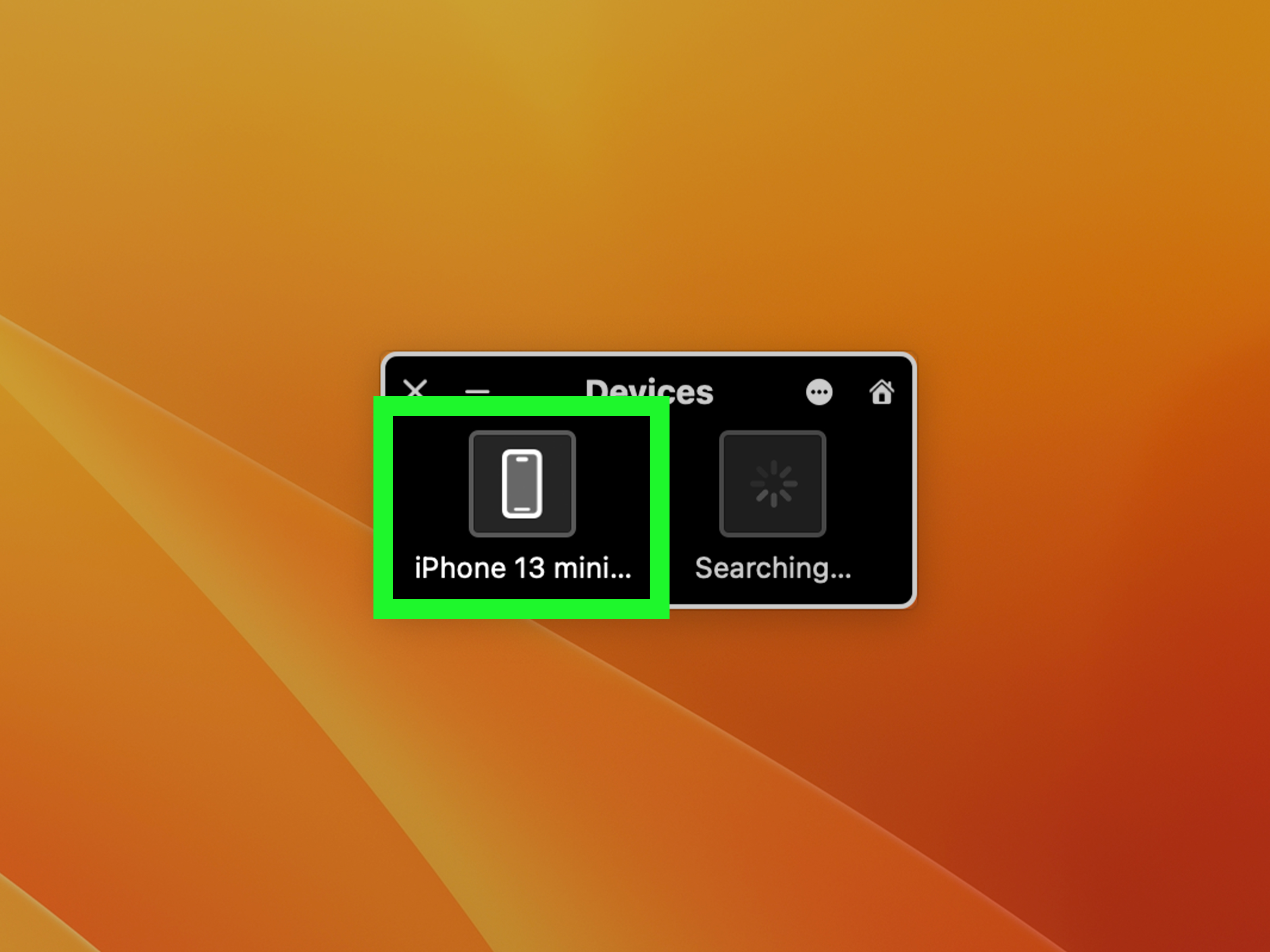
- On your Mac, open iPhone Mirroring from the Dock, Applications folder, or Spotlight.
- Follow the on-screen prompts and unlock your iPhone when Apple asks you to confirm setup.
- Choose whether your Mac should ask for authentication every time you open iPhone Mirroring.
After setup, the iPhone screen appears in a dedicated Mac window. You can click an app icon as if you were tapping it, scroll through feeds, swipe between pages, type into text fields, and use many familiar iPhone gestures with your Mac’s trackpad or mouse. Apple also provides shortcuts for quickly reaching the Home Screen, App Switcher, and Spotlight.
What You Can Do from Your Mac
Once iPhone Mirroring is connected, your Mac becomes a convenient control station for everyday iPhone tasks. You can answer messages, browse apps, manage notes, check shopping lists, edit your Home Screen, open notifications, and type much faster than you can on a glass keyboard that keeps changing “meeting” into “meat ing.”
Your mouse click works like a tap. A click-and-hold acts like a long press. Your trackpad or mouse wheel can scroll and swipe, while your Mac keyboard can enter text directly into supported iPhone apps. You can also use the Mac window controls to return to the Home Screen or open the App Switcher.
Another practical benefit is file transfer. In supported apps, you can drag files, photos, videos, and other items between your Mac and iPhone using the iPhone Mirroring window. This can be far more convenient than emailing files to yourself like it is 2011 and your inbox is a filing cabinet.
Why Your iPhone Locks During Mirroring
The locked-screen requirement may seem annoying at first. You may wonder why your phone cannot remain unlocked on the desk while you control it from the Mac. The answer is privacy.
When iPhone Mirroring is active, your iPhone identifies that it is being used from a Mac. Apple also records recent mirroring activity and lets you review which Mac accessed the phone, when sessions began, and how long they lasted. Unlocking the iPhone directly ends the mirroring session.
Can You Control an iPhone from a Windows PC?
Not in the same way. Windows does not currently offer a built-in equivalent to Apple’s iPhone Mirroring that places a fully interactive iPhone screen on your desktop.
Microsoft Phone Link can still be useful if your goal is productivity rather than full control. Depending on your connected device and available permissions, Phone Link can handle notifications, messages, calls, photos, audio features, and some cross-device functions. Treat it as an iPhone companion dashboard, not a mouse-controlled copy of your iPhone.
For example, Phone Link may help you respond to text messages, receive notifications, or make calls without picking up your phone every few minutes. That is excellent for staying focused during work, but it will not let you open every iPhone app, tap through Settings, or control a banking app from your Windows desktop.
How to Help Someone Else with Their iPhone
Helping another person remotely is where expectations need a reality check. If your parent, client, coworker, or friend asks you to “take over their iPhone,” most tools cannot give you direct touch control over their device.
Instead, the practical solution is remote screen sharing. The iPhone owner starts a support session, shares their screen, and you guide them through the steps by phone call, video call, or chat. It is less magical than taking control yourself, but it is much safer and less likely to end with someone accidentally deleting their vacation photos.
AnyDesk explicitly states that direct remote control of iPhone and iPad devices is unavailable because of platform restrictions. TeamViewer likewise explains that iOS sessions are limited to screen sharing rather than full remote control.
Tools such as Splashtop SOS and Zoho Assist can support screen-sharing sessions for iPhone users. Typically, the person with the iPhone installs an app, starts the session, grants screen-sharing permission, and gives the support person a session code. The technician can then view the screen and explain exactly where to tap.
A Simple Remote Support Script
When helping someone remotely, avoid vague instructions such as “tap the thing near the top.” That phrase has caused more family arguments than most people would like to admit.
- Ask the person to describe what they see on the screen.
- Have them start a secure screen-sharing session.
- Ask them to read any permission prompts aloud before accepting.
- Guide one step at a time: “Tap Settings,” then “Tap Wi-Fi,” then “Choose your network.”
- Ask them to stop sharing when the task is complete.
This approach works well for troubleshooting Wi-Fi settings, app permissions, email setup, photo-sharing issues, software updates, and basic account navigation.
What Will Not Fully Control Your iPhone
Several tools are useful but should not be confused with real iPhone remote control.
- iCloud.com: Great for accessing photos, files, notes, mail, and device-finding features, but it does not display your live iPhone interface.
- AirPlay screen mirroring: Useful for presentations or viewing your screen on another display, but it does not turn your computer into an iPhone controller.
- QuickTime screen capture: Helpful for recording or displaying an iPhone screen through a cable, but it is not a full remote-control solution.
- Random “full iPhone control” apps: Be skeptical. Many can only mirror the screen, access specific files, or provide guided support.
How to Fix iPhone Mirroring Problems
If iPhone Mirroring refuses to connect, do not immediately blame the universe. Most problems come from a short list of setup issues.
- Make sure your iPhone is locked, powered on, and close to the Mac.
- Confirm both devices use the same Apple Account.
- Check that two-factor authentication is enabled.
- Turn Bluetooth and Wi-Fi off and back on.
- Enable Handoff on both devices.
- Install current iOS and macOS updates.
- Stop Internet Sharing, AirPlay, or Sidecar if they are active on the Mac.
- Restart both devices if the connection remains stubborn.
Apple notes that iPhone Mirroring may not connect when the Mac is sharing its internet connection or actively using AirPlay or Sidecar. Those features compete for the same ecosystem attention, like three cats trying to occupy one cardboard box.
Privacy and Security Tips for Remote iPhone Access
Remote access tools are convenient, but convenience has a habit of wearing a fake mustache and pretending it is not also a security issue. Use a few simple rules to protect yourself.
- Never share your Apple Account password, iPhone passcode, or two-factor authentication codes.
- Use iPhone Mirroring only on a personal or trusted Mac whenever possible.
- Choose “Ask Every Time” authentication if multiple people can access your Mac.
- Review the Macs connected to iPhone Mirroring in your iPhone settings.
- Revoke access immediately if you no longer use a shared, old, or work Mac.
- End remote-support sessions as soon as the problem is solved.
Apple allows you to revoke iPhone Mirroring access from either device, resetting the relationship between the Mac and iPhone. This is especially useful when selling a Mac, leaving a shared workspace, or realizing that your old laptop knows a little too much about your snack-delivery habits.
Be extra careful with employer-owned computers. Security researchers have raised concerns that iPhone activity mirrored onto a work Mac may leave traces visible to company monitoring tools. Avoid using a corporate Mac for sensitive personal apps unless you understand your organization’s privacy policies.
Which Method Should You Choose?
| Situation | Best Option | What You Can Do |
|---|---|---|
| You own a Mac and iPhone | iPhone Mirroring | Control apps, type, scroll, manage files, and view notifications |
| You use Windows | Phone Link | Handle calls, messages, notifications, and selected companion tasks |
| You need to help another person | Screen-sharing support tool | View their screen and guide them through each step |
| You are away from your iPhone | iCloud.com and synced apps | Access data, files, notes, photos, and account services |
Experience-Based Lessons: What Using iPhone Control from a Computer Feels Like
Using iPhone Mirroring from a Mac feels surprisingly natural after the first few minutes. At first, your brain may object because you are clicking on a phone screen with a mouse. It feels a little like driving a bicycle with a steering wheel. Then you type a long message without tapping tiny letters for ten minutes, and suddenly the concept becomes extremely reasonable.
The biggest improvement usually appears during desk work. Imagine you are writing a report, researching a product, or attending a video call when an iPhone notification arrives. Normally, you would pick up the phone, unlock it, answer the message, glance at three unrelated notifications, open social media by accident, and somehow emerge twenty minutes later watching a video about restoring an old lawn mower. iPhone Mirroring makes it easier to handle the original task from your Mac and continue working.
It is also useful for moving between mobile-first apps and desktop work. Some services are more convenient on iPhone because of authentication apps, camera uploads, social media tools, or retailer apps that offer features missing from websites. Instead of constantly shifting your attention between computer and phone, you can keep the iPhone interface in a small Mac window while working on a larger screen.
There are still moments when the physical iPhone is better. Face ID, certain camera tasks, mobile payments, hardware buttons, emergency features, and apps with strict security checks may require you to use the actual phone. That is not a failure of iPhone Mirroring. It is Apple drawing a sensible boundary around actions that should remain tied to the physical device.
For families, the experience is different. Remote screen sharing is often less about technical power and more about patience. You may be able to see exactly what your relative sees, but they still need to tap the button. The best support calls happen when you slow down, use plain language, and describe screen locations clearly. “Look for the blue button under the password field” works much better than “You know, the one that looks like the other one.”
For work, the most valuable habit is deciding which device owns each task. Use your Mac for long writing, research, file management, and multitasking. Use the iPhone for mobile authentication, camera-related work, payments, and anything that needs its sensors or secure hardware. iPhone Mirroring becomes the bridge between those worlds rather than a replacement for either device.
Finally, keep privacy in mind. The more your phone and computer blend together, the easier it becomes to forget that a notification on your laptop may be visible to someone standing nearby. Disable mirrored notifications for sensitive apps, lock your Mac when you leave your desk, and revoke old device access occasionally. Convenience is wonderful, but it should never become an open invitation for your private life to appear on a conference-room projector.
Conclusion
The best way to remotely control your iPhone from a computer is Apple’s iPhone Mirroring feature, provided you have a compatible Mac, a nearby locked iPhone, and the same Apple Account on both devices. Windows users can still improve their workflow with Phone Link, while remote-support tools make it possible to view another person’s iPhone screen and guide them safely through a problem.
The key is choosing the right tool for the job. Use iPhone Mirroring for real Mac-based control, Phone Link for Windows productivity, and screen sharing for remote support. Once you understand the limits, your iPhone and computer can work together without turning your desk into a juggling act.