
Learning how to say goodnight in French sounds easy at first. You learn one phrase, say it with confidence, and suddenly you feel one beret away from strolling along the Seine. But French, being French, adds a small plot twist: the best phrase depends on whether someone is going to sleep, leaving a dinner party, ending a phone call, texting a friend, or politely escaping a conversation before dessert number three.
The most common translation of “goodnight” in French is bonne nuit. However, you should not use it every time English speakers would say “good night.” In French, bonne nuit usually means “sleep well” or “have a good night’s sleep.” If you are saying goodbye in the evening but the other person is not going to bed, bonne soirée is often the better choice. And if you are greeting someone in the evening, bonsoir is the phrase you want.
This guide breaks everything into 11 practical steps, with pronunciation help, grammar notes, examples, formal and informal expressions, and real-life situations. By the end, you will know exactly when to say bonne nuit, when to say bonne soirée, and when to avoid sounding like you are tucking your waiter into bed.
Step 1: Start With the Main Phrase: Bonne Nuit
The simplest way to say goodnight in French is:
Bonne nuit. Goodnight.
Use bonne nuit when someone is going to sleep or when you are ending the day in a bedtime context. For example, you can say it to your child, your partner, your host if everyone is heading to their rooms, or a friend during a late-night text conversation when one of you is clearly going to bed.
Example:
Il est tard. Bonne nuit !
It’s late. Goodnight!
The important thing is context. In English, “good night” can mean both “sleep well” and “goodbye in the evening.” In French, bonne nuit leans strongly toward sleep. Think of it as the phrase that belongs near pajamas, pillows, sleepy cats, and phone screens at 12:47 a.m.
Step 2: Pronounce Bonne Nuit Correctly
Pronunciation matters because French has sounds that do not always match English spelling. A simple learner-friendly pronunciation of bonne nuit is:
bonn nwee
The word bonne sounds somewhat like “bun,” but with a clearer French vowel. The final e is soft, not strongly pronounced. The word nuit sounds like “nwee,” but the French u sound is tighter than English. To make it easier, round your lips as if you are saying “oo,” then try to say “ee.” Congratulations: your mouth is now doing French gymnastics.
Avoid saying “bon new-it” or “bon night.” Also, do not say bon nuit. That looks logical to English speakers, but it is grammatically wrong in French. The correct form is bonne nuit, with bonne in the feminine form.
Step 3: Understand Why It Is Bonne, Not Bon
French adjectives often change depending on whether the noun is masculine or feminine. The word nuit, meaning “night,” is feminine. That is why French uses bonne, the feminine form of bon.
Compare:
- bon voyage have a good trip, because voyage is masculine
- bonne journée have a good day, because journée is feminine
- bonne nuit goodnight, because nuit is feminine
This small grammar point helps you sound more natural. It also explains why French learners often make the same mistake. English does not make adjectives agree with nouns, so “good” stays “good.” French says, “Not so fast. Let’s dress the adjective properly before it leaves the house.”
Step 4: Use Bonne Nuit Only for Bedtime
The biggest mistake learners make is using bonne nuit whenever they leave someone at night. In French, this can sound odd if the person is not actually going to sleep.
Imagine you leave a restaurant at 8:30 p.m. and tell the server bonne nuit. You probably mean “have a good night.” But to French ears, it may sound like “sleep well,” which is sweet but slightly strange. The server is still working, not preparing for a bedtime story.
Use bonne nuit in situations like these:
- Someone says they are going to bed.
- You are saying goodnight to family at home.
- You are ending a late-night call before sleeping.
- You are texting someone right before bedtime.
- You are saying goodnight to children.
Example:
Je vais me coucher. Bonne nuit !
I’m going to bed. Goodnight!
Step 5: Say Bonne Soirée for “Have a Good Evening”
If you are leaving someone in the evening and want to say “have a good night” in the social sense, use:
Bonne soirée. Have a good evening.
This is one of the most useful French phrases you can learn. Use it when leaving a restaurant, shop, office, hotel desk, class, gathering, or video call in the evening. It means you hope the person enjoys the rest of their evening, not necessarily that they should immediately put on slippers and count sheep.
Examples:
Merci, bonne soirée !
Thank you, have a good evening!
Au revoir, bonne soirée.
Goodbye, have a good evening.
Here is the simple rule: if someone is going to sleep, say bonne nuit. If someone is continuing their evening, say bonne soirée.
Step 6: Use Bonsoir as an Evening Greeting
Bonsoir means “good evening.” It is commonly used as a greeting when you meet someone in the evening. Depending on context, it may also work as a polite evening goodbye, but it is not the same as bonne nuit.
Use bonsoir when you enter a restaurant, greet a hotel receptionist, answer an evening phone call, or arrive at a dinner party.
Examples:
Bonsoir, madame.
Good evening, ma’am.
Bonsoir à tous.
Good evening, everyone.
Many learners confuse bonsoir and bonne soirée. Here is the difference:
- Bonsoir = good evening, usually when greeting someone
- Bonne soirée = have a good evening, usually when leaving
- Bonne nuit = goodnight, usually before sleep
Step 7: Add “Sleep Well” With Dors Bien
Another warm and natural phrase is:
Dors bien. Sleep well.
Use dors bien with someone you know well, such as a child, friend, family member, or partner. It is informal because dors comes from the tu form of the verb dormir, meaning “to sleep.”
Example:
Bonne nuit, dors bien.
Goodnight, sleep well.
If you are speaking formally or addressing more than one person, use:
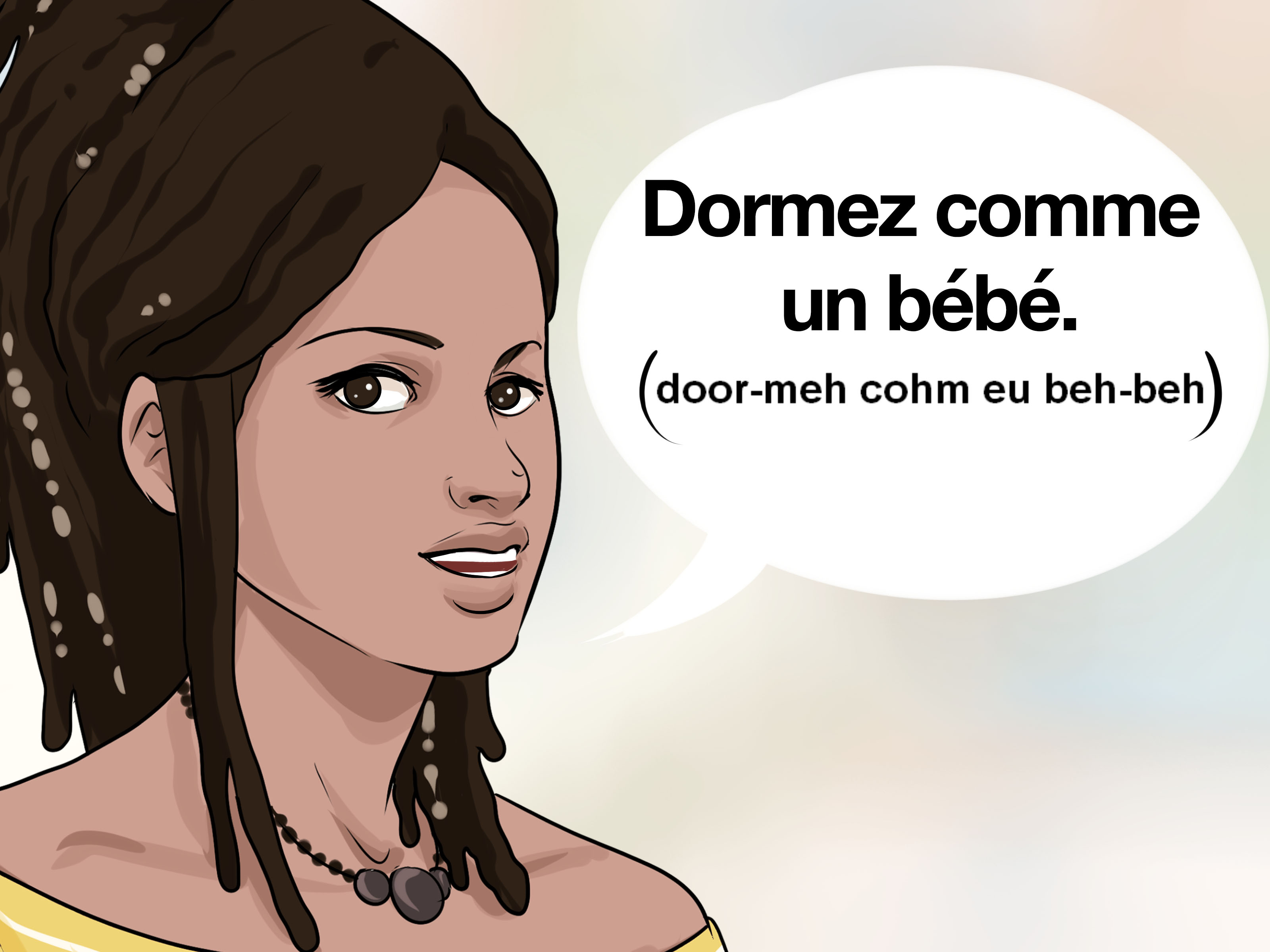
Dormez bien. Sleep well.
Example:
Bonne nuit, dormez bien.
Goodnight, sleep well.
This is especially useful if you are speaking to guests, older relatives, or a group. French has a formal/informal distinction that English largely lost, so choosing between dors and dormez can make your French sound more polished.
Step 8: Say “Sweet Dreams” With Fais de Beaux Rêves
To say “sweet dreams” in French, use:
Fais de beaux rêves. Sweet dreams.
Literally, it means “make beautiful dreams.” French does not translate the English phrase word for word, but the meaning is the same. Use this with people you are close to, especially children, family members, or someone you care about.
Example:
Bonne nuit, fais de beaux rêves.
Goodnight, sweet dreams.
If you are speaking to more than one person, or using formal speech, say:
Faites de beaux rêves. Sweet dreams.
The phrase is kind, gentle, and affectionate. It is probably not what you should say to a cashier after buying toothpaste, unless your goal is to become the most memorable customer of the week.
Step 9: Use À Demain When You Will See Them Tomorrow
Another useful phrase is:
À demain. See you tomorrow.
You can combine it with bonne nuit or bonne soirée, depending on the situation.
Examples:
Bonne nuit, à demain.
Goodnight, see you tomorrow.
Bonne soirée, à demain.
Have a good evening, see you tomorrow.
This phrase is perfect for classmates, coworkers, roommates, family members, or anyone you genuinely expect to see the next day. It adds a friendly, natural ending to your goodbye and prevents your French from sounding like a phrasebook with shoes.
Step 10: Choose the Right Level of Formality
French has two main ways to say “you”: tu and vous. The informal tu is used with close friends, family, children, and people your age when the relationship is casual. The formal or plural vous is used with strangers, professionals, elders, customers, teachers, or groups.
Here are useful goodnight phrases by formality:
Informal French Goodnight Phrases
- Bonne nuit. Goodnight.
- Dors bien. Sleep well.
- Fais de beaux rêves. Sweet dreams.
- À demain. See you tomorrow.
Formal or Plural French Goodnight Phrases
- Bonne nuit. Goodnight.
- Dormez bien. Sleep well.
- Faites de beaux rêves. Sweet dreams.
- Je vous souhaite une bonne nuit. I wish you a good night.
For everyday polite situations, bonne soirée is usually safer than bonne nuit unless bedtime is clearly involved. When in doubt, ask yourself: “Is this person going to sleep?” If yes, bonne nuit. If no, bonne soirée.
Step 11: Practice With Real-Life Examples
The fastest way to remember these phrases is to connect each one to a situation. Here are practical examples you can copy, adapt, and use.
At Home
Bonne nuit, dors bien.
Goodnight, sleep well.
Texting a Friend
Je suis fatigué. Bonne nuit, à demain !
I’m tired. Goodnight, see you tomorrow!
Leaving a Restaurant
Merci beaucoup. Bonne soirée !
Thank you very much. Have a good evening!
Greeting Someone at Night
Bonsoir, comment allez-vous ?
Good evening, how are you?
Saying Goodnight to a Child
Bonne nuit, fais de beaux rêves.
Goodnight, sweet dreams.
Ending a Formal Message
Je vous souhaite une bonne soirée.
I wish you a pleasant evening.
These examples show why context matters so much. French is not trying to make your life difficult. Well, not always. It simply separates “evening farewell” from “bedtime farewell” more clearly than English does.
Common Mistakes to Avoid
Mistake 1: Saying Bon Nuit
The correct phrase is bonne nuit, not bon nuit. Since nuit is feminine, the adjective must be feminine too.
Mistake 2: Saying Bonne Nuit Too Early
If someone is not going to sleep, use bonne soirée instead. Saying bonne nuit too early can sound like you are politely sending the person to bed.
Mistake 3: Using Bonsoir for Everything
Bonsoir is useful, but it does not replace every evening phrase. Use it mostly as “good evening,” especially when greeting someone.
Mistake 4: Translating Sweet Dreams Literally
Do not translate “sweet dreams” word by word. The natural French phrase is fais de beaux rêves or faites de beaux rêves.
Quick Phrase Table: Goodnight in French
| English | French | Best Context |
|---|---|---|
| Goodnight | Bonne nuit | Before sleep |
| Have a good evening | Bonne soirée | Leaving in the evening |
| Good evening | Bonsoir | Greeting someone at night |
| Sleep well | Dors bien | Informal bedtime phrase |
| Sleep well | Dormez bien | Formal or plural |
| Sweet dreams | Fais de beaux rêves | Informal and affectionate |
| See you tomorrow | À demain | When you expect to meet tomorrow |
Experience Notes: What Learners Discover When Saying Goodnight in French
One of the most common experiences learners have with French goodnight phrases is realizing that translation is not always about matching words. It is about matching situations. A beginner may confidently memorize bonne nuit and use it everywhere after sunset. Then, after a few conversations, they notice native speakers saying bonne soirée at restaurants, shops, offices, and social events. That moment can feel confusing at first, but it is actually a great sign: the learner is moving from textbook French into real-life French.
In everyday practice, the difference becomes easier. Picture a student leaving an evening French class. The teacher might say bonne soirée, because the student is leaving but not necessarily going to bed. Later that same night, the student texts a friend, “I’m exhausted. I’m going to sleep.” Now bonne nuit makes perfect sense. The same English idea, “good night,” has two French paths depending on what happens next.
Another learner experience involves pronunciation. Many English speakers want to pronounce every written letter, so nuit becomes something like “new-it.” After listening and practicing, they realize that French pronunciation is smoother and more compact. Saying bonne nuit slowly at first, then naturally, helps train the mouth. The phrase may feel unusual for a few days, but repetition turns it into muscle memory. A good trick is to practice it in short combinations: bonne nuit, bonne nuit, dors bien, and bonne nuit, à demain.
Travelers also learn quickly. In a hotel, bonsoir works when arriving at the front desk in the evening. After receiving the room key and heading upstairs, bonne soirée is a polite farewell. But if you are traveling with family and everyone is closing their doors for the night, bonne nuit is the natural phrase. These small distinctions can make interactions feel more respectful and less awkward.
Parents, babysitters, and teachers often find the sweetest phrases the easiest to remember. Fais de beaux rêves has a gentle rhythm, and children usually understand it through routine. Pairing it with bonne nuit creates a warm bedtime formula: Bonne nuit, fais de beaux rêves. For adults, the same phrase can sound affectionate, so it is best saved for close relationships.
The biggest lesson from real-life use is simple: French goodnight phrases are less about the clock and more about intention. Are you greeting someone? Say bonsoir. Are you leaving while the evening continues? Say bonne soirée. Is someone going to bed? Say bonne nuit. Once you understand that, saying goodnight in French stops being a grammar puzzle and starts feeling natural. And that is when the language becomes more than memorized words; it becomes communication with timing, tone, and charm.
Conclusion
Knowing how to say goodnight in French is more than memorizing bonne nuit. The real skill is knowing when to use it. Say bonne nuit when someone is going to sleep. Say bonne soirée when you are leaving someone in the evening. Say bonsoir when you greet someone after the day has turned into evening. Add dors bien, dormez bien, fais de beaux rêves, or à demain when the relationship and situation fit.
French rewards context. A small phrase can sound warm, polite, formal, casual, or accidentally hilarious depending on when you use it. But with these 11 steps, you now have the tools to say goodnight naturally, confidently, and with just enough French elegance to make your evening sound better than your alarm clock will tomorrow morning.











