
New parenthood comes with plenty of surprises: tiny socks that vanish into another dimension, a baby who seems to schedule hunger at the exact moment you sit down to eat, and the realization that feeding a newborn can somehow require the posture of a professional yoga instructor.
A breastfeeding pillow can make nursing more comfortable by helping lift your baby closer to breast height and supporting your arms, shoulders, back, and lap. Used correctly, it can turn a tense, hunched-over feeding session into a calmer moment for both parent and baby. Used incorrectly, however, it can leave you uncomfortable, encourage a shallow latch, or create an unsafe situation if baby falls asleep on the pillow.
This guide explains how to use a breastfeeding pillow safely, how to find a comfortable nursing position, how to improve baby’s latch, and what to do when feeding still feels more like wrestling a tiny, adorable octopus than a peaceful bonding moment.
Note: This article is for general education and does not replace personalized medical advice. Contact your pediatrician, OB-GYN, midwife, or lactation consultant if nursing is painful, your baby is not feeding well, or you have concerns about milk intake or weight gain.
What Is a Breastfeeding Pillow?
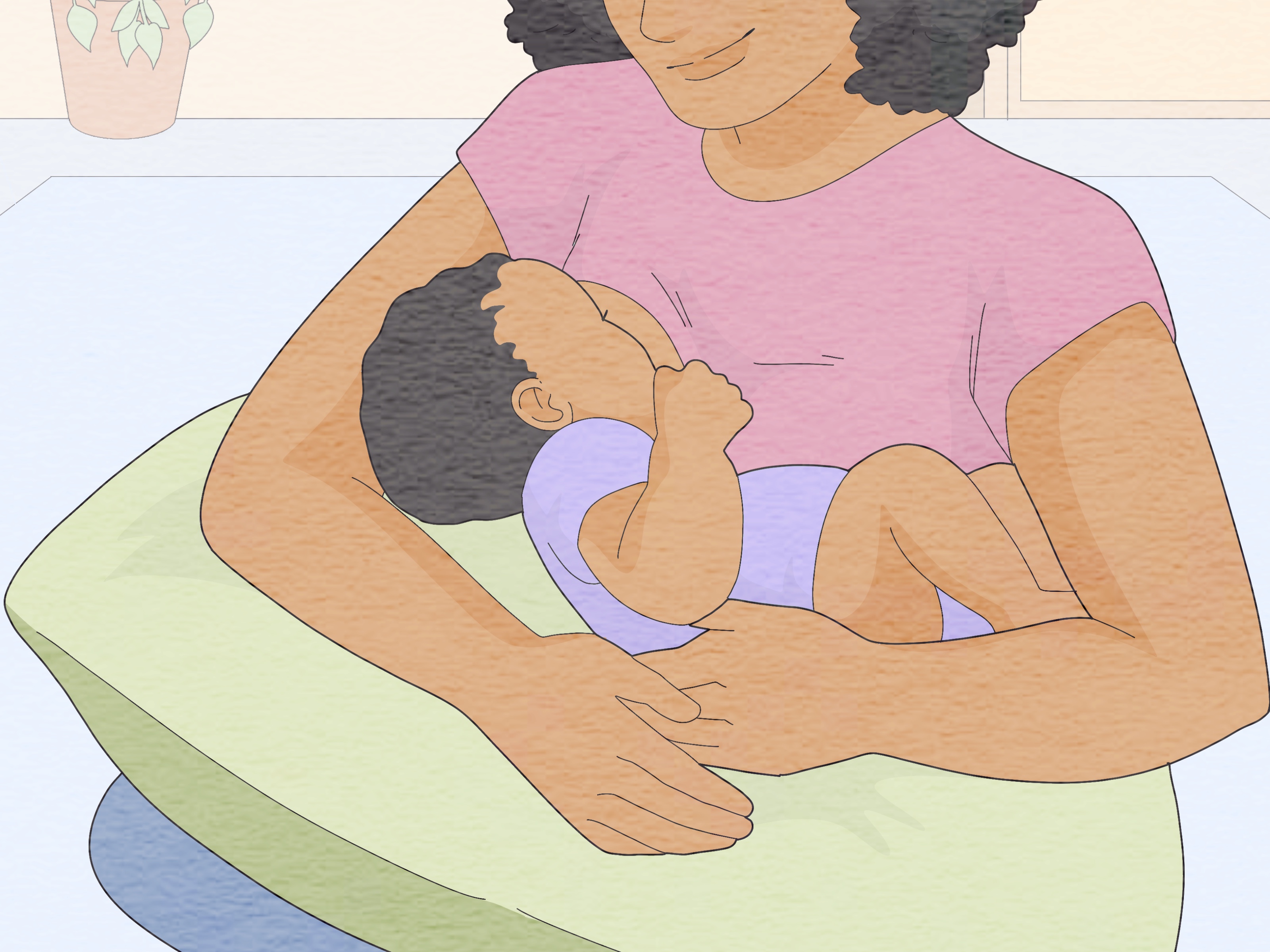
A breastfeeding pillow, sometimes called a nursing pillow, is a supportive cushion designed to sit around your waist or across your lap while you feed your baby. Its main job is simple: bring baby up to breast level so you do not have to bend forward, strain your neck, or hold all of baby’s weight with your arms.
Some nursing pillows wrap around the waist, while others are crescent-shaped or rectangular. Certain styles have a firm foam surface, while others are softer and more flexible. The “best” pillow is not necessarily the fanciest one with fourteen buckles and a cup holder worthy of a spaceship. The best pillow is the one that helps you sit comfortably, keeps baby close, and supports a good feeding position.
A breastfeeding pillow can be useful for direct nursing, bottle-feeding expressed milk, and giving your arms a break during long feeds. It is not a hands-free baby seat, a lounge chair, a sleep surface, or a substitute for holding and watching your baby during feeding.
Why a Breastfeeding Pillow Can Make Nursing Easier
During the early weeks, babies feed often, sometimes every couple of hours or more. That means even a slightly awkward position can become very uncomfortable after several days of repeated feeds. A nursing pillow may help reduce pressure on your wrists, shoulders, neck, lower back, and arms.
The pillow can also help place your baby at a better height for latching. Instead of leaning forward and bringing your breast down toward baby, you bring baby up toward your breast. This is one of the most helpful principles of comfortable nursing: bring baby to the breast, not the breast to the baby.
When you are sitting upright, relaxed, and supported, baby may have an easier time staying aligned and latching deeply. Better positioning can also reduce the chance of sore nipples, repeated unlatching, extra air swallowing, and marathon feeding sessions that feel longer than a holiday airport layover.
How to Use a Breast Feeding Pillow Step by Step
1. Choose a Stable Place to Feed
Start in a comfortable chair, sofa, or bed where you can sit upright and stay alert. A chair with armrests can be especially helpful because it gives your elbows another layer of support. Keep water, a snack, burp cloths, nursing pads, your phone, and the remote nearby before feeding begins.
Think of this as building a small feeding headquarters. Once baby is hungry, you do not want to be balancing a squirmy newborn in one arm while trying to retrieve a glass of water with your foot.
2. Sit Back and Support Your Body First
Before placing baby on the pillow, get yourself comfortable. Sit with your back supported and both feet resting on the floor or a footstool. Try not to perch on the edge of the chair or lean forward from the waist.
If your back needs extra help, place a regular pillow behind you. If your shoulders are creeping toward your ears, take a breath and let them drop. Your body does not need to look like it is preparing for a surprise pop quiz.
3. Position the Pillow Around Your Waist or Across Your Lap
Place the breastfeeding pillow snugly against your body. If your pillow has a waist strap, fasten it according to the manufacturer’s instructions so it stays close to you. Avoid leaving a large gap between your body and the pillow, since a baby can sink, slide, or become awkwardly positioned in that space.
The pillow should sit high enough to raise your baby to breast level. If the pillow feels too low, add a firm regular pillow underneath it or adjust your seat. You should not need to bend your shoulders forward to reach baby.
4. Lay Baby Across the Pillow With Full Body Support
Place your baby on the pillow so their whole body faces you. Baby’s chest and tummy should be turned toward your body, not pointing up toward the ceiling. Their ear, shoulder, and hip should generally stay in a straight line rather than twisting in different directions.
Support baby’s head, neck, shoulders, and upper back with your hand or forearm as needed. The pillow supports baby’s weight, but you are still responsible for keeping baby secure and properly positioned. A nursing pillow helps, but it does not become a babysitter just because it has cute fabric.
5. Bring Baby Close Before Attempting the Latch
Move baby close enough that their nose is near your nipple before you attempt to latch. Avoid reaching your breast toward baby or pulling baby’s head from behind. Instead, support baby behind the shoulders and upper neck so they can tip their head slightly back and open wide.
Touch your nipple gently to baby’s upper lip or nose area. Wait for a wide-open mouth, then bring baby quickly and gently onto the breast. Aim the nipple toward the roof of baby’s mouth rather than directly into the center of the mouth.
6. Check for a Deep, Comfortable Latch
A good latch usually feels like strong pulling or tugging, not pinching, biting, burning, or toe-curling pain. Baby’s mouth should be wide open, with lips flanged outward rather than tucked inward. Their chin should rest against the breast, while their nose remains free enough for comfortable breathing.
You may see more areola above baby’s upper lip than below the lower lip. During active feeding, baby’s jaw may move rhythmically, and you may hear soft swallowing after your milk begins flowing.
If the latch hurts beyond the initial few seconds, do not grit your teeth and hope for the best. Slide a clean finger into the corner of baby’s mouth to gently break the suction, then reposition and try again. Most nipple pain is not a badge of honor. It is usually a sign that something needs adjusting.
7. Keep Your Arms Relaxed During the Feed
Once baby is latched, check your posture again. Your shoulders should stay relaxed, your wrists should not feel strained, and your elbows should have support. Use an extra pillow beneath your arm if necessary.
The breastfeeding pillow should reduce the amount of lifting you need to do, but you may still need one hand to support baby’s upper back or guide their position during the early weeks. As your baby grows stronger and nursing becomes more familiar, you may need less hands-on support.
8. Remove Baby Safely After Feeding
When baby finishes feeding, gently break the latch before moving them. Do not pull baby directly away from your breast while suction is still strong. Place your clean finger at the corner of baby’s mouth, release the suction, and then lift baby carefully.
After feeding, burp baby if needed and place them in a safe sleep space if they are sleepy. A breastfeeding pillow should never be used as a place for a baby to nap, lounge unattended, or sleep.
Best Breastfeeding Positions to Use With a Nursing Pillow
Cross-Cradle Hold
The cross-cradle hold is often helpful for newborns because it gives you more control over baby’s head and neck. If baby is feeding from the right breast, support them with your left arm and hand. Your left hand supports the back of baby’s neck and shoulders while your right hand supports your breast if needed.
Place baby across the nursing pillow, tummy facing your tummy. This position can make it easier to guide baby into a deep latch, especially while both of you are still learning the dance steps.
Cradle Hold
In the cradle hold, baby rests across the front of your body with their head in the crook of the arm on the same side as the nursing breast. This position may feel natural once breastfeeding is established, but it can be harder for some new parents to control baby’s head during the first few weeks.
A nursing pillow can help keep baby at the right height so your arm does not have to carry all the weight.
Football Hold
The football hold, also called the clutch hold, places baby at your side under your arm instead of across your stomach. Baby’s feet point behind you, while their head rests near your breast. A pillow beside your waist supports baby’s body and takes pressure off your arm.
This position can be especially useful after a Cesarean birth because baby does not rest directly on the incision area. It may also work well for parents with larger breasts, twins, premature babies, or babies who struggle with certain latching positions.
Laid-Back Breastfeeding
Laid-back breastfeeding involves reclining comfortably while baby rests tummy-down against your chest. A breastfeeding pillow may support your arms or help stabilize baby’s body, but it should not replace your hands or attention.
This position can feel calm and natural for some parents, especially during skin-to-skin time. Just make sure you stay awake and move baby to a flat, firm, separate sleep surface if you begin to feel drowsy.
How to Tell Whether the Pillow Height Is Right
A nursing pillow is at the right height when baby reaches your breast without you leaning forward, slumping your shoulders, or lifting baby with your forearms for the entire feed.
Ask yourself these quick questions:
- Can I sit with my back supported?
- Are my shoulders relaxed instead of rounded forward?
- Is baby close enough to latch without stretching or twisting?
- Can baby keep their head, neck, and body aligned?
- Do I feel pulling rather than sharp nipple pain?
If you answer “no” to several of these questions, adjust the setup before trying to nurse again. Add a pillow, sit in a different chair, shift baby closer, or try another hold. Tiny changes can make a dramatic difference.
Common Breastfeeding Pillow Mistakes to Avoid
Leaning Down Toward Baby
One of the most common mistakes is using the pillow but still bending forward to reach baby. This can lead to sore shoulders, back pain, neck strain, and a shallow latch. Raise baby higher instead of lowering yourself.
Using the Pillow as a Baby Prop
A nursing pillow is meant to support feeding while you are present and alert. Do not place baby on the pillow and step away, even for a minute. Babies can shift unexpectedly, roll, slump, or move into a position that affects breathing.
Leaving a Gap Between the Pillow and Your Body
If there is a large space between the pillow and your abdomen, baby may slide down or twist away from the breast. Pull the pillow close to your body and reposition baby so their chest stays facing you.
Expecting the Pillow to Fix Every Feeding Problem
A breastfeeding pillow can improve comfort and positioning, but it cannot solve every issue. If feeding remains painful, baby repeatedly slips off the breast, feeds for very long periods without seeming satisfied, or has trouble gaining weight, seek support from a qualified healthcare professional or lactation consultant.
Using the Same Setup for Every Feed
Babies grow quickly, and what worked last week may need adjustment today. You may need extra support during the newborn stage, less support as baby gains head control, or a different hold after a growth spurt. Think of your feeding station as adjustable equipment, not a permanent monument.
Breastfeeding Pillow Safety Rules Every Parent Should Know
Safety is the part of the guide where the humor takes a respectful nap. A breastfeeding pillow can be useful during an awake, supervised feeding, but it is never a safe sleep surface.
- Never leave your baby unattended on a nursing pillow.
- Never place a nursing pillow in a crib, bassinet, play yard, or other sleep space.
- Do not allow baby to nap on the pillow after feeding.
- Do not use a nursing pillow as an infant positioner, lounger, recliner, or car seat substitute.
- If you feel sleepy while feeding, move baby to a safe, firm, flat sleep surface designed for infants.
- Avoid feeding on a sofa or cushioned chair if you think you may fall asleep.
- Keep baby’s face visible and make sure their nose and mouth are not covered by fabric, blankets, pillows, or your clothing.
Even when baby appears deeply asleep after feeding, transfer them to their own safe sleep space. This extra step may feel inconvenient at 3:17 a.m., but safe sleep practices matter far more than convenience.
How to Use a Breastfeeding Pillow After a C-Section
After a Cesarean birth, your abdomen may feel tender, sore, or extremely unimpressed with the idea of having a baby rest on it. A breastfeeding pillow can create a protective barrier between baby and your incision area.
The football hold is often a comfortable option because baby stays beside your body rather than directly across your stomach. You can also use a pillow across your lap in a modified cradle or cross-cradle hold, provided baby’s weight does not press painfully on your incision.
Keep your back supported, avoid twisting, and ask a partner or support person to help position the pillow and bring baby to you during the first days. You do not earn bonus points for doing every lift yourself.
Can You Use a Breastfeeding Pillow for Bottle-Feeding?
Yes. A nursing pillow can be useful whether baby receives milk directly from the breast, pumped breast milk in a bottle, formula, or a combination of feeding methods. The goal is still the same: support your arms, keep baby comfortably elevated, and maintain a secure, responsive feeding position.
Hold baby close, support their head and neck, and watch for hunger and fullness cues. Do not prop a bottle and leave baby alone with it. Feeding is more than milk delivery; it is also a time to monitor comfort, swallowing, and connection.
How to Clean and Care for a Nursing Pillow
Spit-up, milk dribbles, diaper surprises, and mysterious damp spots are all part of life with a newborn. Choose a breastfeeding pillow with a removable, washable cover whenever possible.
Follow the product’s care instructions, wash covers regularly, and clean spills promptly. Keep an extra cover available if you can. This may sound unnecessary until you discover that the only cover is in the washing machine precisely when baby decides to perform a milk-themed reenactment of a water park.
Check the pillow occasionally for loose seams, damaged straps, flattened areas, or worn foam. Replace it if it no longer provides stable support or if it becomes difficult to clean properly.
When to Ask for Breastfeeding Help
Breastfeeding is a learned skill for both parent and baby. It is common to need help, especially during the first days and weeks. Contact a lactation consultant, pediatrician, OB-GYN, midwife, or other qualified healthcare professional if you notice persistent pain, cracked or bleeding nipples, recurrent clogged ducts, fever, concerns about milk supply, or a baby who seems unable to latch effectively.
You should also seek prompt medical advice if your baby seems unusually sleepy, feeds poorly, has significantly fewer wet or dirty diapers than expected, appears dehydrated, or is not gaining weight as advised by their healthcare provider.
Getting support early can prevent small issues from becoming exhausting ones. A few minutes with an experienced lactation professional can sometimes save hours of frustration, tears, and internet searches at midnight that begin with, “Is this normal?”
Real-World Breastfeeding Pillow Experiences: What New Parents Often Learn
Many new parents buy a breastfeeding pillow before baby arrives and imagine using it in a peaceful nursery, perhaps while sunlight streams gently through the window and everyone looks like they belong in a baby-product commercial. Then real life begins. The room may be dim, the laundry may be multiplying, and the baby may decide that 2:46 a.m. is the ideal moment to practice advanced head-bobbing techniques.
One of the first lessons parents often learn is that the pillow itself is only part of the setup. The chair matters. Your foot position matters. Whether you have water nearby matters. Even a small adjustment, such as putting a pillow behind your lower back or using a footstool, can make feeding feel completely different.
Parents also frequently discover that they need to adjust the pillow as their baby grows. A tiny newborn may need extra support beneath the nursing pillow because they sit lower on the lap. A larger baby may need less height but more room to stretch and wiggle. The pillow that felt perfect during week one may feel too low, too soft, or too narrow by month three. This is normal, not a sign that you somehow failed an invisible breastfeeding exam.
Another common experience is realizing that a good latch matters more than finding the world’s most expensive pillow. A premium pillow can help with posture, but it cannot make baby open wide, flange their lips, or stay deeply latched. Some parents find that their nursing experience improves dramatically after a lactation consultant makes one small change to baby’s position, such as bringing baby closer, lifting the hips, or adjusting the angle of the head.
Many families also find that having a “feeding basket” near their favorite chair makes daily life easier. The basket might include water, snacks, nipple cream recommended by a healthcare provider, burp cloths, a charger, headphones, a book, and a spare shirt for baby. The goal is not to create a luxury lounge. The goal is to avoid trying to stand up with a feeding baby while your phone, water bottle, and burp cloth are all just out of reach.
Partners and support people can become surprisingly important members of the breastfeeding pillow team. They can hand over the pillow, bring baby to the feeding parent, refill water, change diapers before or after feeds, and help notice whether the feeding parent is leaning forward or looking uncomfortable. Sometimes the most useful question a partner can ask is simply, “Do you need another pillow?”
Finally, many parents report that confidence grows gradually. In the beginning, every feed can feel like a complicated engineering project. Over time, you learn baby’s favorite side, their hunger cues, their sleepy signals, and the exact position that helps them settle. The breastfeeding pillow becomes less of a mysterious gadget and more of a reliable support tool. It may not make newborn life effortless, but it can make one important part of the day feel a little steadier.
Conclusion
A breastfeeding pillow can make feeding more comfortable by supporting your baby at breast level and reducing strain on your arms, shoulders, neck, and back. The key is using it as a support tool rather than a baby seat: keep baby close, maintain a deep latch, support their head and body, stay alert, and always move baby to a safe sleep surface after feeding.
Every parent-baby pair is different, so give yourself permission to experiment with pillow height, chair setup, and nursing positions. A few small changes can make feeding less stressful and far more comfortable. And remember: the goal is not perfect posture or a picture-perfect feed. The goal is a safe, nourished baby and a parent whose shoulders are not trying to become earrings.














