
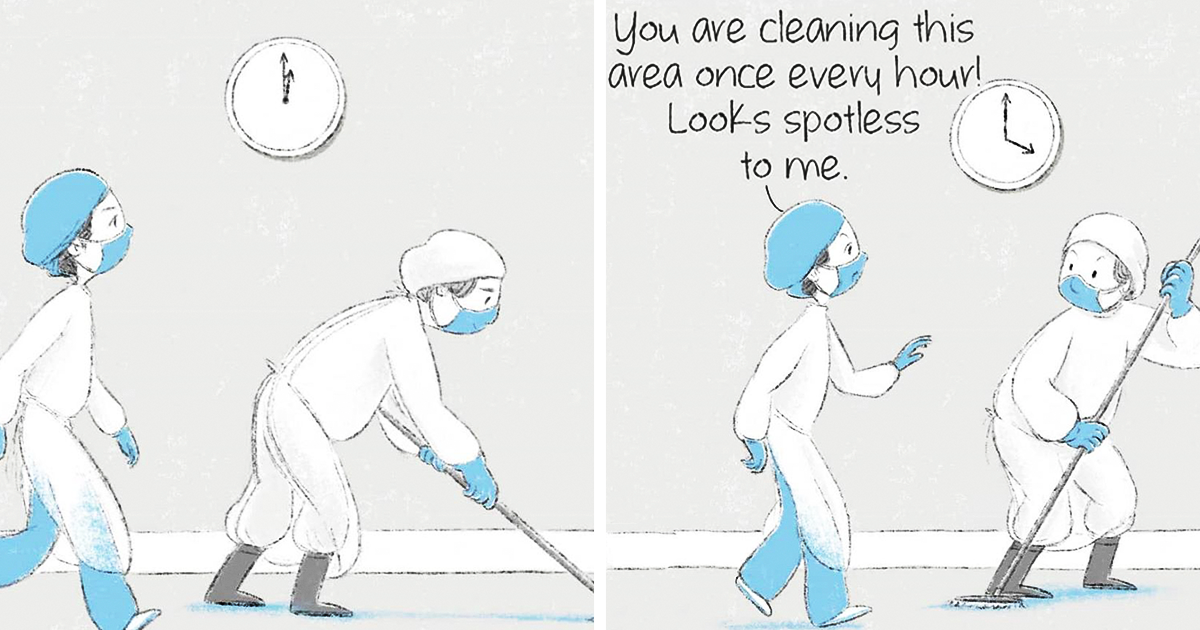
Some superheroes wear capes. Healthcare heroes usually wear scrubs, compression socks, badge reels, and the expression of someone who has answered “Where is the bathroom?” 47 times before lunch. That is exactly why I created 10 more comics about healthcare heroes: to celebrate the nurses, doctors, EMTs, medical assistants, pharmacists, therapists, lab workers, technicians, home health aides, and support staff who keep showing up when the world feels like it has misplaced the instruction manual.
These healthcare hero comics are not about making medicine look easy. Anyone who has ever watched a nurse juggle three call lights, one family question, a ringing phone, and a charting system that appears to have been designed by a mischievous raccoon knows better. Instead, these comics are about the small moments that make healthcare human: a warm blanket, a calm voice, a joke at the right second, a steady hand, and the kind of patience that deserves its own parking spot.
In recent years, healthcare workers have carried an enormous emotional load. Burnout, staffing shortages, administrative pressure, workplace violence, long shifts, and rising patient needs are not abstract policy terms to them; they are Tuesday. Yet inside that pressure cooker, compassion still happens. Sometimes it looks heroic. Sometimes it looks hilarious. Often, it looks like someone eating a granola bar over a trash can because there was no time for lunch. Glamour, thy name is healthcare.
Why Healthcare Heroes Make Such Powerful Comic Characters
Comics are built for contrast. A tiny panel can hold a huge emotion. A simple face can say, “I am fine,” while the coffee cup in the character’s hand says, “Please send backup.” That makes comics a surprisingly perfect format for telling healthcare stories.
The field of graphic medicine uses comics and visual storytelling to explore illness, caregiving, healthcare experiences, and the emotional side of medical life. The beauty of the medium is that it can make complicated systems feel personal. A long report about burnout might make people nod politely. A four-panel comic showing a nurse finishing a shift, sitting in a car, and finally exhaling can make people feel something in their ribs.
Healthcare hero comics work because they do not need a dramatic operating room scene every time. The most moving moments are often quiet. A respiratory therapist adjusts a mask with gentleness. A phlebotomist distracts a nervous patient with a joke. A receptionist absorbs frustration while still protecting the schedule like a wizard guarding a portal. These are not side characters. They are the structure holding the story together.
The Idea Behind These 10 New Comics
For this new set, I wanted to draw healthcare heroes as real people, not shiny statues. Real healthcare workers are tired, funny, brilliant, occasionally sarcastic, and often powered by caffeine, teamwork, and a very suspicious vending machine sandwich. They deserve art that honors both their courage and their humanity.
Each comic is designed around a small healthcare moment that many readers recognize. Some focus on emotional support. Others highlight teamwork, patient safety, or the strange comedy of hospital life. The goal is simple: warm the heart without pretending the job is one long inspirational poster.
Comic 1: “The Warm Blanket Department”
The first comic features a nurse delivering a warm blanket to a patient who is scared before a procedure. In the first panel, the patient looks overwhelmed. In the second, the nurse appears with the blanket like a knight carrying a sacred comfort tortilla. By the final panel, the patient’s face softens.
The joke is gentle, but the message is real. Healthcare is not only medication, machines, and test results. It is also comfort. Warm blankets are practically hospital currency, and the people who bring them understand that dignity can arrive folded and slightly toasty.
Comic 2: “The Doctor Who Speaks Human”
This comic shows a physician explaining a complex diagnosis using plain language, a doodle on a notepad, and zero terrifying medical jargon. In the background, a cloud of complicated terms floats away like a defeated villain.
Good communication is one of the most underrated healthcare superpowers. Patients do not need a lecture wrapped in Latin and sprinkled with panic. They need clarity. A doctor who can translate medical complexity into understandable language is not “dumbing it down.” They are opening the door.
Comic 3: “The EMT and the Terrible Joke”
In this panel set, an EMT helps a frightened patient into the ambulance while telling an absolutely awful joke. The patient groans. The EMT smiles. The punchline is so bad it should require insurance preauthorization.
Emergency medical workers often meet people on the worst day of their lives. A calm voice, a quick assessment, and even a silly joke can make chaos feel less lonely. Humor does not erase fear, but sometimes it gives fear a chair, a juice box, and a reason to be quiet for a minute.
Comic 4: “The Lab Tech’s Invisible Victory”
This comic follows a lab technician processing a sample while the rest of the hospital waits for answers. No one sees the tiny victory dance when the result is completed accurately and quickly. But the comic does.
Lab professionals are often hidden heroes. Patients may never meet them, yet decisions depend on their precision. In a world that loves front-facing drama, the lab reminds us that invisible work can be lifesaving work.
Comic 5: “The Pharmacist vs. The Mystery Medication List”
Here, a pharmacist faces a patient’s medication list that looks like it was written during a thunderstorm on the back of a grocery receipt. With detective energy, the pharmacist checks interactions, clarifies doses, and prevents confusion before it becomes danger.
Pharmacists do far more than count pills. They educate, protect, review, catch mistakes, and help patients understand how to take medications safely. In comic form, they are part scientist, part translator, part detective, and part person who has heard “Do you work here?” while standing behind the pharmacy counter.
Comic 6: “The Medical Assistant Who Notices Everything”
This comic centers on a medical assistant who spots that a patient seems unusually quiet. The appointment is busy, the schedule is tight, but the assistant pauses and asks, “Are you doing okay today?” That one question changes the tone of the visit.
Medical assistants are often the first people patients open up to. They collect vitals, update histories, manage flow, and notice details that others might miss. In a clinic, attention is not a small skill. It is a lighthouse.
Comic 7: “The Physical Therapist and the One More Step Club”
In this comic, a physical therapist cheers as a patient takes one difficult step after surgery. The patient says, “That was only one step.” The therapist replies, “Correct. Also known as the beginning of the parade.”
Rehabilitation is full of tiny milestones that feel enormous when you are living them. Healthcare heroes in therapy roles understand how to celebrate progress without rushing it. They turn effort into momentum, and sometimes momentum starts with one shaky step and a very enthusiastic clipboard.
Comic 8: “The Home Health Aide and the Cup of Tea”
This comic visits a patient at home, where a home health aide helps with daily care and notices the patient’s favorite mug sitting unused. In the final panel, the patient smiles over a cup of tea while the aide checks the care plan.
Home health workers support people where life actually happens: kitchens, living rooms, narrow hallways, family photos, pets that may or may not approve of strangers. Their work protects independence and comfort, especially for older adults and people with chronic needs.
Comic 9: “The Night Shift Constellation”
This one shows a hospital at 3:12 a.m. Each lit window becomes a star. Inside are nurses, physicians, respiratory therapists, environmental services workers, security staff, and technicians keeping the building alive while most of the city sleeps.
Night shift healthcare has its own rhythm. The jokes get stranger. The coffee gets stronger. Time becomes a soup. But the care continues. This comic is a small thank-you to everyone who works while the rest of us are dreaming about missing homework from 2009.
Comic 10: “The Healthcare Hero Goes Home”
The final comic is quiet. A healthcare worker comes home, takes off their shoes, washes their hands, and sits for a moment before joining family life. A child asks, “Did you save anyone today?” The healthcare worker smiles and says, “A few people helped me, too.”
That ending matters. Healthcare heroes are not machines that produce compassion on command. They need support, rest, safe workplaces, fair staffing, and leaders who listen. The best way to honor healthcare workers is not only to applaud them. It is to build systems that protect them.
The Real-World Heart Behind Healthcare Hero Comics
These comics may be warm and funny, but the real world behind them is serious. U.S. healthcare workers continue to face high levels of stress and burnout. Physician burnout has improved from its pandemic peak, but it remains a major concern. Nurses, residents, students, support staff, and frontline teams often experience pressure from heavy workloads, administrative burden, staffing challenges, and emotionally intense patient care.
The United States also faces major healthcare workforce concerns. Projections from medical and labor organizations point to continued demand for physicians, nurses, nurse practitioners, home health aides, and other healthcare roles as the population ages and care needs grow. Behind every statistic is a person trying to care for another person without becoming invisible in the process.
That is why storytelling matters. A comic cannot fix staffing shortages. It cannot reduce paperwork, repair broken workflows, or make an electronic health record suddenly behave like it attended charm school. But a comic can remind readers that healthcare workers are human beings, not just job titles. It can make empathy easier to access.
How Humor Helps Without Making Light of the Work
Writing funny healthcare comics requires balance. The humor should never punch down at patients or mock people in vulnerable moments. The best jokes come from shared absurdity: the printer that jams only during emergencies, the badge that flips backward at the worst possible time, the computer password that expires right when you finally remember it, and the break room fridge containing leftovers old enough to have a retirement account.
Humor can be a pressure valve. Many healthcare workers use it to stay connected, process hard days, and keep moving. In comic form, humor creates an invitation. Readers laugh first, then notice the deeper feeling underneath. That combination is powerful because it lets people approach difficult topics without immediately putting up emotional armor.
What Makes a Healthcare Hero?
A healthcare hero is not defined by perfection. In fact, perfection would make a boring comic character. The most meaningful healthcare heroes are defined by presence. They keep learning. They work in teams. They notice small needs. They ask better questions. They apologize when necessary. They stay calm when the room is not calm. They care even when care is complicated.
Healthcare is also not a solo sport. The word “hero” can accidentally make us imagine one person saving the day alone under dramatic lighting. Real care is more like a relay race through a maze where everyone is carrying paperwork. A patient’s good outcome may involve nurses, physicians, therapists, transporters, pharmacists, social workers, lab teams, food service workers, environmental services, administrators, and family caregivers.
That teamwork is why the comics include many roles. The hero is not always the person holding the stethoscope. Sometimes the hero is the person cleaning the room thoroughly, calming a worried parent, double-checking a medication, translating instructions, or making sure the next team member has what they need.
Why Readers Respond to Heartwarming Medical Comics
Readers love healthcare comics because almost everyone has a healthcare story. Maybe you remember the nurse who made you laugh before surgery. Maybe a paramedic helped your family during an emergency. Maybe a therapist encouraged you when recovery felt impossible. Maybe a receptionist fought bravely with the schedule and somehow found you an appointment before the next ice age.
Comics turn those memories into something visible. They also make gratitude easier to express. A simple drawing can say, “I saw what you did,” in a way that feels direct and sincere.
Heartwarming comics also help people outside healthcare understand the emotional texture of the work. They show that care is not one grand gesture. It is hundreds of small choices repeated under pressure. It is patience in a hallway. It is accuracy in a lab. It is listening when time is short. It is compassion with sore feet.
Lessons I Learned While Creating These Comics
The biggest lesson is that healthcare stories do not need exaggeration to be powerful. Real life already has enough drama, comedy, tenderness, and chaos to fill a whole graphic novel series. A patient trying to thank every staff member before discharge can be moving. A nurse labeling their lunch “Do Not Eat” in three languages can be funny. A doctor sitting at a desk after hours to answer messages can be quietly heartbreaking.
I also learned that the best healthcare comics leave room for complexity. Healthcare workers can be heroes and exhausted. Patients can be grateful and frustrated. Systems can include brilliant people and still create unnecessary strain. A warm comic does not have to ignore the hard parts. In fact, warmth feels more honest when it sits beside truth.
500 More Words: Personal Experiences and Reflections Behind the Topic
Creating these 10 more comics about healthcare heroes made me think about the moments that rarely get framed. Big medical scenes are easy to imagine: the emergency room rush, the dramatic diagnosis, the urgent call, the heroic save. But the experiences that stayed with me while shaping these comics were smaller and more ordinary. They were the kinds of moments that might pass in ten seconds but stay in someone’s memory for years.
One experience I kept returning to was the simple power of being treated like a person when you feel scared. Anyone who has sat in a waiting room knows that healthcare anxiety has a very specific flavor. It tastes like old coffee, hand sanitizer, and pretending not to stare at the door every time it opens. In that state, a kind staff member can change everything. A smile, a clear explanation, or a “We haven’t forgotten you” can bring the nervous system down from full orchestra mode to something closer to a kazoo.
That feeling shaped the warm blanket comic. The blanket is not really the point. The point is that someone noticed discomfort and responded. In healthcare, noticing is a form of care. It says, “You are not just a chart. You are a person in a chilly room trying to be brave.”
Another experience behind these comics is watching teamwork happen almost invisibly. From the outside, patients may see one clinician at a time. Behind the scenes, care often looks like a living network. One person documents. Another calls. Someone checks a result. Someone cleans a room. Someone transports a patient. Someone explains the next step. When it works, it can feel almost magical, but it is not magic. It is training, communication, repetition, and a lot of people choosing responsibility at the same time.
That is why I wanted the “Night Shift Constellation” comic to include many roles. Hospitals do not sleep because people keep them awake. Some are highly visible. Others are rarely thanked. Environmental services workers, food service workers, security teams, unit clerks, and transport staff all help care happen. A hospital without them would stop functioning faster than a phone battery at 1 percent.
The funny comics came from another truth: humor survives in strange places. Healthcare humor is often quick, dry, and oddly practical. It appears in break rooms, supply closets, nurse stations, ambulance bays, and clinic hallways. It is not about disrespect. It is about endurance. When the day is heavy, a tiny joke can make the next task possible.
Still, I wanted the humor to have a soft landing. The goal was never to turn healthcare workers into cartoon superheroes who never struggle. That kind of praise can become another burden. Real appreciation should include honesty. Healthcare heroes deserve admiration, but they also deserve safe staffing, mental health support, protection from violence, manageable workloads, and systems that make good care easier instead of harder.
In the end, these comics are love letters with punchlines. They are small illustrated thank-you notes to the people who measure, lift, listen, explain, clean, comfort, diagnose, repair, reassure, and return the next day to do it again. If they warm your heart, good. If they also make you thank a healthcare worker, support better healthcare workplaces, or simply show a little more patience at your next appointment, even better. That would be the kind of sequel worth drawing.
Conclusion: The Small Panels That Say a Big Thank You
I created 10 more comics about healthcare heroes because gratitude sometimes needs pictures. These stories celebrate the visible and invisible people who keep healthcare moving with skill, humor, patience, and heart. They remind us that heroism is not always loud. Sometimes it is a warm blanket, a careful explanation, a clean room, a steady hand, or one more step after surgery.
Healthcare heroes are not perfect mythical beings. They are people doing meaningful work in demanding conditions. They deserve more than applause; they deserve understanding, respect, and support. But if a comic can make someone smile, pause, and recognize the humanity behind the badge, then that little drawing has done its job.











