
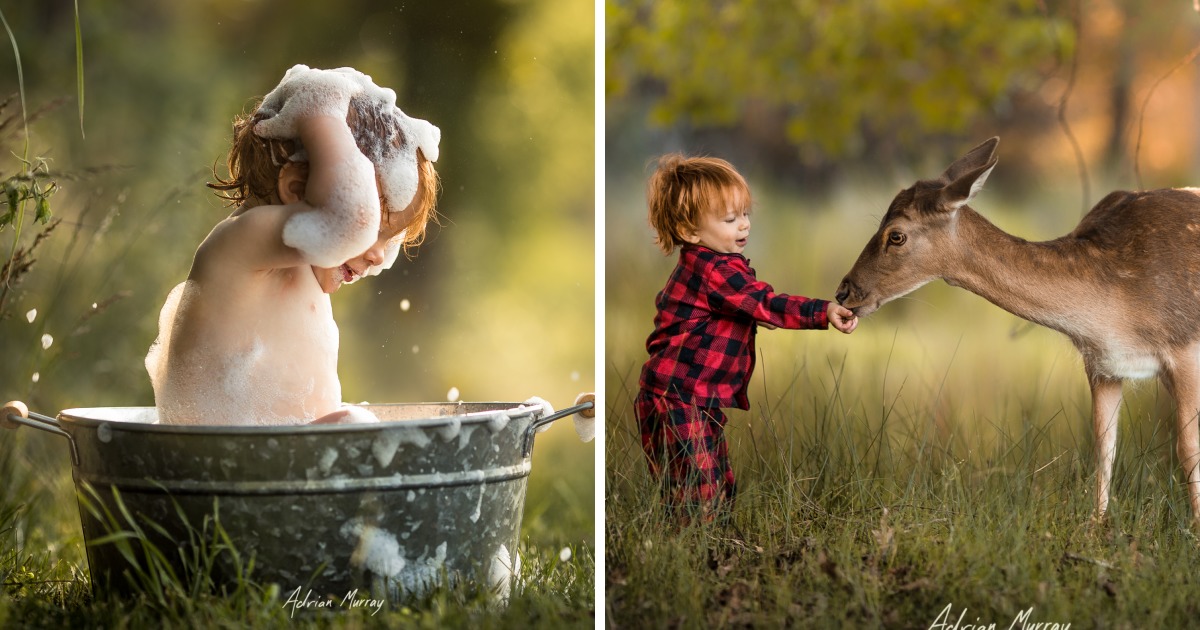
There is a particular kind of summer that refuses to be rushed. It smells like cut grass, sun-warmed berries, dusty roads, lake water, and sandwiches that somehow taste better when eaten on a blanket under a tree. It is the kind of summer where children run barefoot through the yard as if shoes are a government conspiracy, where a jar becomes a temporary hotel for fireflies, and where the biggest afternoon decision is whether to climb the apple tree before or after lemonade.
Documenting my children enjoying their idyllic summer in the countryside is not just about taking pretty photographs. It is about preserving a rhythm of childhood that feels increasingly rare: slow mornings, outdoor play, small discoveries, dirt under fingernails, and the glorious freedom of being bored long enough to invent something wonderful. A countryside childhood does not need a dramatic itinerary. The field is the playground. The garden is the classroom. The creek is the science lab. The porch is the theater. And yes, the laundry room is where all evidence eventually arrives.
Why Countryside Summers Make Childhood Feel Bigger
An idyllic summer in the countryside gives children what modern family life often struggles to protect: space, time, and permission to explore. In the city, play can feel scheduled between errands, traffic, lessons, and screen time negotiations worthy of international diplomacy. In the countryside, the day opens differently. The birds start before the alarm. The sky looks impossibly wide. A child can spend twenty minutes watching ants carry a crumb and call it “research,” which, honestly, is not wrong.
Outdoor play supports physical activity, imagination, attention, social skills, and emotional well-being. Children climb, run, balance, jump, dig, chase, splash, and invent games with rules that become suspiciously flexible whenever the youngest sibling starts winning. These ordinary movements matter. They build strength and coordination, but they also build confidence. A child who figures out how to cross a shallow stream on stepping stones is also practicing judgment, patience, and courage.
The countryside naturally invites open-ended play. A stick becomes a fishing rod, a magic wand, a hiking pole, a sword for battling invisible dragons, and then, mysteriously, something that must be brought into the house and placed on the kitchen table. Nature does not come with batteries, pop-up ads, or a “skip intro” button. It asks children to notice, adapt, and imagine.
Documenting the Summer Without Turning It Into a Photo Shoot
The best family photography often happens when nobody is performing. I try to document my children’s countryside summer as it unfolds, not as a perfectly styled catalog of golden-hour wholesomeness. Real summer has mosquito bites, crooked hats, watermelon juice on shirts, muddy knees, and at least one child insisting that a beetle is now a family pet named Mr. Pancake.
Instead of asking children to pose constantly, I look for moments: a hand reaching into a berry bush, a face concentrating over a jar of tadpoles, siblings whispering under a quilt fort on the porch, a child standing at the edge of a field as if considering the meaning of the universe or whether snack time is legally overdue. These details tell a richer story than a row of forced smiles.
Focus on Small Scenes, Not Perfect Pictures
Country life gives you built-in storytelling material. Photograph the boots by the door, the garden hose curled in the grass, the half-built tree fort, the chalk drawings fading after rain, the wildflowers in a chipped mug, the breakfast plate with one bite left because someone spotted a butterfly emergency. These objects are emotional bookmarks. Years later, they may say more about the summer than a formal portrait ever could.
Let Children Help Tell the Story
Children see the countryside differently from adults. Adults see a field and think, “Beautiful landscape.” Children see a field and think, “Ideal place to become a horse, detective, farmer, or wizard.” Giving kids a small camera or letting them choose what to photograph can reveal what matters to them: a favorite chicken, a weird cloud, a bug, a dented red wagon, the exact rock they are emotionally attached to for reasons nobody understands.
The Quiet Benefits of a Screen-Light Summer
A countryside summer does not mean screens disappear completely. We are a modern family, not a pioneer reenactment with better sunscreen. But the countryside makes it easier to reduce the constant pull of devices. There is always something to do outside, even when “something” looks like lying in the grass and arguing about whether a cloud resembles a dinosaur or a baked potato.
When children spend more time outdoors, they often become more physically active without being told to “exercise.” Running to the barn, carrying watering cans, helping gather vegetables, biking on a quiet lane, skipping stones, or playing tag until everyone collapses dramatically in the shade all count as movement. The beauty is that it does not feel like a fitness plan. It feels like being alive.
Nature also gives children a calmer kind of stimulation. The countryside is full of sounds and textures: crickets, wind, birds, gravel under tires, leaves rubbing together, frogs after rain. Unlike digital noise, these details do not demand constant reaction. They invite attention. They teach children to slow down enough to see what is actually there.
Country Lessons Children Learn Without a Worksheet
One of the great joys of documenting children in the countryside is watching learning happen naturally. A child who plants beans learns patience, weather, responsibility, and the brutal truth that rabbits do not respect garden boundaries. A child who collects eggs learns gentleness and routine. A child who follows deer tracks learns observation. A child who drops a sandwich in the dirt learns tragedy.
Gardening Teaches More Than Gardening
Gardening with children is a summer gift disguised as a chore. They learn where food comes from, why soil matters, how plants grow, and how much drama can be caused by one tomato hornworm. Children who help grow vegetables may become more curious about tasting them, especially when they can announce, with the confidence of a celebrity chef, “I grew this cucumber.”
The garden also teaches that not everything happens instantly. Seeds take time. Rain matters. Too much sun can wilt a plant. A forgotten watering can has consequences. These are simple lessons, but they are deep ones. The countryside teaches cause and effect with dirt, weather, and patience instead of lectures.
Animals Teach Empathy and Responsibility
Whether children are feeding chickens, watching cows beyond a fence, caring for a family dog, or observing birds at a feeder, animals help them practice attention and empathy. They learn that living things have needs. They learn to move quietly, wait patiently, and respect boundaries. They also learn that chickens are surprisingly opinionated creatures, which feels like important science.
How to Capture an Idyllic Summer Without Ignoring Reality
The word “idyllic” can sound as if every moment is glowing, peaceful, and suitable for a calendar. Real countryside summers are more complicated and funnier. Someone cries because their popsicle broke. Someone steps in something mysterious. Someone refuses to leave the pond because they are “basically a frog now.” The magic is not the absence of mess. The magic is that the mess belongs to a larger story of freedom, discovery, and togetherness.
When I document my children enjoying their summer in the countryside, I try to include both beauty and honesty. Yes, I photograph the sunset over the field. I also photograph the pile of muddy clothes by the back door. Yes, I capture the children laughing under the sprinkler. I also remember that five minutes earlier they were arguing over whose turn it was to control the hose like tiny water-rights attorneys.
Authentic family storytelling does not require perfection. It requires attention. The best images say, “This is how it felt.” They hold the warmth of the day, the sound of laughter, the slowness of afternoon, and the deep sleep that comes after hours outside.
Summer Safety Still Matters, Even in Paradise
A countryside summer should feel free, but freedom works best with sensible boundaries. Sun protection, hydration, tick checks, water safety, and basic supervision are not glamorous, but neither is explaining to a child why they cannot keep scratching mosquito bites with the intensity of a tiny raccoon.
Our summer rhythm includes hats, sunscreen, water bottles, shaded breaks, and a practical respect for heat. Around ponds, lakes, pools, and creeks, adults stay alert. Natural water can look peaceful while still requiring serious supervision. Life jackets, swimming skills, and clear rules help protect the fun.
Ticks and insects are part of outdoor life in many rural areas, so we build checks into the evening routine. Shoes come off, clothes go into the wash when needed, and everyone gets inspected after tall grass or wooded adventures. The children complain, of course, because complaining is their seasonal sport. But safety routines become easier when they are simply part of the day, like brushing teeth or asking for snacks immediately after declaring they are not hungry.
Sharing Family Photos With Care
Documenting children does not automatically mean posting everything online. A family archive can be private, printed, saved in albums, or shared only with close relatives. When I do share, I think carefully about privacy. I avoid posting precise locations, school details, embarrassing moments, or images that my children may dislike later. Childhood memories should belong to children too, not just to the internet.
A useful rule is simple: if the photo might make a child uncomfortable when they are older, keep it private. Another good habit is to ask children, when they are old enough, whether they are okay with a picture being shared. This teaches consent in a practical, everyday way. It also reminds adults that children are not content. They are people with muddy knees, loud opinions, and future digital footprints.
Creating a Family Summer Archive
At the end of each week, I like to gather the best moments into a simple archive. It does not have to be fancy. A folder labeled by date, a printed photo book, a scrapbook, or a handwritten summer journal can turn scattered memories into something lasting. I include images, funny quotes, weather notes, recipes, pressed flowers, drawings, and tiny stories.
For example, one page might read: “Tuesday: Picked blackberries. Lost one sandal. Found three frogs. Nobody knows where the blue bucket went.” That is not just a note. That is a family time capsule. Years later, those small details may bring back the entire day with surprising force.
The countryside gives children a stage, but documentation gives the summer a second life. Photographs help us remember how small their hands were, how brave they looked on a bike, how proud they were of a crooked cucumber, and how golden the evenings felt when everyone was tired, sticky, and happy.
Additional Experiences: What This Countryside Summer Taught Me
The longer I document my children enjoying their idyllic summer in the countryside, the more I realize that I am not only recording their childhood. I am being taught how to notice again. Children are natural experts in wonder. They do not walk past a butterfly because they are late for an email. They do not ignore a puddle because it is inconvenient. They do not see a pile of stones as a pile of stones; they see a castle, a bakery, a museum, or a suspiciously organized dragon nest.
One morning, I watched my children spend nearly an hour building a “restaurant” under an old tree. The menu included grass soup, bark toast, clover salad, and a dessert made of pebbles that came with a strict warning: “Don’t actually eat this unless you are a squirrel.” No toy set could have improved the scene. They negotiated prices, assigned jobs, decorated the entrance with leaves, and became deeply offended when the dog tried to eat the inventory. I photographed their hands arranging acorns on a stump, but the real memory was their seriousness. In that moment, imagination was not pretend. It was work, art, business, and theater all at once.
Another afternoon, a storm rolled over the fields, turning the sky dark blue and making the air smell like rain before a single drop fell. We sat on the porch and listened. The children were quiet, which was notable enough that I nearly checked for a fever. Then the rain arrived, loud and silver, bouncing off the roof and filling the ditches. Afterward, they ran outside to inspect the world as if it had been newly delivered. Worms had appeared. Leaves glittered. The driveway had become a map of tiny rivers. I took photos, but I also put the camera down. Some moments are better entered than captured.
The countryside has also taught me that children do not need constant entertainment. They need access, patience, and adults willing to tolerate a reasonable amount of dirt. Boredom is not always a problem to solve. Sometimes boredom is the doorway. After the first complaint of “There’s nothing to do,” comes the invention: a scavenger hunt, a fort, a race, a mud pie bakery, a secret club, a bug investigation, a song about a chicken who wants to become mayor. I have learned not to interrupt too quickly. The best ideas often arrive after the whining has completed its dramatic opening act.
Documenting these experiences has changed the way I use my camera. I take fewer staged photos and more story photos. I capture motion, texture, weather, and emotion. I save the blurry image if it carries the feeling. I write down the ridiculous quotes. I photograph the ordinary places: the back steps, the garden row, the kitchen sink full of berries, the towels hanging over chairs. These are the details that will one day say, “This was our summer.”
Most of all, I have learned that an idyllic summer is not perfect. It is alive. It includes laughter, arguments, sunburn prevention, wet socks, late dinners, tired parents, and children who fall asleep as if someone removed their batteries. It is beautiful because it is real. The countryside simply gives that reality more room to breathe.
Conclusion
To document my children enjoying their idyllic summer in the countryside is to preserve more than photographs. It is to honor a season of freedom, curiosity, movement, nature, and family connection. The countryside gives children room to run, wonder, create, and learn without realizing they are learning. It offers a childhood textured with grass stains, garden soil, creek stones, porch shadows, and firefly evenings.
Years from now, the images may not be valuable because they are technically perfect. They will matter because they are honest. They will remind us how the children looked before they grew taller, how the fields glowed at dusk, how the dog followed every adventure, and how summer once seemed endless. That is the quiet power of documenting family life: it turns ordinary days into a story we can return to, long after the season has packed up its sandals and wandered into memory.














