
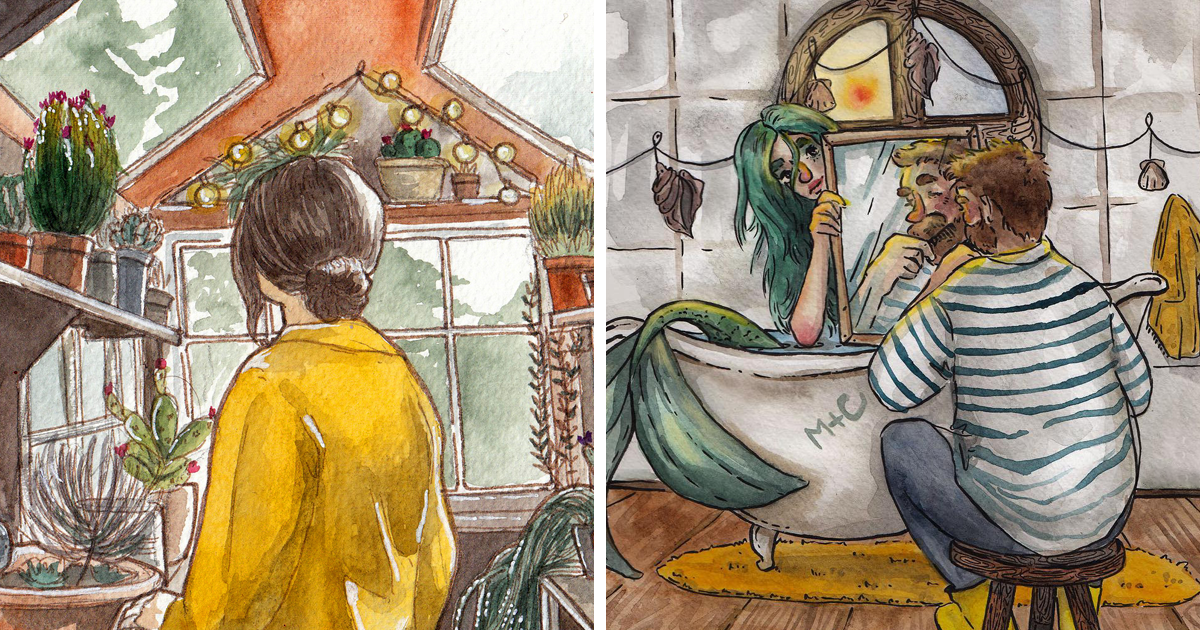
Leaving a stable job to become a full-time illustrator sounds wonderfully romanticuntil you realize romance does not pay for watercolor paper, shipping labels, printer ink, or the tiny jar you keep filling with “emergency coffee money.” Still, for many artists, the pull of creative work becomes too loud to ignore. Mine sounded like a pencil tapping on a sketchbook at 11:47 p.m., whispering, “What if this little duck wearing rain boots became your whole career?”
This article is about that leap: trading office routines for paint-stained fingers, client briefs, sketchbook pages, and the quiet joy of capturing cute everyday moments with watercolor and ink. It is not a fairy tale where everything becomes easy after one brave decision. It is more like an illustrated field guide to courage, complete with smudges, invoices, happy accidents, and one suspiciously judgmental cat.
For anyone dreaming about becoming a full-time illustrator, this story offers both inspiration and practical insight. We will explore how watercolor and ink illustration works, why “cute moments” connect so strongly with audiences, what it really means to build a creative career, and how 30 small scenes can become a personal visual diary of tenderness, humor, and everyday magic.
Why I Left My Job To Become A Full-Time Illustrator
The decision did not happen overnight. It grew quietly, like a seed under the floorboards of my regular life. I had a job, a schedule, coworkers, emails, meetings, and a calendar that looked as if it had been attacked by color-coded confetti. On paper, everything was fine. But every spare moment I had, I found myself drawing.
I drew sleepy animals in teacups. I drew little couples sharing umbrellas. I drew a raccoon proudly presenting a single blueberry as if it had discovered treasure. The more I illustrated, the more I noticed something important: people did not just respond to polished artwork. They responded to feelings. A tiny frog reading under a mushroom could make someone smile after a difficult day. A bear hugging a cup of tea could say, “Rest is allowed,” better than a motivational poster ever could.
Eventually, illustration stopped feeling like a hobby and started feeling like the truest version of work I could offer. That realization was exciting, inconvenient, and mildly terrifyinglike realizing the door you have been staring at for years is unlocked.
The Charm Of Watercolor And Ink Illustration
Watercolor and ink are a charming pair because they balance each other. Ink brings structure, personality, and crisp little details. Watercolor brings softness, movement, and those unpredictable blooms of color that make an image feel alive. Together, they create artwork that feels handmade in the best possible way.
Watercolor Adds Warmth And Emotion
Watercolor has a mind of its own. You can guide it, encourage it, and politely request that it stay inside the lines, but sometimes it simply wanders off and becomes a cloud. That unpredictability is part of its beauty. A pale wash of blue can make a rainy window feel peaceful. A blush of pink on a character’s cheeks can turn a simple face into a tiny emotional event.
In cute illustration, watercolor is especially powerful because it softens the scene. It makes a bunny’s blanket feel cozy, a bakery window glow, and a night sky look like it is holding its breath. The medium naturally invites gentleness.
Ink Gives The Artwork Personality
Ink is where many of the jokes happen. A raised eyebrow, a wobbly whisker, a tiny paw gripping a mug too seriouslythese details turn a drawing from “nice” into “I would like this character to be my friend.”
Line weight matters. A thicker outline can make a character feel bold and playful, while thinner lines can add texture, movement, and delicate expression. In watercolor and ink illustration, the ink often acts like the storyteller, while watercolor sets the mood.
Here Are 30 Cute Moments I Created With Watercolor And Ink
When I began working full-time as an illustrator, I wanted to build a collection that felt like a pocket-sized celebration of everyday joy. Instead of chasing grand dramatic scenes, I focused on tiny momentsthe kind that usually disappear unless someone draws them. Here are 30 cute moments that became part of my watercolor and ink world.
1. The Cat Who Claimed The Fresh Laundry
A round gray cat sits proudly on a warm stack of folded towels, looking absolutely certain that laundry was invented for royal feline comfort.
2. Two Ducks Sharing A Rain Puddle
One duck wears a yellow rain hat. The other has no hat but twice the confidence. Together, they splash like puddle professionals.
3. A Mouse Baking A Strawberry Tart
The tart is larger than the mouse, which is exactly how all good dessert situations should be measured.
4. A Sleepy Bear In A Tiny Sweater
This bear is holding tea with both paws and staring into the distance like it just remembered it has emails.
5. A Frog Reading Under A Mushroom
A red-capped mushroom becomes a library roof while the frog turns a page with dramatic seriousness.
6. A Hedgehog Collecting Autumn Leaves
The hedgehog carries one leaf on its head, three on its back, and the proud expression of someone who has found treasure.
7. A Bunny Mailing A Love Letter
The envelope is sealed with a heart, but the bunny looks nervousas if the mailbox might have opinions.
8. A Puppy Meeting A Butterfly
The puppy’s nose points upward, the butterfly hovers, and the whole scene feels like the beginning of a very polite friendship.
9. A Raccoon Having A Midnight Snack
There is a cookie, a moonlit windowsill, and a raccoon pretending this was definitely planned and not stolen.
10. A Little Fox Wearing Oversized Glasses
The glasses are too large, the fox is too proud, and somehow the math homework still looks suspicious.
11. A Penguin Knitting A Scarf
The scarf is already longer than the penguin. No one is stopping the penguin. The penguin has entered its scarf era.
12. A Tiny Dragon Toasting Marshmallows
Instead of being fearsome, the dragon is useful at campfires and very careful not to over-toast dessert.
13. A Squirrel Organizing Acorns By Size
This one is for anyone who has ever said, “I am not procrastinating; I am creating a system.”
14. A Snail Delivering Flowers
The delivery may arrive in three to seven business weeks, but the bouquet is adorable.
15. A Kitten Falling Asleep In A Paint Palette
A few pastel paw prints trail across the paper, proving once again that cats believe all art is a collaboration.
16. A Bear And Bird Watching The Sunset
The bear says nothing. The bird says everything. The sky does the rest.
17. A Rabbit Floating In A Teacup
The teacup becomes a boat, the saucer becomes the sea, and the rabbit becomes captain of the calmest voyage ever.
18. A Panda Watering A Plant
The plant is tiny, the watering can is tinier, and the panda’s dedication is enormous.
19. A Fox And A Goose At A Picnic
Against all storybook expectations, they share sandwiches and excellent boundaries.
20. A Hamster Painting A Self-Portrait
The portrait looks nothing like the hamster, but the confidence is museum-level.
21. A Whale Carrying A Little Lighthouse
This dreamy scene mixes ocean blue washes with fine ink lines to create a gentle, storybook feeling.
22. A Dog Waiting At A Bakery Window
The dog does not understand business hours. The dog understands croissants.
23. A Ghost Making Pancakes
Not a scary ghostmore of a breakfast enthusiast with transparent hands and excellent syrup control.
24. A Turtle Wearing A Backpack
The turtle is ready for adventure, even if the adventure is only four inches away.
25. A Chick Learning To Tie Shoes
The shoelaces are chaos. The determination is heroic.
26. A Deer Hanging Fairy Lights
Soft yellow watercolor glows against inked branches, turning the forest into a cozy evening festival.
27. A Seal Reading A Map Upside Down
The seal is lost but extremely cheerful, which is honestly a respectable travel strategy.
28. A Tiny Owl In A Nightcap
The owl is supposed to be nocturnal but has chosen bedtime. Personal growth looks different for everyone.
29. A Badger Sharing Soup
Two bowls, one candle, and a kitchen that smells like kindness.
30. A Little Artist Drawing The Moon
This final piece feels like a self-portrait: a tiny figure with a brush, trying to capture something bigger than the page.
Why Cute Illustration Connects With People
Cute art is often misunderstood as simple or lightweight, but creating it well requires emotional precision. A small illustration has only a few seconds to make someone feel something. There is no room for clutter. Every tilt of the head, every color choice, every little prop must work.
Cute watercolor and ink illustration works because it offers comfort without demanding much from the viewer. It does not shout. It taps gently on the shoulder. In a busy digital world full of alerts, deadlines, and dramatic headlines, a soft illustration can feel like a tiny pause button.
That does not mean cute art avoids depth. A bear drinking tea can represent rest. A snail delivering flowers can represent patience. A small character facing a big world can reflect courage. The sweetness is the doorway; the emotion is the room.
How I Developed My Illustration Style
Finding a personal illustration style is not like choosing a hat. You do not simply try one on and say, “Yes, this is my professional face now.” Style develops through repetition, curiosity, and a truly impressive number of drawings you would prefer no one ever sees.
At first, I copied the energy of everything I loved: children’s books, stationery, comics, vintage botanical sketches, animated films, cozy packaging, and old postcards. Over time, certain patterns appeared. I liked rounded shapes. I liked characters with gentle expressions. I liked warm color palettes, quiet scenes, and tiny visual jokes. I liked art that felt like finding a note in your lunchbox.
My process usually begins with a pencil sketch. I keep the first version loose, because stiff sketches often lead to stiff characters. After that, I refine the pose, add ink, erase the pencil, and build watercolor in layers. The final step is usually adding tiny details: cheek color, fur texture, stars, steam from a cup, or crumbs near a suspiciously innocent raccoon.
The Real Business Side Of Becoming A Full-Time Illustrator
Behind every charming illustration is an artist doing very un-charming tasks. Becoming a full-time illustrator means learning how to price work, answer emails, manage deadlines, photograph artwork, scan images, write product descriptions, package prints, track expenses, and politely explain that “quick little drawing” is not a payment method.
Freelance illustration can include many income streams: children’s books, editorial art, greeting cards, licensing, commissions, online shops, art prints, stickers, surface pattern design, workshops, and social media content. Relying on only one source of income can be risky, so many illustrators build a flexible mix.
One lesson arrived quickly: creativity needs structure. A weekly schedule helped me protect both art-making time and admin time. Without structure, the day can vanish into “research,” which sometimes means looking at reference photos and sometimes means comparing 18 kinds of masking tape like it is a national emergency.
Building A Portfolio That Feels Consistent
A strong illustration portfolio does not need hundreds of pieces. It needs clarity. Clients and art directors want to understand what kind of work you make, what mood you create, and whether your style fits their project. For cute watercolor and ink illustration, that means showing expressive characters, consistent color choices, storytelling ability, and finished pieces that look professional.
A portfolio should also show range within a recognizable voice. For example, I include animals, cozy interiors, seasonal scenes, character interactions, and small narrative moments. The goal is to show that I can create variety without looking like five different artists are fighting over the same sketchbook.
Learning To Price Creative Work
Pricing illustration is one of the hardest parts of turning art into a career. It involves time, skill, usage rights, complexity, revisions, materials, and the value the artwork brings to the client. A tiny spot illustration for a personal gift is different from a commercial illustration used on packaging or advertising.
Early on, many artists undercharge because they feel grateful to be asked. Gratitude is lovely, but it does not cover rent. A professional illustrator must learn to discuss budgets clearly, use agreements, define revision limits, and protect time. The art may be cute, but the invoice should not be shy.
What Watercolor And Ink Taught Me About Creative Courage
Watercolor is a surprisingly good teacher. It refuses to be completely controlled, which is annoying when you want perfection and wonderful when you need freedom. A bloom, bleed, or uneven wash can become the best part of a painting if you stop panicking long enough to notice.
Ink teaches a different lesson. Once a line is down, it is down. You can adapt, cover, transform, or laugh dramatically into your sleeve, but you cannot fully undo it. That permanence helped me become braver. It reminded me that art is not about avoiding mistakes; it is about responding to them with imagination.
Leaving my job worked the same way. I could plan carefully, save money, build a portfolio, and prepare, but at some point I still had to make the line. The moment was not perfect. It was simply real.
Tips For Aspiring Full-Time Illustrators
Start Before You Feel Ready
You do not need to quit your job immediately to begin. Start by building a body of work, posting consistently, creating a simple portfolio, and learning what people respond to. Treat your creative practice seriously before it becomes your full-time work.
Create A Signature Series
A themed series can help people understand your artistic world. My 30 cute watercolor and ink moments gave me a clear project to share. It also helped me practice storytelling, character design, color harmony, and consistency.
Think Like Both An Artist And A Small Business Owner
The creative side and business side must work together. Keep records, communicate professionally, learn basic marketing, and respect your own time. Your art may begin in your heart, but your career also needs spreadsheets. Unfortunately, even the cutest fox accountant cannot do them for you.
Protect Your Joy
When art becomes work, it can lose some of its playfulness if you are not careful. Keep a sketchbook for messy ideas. Paint things no one asked for. Draw a goose in a bow tie for absolutely no strategic reason. Joy is not a distraction from the career; it is the fuel.
Experiences From My Journey As A Full-Time Illustrator
The most surprising part of becoming a full-time illustrator was not the freedom. It was the responsibility. When I had a traditional job, my day came with built-in structure. Meetings appeared. Tasks arrived. Lunch happened somewhere in the middle like a small, edible landmark. Once I became self-employed, the whole day became mine, which sounded dreamy until I realized I was now the boss, the employee, the marketing department, the shipping team, the accountant, and the person responsible for noticing we were out of paper towels.
In the beginning, I thought my main challenge would be making enough art. Instead, the challenge was learning how to make art while also building a sustainable rhythm. Some mornings were magical. I would sit down with coffee, sketch a little fox holding wildflowers, and feel as if I had made the exact right choice. Other mornings were less cinematic. A client would request revisions, my scanner would refuse to cooperate, and I would spill rinse water near a finished painting while making a sound usually reserved for haunted houses.
One of the biggest lessons was learning to separate my identity from the performance of a single piece. Not every illustration becomes popular. Not every post gets attention. Not every product sells immediately. At first, that felt personal. If a painting did not receive much response, I wondered if it meant the work was weak or the dream was foolish. Over time, I learned that creative careers move in patterns. Some pieces are quiet stepping stones. Some teach technique. Some build a future collection. Some simply keep your hand moving on a hard day, and that matters too.
I also learned that cute art can create surprisingly meaningful conversations. People wrote to say a tiny bear reminded them to rest. Someone said a bunny with a letter made them think of a long-distance friend. A parent bought a print because their child loved frogs. These messages reminded me that illustration is not only decoration. It can become a small emotional object people carry into their lives.
Another experience that shaped me was discovering the importance of community. Working alone can be peaceful, but it can also become lonely if your only coworker is a houseplant and it refuses to give feedback. Connecting with other illustrators helped me understand pricing, contracts, burnout, supplies, printing, and the emotional roller coaster of freelance life. Creative friends celebrate your wins, understand your weird problems, and do not judge when you say, “I spent forty minutes trying to draw the perfect toast expression.”
Looking back, leaving my job was not a single brave moment. It was a collection of small brave moments: sending the first portfolio email, raising my rates, saying no to a poor-fit project, sharing imperfect work, investing in better materials, and continuing after slow weeks. The 30 cute watercolor and ink moments became more than illustrations. They became proof that a gentle idea, repeated with care, can grow into a body of workand eventually, a life.
Conclusion
Leaving a job to become a full-time illustrator is not just about chasing a dream. It is about building a practice, learning a business, developing a voice, and staying tender in a world that often rewards speed over softness. Watercolor and ink taught me to love both control and surprise. Cute everyday moments taught me that small stories can carry big feelings.
Whether you are an artist, an art lover, or someone wondering if your creative dream is worth taking seriously, let this be your gentle nudge. Start with one sketch. Then another. Then maybe thirty. A career can begin quietlywith a brush, a line, a character, and the courage to keep going.
Note: This article is written as original, publication-ready web content in standard American English, based on real-world illustration, freelance art, portfolio, and creative business practices.














