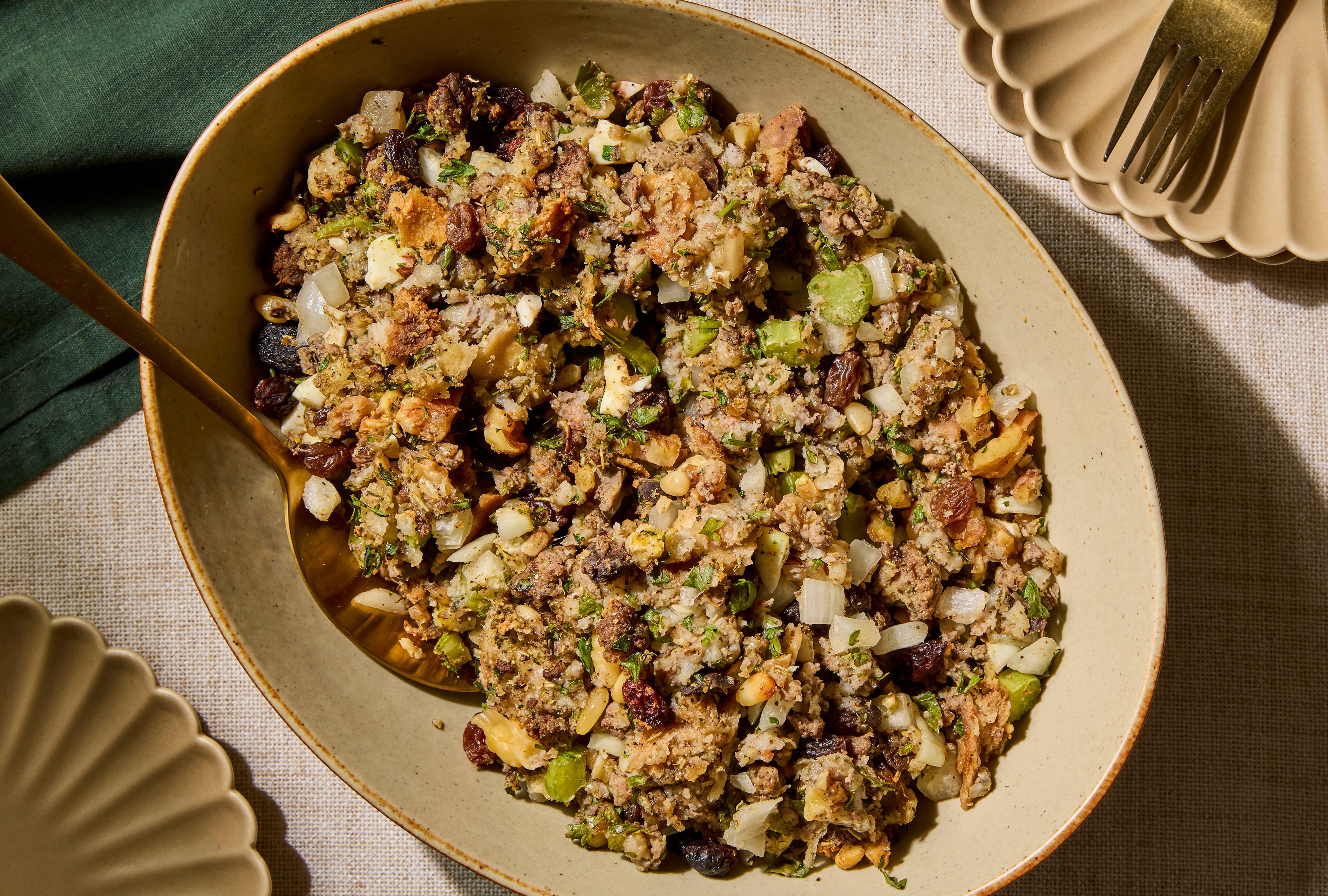
Some recipes arrive in your kitchen wearing an apron. Marilyn Monroe’s stuffing recipe arrives wearing sunglasses, a silk scarf, and the confident expression of someone who just put raisins, Parmesan, ground beef, chicken liver, hard-boiled eggs, and sourdough bread in the same bowl and dared history to complain.
When I first heard about Marilyn Monroe’s stuffing recipe, I expected something glamorous but simple: maybe buttery bread cubes, a little sage, a whisper of celery, and a story about Old Hollywood holiday dinners. Instead, I found a recipe that looks like Thanksgiving, Italian Sunday supper, and a vintage deli counter all got invited to the same party. It is not a shy side dish. It is not a “set it and forget it” casserole. It is a production.
The handwritten recipe became famous after appearing in Fragments: Poems, Intimate Notes, Letters, a collection of Monroe’s personal writings, notes, letters, and scraps. Food writers later adapted it for modern home cooks, and the internet has been fascinated ever since. Why? Because it challenges the flat, glossy image of Marilyn Monroe as merely a movie star. This recipe suggests someone practical, curious, and surprisingly bold in the kitchen.
So I tried it. I chopped, soaked, squeezed, browned, boiled, mixed, questioned my life choices, and eventually pulled a golden, fragrant pan from the oven. The result was far more interesting than a celebrity novelty recipe. Marilyn Monroe’s stuffing is rich, savory, slightly sweet, deeply textured, and wonderfully strange in the best possible way.
What Is Marilyn Monroe’s Stuffing Recipe?
Marilyn Monroe’s stuffing recipe is a poultry stuffing made with sourdough bread, ground beef, giblets or chicken liver, celery, onion, parsley, hard-boiled eggs, raisins, Parmesan cheese, nuts, and dried herbs. Unlike many modern Thanksgiving stuffing recipes, it does not rely heavily on butter, broth, or garlic. In fact, one of the most famous notes attached to the recipe is “no garlic,” a detail that has sparked plenty of speculation because Monroe was once married to Joe DiMaggio, who was reportedly not a garlic fan.
The recipe feels like a snapshot of mid-century home cooking with a glamorous twist. Sourdough nods toward San Francisco. Parmesan, raisins, and pine nuts hint at Italian-American flavors. The meat and liver bring old-school richness. The hard-boiled eggs add body. The herbs keep everything grounded in classic holiday territory.
Why This Recipe Still Fascinates People
Celebrity recipes often become popular because they are funny, nostalgic, or surprisingly ordinary. Marilyn Monroe’s stuffing recipe is different because it is unusually complex. This is not a “dump three cans into a dish” situation. It requires multiple steps, a long ingredient list, and a cook who is not afraid to get their hands involved.
That complexity is part of the charm. Monroe’s public image was carefully shaped by Hollywood, but this recipe feels personal. It is messy, handwritten, specific, and confident. It does not ask for approval. It simply says: soak the bread, cook the meats, add the raisins, and trust the process.
And honestly? That might be the most Marilyn thing about it. It is glamorous because it refuses to be basic.
The Ingredients: A Stuffing With Main Character Energy
Most traditional stuffing recipes begin with bread, onion, celery, herbs, and some kind of fat or broth. Monroe’s version starts there, then takes a sharp turn into “Are we making stuffing or opening a tiny restaurant?” territory.
Sourdough Bread
The base of the recipe is sourdough bread. Instead of dry bread cubes, the bread is soaked in water, squeezed out, and shredded. This creates a softer, denser texture than the crisp-edged stuffing many people know today. It feels old-fashioned, almost like a savory bread pudding, but with more structure.
Ground Beef and Giblets
The recipe calls for ground beef along with chicken or turkey giblets, such as liver or hearts. This gives the stuffing a deep, meaty flavor. If you are used to sausage stuffing, the beef will feel familiar, but the liver adds a more intense, mineral-rich note. It is not overpowering if chopped finely, but it definitely announces itself.
Hard-Boiled Eggs
Hard-boiled eggs in stuffing may surprise some readers, but they are common in several regional dressing traditions, especially in Southern-style cornbread dressing. In Monroe’s recipe, they make the dish feel heartier and more complete.
Raisins
Ah, raisins. The ingredient that enters a room and immediately divides the family. In this stuffing, raisins provide sweetness that balances the liver, beef, herbs, and Parmesan. I expected them to be distracting. Instead, they worked better than expected, especially when eaten with the nuts and cheese.
Parmesan and Nuts
Parmesan gives the stuffing salty depth, while nuts add crunch and a festive texture. Walnuts, pine nuts, or chestnuts all make sense here. Chestnuts feel the most holiday-friendly, pine nuts lean Italian, and walnuts are easiest to find.
My Cooking Process: Glamour Meets Dishwashing
The first thing I learned is that Marilyn Monroe’s stuffing recipe is not a casual weeknight project. This is a Saturday afternoon recipe. This is a “clear the counter, sharpen the knife, and prepare to wash every bowl you own” recipe.
I started with the sourdough, soaking it in cold water and squeezing it out by hand. This step feels wrong at first. We are trained to protect good bread from sogginess, not baptize it in a mixing bowl. But once shredded, the bread becomes soft and ready to absorb flavor.
Next came the meats. I browned the ground beef until it was crumbly and cooked through. For the liver, I followed the traditional method of briefly boiling it, then chopping it very small. This matters. Large chunks of liver would dominate the dish, but tiny pieces blend into the stuffing and add richness without turning the whole pan into a liver parade.
Then I added chopped celery, onion, parsley, hard-boiled eggs, raisins, Parmesan, and nuts. At this stage, the bowl looked chaotic. It was colorful, chunky, fragrant, and slightly alarming. The herbs helped bring everything together: rosemary, oregano, thyme, bay leaf, poultry seasoning, salt, and pepper.
Mixing it by hand was the best method. A spoon felt too timid. This stuffing needs to be folded gently but thoroughly, almost like meatloaf’s eccentric holiday cousin.
How It Smelled While Baking
While baking, the stuffing filled the kitchen with an aroma that was savory, herbal, and old-fashioned. It did not smell like typical boxed stuffing. It smelled deeper and more layered. The beef and liver gave it a roasted quality, the herbs made it Thanksgiving-friendly, and the Parmesan added a salty richness that became more noticeable as the top browned.
The raisins did not dominate the aroma, which was a relief. No one wants stuffing that smells like trail mix wearing a pilgrim hat. Instead, the sweetness stayed in the background.
The Taste Test: Was Marilyn Onto Something?
The first bite was surprising. I expected confusion. I got balance.
The texture was moist but not mushy, hearty but not heavy. The sourdough held everything together without becoming gluey. The ground beef made the stuffing feel substantial enough to eat as a main dish. The liver added depth, though I would recommend using a light hand if you are nervous about organ meats.
The raisins were the biggest surprise. They added little pops of sweetness that made the savory ingredients more interesting. The Parmesan was essential. Without it, the dish might have leaned too earthy. With it, the stuffing had a salty, nutty backbone.
Was it the best stuffing I have ever had? It depends on the mood. If I want cozy, familiar Thanksgiving comfort, I might choose a classic sage-and-onion dressing. But if I want a conversation piece that actually tastes good, Marilyn Monroe’s stuffing recipe wins the scene.
What I Would Change Next Time
I would make a few small adjustments while keeping the spirit of the recipe intact.
I Would Bake It as Dressing
Although the original recipe is described as stuffing for poultry, I prefer baking it separately as dressing. It creates a better browned top and makes it easier to ensure the dish reaches a safe internal temperature. A separate casserole also gives you those crispy corners that stuffing fans fight over with quiet but serious intensity.
I Would Use Slightly Less Liver
If serving this to guests, I would reduce the liver slightly or use turkey giblets for a milder flavor. The liver is part of the recipe’s personality, but not every Thanksgiving table wants that much personality before dessert.
I Would Add a Splash of Stock if Needed
The recipe does not rely on stock the way many modern versions do. If the mixture looks dry before baking, a small splash of chicken or turkey stock can help. The goal is moist, not wet.
I Would Toast the Nuts
Toasted nuts make a big difference. They add aroma and crunch, especially if using walnuts or pine nuts. This small step makes the finished stuffing taste more intentional.
Who Will Love This Stuffing?
This recipe is perfect for adventurous cooks, vintage recipe fans, Marilyn Monroe admirers, and anyone who believes Thanksgiving side dishes should have a little drama. It is also great for people who enjoy sweet-and-savory combinations, Italian-inspired flavors, and hearty dressings with meat.
It may not be ideal for picky eaters, anyone firmly opposed to raisins, or guests who expect very traditional stuffing. If your family argues over whether celery belongs in dressing, do not begin the evening with chicken liver and pine nuts. Read the room.
Is Marilyn Monroe’s Stuffing Recipe Worth Making?
Yes, but with expectations in the right place. Do not make it because you want the easiest Thanksgiving stuffing recipe. Make it because you want a dish with history, personality, and enough unexpected ingredients to make everyone at the table ask, “Wait, what’s in this?”
It is a recipe that reveals more than flavor. It hints at a private Marilyn Monroe who cooked with confidence, borrowed from different food traditions, and had a taste for complexity. The dish is not polished in a modern test-kitchen way. It is personal, slightly mysterious, and full of character.
Tips for Making Marilyn Monroe’s Stuffing Recipe at Home
Prep Everything Before Mixing
This recipe has many components. Chop the vegetables, cook the meats, prepare the eggs, measure the herbs, and grate the cheese before combining anything. Once the large bowl comes out, you will want everything ready.
Chop the Liver Finely
Fine chopping helps the liver blend into the stuffing. This gives you depth of flavor without large bites that may overwhelm the dish.
Use Good Bread
Sourdough is important because it brings tang and structure. A soft sandwich loaf would not deliver the same result.
Do Not Skip the Herbs
The herbs keep the stuffing connected to Thanksgiving. Without rosemary, thyme, oregano, and poultry seasoning, the dish could feel too much like a meat casserole.
Let It Rest Before Serving
After baking, give the stuffing a few minutes to settle. The flavors become more cohesive, and the texture improves.
Food Safety Note for Stuffing and Dressing
If you bake this inside poultry, the center of the stuffing must reach 165°F for food safety. However, baking it separately in a casserole is easier, safer, and better for texture. You get a crisp top, a moist center, and less stress over whether the turkey is done before the stuffing is safe.
My Final Verdict
Marilyn Monroe’s stuffing recipe is not just a celebrity curiosity. It is a bold, layered, surprisingly successful holiday dish. It tastes like something from another era, but not in a dusty way. More like a glamorous handwritten note found in a kitchen drawer.
The recipe is savory, sweet, herbal, meaty, nutty, and a little theatrical. In other words, it understands the assignment. I would make it again, especially for a smaller Thanksgiving gathering where people enjoy trying something new. I might not replace the family’s traditional stuffing forever, but I would absolutely give Marilyn a seat at the holiday table.
Extra Experience Notes: What It Really Felt Like to Try Marilyn Monroe’s Stuffing Recipe
Making Marilyn Monroe’s stuffing recipe felt less like following a modern recipe and more like decoding a culinary letter from the past. Most current recipes are polished until every measurement behaves itself. This one feels alive. It has quirks. It leaves room for instinct. It makes you pause and wonder what Monroe’s kitchen might have looked like when she made it.
The most memorable part was the moment everything went into the mixing bowl. At first, the ingredients looked like they had no business being together. Sourdough, beef, liver, raisins, eggs, Parmesan, herbs, and nuts created a mixture that seemed almost too ambitious. But once I started folding it together, the logic appeared. The bread softened the meat. The herbs sharpened the richness. The raisins brightened the savory base. The cheese tied the whole thing together.
I also noticed how physical the recipe is. You squeeze bread with your hands. You chop cooked liver into tiny pieces. You toss a heavy mixture in your largest bowl. This is not delicate tweezer food. It is hands-in, sleeves-up cooking. That gave the recipe a human quality I did not expect. For all the glamour attached to Marilyn Monroe, this dish is practical and tactile.
The first forkful was the real surprise. I had prepared myself for something weird but historically interesting. Instead, I got something genuinely satisfying. The stuffing had depth, and every few bites changed slightly. One bite leaned herbal and savory. The next had a sweet raisin note. Another had crunch from the nuts or saltiness from the Parmesan. It kept my attention in a way many traditional stuffings do not.
That said, this is not a recipe I would spring on guests without warning. It has strong flavors and a vintage personality. If your table loves classic bread stuffing with butter and sage, this may feel like inviting a jazz band to a quiet family dinner. Fun, yes. Subtle, no.
My biggest takeaway is that Marilyn Monroe’s stuffing recipe deserves its reputation because it is more than a gimmick. It offers a small, flavorful glimpse into a complicated person who has too often been flattened into an image. Cooking the recipe made her feel less like a poster and more like a real person who planned meals, made notes, and had opinions about garlic.
Would I make it every year? Maybe not. Would I make it again for a holiday potluck, a vintage dinner party, or a food-history experiment? Absolutely. It is the kind of dish people remember, and at a table full of mashed potatoes, green beans, and dinner rolls, being memorable is no small thing.
Conclusion
Trying Marilyn Monroe’s stuffing recipe reminded me that the best old recipes are not always the easiest or neatest. Sometimes they are the ones that make you raise an eyebrow, dirty three extra pans, and then go back for seconds. This stuffing is bold, strange, comforting, and unexpectedly elegant. It combines sourdough, meat, herbs, eggs, raisins, Parmesan, and nuts into a dish that feels both vintage and surprisingly modern.
If you love food with a story, this recipe is worth making at least once. It may not replace your family’s classic Thanksgiving dressing, but it will give everyone something to talk about. And honestly, Marilyn Monroe bringing a little drama to dinner? That feels exactly right.
: