
Note: This original article was created for web publication and synthesized from reputable art education, museum, youth creativity, and visual learning resources. Source links are intentionally omitted for clean publishing format.
Being a 14-year-old aspiring artist in 2017 meant living in a strange and wonderful creative universe. One minute I was studying how shadows wrapped around a face; the next, I was drawing dramatic hair that looked like it had survived a wind tunnel, a thunderstorm, and possibly a shampoo commercial. My sketchbook was part art studio, part diary, part “please ignore this page because the hand looks like a melted fork.”
But that is exactly what made the year exciting. Every drawing, even the awkward ones, showed progress. Every unfinished idea had a tiny spark in it. Every favorite piece became a snapshot of who I was at the time: curious, impatient, dramatic, and absolutely convinced that one more layer of shading could fix anything. Spoiler: sometimes it could. Sometimes it made the nose look like it had its own weather system.
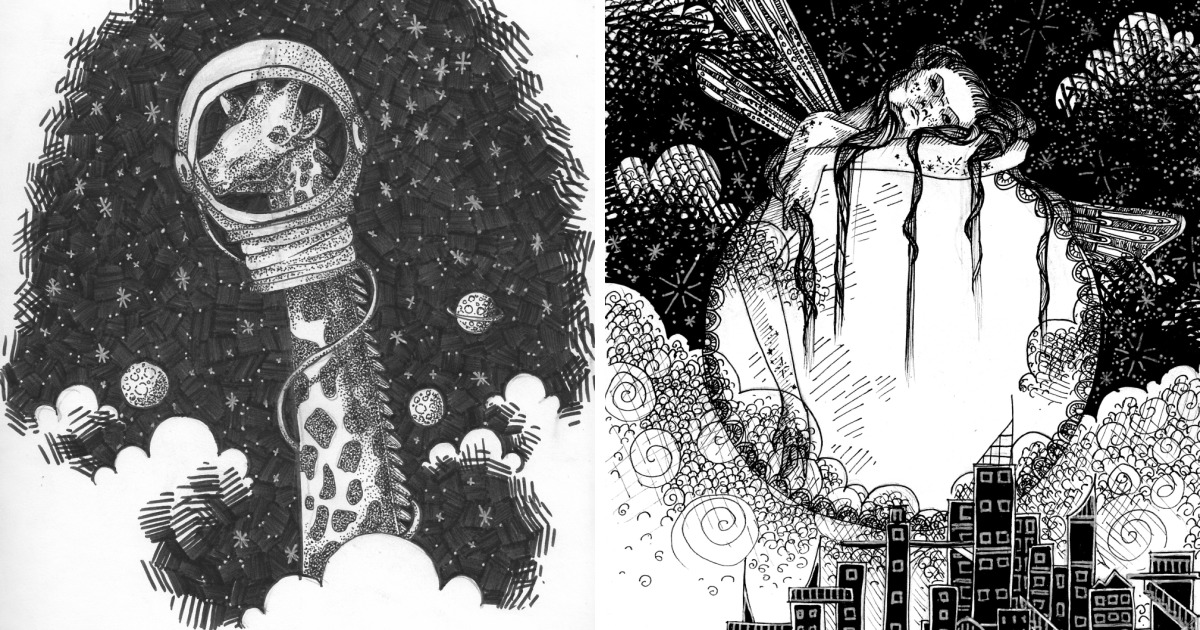
This collection of favorite works from 2017 is not about perfection. It is about growth, experimentation, and the funny little victories that happen when a young artist keeps showing up. Whether it was pencil portraits, fantasy characters, expressive eyes, digital sketches, or moody scenes inspired by music and late-night imagination, each piece taught me something. And honestly, that is the best kind of art education: the kind that leaves graphite on your hands and three abandoned erasers on the floor.
Why 2017 Was Such an Important Year for My Art
For many young artists, one year can feel like an entire era. In January, you might be drawing stiff figures with shoulders shaped like coat hangers. By December, you may suddenly understand gesture, lighting, expression, and why hands are secretly tiny villains sent to humble every artist alive.
In 2017, my biggest breakthrough was learning to look more carefully. I began noticing how faces were built from simple forms, how fabric folded around movement, and how a character’s posture could say more than a speech bubble ever could. I also learned that art is not just about making something pretty. It is about communicating a feeling, a story, or a moment that would otherwise stay stuck in your head like a song lyric you cannot remember correctly.
Drawing became a way to process ideas. A sad character was not just a sad character; it was an experiment in eyebrows, tilted shoulders, and quiet colors. A fantasy creature was not just a cool monster; it was a puzzle of anatomy, texture, and personality. A sketch of a friend, a pet, or a made-up hero became practice in observation and imagination at the same time.
The Works That Felt Like Milestones
Not every drawing from 2017 made the “favorite” list. Some were buried deep in the sketchbook for reasons of public safety. However, the pieces I loved most had something in common: they showed me trying something new. They were not always the cleanest or most technically polished, but they felt alive.
1. The Emotional Portrait That Finally Looked Human
One of my favorite works from 2017 was a pencil portrait focused on expression. I remember caring less about making the face perfectly symmetrical and more about capturing a mood. The eyes were slightly tired, the mouth was quiet, and the shading around the cheeks gave the drawing a softness I had not managed before.
This piece mattered because it taught me that expression comes from small details. A tiny change in the angle of the eyelids can turn a face from bored to thoughtful. A shadow under the lower lip can make a character feel more dimensional. A highlight in the eye can add life faster than ten dramatic background clouds, although I will never disrespect dramatic clouds.
2. The Fantasy Character With Way Too Much Hair
Every young artist deserves at least one fantasy character with impossible hair. Mine had flowing locks, layered clothing, and the kind of serious expression that said, “I have a destiny, and also I probably own a sword.” The anatomy was not perfect, and the outfit had more belts than any person could reasonably fasten before breakfast, but the design felt bold.
This drawing helped me understand character design. A good character is not just a collection of cool accessories. The shapes, clothing, hair, colors, and pose all need to work together. In this piece, I started thinking about silhouette, personality, and visual storytelling. Did the character look brave? Mysterious? Dramatic enough to stand on a cliff during a storm? Absolutely.
3. The Animal Study That Made Me Respect Fur
Another favorite was an animal study, probably because it reminded me that nature has been outdrawing all of us for a very long time. Fur, feathers, eyes, paws, and ears all require patience. You cannot just scribble lines and hope the viewer politely agrees it is a wolf. Well, you can, but the wolf may look like a nervous loaf of bread.
Studying animals improved my observation skills. I learned that fur follows the form underneath it. I learned that animal eyes catch light differently from human eyes. I learned that paws are not just fluffy circles attached to legs. Most importantly, I learned that drawing from reference is not cheating. It is training your eye, and your eye is basically the art teacher who never stops giving homework.
4. The Digital Sketch That Opened a New Door
In 2017, digital art felt like magic with buttons. Layers were amazing. Undo was life-changing. Brushes had names that made me feel professional even when I was still accidentally drawing on the wrong layer. My favorite digital sketch from that year was not perfect, but it introduced me to color planning, clean line work, and the joy of moving a character’s eye two pixels to the left instead of redrawing the entire face.
Digital art also taught me discipline. Because the tools were so flexible, it was easy to keep adjusting forever. I had to learn when a piece was finished, or at least finished enough to stop poking it like a suspicious potato. The best digital work from that year showed me that technology does not replace artistic skill; it gives skill more room to play.
5. The Sketchbook Page Full of Tiny Ideas
One of my favorite “works” was not a finished drawing at all. It was a sketchbook page filled with tiny faces, hands, thumbnails, notes, costume ideas, and random shapes. At first, it looked messy. Later, I realized it was one of the most honest pages in the whole book.
Sketchbook pages like that reveal how artists think. They show decisions happening in real time. A small pose might become a larger illustration. A random eye shape might become a new character. A scribbled note like “make jacket cooler” might lead to a design breakthrough. The page was not polished, but it had energy. It felt like a creative kitchen where all the ingredients were scattered around and something delicious might happen if nobody knocked over the ink.
What These Favorite Works Taught Me About Art
The biggest lesson from my favorite works of 2017 was that progress is sneaky. It does not always arrive with fireworks and a heroic soundtrack. Sometimes progress looks like drawing the same eye twelve times and finally making the thirteenth one less confused. Sometimes it looks like understanding why a pose feels stiff. Sometimes it looks like realizing that backgrounds matter, even if your characters would prefer to float in a mysterious blank void forever.
I also learned that style is not something you force overnight. Style grows from repetition, curiosity, mistakes, influences, and personal taste. At 14, it was tempting to compare my art to professional illustrators, comic artists, animators, and online creators whose work looked impossibly smooth. But comparison can be a very dramatic goblin. It sits on your shoulder and whispers, “Why are you not perfect yet?” The answer, of course, is because learning takes time.
The better question is: what did I improve this month? Did my line work become cleaner? Did my characters become more expressive? Did I try a background without immediately pretending the paper caught fire? Those smaller questions are more useful. They turn art from a scary competition into a long, interesting conversation with yourself.
How Young Artists Can Build a Stronger Portfolio
A young artist portfolio does not need to look like a museum exhibition. It should show curiosity, effort, range, and growth. In fact, some of the most interesting portfolios include both polished pieces and process work. A finished portrait shows skill, but a page of thumbnails shows thinking. A colorful character design shows imagination, but a study from life shows discipline.
For any teen artist building a collection of favorite works, variety helps. Include portraits, observational drawings, original characters, environments, animal studies, still life sketches, and experiments with color. The goal is not to prove you can do everything perfectly. The goal is to show that you are learning how to see.
It also helps to write short notes about each piece. What inspired it? What was difficult? What improved? What would you change now? These notes turn a simple gallery into a story of growth. They also remind you that every finished work is a teacher, even the ones with suspicious elbows.
Why Sharing Art Online Can Be Scary but Worth It
Sharing artwork online as a young artist can feel like releasing a paper boat into a very large ocean. You hope people will understand it. You hope nobody is mean. You hope the algorithm does not toss it into a digital basement beside forgotten sandwich photos. But sharing can also be powerful.
When people respond kindly to your work, it builds confidence. When they offer thoughtful feedback, it helps you improve. When other young artists comment, you realize you are not alone in the eternal battle against hands, feet, perspective, and the mysterious disappearance of motivation during long projects.
However, it is important to protect your peace. Not every opinion deserves a permanent seat in your brain. Useful criticism is specific and respectful. Empty negativity is just noise wearing a tiny hat. A young artist should learn from feedback without letting strangers decide whether art is worth making. The real reason to create is not applause. It is the feeling of turning an idea into something visible.
My Favorite Themes From 2017
Looking back, several themes appeared again and again in my artwork. I loved expressive faces, fantasy moods, soft sadness, dramatic lighting, animals, and characters who looked like they were about to begin an adventure. I also liked mixing cute and serious elements, because nothing says “young artist energy” like drawing a tiny creature beside a character with tragic backstory eyes.
These themes mattered because they showed what I cared about. Art is often a mirror, even when it includes dragons, glowing forests, or characters who dress better than anyone at school. The subjects we return to can reveal our interests, emotions, questions, and dreams. In 2017, I was drawn to art that felt personal but still imaginative. I wanted my drawings to look like they came from a story, even if I had not written the story yet.
The Funny Side of Being a 14-Year-Old Aspiring Artist
Being an aspiring artist at 14 comes with very specific comedy. You sharpen a pencil and feel unstoppable. Then the pencil breaks. You buy a new sketchbook and promise it will be beautiful. Then the first page goes badly, and suddenly you are considering moving to a new country under a new identity. You spend two hours drawing one eye, then realize the other eye has entered a different dimension.
There is also the art supply problem. You never have enough markers, even if you have many markers. You own seven pencils but can only find the one that is too short to hold comfortably. Your eraser disappears exactly when you need it, then returns later covered in mysterious dust. Your desk becomes a habitat for paper scraps, reference photos, and cups of water that must never be confused with actual drinking water.
But those little struggles are part of the charm. They make the journey memorable. Every artist has a history of awkward phases, unfinished drawings, and experiments that went sideways. The important thing is not avoiding mistakes. It is making enough art that mistakes become stepping stones instead of stop signs.
Experiences Related to My Favorite Works From 2017
One of the strongest memories I connect with my 2017 artwork is the feeling of drawing late in the day, when everything became quieter. Schoolwork was done, or at least ignored with great confidence, and the sketchbook became a little world I could control. If the day had been boring, I could draw something magical. If the day had been stressful, I could shade quietly until my thoughts slowed down. Art gave me a place to put feelings without having to explain them perfectly.
I remember carrying ideas around before I knew how to draw them well. A character might start as a sentence in my head: “a girl who talks to birds,” “a lonely knight,” “a fox with secrets,” or “someone who looks calm but is definitely not calm.” Then I would try to build that idea with lines. Sometimes the drawing matched the image in my mind. Sometimes it looked like the image had fallen down several flights of stairs. Still, even the failed attempts were useful because they showed me what I needed to practice next.
Another experience from that year was learning to accept unfinished work. I used to think every drawing had to become a masterpiece. That belief lasted until I had a pile of half-finished sketches and a very tired hand. Eventually, I realized that sketching is allowed to be messy. A sketch can simply be a question. What if the pose turns this way? What if the hair is shorter? What if the background has trees? What if I never draw the background and call it “minimalism”? Not every idea needs a frame. Some ideas are just practice wearing casual clothes.
I also started paying attention to other artists in a more useful way. Instead of only thinking, “Wow, they are better than me,” I began asking, “What can I learn from this?” Maybe one artist used warm colors beautifully. Maybe another drew expressive hands. Maybe someone made simple lines feel emotional. This changed everything. Inspiration stopped feeling like comparison and started feeling like a toolbox.
One of the best experiences was showing my drawings to people who cared. A simple compliment could keep me motivated for days. Even better was when someone noticed a detail I had worked hard on, like the texture of hair or the expression in a character’s eyes. That kind of response made the hours feel worth it. It reminded me that art is communication. When someone sees what you were trying to say, even a little bit, the drawing has done its job.
At the same time, I learned that my opinion mattered too. If I liked a piece, I did not need everyone else to approve it. Some drawings felt special because of what they meant to me, not because they were technically perfect. A small sketch could hold a memory. A colorful character could represent confidence I did not always feel. A quiet portrait could say something I did not know how to say out loud.
By the end of 2017, my favorite works had become more than drawings. They were evidence. Evidence that I had practiced, experimented, struggled, improved, and kept going. They showed that being a young artist is not about arriving fully formed. It is about collecting small discoveries until they become skill. It is about letting yourself be a beginner without apologizing every five seconds. It is about making art because the idea in your head keeps knocking and, eventually, you have to open the door.
Conclusion: A Year of Sketches, Mistakes, and Small Wins
My favorite works from 2017 remind me that art growth is built from ordinary moments: a pencil moving across paper, a color choice that finally works, a face that suddenly has feeling, a sketchbook page that looks chaotic but alive. At 14, I did not have everything figured out. Honestly, no artist does. But I had curiosity, persistence, and enough imagination to keep filling pages.
That is what makes these works meaningful. They are not just drawings from a younger version of myself. They are proof that creativity grows when you feed it attention. They show that an aspiring artist does not need perfect tools, perfect confidence, or perfect results to begin. You only need the willingness to try, learn, laugh at the weird hands, and try again tomorrow.
For any young artist looking back at old work, do not cringe too hard. Those drawings carried you forward. They taught your eyes to observe, your hands to practice, and your imagination to stay open. Every favorite piece is a little landmark on the road, and every awkward sketch is still part of the map.














