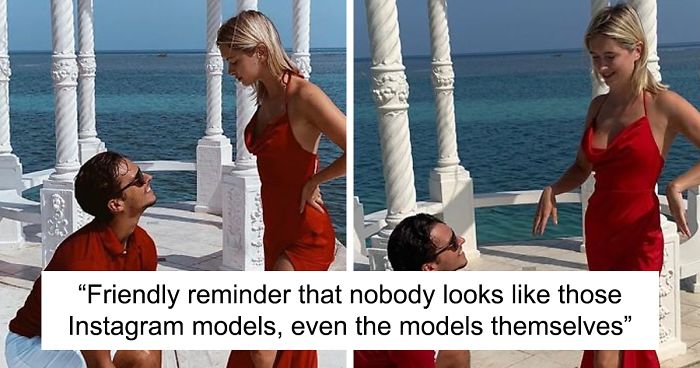
There is a familiar kind of Instagram magic: one person, one beach, one wildly cooperative sunset, and a body that appears to have been assembled by a team of sculptors with excellent lighting. Then an influencer posts the side-by-side versionthe relaxed pose next to the flexed one, the unedited skin next to the smoothed version, the “I woke up like this” photo next to the 47 attempts that came before itand the spell breaks.
That does not make social media a villain twirling a mustache behind a ring light. It does make one thing clear: a polished image is usually a production, not a casual glimpse of ordinary life. Side-by-side “Instagram versus reality” posts can be a useful reminder that camera angle, posture, lens distance, lighting, timing, editing tools, and good old-fashioned selective posting all influence what appears in the feed.
The growing popularity of these comparisons matters because online appearance standards are not merely a fashion trend. Research and clinical guidance consistently connect appearance-focused social media, self-comparison, and image editing with body dissatisfaction and lower self-esteem for some usersespecially young people who are still forming their sense of self.
Why Side-by-Side Instagram Photos Hit So Hard
A single flawless photo can look like evidence. A side-by-side photo reveals the conditions behind the evidence. Suddenly, the “perfect” waist may be a hip tilt. The glass-smooth skin may be a filter. The beach shot may have required a photographer crouching in a position that would alarm a physical therapist. The reveal gives viewers a missing piece of context.
That context is powerful because social media often removes the boring but important parts of image-making: dozens of frames, strategic cropping, a professional camera, a carefully selected pose, and a little digital cleanup. None of those techniques automatically make someone dishonest. Photography has always involved choices. The problem starts when a highly curated result is repeatedly consumed as though it were the baseline for normal human appearance.
Side-by-side posts work because they do not lecture people for caring about photos. They demonstrate, often with humor, that bodies change shape when people sit, breathe, twist, relax, eat lunch, or encounter a camera lens that has chosen chaos. That is not a personal failure. It is anatomy doing its extremely normal job.
The Influencer’s Message: “Perfect” Is Usually a Performance
The most effective reality-check creators do not argue that everyone should stop taking attractive pictures. Their point is subtler: enjoy the photo, but do not mistake it for the whole story. A beautifully composed image can be real in the sense that it happened, while still being incomplete in the sense that it leaves out everything that did not fit the frame.
Influencer and body-confidence posts have used this format for years. Lifestyle creator Chessie King shared photo pairs that contrasted a camera-ready pose with a more relaxed moment, showing followers that the difference could come down to posture and timing rather than a dramatic transformation. Fitness creator Sara Puhto also used photos taken minutes apart to show how angle and pose can create the illusion of a completely different body. Model Iskra Lawrence went a step further by showing an original image beside a Facetuned version, demonstrating how tiny edits can quietly reshape a viewer’s expectations.
These examples land because they puncture the fantasy without shaming the person in the photo. The message is not, “You were foolish to believe this.” It is, “You were given one frame when you deserved the full context.” That is a much kinder lesson, and it is one people are more likely to remember the next time an algorithm serves them a suspiciously pore-free vacation carousel.
How “Perfect” Instagram Photos Are Actually Made
There is no single trick behind the idealized Instagram image. More often, there is a stack of tiny choices that work together like a very motivated stage crew.
Posing changes the picture before editing even begins
Turning slightly, shifting weight to one leg, lengthening the torso, raising the camera, flexing muscles, or moving an arm away from the body can change how a person looks in a still image. A body that looks one way while sitting on the couch may look dramatically different while standing tall, bracing the core, and posing for a photo. Both versions are real; neither is a moral report card.
Lighting is a professional illusionist
Soft front lighting can blur the appearance of texture. Strong overhead light can create definition. A sunset can make almost anyone look like they have a skincare contract with the moon. Shadows can sharpen or soften features, and photographers routinely use them to guide the viewer’s eye.
Camera lenses and distance are not neutral
Wide lenses can exaggerate what is closest to the camera, while different focal lengths can compress or flatten a scene. A photo taken from low down can make legs appear longer; a closer shot can change the proportions of a face. This is not necessarily manipulation in a sinister sense. It is simply a reminder that a camera records perspective, not objective truth.
Filters and retouching can be nearly invisible
Modern editing does not always look like cartoonishly smooth skin or a bent doorframe in the background. It can be subtle: brightening eyes, evening skin tone, shrinking a shadow, whitening teeth, smoothing texture, changing color balance, or slightly reshaping a waistline. Because these edits are often small, viewers may compare themselves to an ideal that feels natural even when it is digitally enhanced.
The American Academy of Pediatrics notes that altering selfies and comparing oneself with edited online images can contribute to body dissatisfaction and lower self-esteem. Its guidance is not “ban every selfie”; it emphasizes conversation, media literacy, and helping young people distinguish between an edited presentation and everyday reality.
Why the Comparison Trap Is So Sticky
Human beings have always compared themselves with others. Instagram simply put that instinct on a conveyor belt, added background music, and made it available at 1:00 a.m. when everyone’s critical-thinking skills are wearing pajamas.
Image-heavy feeds can encourage users to compare their unfiltered, moving, three-dimensional lives with someone else’s best-lit still frame. The issue is not that every beautiful post causes harm. Social media can create connection, community, education, creativity, and support. The impact depends on what a person sees, how they use a platform, their age, their existing vulnerabilities, and whether they are actively creating or passively comparing.
Still, there is enough evidence for caution. The U.S. Surgeon General’s advisory on youth mental health states that social media can offer meaningful benefits while also presenting risks, including exposure to harmful content and excessive use. The advisory notes an association between spending more than three hours a day on social media and a higher risk of poor mental-health outcomes in adolescents; that is an association, not proof that every extra minute causes distress.
That distinction is important. A teenager who feels lonely, anxious, or unhappy may also spend more time scrolling, so the relationship is complicated. The answer is not a simplistic “phones ruined everything” speech delivered by someone who just spent 40 minutes choosing a brunch filter. The answer is helping people use platforms with more awareness and more control.
What Side-by-Side Posts Get Rightand What They Cannot Fix
Reality-check posts can be a form of media literacy in motion. They teach viewers to ask better questions: Was this posed? Is there editing? Is this a paid campaign? Is this one moment being presented as a lifestyle? What is outside the crop? Those questions can interrupt the automatic assumption that someone else’s appearance, home, relationship, or vacation is effortlessly perfect.
They also make room for a healthier idea of authenticity. Authenticity does not require posting every insecurity, every skin flare-up, or every bad-hair day to an audience of strangers. People are allowed privacy. What creators can offer is clearer context: acknowledging retouching, labeling advertising, and avoiding claims that imply a body or product result is effortless when it was carefully manufactured.
The Federal Trade Commission expects influencers to disclose material connections with brands clearly and conspicuously. That rule addresses advertising rather than photo editing itself, but the larger principle is similar: audiences deserve information that helps them understand what they are seeing and what may be motivating a post.
At the same time, a side-by-side post is not a magic cure for body-image distress. It can help one person feel less alone and another person feel newly focused on perceived flaws. The healthiest version of this content avoids trading one rigid beauty standard for another. “Natural” should not become another performance requirement. Acne, cellulite, makeup, cosmetic procedures, filters, and no-makeup selfies are not measures of virtue.
How to Scroll Without Letting Instagram Grade Your Face
You do not have to delete every app and move into a cabin with a flip phone. A few small habits can make a feed feel less like a daily audition.
Curate with intent
Unfollow or mute accounts that repeatedly leave you feeling inadequate, compulsive, angry, or unhappy with your body. Add creators who show a wider range of ages, body types, abilities, skin textures, cultural perspectives, and interests. Your feed is not a neutral public square; it is a personalized environment that you can redesign.
Use the “production check”
When a photo makes you feel bad about yourself, pause before accepting its message. Consider the lighting, pose, styling, editing, selection process, and commercial incentive behind it. This does not mean every image is fake. It means every image is constructed in some way.
Swap appearance goals for experience goals
Instead of asking, “Would this look good on my feed?” try asking, “Will I enjoy this?” Take the hike, eat the birthday cake, wear the swimsuit, laugh with your friends, and take a photo if you want one. A life is not improved by standing at a perfect angle through all of it.
Watch for signs that scrolling is becoming harmful
Persistent body checking, rigid food rules, skipped meals, compulsive exercise, extreme distress about appearance, or withdrawal from ordinary life deserve supportnot more wellness content from strangers. Eating disorders are serious mental-health conditions, and distorted body image can be part of the picture. A qualified health professional can help assess what is going on and identify appropriate care.
What Responsible Influencers Can Do Better
Influencers have unusual power because they often feel more relatable than traditional celebrities. Their audiences may see them as friends, style guides, fitness coaches, product testers, or informal life advisers. That trust makes transparency valuable.
Responsible creators can disclose sponsorships clearly, avoid exaggerating what products can do, explain when an image is edited, and diversify the kinds of bodies and experiences they show. They can also stop framing normal body changes as emergencies. A stomach that folds while sitting is not a crisis. A face with texture is not a before photo awaiting a miracle serum. A vacation with clouds is still a vacation.
Perhaps most importantly, creators can acknowledge that polished content is work. Great photos can be art, branding, memory-making, or simple fun. They do not have to be presented as proof that the creator lives above human inconveniences such as bloating, laundry, bad lighting, and the universal betrayal of a phone camera’s front lens.
More Experiences From the Other Side of the “Perfect” Photo
Anyone who has ever tried to take a “casual” Instagram photo knows the secret: casual can be alarmingly labor-intensive. You might start with the innocent goal of documenting a coffee date. Ten minutes later, one friend is holding a tote bag in the air to block glare, another is moving a croissant two inches to the left, and someone is saying, “Wait, I blinked, but in a way that changed my personality.” The final post may look spontaneous. The behind-the-scenes version looks like a tiny production crew with pastries.
That is why side-by-side posts can feel oddly relieving. They validate the gap between what people see and what people experience. The photo in the feed may show a confident person in a swimsuit. The unseen version may include sunscreen in someone’s eye, sand in places that should remain private, a nearby child throwing seaweed, and an argument about whether the phone is angled high enough. Reality is not less valuable because it is messier. It is usually funnier.
Many people also discover that their worst photos are not actually bad. They are simply less controlled. A candid picture may show a laugh that looks too loud, an arm that looks softer than expected, a chin appearing from an angle it did not schedule in advance. But the same picture may also capture genuine joy, movement, friendship, or a moment that feels more alive than the polished version.
There is a difference between wanting to look good in a photo and believing you must look flawless to deserve being photographed. The first is ordinary. The second can quietly shrink a person’s life. It can make someone avoid pools, birthday parties, vacations, dates, or even family photos because they do not feel “ready.” Yet readiness is a moving target. There will always be another perceived flaw, another trend, another filter that promises a new version of perfect.
Side-by-side comparisons are useful when they make that target look less authoritative. They remind viewers that a posed body is not a superior body, a filtered face is not a more deserving face, and an edited photo is not a contract that everyone else must meet. The goal is not to shame people for enjoying beautiful images. The goal is to make beauty less narrow, less mysterious, and less expensive to chase.
There is also an experience many creators share but rarely say out loud: honesty can be vulnerable. Posting the less-polished image may invite comments from people who believe they are entitled to rate another person’s body. That is why audiences have a role too. When a creator shares a reality-check post, the most helpful response is not “You look better in the edited one” or “You do not need to be insecure.” It is gratitude for the context, respect for the person, and a refusal to turn vulnerability into a public debate.
In the best cases, these posts build a different kind of online culture. One where people can take gorgeous photos without pretending they woke up inside a skincare commercial. One where viewers can admire an image without using it as evidence against themselves. One where the algorithm may still be dramatic, but at least we know it is wearing stage makeup.
Note: This article is for media-literacy and wellness education, not a diagnosis or substitute for professional mental-health care. If social media is contributing to severe distress about eating, exercise, weight, or appearance, consider speaking with a licensed clinician or another qualified health professional.