
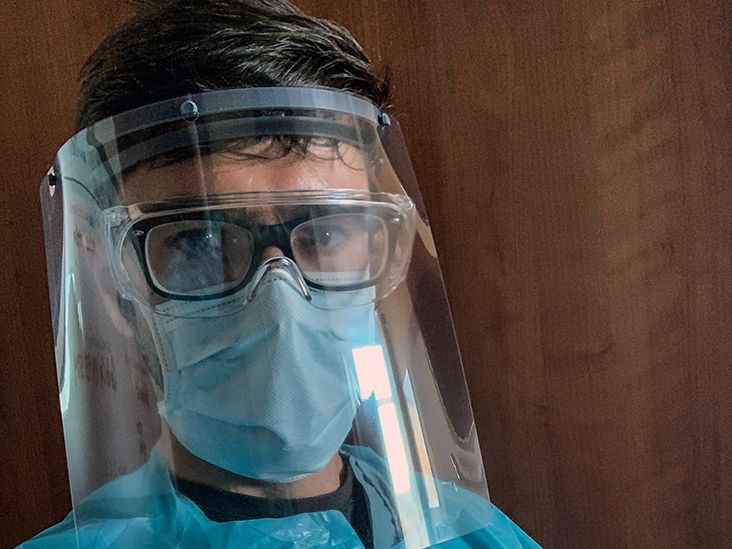
In the spring of 2020, hospital work changed with breathtaking speed. Floors were repurposed, visiting rules tightened, personal protective equipment became part of daily conversatis helping in unfamiliar clinical environments.
For one registered nurse working in the Chicago suburbs, that meant moving beyond his usual role in inpatient psychiatric care and helping care for people with COVID-19. His simple observation“It’s really a hard time right now”captured something that statistics could not. Behind every case count was a patient. Behind every patient was a family. And standing in the middle of that painful distance were nurses and other healthcare workers trying to provide both medical care and human connection.
The story of a Chicago nurse during COVID-19 is not merely a snapshot of one difficult shift. It reflects the larger experience of frontline healthcare workers across the United States: rapid redeployment, uncertainty, emotional exhaustion, fear of infection, staffing pressure, heartbreaking goodbyes, and a growing recognition that the mental health effects of the pandemic would continue long after individual shifts ended.
When a Nurse’s Familiar Job Suddenly Became Unfamiliar
Before the pandemic transformed hospital operations, the Chicago-area nurse at the center of the original account primarily worked with adults receiving inpatient psychiatric care. Then COVID-19 cases increased, hospitals prepared for surges, and nurses from different departments were asked to train for new assignments.
That kind of redeployment became one of the defining features of early pandemic healthcare. A nurse who knew the rhythms of one unit could suddenly be asked to work in another. Familiar colleagues might be scattered across departments. Procedures evolved as knowledge about the virus developed. Even experienced professionals could feel as though someone had changed the rules halfway through the gameand neglected to provide the updated instruction manual until the next morning.
Being a skilled nurse did not make an unfamiliar assignment effortless. Psychiatric nursing, medical-surgical nursing, emergency care, and intensive care each require distinct knowledge and workflows. During the COVID-19 emergency, however, staffing needs pushed many healthcare professionals beyond their usual clinical comfort zones.
Training Became Part of Emergency Preparedness
Hospitals responded by rapidly training staff, expanding capacity, reorganizing units, and preparing for unpredictable numbers of patients. Chicago also developed extraordinary surge plans, including temporary healthcare capacity, as officials prepared for the possibility that conventional hospital resources could become overwhelmed.
For nurses, preparation was not abstract. It meant learning new routines while continuing to care for real people. There was little opportunity for a leisurely transition. COVID-19 did not pause while everyone updated their résumés and completed a tidy six-week orientation.
The challenge was both professional and psychological: How do you remain calm for a frightened patient while adjusting to a rapidly changing environment yourself?
A Goodbye Through a Screen
One of the most painful moments described by the Chicago nurse involved a patient whose family could not visit in person. The family said goodbye through a video connection. The patient later died.
That experience became tragically familiar in hospitals during the pandemic. Infection-control restrictions often limited visitors, especially during major waves of transmission. Smartphones and tablets became emotional lifelines, allowing patients to see spouses, children, siblings, and friends when physical presence was impossible.
Technology helped, but nobody should confuse a video call with an ordinary farewell. A screen could carry a voice and a face. It could not provide a hand to hold.
Nurses were often present during these intensely private moments. Their role expanded beyond administering medications, monitoring oxygen levels, documenting changes, and coordinating treatment. They sometimes positioned a device near a bed, helped a patient communicate, translated clinical developments into ordinary language, or simply remained nearby when a person was alone.
This emotional labor is difficult to measure. There is no neat hospital billing code for “stood beside a dying person because the family could not enter the room.” Yet such moments became part of the lived reality of COVID-19 hospital care.
Frontline Healthcare Workers Were More Than Doctors and Nurses
The Chicago nurse also emphasized a point that often disappeared beneath the popular language of “frontline heroes”: hospitals function because entire teams work together.
Respiratory therapists managed complex breathing support. Nursing assistants helped with essential bedside care. Environmental services workers cleaned rooms containing infectious material. Laboratory professionals processed tests. Transport teams moved patients safely. Unit secretaries kept communication flowing. Security employees maintained safe environments. Technicians, pharmacists, food-service workers, maintenance crews, and many others kept the system operating.
The pandemic made one fact impossible to ignore: healthcare is a team sport played in extremely uncomfortable uniforms.
Recognition matters because exposure, stress, and exhaustion were not limited to the most visible professions. Supporting frontline healthcare workers requires protecting the entire workforce, including employees whose names may never appear in headlines.
PPE Shortages Turned Safety Into a Daily Question
One of the biggest national concerns during the early COVID-19 response was access to adequate personal protective equipment, or PPE. Surveys of U.S. nurses during 2020 documented persistent concerns about shortages and the reuse of equipment that had traditionally been intended for limited or single use.
For a nurse, PPE was not an abstract supply-chain problem. It was the layer between professional duty and potential exposure.
The uncertainty affected families as well. Healthcare workers worried not only about becoming sick but also about carrying the virus home. Some developed elaborate routines: changing clothes before entering the house, showering immediately, isolating from vulnerable relatives, wiping down belongings, or temporarily living apart from family members.
This fear created an unusual emotional contradiction. A nurse could feel deeply committed to helping patients while simultaneously wondering whether going to work might endanger the people waiting at home.
That tension helps explain why organizational support mattered so much. Adequate protective equipment, clear communication, realistic staffing, appropriate training, testing access, and confidence in leadership were not luxuries. They influenced whether healthcare workers felt protected enough to continue doing extraordinarily demanding jobs.
COVID-19 Put Mental Health Under a Magnifying Glass
The nurse’s background in psychiatric care gave him a particular perspective on another developing crisis. He was already seeing anxiety, depression, paranoia, and distress connected to isolation and fear. He expected demand for mental health services to increase.
That concern was well founded. The pandemic disrupted routines, separated families, closed workplaces and schools, strained finances, intensified grief, and created prolonged uncertainty. For healthcare workers, those pressures were layered on top of repeated exposure to severe illness and death.
National surveys later found substantial levels of emotional distress among nurses and other healthcare employees. Many reported feeling overwhelmed, burned out, anxious, depressed, overloaded, or worried about exposing themselves and their families to infection.
Burnout Was Only Part of the Story
Burnout is often discussed as though it can be solved with a scented candle, a meditation app, and perhaps a strongly worded reminder to “practice self-care.” Those things may be pleasant, but they cannot repair chronic understaffing or make an unsafe workplace safe.
The pandemic highlighted the difference between individual coping and systemic responsibility. Healthcare workers can benefit from rest, exercise, counseling, peer support, time outdoors, and healthy routines. The Chicago nurse himself described outdoor activity as a way to decompress. Yet individual resilience should not become an excuse for institutions to ignore excessive workloads, inadequate resources, poor communication, or insufficient staffing.
Support must exist at several levels. Workers need access to confidential mental health care and peer support. Teams need psychologically safe environments where people can admit that a shift affected them. Leaders need to listen to employees and respond to practical concerns. Healthcare systems need staffing and safety policies that reduce preventable stress rather than merely asking exhausted employees to become better at tolerating it.
The Emotional Cost of Never Knowing What the Next Shift Would Bring
Uncertainty was one of the hardest parts of early pandemic nursing. Guidance changed as scientists learned more about SARS-CoV-2. Patient volumes rose and fell. Units were reorganized. New treatments emerged. Public behavior outside hospitals influenced what healthcare workers encountered inside them.
A nurse starting a shift might know the department assignment but not what the next 12 hours would contain. One patient might improve enough to go home. Another could deteriorate quickly. A family might celebrate good news in the morning while another received devastating news before lunch.
The Chicago nurse described trying not to worry in advance. Instead, he approached work with an open mind and dealt with events as they unfolded. That strategy sounds simple, but in an unpredictable crisis, focusing on the next necessary action can be a powerful way to function.
It also reflects a fundamental truth about nursing. Much of the job involves being fully present in situations that cannot be controlled.
What the Chicago Nurse’s Story Still Teaches Us
The most important lesson is not that healthcare workers are superheroes. Calling people heroes may express gratitude, but it can also hide their human needs. Superheroes apparently do not require sleep, adequate staffing, counseling, sick leave, child care, functioning protective equipment, or a quiet place to eat lunch. Actual humans do.
The better lesson is that healthcare workers repeatedly continued despite fear and uncertaintyand that society has a responsibility to build systems worthy of that commitment.
The experience also demonstrates why listening to frontline workers matters. Early pandemic research repeatedly identified practical concerns among healthcare professionals: protection from infection, reliable information, adequate preparation, support for personal and family needs, and reassurance that organizations would care for workers who became ill or overwhelmed.
Those concerns are relevant beyond COVID-19. Future infectious disease outbreaks, natural disasters, mass-casualty events, and ordinary periods of severe staffing pressure will test healthcare systems again. Preparedness should include not only beds, ventilators, medications, and supply chains but also plans for protecting the psychological and physical well-being of the people delivering care.
Five Lessons for Future Healthcare Crises
1. Cross-Training Must Come With Real Support
Redeploying clinicians may be necessary during emergencies, but flexibility should not mean abandoning workers in unfamiliar environments. Training, supervision, clear responsibilities, and access to experienced colleagues are essential.
2. Communication Is a Safety Tool
Uncertainty becomes more dangerous when workers receive inconsistent information. Leaders should communicate frequently, acknowledge what remains unknown, explain why policies change, and create reliable ways for staff to raise concerns.
3. Mental Health Support Should Begin Before a Crisis Peaks
Waiting until employees are exhausted is like installing a smoke detector after the kitchen is already on fire. Confidential counseling, peer-support systems, protected recovery time, and psychologically safe leadership should be part of routine healthcare operations.
4. Families Are Part of the Workforce Support System
Healthcare workers do not leave their personal lives in the hospital parking garage. Child care, transportation, housing concerns, infection risks, and responsibilities for vulnerable relatives can directly affect a worker’s ability to function during an emergency.
5. Every Hospital Worker Deserves Protection and Recognition
A functioning hospital depends on clinical and nonclinical staff. Emergency planning should account for the safety and well-being of everyone required to keep patient care moving.
Related Experiences: What a COVID-19 Frontline Shift Could Feel Like
The following section is a composite narrative based on widely reported experiences of frontline healthcare workers during the COVID-19 pandemic. It does not claim to describe one specific nurse’s exact shift.
A COVID-19 shift could begin before a nurse entered the hospital. The mental checklist might start in the car: phone, badge, clean clothes for later, food that could be eaten quickly, and a reminder not to touch the face. Then came the practical questions. What unit today? How many patients? Who called out sick? Had the PPE policy changed again?
Inside, the ordinary comfort of routine was often missing. The nurse might recognize the building but not the assignment. Colleagues from different specialties could be working side by side, each bringing valuable skills while privately wondering whether they were fully prepared for what the day might demand.
The first patient might be awake and joking. That could feel reassuring. A few hours later, the same patient might require more oxygen. The monitor that had been quietly ignored would suddenly become the most interesting object in the room.
Another patient might be frightened because family members could not visit. The nurse could become a messenger: “Your daughter called.” “Your husband says he loves you.” “Let’s try the video again.”
There were moments of hope. A patient who had been seriously ill might finally be discharged. Staff could celebrate a successful recovery with cheers, applause, or music. Those moments mattered. They reminded exhausted teams that improvement was possible.
Then a different room could bring the opposite reality.
A family might appear on a tablet screen. Voices could shake. Someone might ask the nurse a question with no comforting answer. The nurse might adjust the device, step back to provide privacy, and remain close enough to help.
Afterward, there would still be medications to administer, charting to complete, alarms to answer, equipment to check, and another patient pressing the call button. Grief rarely received a convenient appointment on the schedule.
Meals might be delayed. Breaks might be interrupted. Wearing protective equipment for long periods could be physically uncomfortable. Yet removing PPE also required attention because the act of leaving a contaminated environment had its own procedures and risks.
At the end of the shift, fatigue could follow the nurse home. But going home was not always simple. Some healthcare workers worried about touching family members before changing clothes and showering. Others isolated themselves from loved ones or slept in separate spaces because they feared transmitting the virus.
Then came the strange transition from hospital urgency to ordinary life. The world outside might look almost normal. Someone could be walking a dog. A neighbor might be taking out the trash. A television commercial might advertise something hilariously unimportant. Meanwhile, the nurse could still be thinking about a patient’s oxygen level or the face of a family member on a screen.
Some workers decompressed by exercising, sitting outdoors, listening to music, talking with colleagues, or simply becoming very quiet. Others found that sleep did not arrive easily. The body was home; the mind had apparently missed the exit.
Then, after a few hours of rest, another shift approached.
This cycle explains why the phrase “a hard time” carried so much meaning. The hardship was not one dramatic moment. It was accumulation: uncertainty plus responsibility, grief plus fatigue, fear plus duty, and the repeated expectation that healthcare workers would return and do it again.
Yet the experience also contained extraordinary cooperation. Nurses taught one another. Teams adapted. Respiratory therapists, physicians, nursing assistants, technicians, environmental services workers, and countless others solved problems in real time. People found ways to connect isolated patients with families. Colleagues checked on one another after difficult cases. In the middle of a crisis famous for physical distance, healthcare often depended on unusually intense forms of teamwork.
That is perhaps the most enduring experience connected to the Chicago nurse’s story: not effortless heroism, but people doing difficult work together while fully aware that they were human, vulnerable, tired, and sometimes afraid.
Conclusion: Remember the People Behind the Pandemic
The words “It’s really a hard time right now” were understated, which may be why they were so powerful. They did not turn suffering into a slogan. They simply acknowledged reality.
The COVID-19 pandemic forced nurses and other healthcare workers to adapt to unfamiliar assignments, care for isolated patients, manage personal risk, support grieving families, and confront an enormous mental health burden. The experience of one Chicago nurse offered a close view of a national crisisand of the teamwork required to keep hospitals functioning.
Remembering these stories matters. Preparedness is not only about stockpiling equipment or increasing bed capacity. It is also about protecting workers, listening to them, training them, staffing healthcare systems responsibly, and ensuring that people who spend their careers caring for others can receive care themselves.
Note: This article is an independently written retrospective synthesis based on contemporaneous frontline reporting, U.S. public-health information, nursing surveys, healthcare workforce research, and documented experiences from the COVID-19 pandemic. The added experience section is a clearly identified composite narrative rather than a claim of firsthand experience.











