
Note: This article is written for web publishing and is based on current product specifications, retailer information, and practical ownership considerations. Always confirm the exact model number, cutout dimensions, panel requirements, and availability before purchasing.
Jenn-Air Built-In Bottom-Freezer Refrigerator: Luxury Cooling With a Cabinet-Level Poker Face
A Jenn-Air built-in bottom-freezer refrigerator is not the kind of appliance that shouts from across the kitchen, “Look at me, I chill lettuce.” It is more refined than that. This refrigerator is designed to disappear into cabinetry, keep fresh food at eye level, and bring a polished, architectural look to a kitchen without making the room feel like a commercial break for stainless steel.
For homeowners planning a premium kitchen remodel, the Jenn-Air built-in bottom-freezer refrigerator is especially interesting because it sits at the intersection of design, preservation, and space planning. It is not simply a big cold box. Depending on the model, it may offer panel-ready integration, bottom-freezer convenience, precision temperature management, quiet operation, humidity-controlled storage, dramatic interior lighting, and the brand’s signature Obsidian-style design language. In plain English: it tries to keep your strawberries attractive, your ice cream disciplined, and your cabinetry looking like it graduated from design school.
The JennAir lineup includes several built-in bottom-mount and bottom-freezer options, including compact 22-inch and 24-inch models for tighter layouts, 30-inch panel-ready models for modern luxury kitchens, and 36-inch fully integrated refrigerators for homeowners who want serious storage with a seamless custom look. While exact features vary by model, the shared idea is simple: fresh food should be easy to reach, frozen food should stay neatly tucked below, and the refrigerator should look intentional rather than squeezed into the room like an afterthought.
What Is a Built-In Bottom-Freezer Refrigerator?
A built-in bottom-freezer refrigerator is designed to be installed into surrounding cabinetry rather than standing freely in the kitchen. Unlike a standard freestanding refrigerator, a built-in model is usually planned during a remodel or new build because the cabinet opening, ventilation, electrical placement, floor support, door swing, panel depth, and handle clearance all matter. This is not the appliance you impulse-buy because it looked handsome under showroom lighting. It needs a plan, a tape measure, and ideally someone who does not say “close enough” while holding a saw.
The “bottom-freezer” part means the refrigerator compartment is above the freezer. That layout makes daily food easier to access because most people open the fresh-food section more often than the freezer. Milk, eggs, greens, leftovers, cheese, fruit, sauces, and meal-prep containers live at a more comfortable height. The freezer drawer sits below, ready for frozen vegetables, ice cream, emergency pizza, and that mystery container nobody wants to identify.
Jenn-Air built-in bottom-freezer refrigerators are often panel-ready, meaning they can accept custom cabinet panels and handles. This allows the refrigerator to blend with surrounding cabinetry for a flush, furniture-like appearance. Some models can also be paired with suite-coordinating stainless panel kits, depending on the design direction of the kitchen. The result can be subtle and luxurious: the refrigerator is there, but it is not visually wrestling the island for attention.
Key Jenn-Air Built-In Bottom-Freezer Refrigerator Models
22-Inch Built-In Bottom Mount Refrigerator
The 22-inch JennAir built-in bottom mount refrigerator is aimed at small kitchens, apartments, secondary kitchen spaces, guest suites, or design projects where width is limited but the homeowner still wants a premium integrated look. Current listings highlight features such as Precision Temperature Management, quiet refrigeration around 31 dBA, fully flush installation, a temperature-controlled pantry drawer, and a humidity-controlled crisper drawer. That makes it a strong candidate for a narrow urban kitchen where every inch has to earn rent.
With a total capacity around 8.8 cubic feet on current retailer listings, this model is not pretending to feed a football team. It is better suited for compact living, couples, small households, or auxiliary use. Think luxury condo, butler’s pantry, guesthouse, or a highly designed kitchenette where a full-width refrigerator would visually bulldoze the space.
24-Inch Built-In Panel Ready Bottom Mount Refrigerator
The 24-inch Jenn-Air built-in bottom mount refrigerator, often associated with model JBBFX24NHX in current listings, offers about 10 cubic feet of capacity, depending on the source and configuration. It is panel-ready, built for custom overlay design, and commonly listed with adjustable glass shelves, adjustable door bins, automatic defrost, a dual evaporator system, and reversible door capability. In other words, it is compact, but not lazy.
This size works well in smaller homes, upscale apartments, office kitchens, wet bars, or secondary prep areas. The key appeal is that it can integrate into cabinetry while still offering separate fresh and frozen storage. Buyers should pay close attention to installation depth, handle selection, and whether custom panels are included. Spoiler alert: custom panels and handles are often not included, because luxury appliances enjoy making budgeting more exciting.
30-Inch Panel-Ready Built-In Bottom-Mount Refrigerator
The 30-inch JennAir panel-ready built-in bottom-mount models, including left-swing and right-swing versions, move into a more premium whole-kitchen category. Current JennAir information highlights features such as a Daring Obsidian Finish Interior, multi-point lighting with full-width canopy lighting, fully flush integration within a 25-inch-deep cabinet, Precision Temperature Management with dual compressors, and solid glass and metal interior details.
This class of refrigerator is especially attractive for homeowners who want a luxury built-in look but do not have space for a 36-inch model. The 30-inch width can make sense in galley kitchens, modern townhomes, compact high-end remodels, or designs where refrigeration is paired with separate freezer drawers, beverage centers, or pantry storage. It is a more serious investment, but it also brings the styling and interior drama associated with JennAir’s current design language.
36-Inch Panel-Ready Built-In Bottom-Freezer Refrigerator
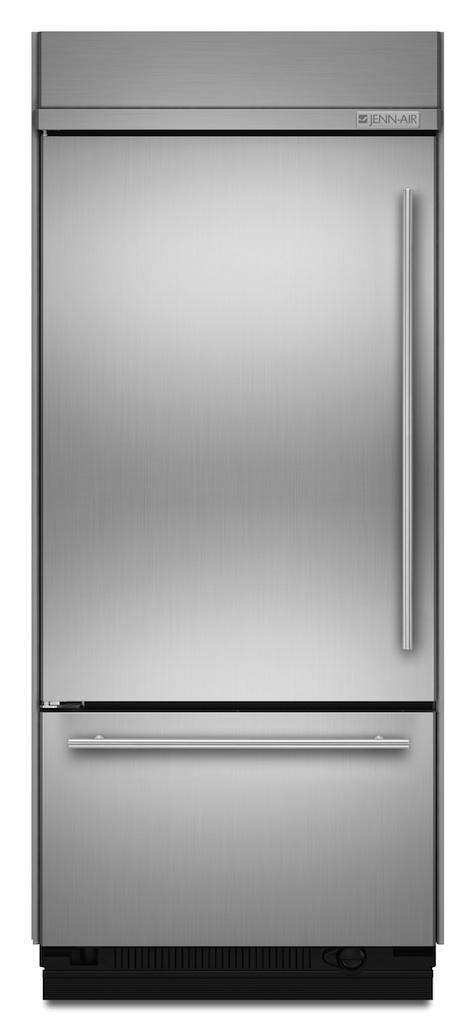
The 36-inch Jenn-Air built-in bottom-freezer refrigerator is the big, composed sibling in the lineup. Current specifications for right-hand and left-hand door swing models list total capacity around 20.9 cubic feet, with a refrigerator capacity around 15.3 cubic feet and freezer capacity around 5.56 cubic feet. These models are designed for fully integrated installation and are commonly associated with features such as the Obsidian interior, distinct fresh and frozen-food climates, Produce Preserver, automatic ice maker options, FreshFlow-style air filtration, and adjustable storage.
This is the model family most likely to appeal to homeowners creating a high-end kitchen around custom cabinetry. It offers the storage volume many families expect, but with a more refined built-in profile than a typical freestanding refrigerator. It can look sleek, quiet, and architecturalbasically the appliance version of someone who owns linen shirts and knows how to pronounce “mille-feuille.”
Design: Panel-Ready, Flush, and Very Serious About Looking Expensive
The biggest visual reason to choose a Jenn-Air built-in bottom-freezer refrigerator is integration. A panel-ready refrigerator can be fitted with custom cabinet panels, allowing the appliance to blend into the kitchen wall. This is especially valuable in open-concept homes where the kitchen is visible from the living or dining area. Instead of a large shiny appliance dominating the view, the refrigerator becomes part of the cabinetry rhythm.
JennAir’s higher-end built-in refrigerators often lean into a dark, dramatic interior aesthetic. The Obsidian interior is one of the brand’s most recognizable design signatures. Against a dark background, produce, bottles, containers, and glass shelves stand out more vividly. It feels less like opening a refrigerator and more like revealing a tiny refrigerated theater where the spinach finally gets its big break.
Lighting also matters. Multi-point lighting and canopy lighting, depending on model, improve visibility and give the interior a more premium feel. Good lighting is not just pretty; it reduces the chance that yogurt disappears into the back of the fridge and reemerges three months later as a science project with ambitions.
Performance and Food Preservation Features
A luxury refrigerator should do more than look good in a kitchen photo. The real test is whether it can maintain consistent temperatures, manage humidity, and organize food in a way that helps reduce waste. Jenn-Air built-in bottom-freezer refrigerators may include features such as dual evaporators, dual compressors, Precision Temperature Management, humidity-controlled crispers, temperature-controlled drawers, and separate fresh and frozen climates, depending on the specific model.
Separate climate management is important because fresh food and frozen food do not want the same environment. Fresh produce benefits from controlled humidity and stable cooling, while frozen food needs dry, cold air to maintain texture and reduce freezer burn. A system that treats both compartments differently can help preserve food more effectively than a basic single-cooling setup.
Some 36-inch models also include convenience features such as an automatic ice maker with storage drawer and a Max Ice option for entertaining. That is useful if your house is the kind of place where guests arrive, drinks appear, and somehow every glass requires more ice than physics should allow.
Capacity: Choosing the Right Size
Capacity is where buyers need to be honest. A built-in refrigerator may look larger because it is tall and integrated, but usable cubic feet vary widely. A compact 22-inch or 24-inch JennAir bottom-freezer refrigerator may be perfect for a small household, apartment, office, or secondary space, but it will feel limited for a family that shops in bulk. A 30-inch model offers more practical storage, while a 36-inch model is closer to what many full-size kitchen users expect.
Before choosing a model, consider how your household actually eats. Do you buy fresh produce twice a week, or do you return from the grocery store like you are preparing for winter in a mountain cabin? Do you freeze bulk meats, smoothie packs, leftovers, and ice cream? Do you need gallon door storage? Do you entertain often? These questions matter more than showroom sparkle.
A good rule: choose the refrigerator that fits both your cabinet opening and your lifestyle. The wrong size can turn a beautiful kitchen into a daily game of cold-storage Tetris.
Installation: The Part Nobody Should Wing
Installation is one of the most important parts of buying a Jenn-Air built-in bottom-freezer refrigerator. Built-in models require careful planning. Cabinet depth, cutout width, cutout height, panel thickness, door swing clearance, ventilation requirements, water line placement, electrical access, and floor strength can all affect the final result.
Panel-ready models usually require separate custom panels and handles. Those panels must be built to the appliance’s specifications, not to someone’s optimistic guess. If the panel is too heavy, too thick, poorly aligned, or incorrectly drilled, the refrigerator may not open properly or sit flush. Also, built-in refrigerators are heavy. The 36-inch models can weigh several hundred pounds, so the installation area needs to be properly prepared.
Professional installation is strongly recommended. This is not because homeowners are incapable, but because the cost of getting it wrong can be hilariously unfunny. A built-in refrigerator is a premium appliance, and the cabinetry around it is often custom. One bad measurement can create an expensive domino effect involving installers, cabinetmakers, flooring, and possibly a dramatic sigh from everyone involved.
Pros and Cons of a Jenn-Air Built-In Bottom-Freezer Refrigerator
Pros
The first major advantage is appearance. These refrigerators can blend into cabinetry and create a clean, high-end kitchen design. The panel-ready format is especially useful for luxury remodels, minimalist kitchens, and open-plan spaces.
The second advantage is convenience. With fresh food above and frozen food below, frequently used items are easier to reach. For many households, that layout feels more natural than a top-freezer design or a side-by-side arrangement.
The third advantage is food organization. Adjustable shelves, door bins, humidity drawers, pantry drawers, and separate cooling systems help create a more flexible storage environment. Higher-end models also offer premium lighting and finishes that make the interior easier and more pleasant to use.
Cons
The biggest disadvantage is cost. Jenn-Air built-in bottom-freezer refrigerators are premium appliances, and the final project cost may include panels, handles, installation, delivery, and cabinetry adjustments. The sticker price is only one chapter of the story.
The second drawback is planning complexity. These models are not as simple to replace as standard freestanding refrigerators. If the appliance fails years later, replacement options may be limited by the existing cutout and panel setup.
The third concern is capacity. Compact built-in models can be beautifully designed but smaller than some buyers expect. Always compare cubic feet and interior layout, not just exterior width.
Who Should Buy One?
A Jenn-Air built-in bottom-freezer refrigerator is best for homeowners who care deeply about kitchen design and are willing to plan carefully. It is a strong fit for custom kitchens, premium remodels, compact luxury spaces, and households that want fresh-food convenience with a hidden or semi-hidden appliance profile.
It is not the best choice for buyers who want the lowest possible price, maximum cubic feet per dollar, or a refrigerator that can be swapped out quickly without involving cabinetry. If you rent, move often, or shop mainly for value, a freestanding counter-depth refrigerator may make more sense. If you are building a dream kitchen where every line matters, JennAir becomes much more compelling.
Real-World Experience Notes: Living With a Jenn-Air Built-In Bottom-Freezer Refrigerator
Living with a Jenn-Air built-in bottom-freezer refrigerator is a little different from living with a standard refrigerator. The first thing most owners notice is not the cooling system or the drawers. It is the look. When the refrigerator is properly installed with matching panels, the kitchen feels calmer. There is no large appliance face breaking up the cabinetry. Guests may not even realize where the refrigerator is until someone opens it, which is oddly satisfying in the way hidden doors and secret snack drawers are satisfying.
Daily use tends to feel convenient because the fresh-food compartment is at a practical height. You open the door and see the foods you use most: drinks, produce, leftovers, dairy, condiments, and meal-prep containers. This layout makes sense for busy mornings when you are trying to find coffee creamer before your brain has fully joined society. It also helps reduce forgotten items because the main refrigerator area is easier to scan.
The bottom freezer is useful but requires organization. Drawer-style freezers can become chaotic if everything is tossed in like a frozen archaeological dig. The best experience comes from using bins or zones: one area for vegetables, one for proteins, one for frozen meals, and one sacred area for ice cream. Without that system, small bags can slide underneath larger items and vanish until the next presidential administration.
Panel-ready design is beautiful, but it also changes how the refrigerator feels. The handle choice matters more than people expect. A heavy professional-style handle gives the appliance a bold look, while a slim custom handle keeps the cabinet-like illusion. In a modern kitchen, understated hardware can make the refrigerator nearly invisible. In a transitional kitchen, a more substantial handle may help it match the rest of the appliance suite.
Noise is another real-world factor. Many premium built-in refrigerators are designed for quieter operation, and compact JennAir models are often promoted around quiet performance. That matters in open kitchens where the refrigerator is near the dining or living area. A quiet refrigerator will not make your house peaceful if someone is blending a smoothie at 6 a.m., but it does help keep the background environment more pleasant.
Maintenance is straightforward but should not be ignored. Owners should clean door gaskets, avoid blocking interior air vents, replace filters when applicable, wipe spills quickly, and keep the condenser area maintained according to the manual. Built-in refrigerators are expensive machines living inside expensive cabinetry, so treating them casually is not the move. A little routine care can protect performance and help avoid service calls.
The biggest lesson from real-world ownership is simple: measure first, admire second. A Jenn-Air built-in bottom-freezer refrigerator can be a fantastic kitchen upgrade, but it must fit the space, the household, and the budget. When the planning is right, it feels elegant every day. When the planning is wrong, it becomes a very sophisticated reminder that refrigerators and cabinetry do not negotiate.
Final Verdict
The Jenn-Air built-in bottom-freezer refrigerator is a premium choice for homeowners who want refrigeration that works hard without visually taking over the kitchen. Its biggest strengths are design integration, fresh-food accessibility, flexible storage, and upscale interior styling. Depending on the model, buyers can choose compact 22-inch or 24-inch versions, more advanced 30-inch panel-ready refrigerators, or spacious 36-inch fully integrated models.
The best buyer is someone who values a seamless kitchen design and understands that built-in refrigeration is a project, not just a purchase. You need correct measurements, compatible panels, professional installation, and realistic expectations about capacity. Get those details right, and a Jenn-Air built-in bottom-freezer refrigerator can make a kitchen feel cleaner, smarter, and more luxurious. It will not cook dinner for you, sadly, but it will keep the ingredients looking like they deserve their own lighting crew.













