
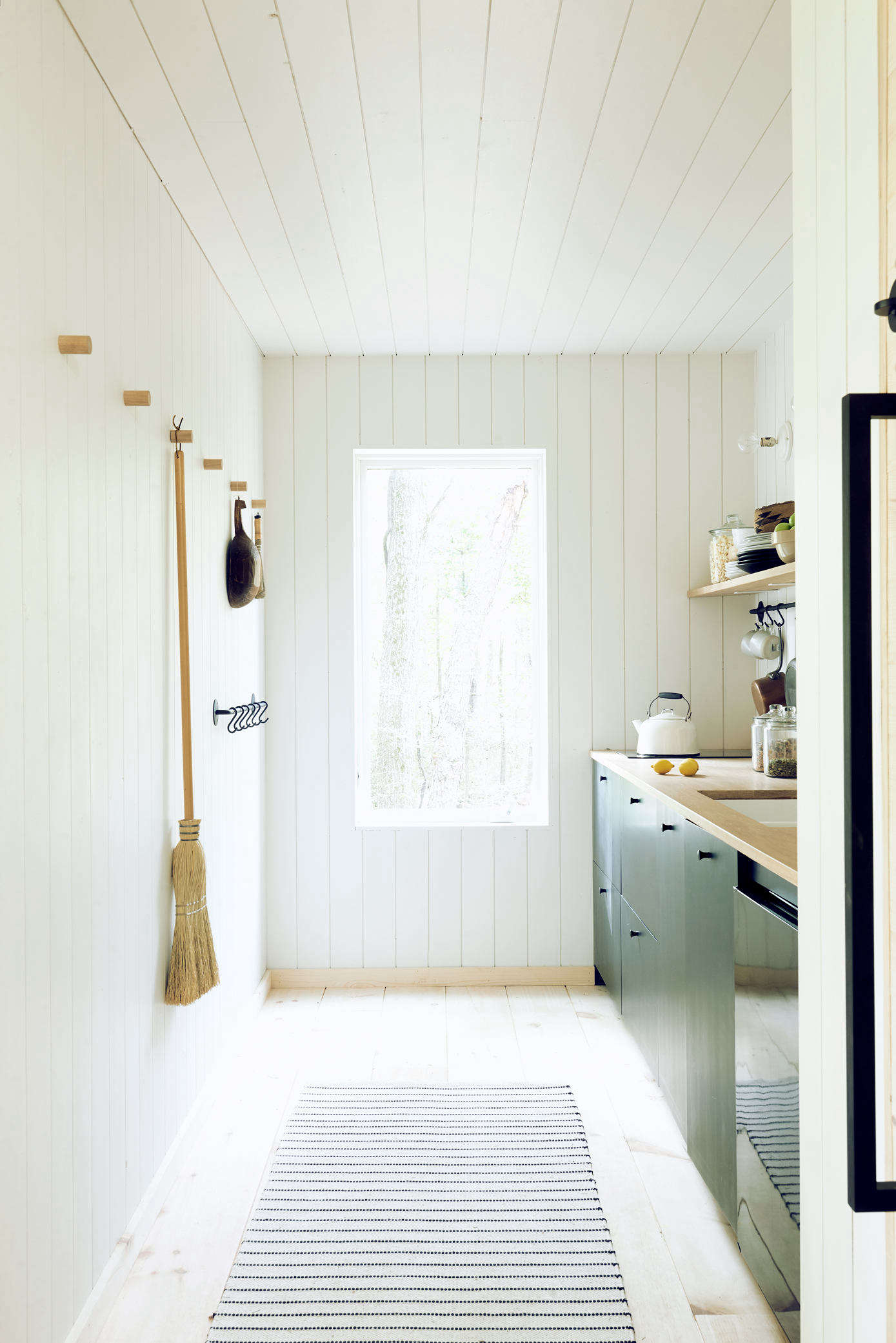
There is something deeply satisfying about a small off-grid kitchen that knows exactly what it is doing. It does not try to become a marble-clad suburban command center with three ovens, a wine fridge, and a mysterious drawer nobody is allowed to open. Instead, it behaves like a smart cabin kitchen should: compact, calm, durable, and ready to make coffee before anyone has found their socks.
The best small off-grid kitchens are not simply “tiny kitchens.” They are carefully edited systems. Every inch has a job. Every appliance must justify its appetite for power. Every shelf, hook, window, and cabinet door matters. In an architect-designed guest cabin, the kitchen becomes more than a cooking corner. It is the engine room of hospitality, the social anchor of the cabin, and the place where the romance of off-grid living meets the reality of dirty mugs.
This week’s inspiration centers on the kind of guest cabin kitchen that feels modest at first glance but reveals serious design intelligence the longer you look. Think natural light, simple cabinetry, honest materials, a compact layout, and an off-grid mindset that favors restraint over gadget overload. It is the design equivalent of someone who packed one perfect wool sweater instead of six “just in case” outfits.
Why Small Off-Grid Kitchens Are Having a Moment
Small cabin design has moved far beyond the rustic cliché of knotty pine, wobbly stools, and a frying pan that may or may not predate electricity. Today’s best off-grid guest cabins combine architectural discipline with warm, practical living. They borrow from Scandinavian minimalism, American farmhouse utility, tiny-house storage logic, and sustainable building strategies.
The appeal is easy to understand. A small off-grid kitchen promises freedom from excess. It supports a slower rhythm: boil water, chop vegetables, cook something simple, sit near a window, and remember that dinner does not require a touchscreen refrigerator telling you the emotional status of your lettuce.
But the charm only works when the kitchen is designed well. Off-grid living has no patience for waste. Poor planning can quickly turn “peaceful retreat” into “why is the battery dead and where did I put the can opener?” The most successful compact cabin kitchens solve three problems at once: energy use, storage, and daily comfort.
The Architect’s Advantage: Designing the Kitchen as Part of the Cabin
In many houses, the kitchen is treated like a product showroom inserted into a room. In a well-designed cabin, the kitchen is part of the architecture itself. The ceiling height, windows, wall thickness, circulation path, and view all influence how the cooking area feels and functions.
An architect-designed guest cabin often uses the kitchen to reinforce the entire concept of the building. If the cabin is meant to feel quiet and nature-focused, the kitchen should not scream for attention. Instead, it should speak in a normal indoor voice: simple cabinet fronts, practical counters, a compact sink, sturdy hardware, and a color palette borrowed from the surrounding woods, fields, stone, or water.
Compact Does Not Mean Cramped
The difference between “small” and “cramped” is planning. A small off-grid kitchen can feel generous when it has clear work zones. Even a short counter can function beautifully if it provides a place to prep, a place to wash, and a place to cook without forcing the user into a one-person ballet called “Where Do I Put This Onion?”
Galley layouts, L-shaped corners, and single-wall kitchens are common in compact cabins because they reduce wasted steps. When the refrigerator, sink, and cooktop are close but not colliding, the kitchen feels efficient. When open shelves or peg rails hold everyday tools within reach, the lack of square footage becomes less noticeable.
Materials That Make Sense Off the Grid
Materials in an off-grid guest cabin must be attractive, durable, and forgiving. A remote cabin is not the place for fussy finishes that require a maintenance schedule longer than a tax form. Wood, painted cabinetry, stone, stainless steel, butcher block, and simple tile all work because they can handle real use.
Painted cabinets are especially smart in a small cabin kitchen. A deep green, black-green, warm white, or muted gray can give the kitchen personality without visually crowding the space. Dark lower cabinets ground the room, while pale walls and natural light keep it from feeling like a storage closet with a sink.
Wood Brings Warmth Without Trying Too Hard
Wood is nearly unavoidable in cabin design, and that is not a problem. Used thoughtfully, it adds warmth, texture, and a connection to place. The trick is balance. Too much wood in too many tones can make a small kitchen feel like the inside of a bread box. Pairing wood floors or ceilings with painted cabinets and clean white walls can keep the room fresh.
Butcher block counters are popular in small cabins because they are warm, practical, and easier to repair than many polished surfaces. They do need care, but in a guest cabin, a few marks can add character. The goal is not showroom perfection. The goal is a kitchen that looks better after a weekend of pancakes, soup, muddy boots, and someone enthusiastically misjudging the size of a cutting board.
Energy Choices: The Hidden Design Layer
In an off-grid kitchen, every appliance is part of the energy strategy. A full-size electric range, oversized refrigerator, dishwasher, microwave, toaster oven, espresso machine, and blender may be normal in a conventional home. In a cabin powered by solar panels and batteries, that lineup can behave like a tiny electrical marching band walking straight through your storage capacity.
The smartest off-grid kitchens begin with the question: what do guests actually need? Usually, the answer is modest. A compact refrigerator, efficient lighting, a reliable cooking source, a good kettle, and enough outlets for small essentials can support comfortable short stays without overbuilding the system.
Propane, Induction, or Hybrid?
Cooking fuel is one of the biggest decisions. Propane remains common in remote cabins because it reduces electrical load and performs predictably. Induction cooking, on the other hand, is increasingly attractive because it is efficient, fast, easy to clean, and does not release combustion byproducts into the cabin. The choice depends on the cabin’s solar capacity, battery bank, ventilation, climate, and intended use.
For a guest cabin used on weekends, a two-burner cooktop may be enough. The point is not to recreate a restaurant line. It is to let people make eggs, pasta, coffee, soup, toast, and perhaps one heroic skillet meal that everyone will politely call “rustic.”
Water: The Quiet Boss of the Off-Grid Kitchen
Power gets the glamour, but water often determines how an off-grid kitchen really works. A cabin may rely on a well, cistern, rainwater collection, hauled water, or a seasonal system. That means the sink, faucet, drain, hot water setup, and dishwashing habits all matter.
A water-wise kitchen does not need to feel primitive. A compact sink with a practical faucet, a sensible graywater plan where allowed, and a small on-demand water heater can make the space comfortable. The design should encourage easy cleanup without pretending water is unlimited. In an off-grid cabin, leaving the tap running while you stare dramatically into the distance is not a personality trait. It is a plumbing problem.
Small Sink, Big Responsibility
A smaller sink can work well if it is deep enough for pots and placed near the prep area. Single-basin sinks often make more sense than divided sinks in tiny kitchens because they handle larger cookware. Add a dish rack that folds away or hangs on the wall, and the counter stays usable.
For guest cabins, clear instructions help. A friendly note about conserving water, sorting waste, or using the compost bin can prevent confusion. Guests are more likely to respect an off-grid system when they understand how it works.
Storage: The Art of Not Owning Seven Colanders
Storage in a small off-grid kitchen should be honest. There is no room for fantasy inventory. You do not need twelve mugs for a cabin that sleeps two. You do not need five mixing bowls unless the cabin is secretly hosting a baking competition. Editing is design.
Open shelves, peg rails, wall hooks, drawer organizers, and pull-out pantry shelves can make a compact kitchen highly functional. Closed lower cabinets hide less attractive essentials, while open upper storage keeps everyday items visible and easy to grab.
Use Vertical Space Without Creating Visual Noise
Vertical storage is essential, but it must be controlled. Too many objects on display can make a small kitchen feel busy. A few open shelves with matching dishes, jars, or cooking basics look intentional. A wall covered with every utensil ever invented looks like the kitchen is losing an argument.
The best approach is to store by frequency of use. Daily items belong within arm’s reach. Occasional items can live higher or lower. Rare items should probably not be in the cabin at all. This is not cruelty. It is mercy for the person trying to find the coffee filters at 7 a.m.
Lighting: Make the Small Kitchen Feel Alive
Natural light is one of the most powerful tools in a compact cabin kitchen. A well-placed window can make a tiny cooking space feel connected to the landscape. It also reduces daytime dependence on artificial lighting, which matters in an off-grid system.
At night, efficient LED lighting is the obvious choice. The best setup includes task lighting over the counter and sink, plus softer ambient lighting nearby. This allows the kitchen to shift from practical workspace to cozy gathering spot. Nobody wants to chop carrots in moody darkness unless the recipe is “campfire suspense stew.”
The Guest Cabin Factor: Design for Strangers, Not Just Yourself
A private cabin kitchen can be quirky. A guest cabin kitchen must be intuitive. Visitors should not need a thirty-minute orientation or a treasure map to make coffee. Labels, visible tools, simple controls, and logical storage make the space easier to use.
This is where architect-designed restraint becomes valuable. A small kitchen with fewer elements is easier to understand. Guests can see where things belong. Cleanup is simpler. The room stays calmer. In a compact off-grid cabin, hospitality is not about abundance; it is about removing friction.
What a Guest Kitchen Actually Needs
A well-equipped guest cabin kitchen should include a compact refrigerator, a two-burner cooktop, a kettle, basic cookware, sharp knives, a cutting board, a few durable dishes, cleaning supplies, trash and recycling bins, and a place to sit or perch nearby. Add a French press or pour-over setup and suddenly everyone thinks you are a wilderness genius.
What it probably does not need: oversized appliances, duplicate gadgets, fragile glassware, complicated smart devices, or a drawer full of mystery cords. Small kitchens reward discipline. They also punish the person who thinks a waffle maker is “essential.”
Style Lessons From a Small Off-Grid Cabin Kitchen
The beauty of a small off-grid kitchen is that its lessons translate to almost any home. You do not need a remote cabin to benefit from compact design thinking. Apartment kitchens, ADUs, studio guest suites, backyard cottages, and basement apartments can all borrow the same principles.
Lesson One: Choose Fewer, Better Things
In a tiny kitchen, every object becomes visible either physically or functionally. Cheap hardware that sticks, a faucet that splashes, a cabinet that wastes space, or a noisy refrigerator will annoy users quickly. It is better to choose fewer elements and make them good.
Lesson Two: Let the Architecture Lead
A cabin kitchen should not fight the building. If the cabin is quiet and minimal, the kitchen should echo that. If the structure uses local wood, exposed beams, or simple forms, the kitchen can repeat those ideas through material and proportion. Coherence makes a small space feel larger because the eye is not constantly stopping to ask, “Why is that here?”
Lesson Three: Design for Maintenance
Remote cabins need durable systems. Choose surfaces that clean easily, lighting that lasts, hardware that can be repaired, and appliances with simple controls. The harder a kitchen is to maintain, the less relaxing the cabin becomes. Nothing ruins a peaceful weekend faster than discovering the designer faucet requires a tiny proprietary tool last seen during the Bronze Age.
Experience Notes: What It Feels Like to Use a Small Off-Grid Kitchen
The first thing you notice in a small off-grid kitchen is that your habits change. At home, many people cook as if utilities are invisible. Water appears. Lights glow. The refrigerator hums. The dishwasher swallows the evidence. In an off-grid cabin, the kitchen politely reminds you that every comfort comes from a system. That reminder can feel restrictive for about ten minutes. Then it starts to feel grounding.
You become more intentional. You fill the kettle with the amount of water you need, not a random heroic quantity. You open the refrigerator once with a plan instead of browsing it like a tiny cold museum. You wash dishes in a sequence. You wipe the counter because there is only one good prep area, and it must be ready for the next job. Strangely, this does not feel like deprivation. It feels like clarity.
Cooking in a compact cabin kitchen also changes the menu. Elaborate meals with twelve pans and three sauces begin to seem unnecessary, possibly suspicious. The best cabin meals are simple and fragrant: eggs with herbs, grilled vegetables, soup, skillet potatoes, pasta with whatever is left, coffee strong enough to make the trees stand up straighter. The kitchen encourages food that matches the place.
The social experience is different too. In a large open kitchen, people can spread out and still feel connected. In a small cabin kitchen, everyone negotiates space. One person cooks, one person sits nearby, one person is told lovingly to stop standing in front of the drawer. This creates a funny intimacy. The kitchen becomes a stage for small rituals: morning coffee, rinsing berries, heating soup after a walk, drying mugs beside the sink.
Storage teaches humility. You quickly learn which items matter. A sharp knife matters. A solid pan matters. A stable cutting board matters. A beautiful handmade mug matters more than six novelty mugs shaped like woodland animals, although one tasteful squirrel may be allowed under strict supervision. The small kitchen asks each object to earn its place, and the result is calmer than abundance.
There is also a sensory pleasure that larger kitchens sometimes lose. You hear water hit the sink. You smell coffee immediately. You notice the wood grain, the window light, the sound of a cabinet latch. Because the room is small, details become stronger. A good knob, a smooth drawer, a warm counter, or a shelf lined with simple bowls can feel luxurious.
The main challenge is expectation. Guests who arrive expecting unlimited convenience may need a gentle reset. That is why a good off-grid guest kitchen should include small notes written in a friendly tone. Explain how to conserve water, what can run at the same time, where food waste goes, and how to leave the kitchen ready for the next person. Clear instructions prevent accidental chaos.
After a few days, the small kitchen begins to feel less like a compromise and more like a teacher. It shows how little is actually needed for comfort. It proves that good design is not measured by square footage or appliance count. It is measured by how gracefully a space supports daily life. And in an architect-designed off-grid guest cabin, grace often looks like a small counter, a good window, a quiet shelf, and a pot of coffee made with just enough water.
Conclusion: The Small Kitchen With a Big Design Brain
A small off-grid kitchen in an architect-designed guest cabin succeeds because it understands limits. It does not resent them. It uses them. Limited space encourages better storage. Limited power encourages smarter appliances. Limited water encourages mindful habits. Limited square footage encourages a stronger relationship between the kitchen, the cabin, and the landscape beyond the window.
The result is a kitchen that feels calm, capable, and surprisingly generous. It may not host a holiday banquet for twenty, but it can deliver something more valuable: a clear, beautiful place to cook, gather, and slow down. In a world where many kitchens have become oversized appliance habitats, the small off-grid cabin kitchen offers a refreshing reminder. Enough really can be enough, especially when enough comes with good light, sturdy cabinets, and coffee in the woods.
Note: This article is written as an original SEO-ready synthesis based on real off-grid cabin design, compact kitchen planning, sustainable building, energy-efficient appliance, and water-conscious living principles. No source links or citation placeholders are included in the publishable HTML.














