
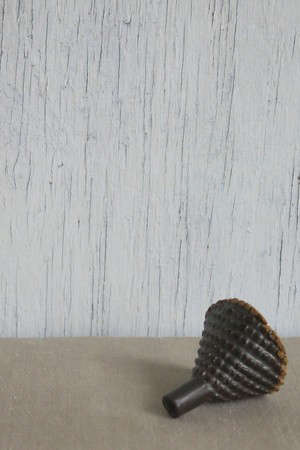
A funnel is usually the kitchen tool nobody writes love letters about. It sits in a drawer, quietly preventing olive oil from turning the counter into a skating rink. But Marité Acosta’s Funnel is not the average plastic cone you bought in a three-pack and immediately lost behind the measuring cups. It is a small, handbuilt ceramic object that turns one of the most practical kitchen shapes into something warm, tactile, and unexpectedly stylish.
At first glance, it looks simple: a compact ceramic funnel, textured by hand, made from brown stoneware, and finished with a deep matte glaze. Look again and it becomes more interesting. This is not just a tool for moving liquid from one container to another. It is a tiny piece of artisan kitchenware that says, “Yes, I decant vinegar, and yes, I have taste.”
Marité Acosta is known as a chef, stylist, and potter, a combination that explains why her ceramics often feel both useful and artful. Her background in food and design gives her work a rare balance: it understands the kitchen as a working place, but also as a stage where texture, proportion, and mood matter. Marité Acosta’s Funnel fits perfectly into that world. It is modest in size, sculptural in presence, and charmingly rebellious against the idea that everyday tools have to be boring.
What Is Marité Acosta’s Funnel?
Marité Acosta’s Funnel is a handbuilt ceramic kitchen tool made for small-scale pouring, transferring, and display. It has been listed as a compact funnel measuring about 2.5 inches by 2.5 inches, made from brown stoneware with a black walnut matte glaze. In design terms, that means it is earthy, small, and textural rather than glossy, industrial, or aggressively “kitchen gadget” in personality.
The word “funnel” may sound purely functional, but in this case, the object belongs to the larger movement of handmade ceramic kitchenware: pieces that can work hard, look beautiful, and make a countertop feel like someone thoughtful lives there. Think of it as the opposite of a plastic funnel that screams from the junk drawer. This one whispers from a shelf like it reads poetry after dinner.
Product Snapshot
- Object: Handbuilt ceramic funnel
- Maker: Marité Acosta
- Material: Brown stoneware
- Finish: Black walnut matte glaze
- Approximate size: 2.5 inches by 2.5 inches
- Style: Textured, earthy, sculptural, handmade
- Best for: Small kitchen tasks, display, gifting, and collectors of artisan pottery
The Maker Behind the Funnel
To understand why this small ceramic funnel has appeal, it helps to understand Marité Acosta’s creative background. Acosta’s career connects food, styling, design, and clay. She is the daughter of Cuban immigrants, and her love of food has been described as rooted in her mother’s cooking. Before becoming widely recognized for ceramics, she worked in fashion and textiles, trained in culinary arts, and built experience in food media, recipe development, and styling.
That history matters because her pottery does not feel like decorative ceramics pretending to belong in the kitchen. It feels like kitchen culture translated into clay. A chef knows how a tool should feel in the hand. A stylist understands how a shape behaves in a photograph or on a table. A potter knows that a slight variation in surface can turn a useful object into something with soul. Acosta’s work sits at the meeting point of those skills.
Her ceramics have appeared in design and lifestyle contexts connected to respected publications and creative shops, and her work has been associated with handmade tableware, sculptural vessels, small dishes, bowls, and textured surfaces. The funnel is one of the most playful pieces in that family because it takes a humble kitchen form and gives it presence.
Why a Handmade Ceramic Funnel Matters
Modern kitchens are full of clever tools. Some are genuinely helpful. Others exist because someone in a product meeting decided an avocado needed its own helmet. A handmade ceramic funnel cuts through that noise. It does one familiar job, but it does it with the personality of craft.
The value of Marité Acosta’s Funnel is not only that it can help transfer small amounts of liquid or dry ingredients. Its deeper appeal is emotional and aesthetic. Handmade ceramics remind us that daily routines can be slower, warmer, and more intentional. Pouring infused oil into a tiny bottle becomes less of a chore and more of a small ritual. Refilling a spice jar feels slightly less like pantry maintenance and slightly more like being the star of a very quiet cooking show.
That may sound dramatic for a funnel, but the best handmade objects often work that way. They shift attention. They invite touch. They make ordinary tasks feel less disposable.
Design Analysis: Small Object, Big Character
1. The Beauty of Brown Stoneware
Stoneware is a favorite material for functional pottery because it is dense, durable, and visually grounded. Brown stoneware in particular gives a piece an earthy quality. It does not try to look pristine or porcelain-perfect. Instead, it brings warmth, depth, and a subtle connection to soil, fire, and handmade tradition.
For a funnel, that material choice is especially interesting. Most funnels are made from metal, plastic, silicone, or glass. Ceramic is less expected, which instantly makes the object feel more personal. It also gives the funnel enough weight to feel substantial despite its tiny footprint.
2. The Texture Makes It Human
Texture is one of the reasons handmade pottery has such lasting appeal. A smooth factory object can be beautiful, but a textured handbuilt ceramic piece offers small variations that feel alive. Acosta’s funnel has been described as textured, and that detail is essential to its character.
The surface suggests the maker’s hand without turning the object into a museum piece. It still reads as a tool, but the texture gives it a quiet sculptural quality. On a shelf, it can sit beside salt dishes, small bowls, or a bottle of olive oil and look like part of a thoughtful arrangement rather than an appliance accessory.
3. The Matte Walnut Glaze
A black walnut matte glaze gives the piece a dark, natural finish. Unlike shiny glazes that bounce light around, matte surfaces absorb light and create a softer visual mood. This makes the funnel feel calm, understated, and easy to pair with wood, linen, stone counters, brass utensils, and other warm kitchen materials.
In a white kitchen, it adds contrast. In a rustic kitchen, it blends beautifully. In a modern kitchen, it prevents everything from looking like it was designed by a very serious refrigerator.
Practical Uses for Marité Acosta’s Funnel
Because it is small, Marité Acosta’s Funnel is best suited for delicate kitchen tasks rather than heavy-duty canning or marathon soup transfers. It is the kind of funnel you reach for when precision matters and the amount is modest.
Small-Batch Pouring
Use a ceramic funnel like this when transferring homemade vanilla extract, chili oil, herb vinegar, simple syrup, or cocktail bitters into small bottles. Its size makes sense for narrow-neck containers and small kitchen experiments.
Spices and Dry Ingredients
A tiny funnel can help refill spice jars, salt cellars, tea tins, or small storage bottles. Anyone who has tried to pour paprika from a bag into a jar knows the tragedy of the red countertop cloud. A small funnel can prevent that culinary crime scene.
Bar Cart and Coffee Station Styling
It can also be used as part of a bar cart, tea setup, or coffee station. Even when it is not actively pouring anything, it looks intentional. Place it near bitters, small bottles, a ceramic spoon rest, or a handmade mug and it adds depth to the setup.
Gift for a Cook or Ceramic Collector
For someone who loves cooking, handmade pottery, or design-forward kitchen tools, this funnel makes a thoughtful gift. It is small enough to feel intimate and unusual enough to avoid the dreaded “Oh, another scented candle” reaction.
Ceramic Funnel vs. Metal, Plastic, and Silicone Funnels
A ceramic funnel is not trying to replace every funnel in the kitchen. If you are draining five gallons of stock or filling dozens of jars, stainless steel or wide-mouth plastic may be the better choice. But for smaller, more visible tasks, ceramic has advantages that industrial materials do not.
Compared With Plastic
Plastic funnels are lightweight and inexpensive, but they often stain, warp, and look tired quickly. A handmade ceramic funnel feels more permanent and far more attractive. Plastic is the tool you hide. Ceramic is the tool you leave out on purpose.
Compared With Stainless Steel
Stainless steel is durable, easy to clean, and excellent for heavy use. However, it can feel clinical. A ceramic funnel brings warmth and character. It is less about speed and more about making small kitchen moments feel considered.
Compared With Silicone
Silicone funnels are flexible and practical, especially for storage. But they often lack visual charm. A handmade ceramic funnel is not collapsible, but it wins the “Would I want to see this next to my olive oil?” contest by a landslide.
How to Style Marité Acosta’s Funnel in the Kitchen
One of the joys of artisan kitchenware is that it does not need to live in a drawer. Marité Acosta’s Funnel can be styled like a small ceramic sculpture while remaining useful.
On Open Shelving
Place it beside handmade bowls, wooden spoons, and small bottles. The matte glaze pairs well with natural textures and prevents open shelving from feeling too polished.
Near Oils and Vinegars
If you decant olive oil, vinegar, or homemade infusions, keep the funnel near those bottles. It visually explains its purpose while adding charm to the workspace.
With Salt Dishes and Spice Jars
Because Acosta’s work includes small dishes and tableware, the funnel looks especially natural near salt dishes, spice jars, and prep bowls. The result feels cohesive without looking overly decorated.
Care Tips for Handmade Ceramic Kitchen Tools
Handmade ceramics deserve practical care. They may be durable, but they are not invincible. Treating them well helps preserve their finish and structure.
- Hand-wash when possible. Even if a ceramic piece can tolerate dishwashing, hand-washing is usually gentler.
- Avoid sudden temperature changes. Do not move a cold ceramic piece directly into hot liquid or extreme heat.
- Check food-use guidance. If using any handmade ceramic with food, follow the maker’s care instructions.
- Dry thoroughly. Let the funnel air-dry completely before storing it.
- Handle the spout carefully. Small ceramic forms can chip if knocked against stone counters or metal sinks.
Who Is This Funnel For?
Marité Acosta’s Funnel is ideal for people who enjoy thoughtful kitchen objects, handmade ceramics, and small tools that double as display pieces. It is especially suited for home cooks who make infusions, refill spice jars, style open shelves, or collect functional pottery.
It may not be the best choice for someone who wants a large, indestructible, dishwasher-battered funnel for industrial kitchen work. This is a piece for people who appreciate texture, maker stories, and the pleasure of using something that was shaped by hand.
Why It Works as Functional Art
The best functional art succeeds because it does not force you to choose between beauty and usefulness. A bowl can hold soup and still be gorgeous. A mug can carry coffee and still feel like a favorite object. A funnel can help pour oil and still look like a tiny sculpture.
That is the quiet genius of Marité Acosta’s Funnel. It does not overexplain itself. It is not loud. It does not need a digital screen, an app, or a charging cable. It simply brings craft back into a small kitchen task. In an era where many tools are designed to be replaced, a handbuilt stoneware funnel feels refreshingly rooted.
Experiences Related to Marité Acosta’s Funnel
Using a handmade ceramic kitchen object changes the rhythm of a task. With a plastic funnel, you usually grab, pour, rinse, and forget. With a small ceramic funnel like Marité Acosta’s, the experience begins before the pouring starts. You notice the weight. You notice the surface. You notice that the object has a front, a back, a mood, and maybe even a little attitude. That is not something most funnels can claim. Most funnels are just cones with responsibilities.
The first experience is visual. A small matte brown funnel placed near a bottle of olive oil looks less like equipment and more like part of a still life. It can sit beside a ceramic salt dish, a linen towel, and a wooden spoon without looking staged. The kitchen immediately feels warmer. Not fancier, exactlymore lived-in, more personal. It suggests that the person who cooks there pays attention to small pleasures.
The second experience is tactile. Handmade stoneware has a grounded feel in the hand. It is not slippery like some glazed factory ceramics and not flimsy like plastic. The textured surface gives your fingers something to register. That matters because cooking is already a sensory act. We smell garlic hitting warm oil, hear onions soften, watch dough rise, and taste sauce one suspiciously large spoonful at a time. A handmade funnel adds touch to that sensory chain.
The third experience is practical, but in a quiet way. A small funnel makes sense for careful jobs: filling a little bottle with homemade rosemary oil, transferring loose tea into a narrow tin, or guiding flaky sea salt into a small jar. These are not dramatic tasks. Nobody applauds when the smoked paprika lands successfully in its container. Still, avoiding a spill feels like a tiny domestic victory, and tiny domestic victories deserve more respect.
The fourth experience is emotional. Handmade tools slow you down just enough to pay attention. You are less likely to toss a ceramic funnel into a chaotic drawer. You rinse it, dry it, and place it somewhere safe. That care creates a relationship with the object. Over time, it may become part of your cooking routine: the thing you reach for when bottling holiday vanilla extract, preparing cocktail syrups, or reorganizing spices during a Sunday kitchen reset that began as “just five minutes” and somehow became a full pantry intervention.
The final experience is conversational. Guests notice small handmade pieces. They ask where something came from. They pick it up, turn it over, and admire the texture. A ceramic funnel may be tiny, but it can start a conversation about craft, food, design, and why the best kitchens are not just efficientthey are personal. That is the real charm of Marité Acosta’s Funnel. It proves that even the smallest object in the room can carry a story.
Conclusion
Marité Acosta’s Funnel is a small object with a surprisingly large amount of character. It combines the usefulness of a kitchen tool with the warmth of handmade pottery, making it appealing to cooks, collectors, stylists, and anyone who believes the best everyday objects should do more than merely function.
Its brown stoneware body, textured surface, and matte walnut glaze give it an earthy presence that feels both practical and poetic. It is not meant to replace every funnel in the kitchen, and that is part of its charm. Instead, it shines in small, careful tasks: decanting, refilling, styling, gifting, and reminding us that even ordinary routines can be made more beautiful.
In a world full of disposable gadgets, Acosta’s handbuilt ceramic funnel feels refreshingly human. It is proof that good design does not always need to be big, expensive, or complicated. Sometimes it is just a tiny ceramic funnel sitting beside the olive oil, quietly making the kitchen feel smarter, warmer, and far more interesting.
Note: This publish-ready article synthesizes public information about Marité Acosta, her ceramic funnel, handmade pottery, and functional kitchenware. External source links and citation markers have been omitted by request.












