
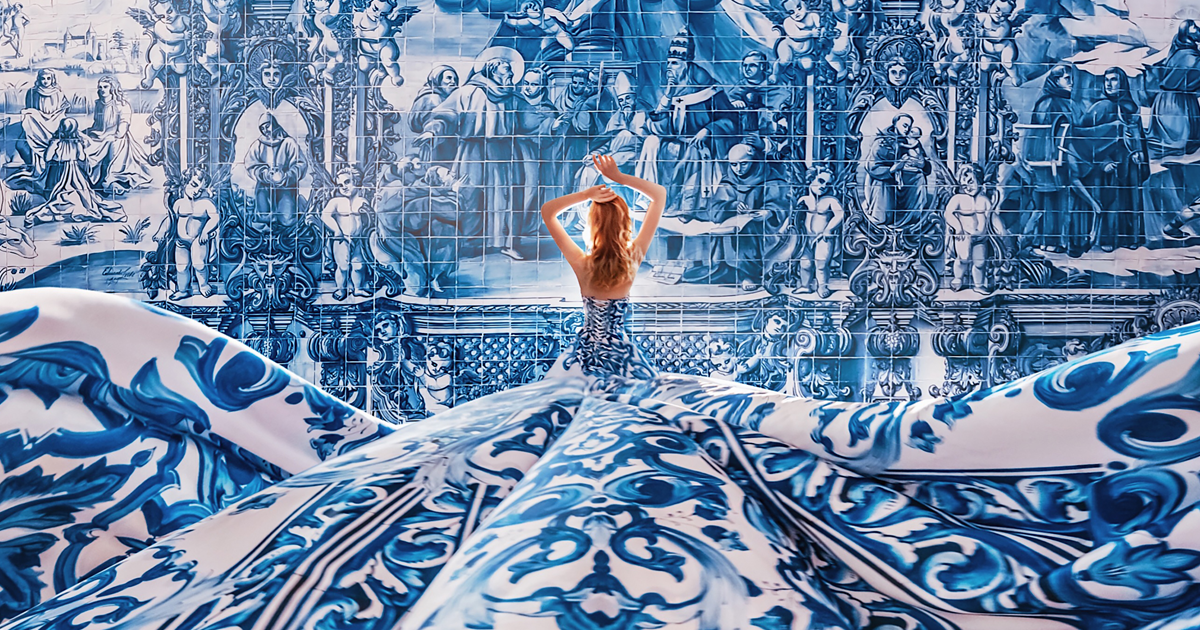
Some people collect postcards. Some collect fridge magnets. I collect moments when a dress, a landscape, and a gust of wind briefly agree to become a fairytale. That is the spirit behind My 30 Pics Of Girls In Dresses Which I Captured While Traveling In The Most Magical Places: a travel photography series where flowing fabric meets unforgettable destinations, and every frame feels like the planet decided to dress up for the camera.
At first glance, the idea sounds simple: a model in a beautiful dress standing in a beautiful place. Easy, right? Not exactly. Anyone who has ever tried to photograph a long gown near a windy cliff, a crowded square, or a beach where sand behaves like an unpaid assistant knows the truth. Magical images require planning, patience, permission, strong shoes, backup batteries, and at least one person willing to yell, “Wait, the wind is perfect!” at sunrise.
This series sits at the intersection of travel photography, fashion photography, and visual storytelling. The dress is not just clothing. It becomes color, movement, shape, and emotion. The location is not just a background. It becomes a character. Together, they create images that feel cinematic without needing a castle, a dragon, or a suspiciously talented fairy godmother.
The Magic Behind Girls In Dresses Travel Photography
There is a reason portraits of women in dresses against dramatic landscapes are so instantly engaging. A flowing dress introduces motion into a still image. Fabric catches light, reacts to wind, and creates shapes that the photographer could never fully control. That tiny bit of unpredictability is what makes the photograph feel alive.
In a mountain valley, a dress can echo the sweep of the cliffs. In a city street, it can soften hard lines of stone, metal, and glass. In a desert, it becomes a ribbon of color against a sea of sand. In a snowy landscape, it looks like a flame, a flower, or a small rebellion against winter. The best images in this style do not simply say, “Look at this dress.” They say, “Look at what happens when imagination travels.”
The most successful travel portraits often balance three visual forces: the person, the place, and the mood. If the dress is too loud, the location disappears. If the location is too overwhelming, the subject gets swallowed. If the mood is unclear, the image becomes merely pretty instead of memorable. The goal is harmony, not a fashion battle royale.
Why Dresses Work So Well In Magical Places
A dress, especially one made of light or layered fabric, gives a photographer a natural tool for composition. It can create leading lines, frame the body, mirror architectural curves, or add contrast to a quiet scene. This is why editorial travel portraits often rely on long silhouettes, bold colors, and fabrics that move gracefully.
In photography, movement suggests life. A dress lifted by wind can make a still frame feel like a paused film scene. The viewer begins to imagine what happened before and after the shutter clicked. Was the model walking toward the sea? Turning under lantern light? Standing in a garden just before rain? A good photograph invites those questions without answering all of them.
Color also matters. A crimson dress in a pale landscape, a blue gown near whitewashed walls, or a gold fabric glowing during sunset can make the image feel intentional and emotionally clear. The dress becomes the visual anchor, while the destination provides atmosphere. When both are chosen carefully, the result can look effortless, which is photographer code for “many things went wrong before this finally worked.”
Choosing The Most Magical Places For A Photo Series
Not every famous destination automatically makes a great portrait location. Some places are beautiful in person but visually chaotic on camera. Others look ordinary at noon but become breathtaking at sunrise, sunset, or during misty weather. The trick is to search for places with strong shapes, memorable textures, and light that does not behave like a flashlight pointed directly at everyone’s forehead.
Magical places often have one or more of these qualities: unusual architecture, dramatic natural lines, soft reflective surfaces, vivid color palettes, or a sense of mystery. Think of frozen lakes, old palaces, flower fields, desert dunes, narrow historic streets, temples, coastlines, forests, and rooftops where the city appears to glitter below. These settings do not need heavy editing to feel special. They already have personality.
For a series of 30 images, variety is essential. If every photo has the same pose, dress shape, and lighting style, even the most beautiful collection can begin to feel like a very glamorous passport application. A strong travel fashion series moves between wide landscape shots, closer portraits, dramatic back views, walking poses, still moments, and details of fabric interacting with the environment.
Location Scouting: The Unromantic Secret Of Romantic Photos
Before the camera comes out, scouting does most of the heavy lifting. A photographer needs to know where the sun rises, where shadows fall, when crowds arrive, whether tripods are allowed, and whether the location requires a permit. This is the part of photography that rarely appears on Instagram because “standing in the wrong place for forty minutes while checking a weather app” is not exactly viral content.
Scouting helps transform luck into preparation. A staircase might look flat from one angle and majestic from another. A wall may become a perfect color backdrop only when the afternoon light touches it. A viewpoint may be empty at dawn and impossible by breakfast. Knowing these details lets the shoot feel spontaneous while secretly being very organized.
The Role Of Light: Golden Hour, Blue Hour, And Weather Drama
Light is the real stylist on every outdoor shoot. Golden hour, the period shortly after sunrise or before sunset, creates warm, soft light that flatters textures and gives landscapes a gentle glow. It is especially useful for portraits because it reduces harsh shadows and makes colors feel richer. The catch is that golden hour moves fast. Ten minutes can completely change a scene.
Blue hour, which happens just before sunrise or after sunset, creates a cooler, dreamier mood. It works beautifully with city lights, lanterns, snow, water, and reflective architecture. A dress photographed during blue hour can feel more mysterious and cinematic, especially when the environment has small points of light in the background.
Clouds are also underrated. Many beginners panic when the sun disappears, but overcast light can be perfect for fashion portraits. It softens contrast, reduces squinting, and allows the photographer to shoot longer without chasing shade like a caffeinated squirrel. Wind, fog, snow, and light rain can all add atmosphere too, as long as everyone stays safe and the equipment survives with dignity.
Composition: Making The Dress And Destination Speak Together
Composition is what keeps a beautiful image from becoming visual soup. In travel portrait photography, the photographer must decide how much of the destination to show and how much attention to give the model. A wide shot can show scale, making the subject appear small within a majestic landscape. A closer portrait can emphasize mood, expression, texture, and detail.
Leading lines are especially useful. Roads, bridges, staircases, shorelines, rows of columns, and patterns in tiles can guide the viewer’s eye toward the subject. Frames within frames, such as arches, windows, doorways, or tree branches, add depth. Foreground elements like flowers, fabric, leaves, or stone can make the image feel layered instead of flat.
The dress itself can become part of the composition. A long train can curve through the frame. A lifted skirt can echo the shape of clouds. A sleeve can create diagonal motion. The photographer’s job is to notice these shapes quickly because fabric does not care about your schedule. It will do something perfect exactly once, usually while you are changing settings.
Ethical Travel Portraits: Beauty With Respect
Travel photography should never treat people or cultures as props. If a series includes models, local clothing inspiration, historic sites, or recognizable communities, respect must come before aesthetics. That means obtaining consent, following local rules, avoiding restricted areas, and understanding whether certain garments, symbols, or locations carry cultural or religious significance.
When photographing people while traveling, communication matters. A smile, a polite introduction, and clear permission can change the energy of a portrait. If someone does not want to be photographed, that answer should be accepted immediately. No image is worth making another person uncomfortable.
The same applies to locations. Some landmarks restrict commercial photography. Some sacred places require modest dress, silence, or no photography at all. Some natural areas are fragile and should not be stepped on for the sake of a dramatic pose. The most magical picture is still not magical if it damages a place or disrespects the people connected to it.
Styling The Dresses Without Overpowering The Story
In this type of series, styling should support the destination rather than compete with it. A dress with heavy detail may work beautifully in a simple landscape, while a clean silhouette may be better in an ornate palace or colorful city. Texture matters too. Tulle, silk, chiffon, linen, velvet, and embroidered fabrics all behave differently in light and wind.
The strongest dress choices often respond to the environment. A soft pastel gown can blend with spring blossoms. A deep emerald dress can glow in a stone courtyard. A white dress can feel cloudlike against desert dunes or snowy mountains. A bright yellow dress can bring humor and sunshine to a gray day, which is useful because weather sometimes has the personality of a dramatic cat.
Accessories should be used carefully. Hats, flowers, jewelry, veils, and scarves can add story, but too many details can distract from the relationship between subject and place. The viewer should not feel as though the suitcase exploded beautifully across the frame.
The Technical Side: Cameras, Lenses, And Real-World Problems
While gear does not create imagination, it does help capture it. A wide-angle lens can show the scale of a location, especially in landscapes or architecture. A portrait lens can compress the background and make the model stand out. A zoom lens gives flexibility in crowded or changing conditions. Shooting in RAW gives more editing control, especially when working with bright skies and shadowed faces.
Shutter speed is important when fabric is moving. A faster shutter can freeze the shape of a dress in midair, while a slower shutter can create blur and motion. Aperture affects how much of the background stays sharp. For destination portraits, the photographer must decide whether the place should be crisp and recognizable or soft and dreamlike.
Real-world problems are part of the adventure. Crowds wander into the frame. Wind blows the dress in the wrong direction. A perfect sunrise lasts approximately six emotional seconds. Someone forgets hairpins. Someone else discovers that “short walk” means “forty-minute hike uphill while carrying fabric.” Yet these challenges often create the funniest memories and sometimes the best images.
Editing: Enhancing Magic Without Inventing A New Planet
Post-processing is where the final mood is refined. Editing can enhance color, correct exposure, soften distractions, and guide the viewer’s attention. However, the best edits still respect the original place. Magical travel photography does not need to turn every sky neon purple or every landscape into a fantasy video game menu.
A thoughtful edit keeps skin tones natural, preserves important textures, and avoids making the dress look pasted into the scene. Color grading can unify the image, especially when the dress and background contain different temperature ranges. Small adjustments to contrast, highlights, shadows, and clarity can make the photograph feel polished while keeping it believable.
The goal is not to trick the viewer. The goal is to express how the moment felt: the cold air near a frozen lake, the warmth of late sun on old stone, the hush of a garden at dawn, or the wild joy of fabric dancing in the wind.
Why This Series Connects With Viewers
People respond to these images because they combine travel dreams with human presence. A landscape alone can be stunning, but adding a person gives scale and emotion. A dress adds fantasy, movement, and color. Together, they make the viewer imagine being there, standing in that light, hearing that wind, and pretending for one glorious second that luggage weight limits do not exist.
The series also celebrates the idea that beauty can be found across cultures, climates, and continents. A magical place is not only a famous landmark. It can be a quiet road, a field after rain, a hidden courtyard, a frozen shore, or a small corner of a city where color and light suddenly cooperate. Photography teaches us to look more carefully, and travel teaches us that the world is much larger than our usual routines.
Lessons For Photographers Who Want To Create Similar Images
Anyone inspired by girls in dresses travel photography can start with a simple approach. Choose one meaningful location, one strong dress, and one clear mood. Do not try to recreate a giant editorial campaign on the first attempt. Begin with the basics: good light, a respectful plan, a comfortable model, and a composition that makes sense.
Work with the environment instead of fighting it. If the day is windy, use movement. If the light is soft, shoot gentle portraits. If the location is crowded, try low angles, tight framing, or early morning timing. If the weather changes, adapt the story. Sometimes the photo you planned is not as good as the photo the place gives you.
Most importantly, treat the person in the photograph as a collaborator. The best portraits happen when the model feels safe, respected, and involved. A relaxed subject brings life to the image. A stressed subject brings the energy of someone mentally calculating how long until lunch.
Personal Travel Notes: What These Shoots Taught Me
After working on a series like My 30 Pics Of Girls In Dresses Which I Captured While Traveling In The Most Magical Places, one lesson becomes clear: the final image is only the shiny top layer of a much bigger experience. Behind every elegant frame is a small comedy of timing, weather, fabric, transportation, and human cooperation.
I learned that sunrise is both a gift and a personal attack. It gives the softest light, the emptiest streets, and the most peaceful atmosphere, but it also requires waking up when most sensible people are still negotiating with their pillows. Still, dawn has a special kind of quiet. In those early minutes, cities feel private, landscapes feel untouched, and even a simple dress can look like it belongs to a storybook.
I also learned that dresses have personalities. Some behave politely. Some catch the wind exactly as planned. Others twist, cling, wrinkle, or attempt to escape into the nearest body of water. A photographer must be patient with fabric. You cannot command it completely; you can only invite it to participate and hope it is in a generous mood.
Travel taught me to respect local rhythm. A place is not a studio. People live there, work there, pray there, commute there, and sometimes wonder why someone is standing in a dramatic gown near a wall at 6:15 a.m. The best shoots happen when the crew stays small, moves gently, and treats the location with gratitude. A beautiful picture should never leave behind irritation, damage, or a trail of glitter that future archaeologists will judge harshly.
I discovered that magical places are not always the famous ones. Some of my favorite moments happened between planned locations: a quiet alley with perfect blue walls, a field glowing after rain, a doorway covered in vines, a roadside view that made everyone stop talking for a second. Travel photography rewards attention. The world keeps offering scenes, but you have to notice them before they disappear.
I learned to pack lighter, plan better, and expect surprises. Comfortable shoes matter. Extra pins matter. Water matters. A backup plan matters. So does kindness, especially when everyone is cold, tired, or waiting for a cloud to move two inches to the left. The mood of the team often appears in the final image, even if viewers cannot explain why.
Most of all, I learned that photography is a way of saying thank you to a place. A dress can add drama, color, and fantasy, but the real magic comes from being present: watching light change, listening to the environment, and letting the location guide the story. The camera captures the frame, but the journey creates the feeling. That is why these 30 pictures are more than pretty portraits. They are souvenirs of wonder, proof that the world still has corners where ordinary travel can briefly turn into a fairytale.
Conclusion
My 30 Pics Of Girls In Dresses Which I Captured While Traveling In The Most Magical Places is more than a collection of beautiful travel portraits. It is a reminder that fashion and landscape can speak the same visual language when light, color, movement, and respect come together. The dress brings emotion. The destination brings story. The photographer brings patience, planning, and the ability to remain calm when wind, crowds, and sunrise all have different opinions.
Whether the scene unfolds in a frozen wilderness, a glowing city, a quiet garden, or a desert at sunset, the best images are the ones that feel both carefully created and wonderfully alive. They invite viewers to travel, dream, and look at familiar places with a little more imagination. And if they also inspire someone to wake up early, pack a camera, and chase golden light across the world, then the magic has done its job.
Note: This article is written as an original, publication-ready synthesis based on real travel photography, portrait photography, styling, composition, and ethical shooting practices. No source links or unnecessary citation markers are included in the article body.













