
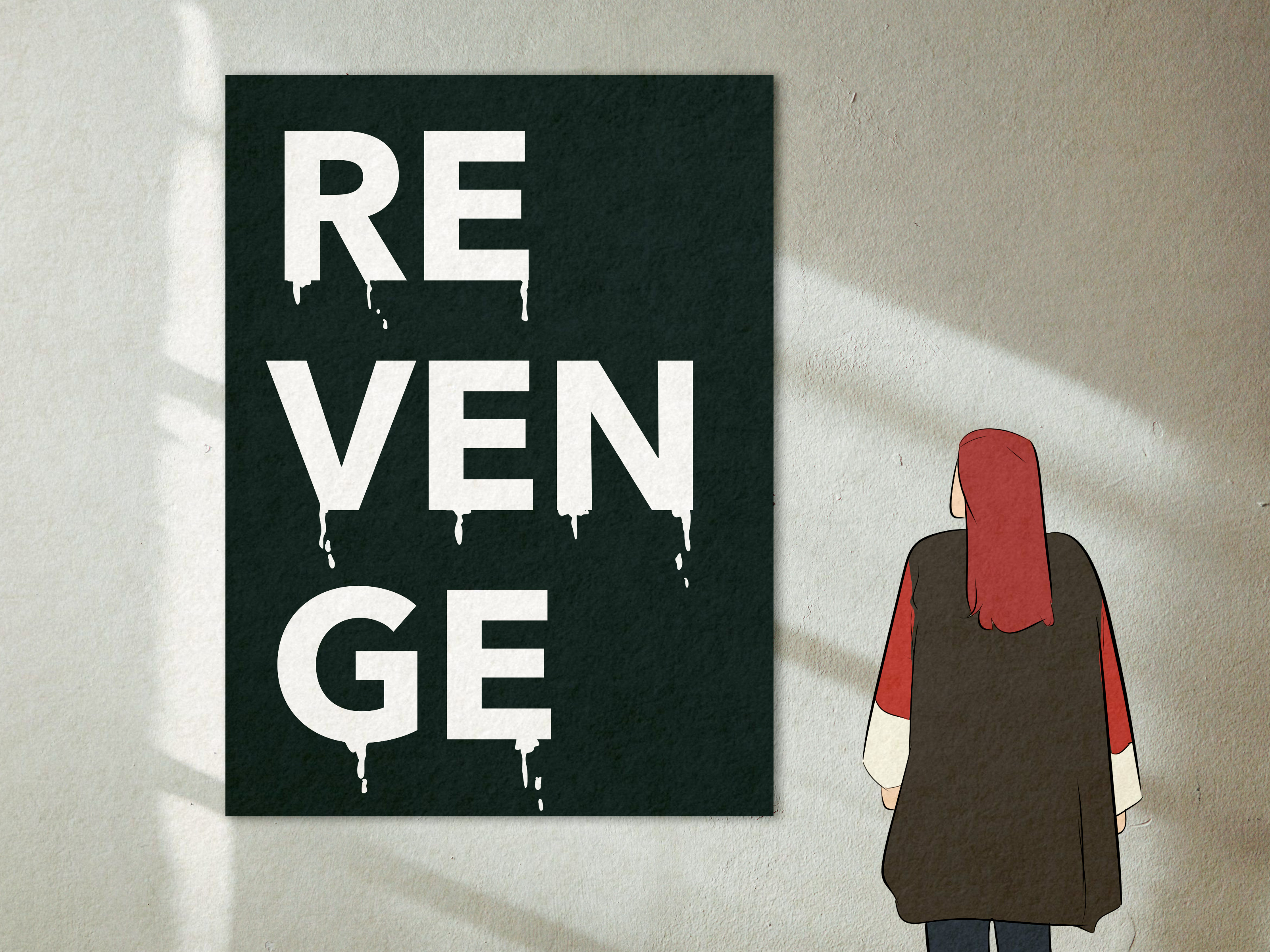
Tom Ford’s Nocturnal Animals is the kind of movie that finishes, rolls credits, and then casually leaves your brain standing alone in a fancy restaurant. It is sleek, icy, emotional, vicious, and just cryptic enough to make people immediately open a group chat and type, “Okay, but what did that ending mean?”
The short answer is this: Edward never shows up because the novel itself is his revenge. But that answer is only the appetizer. The full meal involves guilt, lost love, emotional weakness, performative success, and one brutally effective act of artistic payback. In other words, this is not a movie that hands you closure. It hands you a mirror, dims the lights, and says, “Good luck.”
In this full breakdown, we’ll unpack what really happens at the end of Nocturnal Animals, how the novel inside the movie reflects Susan and Edward’s relationship, what the major symbols mean, and why that final no-show lands like an emotional slap delivered with perfect posture.
What Happens at the End of Nocturnal Animals?
Near the end of the film, Susan Morrow receives the emotional shockwave of Edward Sheffield’s manuscript in full. She has already read the devastating story, revisited memories of their marriage, and started realizing that the book is not just fiction. It is a message. A very stylish, very painful, very personal message.
After reading it, Susan contacts Edward and asks to meet for dinner. He agrees. She gets dressed carefully, chooses her look with obvious hope, and arrives at the restaurant appearing more vulnerable than at any other point in the movie. Then she waits.
And waits.
Edward never comes.
That is the ending. No final speech. No dramatic confrontation. No tidy explanation. Just Susan sitting alone, forced to absorb what the manuscript has already told her: the man she once dismissed has found a way to reach her, wound her, and leave her in silence.
The Simple Meaning of the Ending
If you strip away the layered structure, the meaning of the ending becomes brutally clear: Edward wrote the novel as an act of emotional retaliation. He wanted Susan to feel what he felt when she abandoned him, rejected his sensitivity, and shattered the future they once imagined together.
He does not need to yell. He does not need to threaten her. He does not even need to appear in person. The book does the work for him. By the time Susan reaches the restaurant, Edward has already won.
His absence is the point.
Showing up would have softened the blow. It might have opened the door to reconciliation, closure, or even forgiveness. But Nocturnal Animals is not interested in offering Susan a warm emotional blanket and cocoa. It is interested in consequences.
The Three Story Layers You Need to Understand
One reason the ending feels so rich is that the movie operates on three connected layers:
1. Susan’s present-day life
Susan lives in luxury, but her life is emotionally empty. Her marriage to Hutton is crumbling, her home feels cold, and her art-world success seems polished but hollow. She is surrounded by beauty, yet she looks spiritually exhausted.
2. Susan and Edward’s past
Through flashbacks, we see the early tenderness of their relationship and the gradual collapse of their marriage. Susan loved Edward, but she also doubted him. She saw him as too sensitive, too fragile, too impractical. Over time, she chose ambition, security, and control over the softer, riskier life she had with him.
3. The novel inside the film
Edward’s manuscript tells the story of Tony Hastings, a man whose wife and daughter are taken from him in a horrifying act of violence. Tony is helpless, devastated, and permanently broken by the loss. Jake Gyllenhaal plays both Edward and Tony, which is the movie’s giant neon sign telling you these two men are linked.
These layers are not separate. They talk to each other constantly. The present reveals guilt, the past reveals betrayal, and the novel transforms emotional pain into fictional trauma.
How the Novel Mirrors Susan and Edward’s Marriage
The novel is not a literal retelling of Susan and Edward’s relationship. It is a symbolic translation of emotional devastation into violent fiction. Edward is taking the pain of being abandoned and artistically reshaping it into a story Susan cannot ignore.
Tony Hastings represents Edward’s wounded self: a man who loved deeply, failed to protect what he valued, and was left with unbearable grief. Tony’s loss in the novel is more extreme than Edward’s real-life loss, but that is exactly the point. Art amplifies. It distills emotional truth by exaggerating form.
For Edward, Susan did not simply leave him. She took away his future, his belief in their love, and his sense of himself as a man who could build something meaningful. The novel expresses that devastation in the language of tragedy.
That is why Susan reads the manuscript like someone touching a live wire. She recognizes herself inside it.
Why Edward Doesn’t Show Up
Edward’s absence at dinner is not random, cowardly, or unfinished. It is the final sentence of the revenge letter.
All movie long, Susan has been the one receiving, interpreting, and reacting. Edward controls the emotional rhythm without physically appearing. He sends the manuscript. He reopens the past. He lets her hope. Then he withdraws.
By standing Susan up, Edward recreates abandonment from the opposite side. Years earlier, she left him emotionally stranded. At the end of the film, he leaves her stranded in public, beautifully dressed, waiting for something that is never coming.
It is cruel, yes. It is also precise. Edward does not want a reunion. He wants recognition.
He wants Susan to understand that he was not weak because he felt deeply. He was wounded. And now, through his art, he has finally found the power to make her feel it too.
Is the Ending About Revenge, Regret, or Art?
The smartest answer is: all three.
Revenge
This is the most obvious reading. Edward writes a novel that forces Susan to revisit her past, confront her guilt, and anticipate a meeting that never happens. That is revenge in an elegant black suit.
Regret
Susan’s entire emotional arc is powered by regret. She is not just upset because Edward hurt her. She is upset because the novel makes her realize how much she lost, how much she compromised, and how little meaning remains in the life she chose instead.
Art
The film also suggests that art can do what ordinary conversation cannot. Susan once dismissed Edward as weak and doubted his writing. But the manuscript proves that he has become powerful in exactly the arena where she underestimated him. He has turned pain into something impossible to ignore.
In that sense, the ending is not only revenge. It is also Edward’s declaration of artistic victory.
What Susan’s Final Scene Really Says
When Susan sits alone in the restaurant, the movie is doing several things at once.
First, it confirms that her glamorous life cannot protect her from emotional truth. Throughout the film, Susan exists in curated spaces: immaculate interiors, expensive clothing, controlled social settings. But none of that can defend her from a story written by someone who knew her before the polish hardened into armor.
Second, the scene reveals that Susan was hoping for redemption. She may not admit it out loud, but she clearly wants this dinner to mean something. Maybe forgiveness. Maybe reconnection. Maybe a second chance. The tragedy is that she only reaches for sincerity after the past has already calcified.
Third, the scene forces her into self-recognition. Edward’s no-show is painful, but it also removes her last illusion. She cannot romanticize the past anymore. She cannot pretend the manuscript was merely artistic fiction. She cannot hide inside wealth, taste, or detachment. She is left with herself.
And that, for Susan, may be the harshest ending of all.
Who Is Tony Hastings Supposed to Represent?
Tony Hastings is the fictional stand-in for Edward, but not in a one-to-one biographical way. He is Edward emotionally translated into a darker register. Tony embodies vulnerability, powerlessness, grief, and the crushing aftermath of loss.
That is why Jake Gyllenhaal plays both men. The film wants us to understand that the manuscript is not detached storytelling. It is Edward processing his own identity through fiction.
Tony is also what Susan feared Edward was: a man too soft for the brutal realities of the world. But the irony is that Edward’s sensitivity becomes his strength. It enables him to create a story sharp enough to cut through Susan’s carefully managed life.
So while Tony looks like weakness on paper, the manuscript proves the opposite. Edward survives by making meaning out of pain. Susan, meanwhile, seems emotionally stranded in luxury. Not exactly a glowing Yelp review for the rich and emotionally avoidant.
What Does the Movie Say About Susan’s Marriage to Hutton?
Susan’s marriage to Hutton is presented as emotionally vacant and probably unfaithful. The relationship lacks warmth, honesty, and intimacy. Hutton represents the life Susan chose when she turned away from Edward’s uncertainty and embraced status, image, and conventional success.
But the film makes clear that this choice did not save her. It merely insulated her in a prettier kind of emptiness.
That is one reason Edward’s manuscript hits so hard. It is not just a reminder of what she did to him. It is a reminder that the life she built afterward is spiritually dead.
The Ending Explained in One Sentence
Nocturnal Animals ends with Edward refusing to meet Susan because the manuscript was his true response to their past: a work of art that exposes her guilt, proves his power, and leaves her feeling the same abandonment she once inflicted on him.
Why the Ending Still Works Years Later
The ending sticks because it resists over-explaining itself. It trusts the audience to connect emotion with structure. The nested storytelling, mirrored characters, and unanswered tension all build toward an ending that is less about plot mechanics and more about emotional consequence.
It also works because it refuses easy morality. Edward is hurt, but his revenge is cold. Susan is regretful, but her regret arrives late. The movie does not hand either character a halo. Instead, it shows how love can curdle into resentment, how ambition can hollow out intimacy, and how art can become a weapon with perfect aim.
That final empty chair says more than a monologue ever could.
Experiences Related to Nocturnal Animals: Why the Ending Hits So Hard on a Rewatch
One of the most common experiences viewers have with Nocturnal Animals is confusion on the first watch and clarity on the second. The first time through, many people get pulled into the film like it is a straightforward mystery. They ask practical questions: Is Edward dangerous? Is the novel literal? Is Susan going to reconcile with him? Is there some final twist coming? But on a rewatch, the experience changes. The movie stops feeling like a thriller with secrets and starts feeling like an emotional autopsy.
That shift is part of what makes the ending so memorable. On first viewing, Edward’s no-show can feel abrupt, even frustrating. On second viewing, it feels inevitable. You start noticing how carefully the film prepares Susan’s isolation. Her house is enormous but cold. Her marriage is polished but lifeless. Her professional world is crowded but emotionally sterile. Even before Edward reenters her life through the manuscript, she already seems haunted. The novel just gives that haunting a voice.
Another powerful viewing experience is the way the film creates tension without relying on traditional action in Susan’s storyline. She mostly reads, remembers, reacts, and waits. That should be boring in theory. In practice, it is excruciatingly compelling, because the act of reading becomes its own suspense mechanism. Viewers are not just watching a woman read a book. They are watching a woman realize the book is reading her back.
Many viewers also describe the ending as emotionally “mean,” and honestly, that is fair. The film does not reward vulnerability with healing. It shows what happens when regret arrives after the relationship is already unrecoverable. That resonates with people because it feels painfully human. Not everyone gets closure. Not every apology arrives on time. Not every person you underestimated waits around for your realization.
And then there is the rewatch experience of catching the film’s visual attitude. The clean lines, expensive rooms, controlled lighting, and immaculate surfaces begin to feel almost sarcastic. The movie dares you to admire the beauty while noticing the decay underneath it. By the ending, that emotional contradiction becomes the whole point. Susan looks composed, but internally she is unraveling. The restaurant is elegant, but the moment is devastating. Edward never has to raise his voice because the silence does all the heavy lifting.
That is why Nocturnal Animals lingers. It is not just a movie you watch. It is a movie you revisit in your head later, usually at an inconvenient hour, like 1:17 a.m., when your brain suddenly decides to whisper, “You know that empty chair at the end? Brutal.” And yes, that is very on-brand for a film called Nocturnal Animals.














