
Note: This article is based on verified public archival and historical information. No source links are embedded in the body copy so the content remains clean and ready for publication.
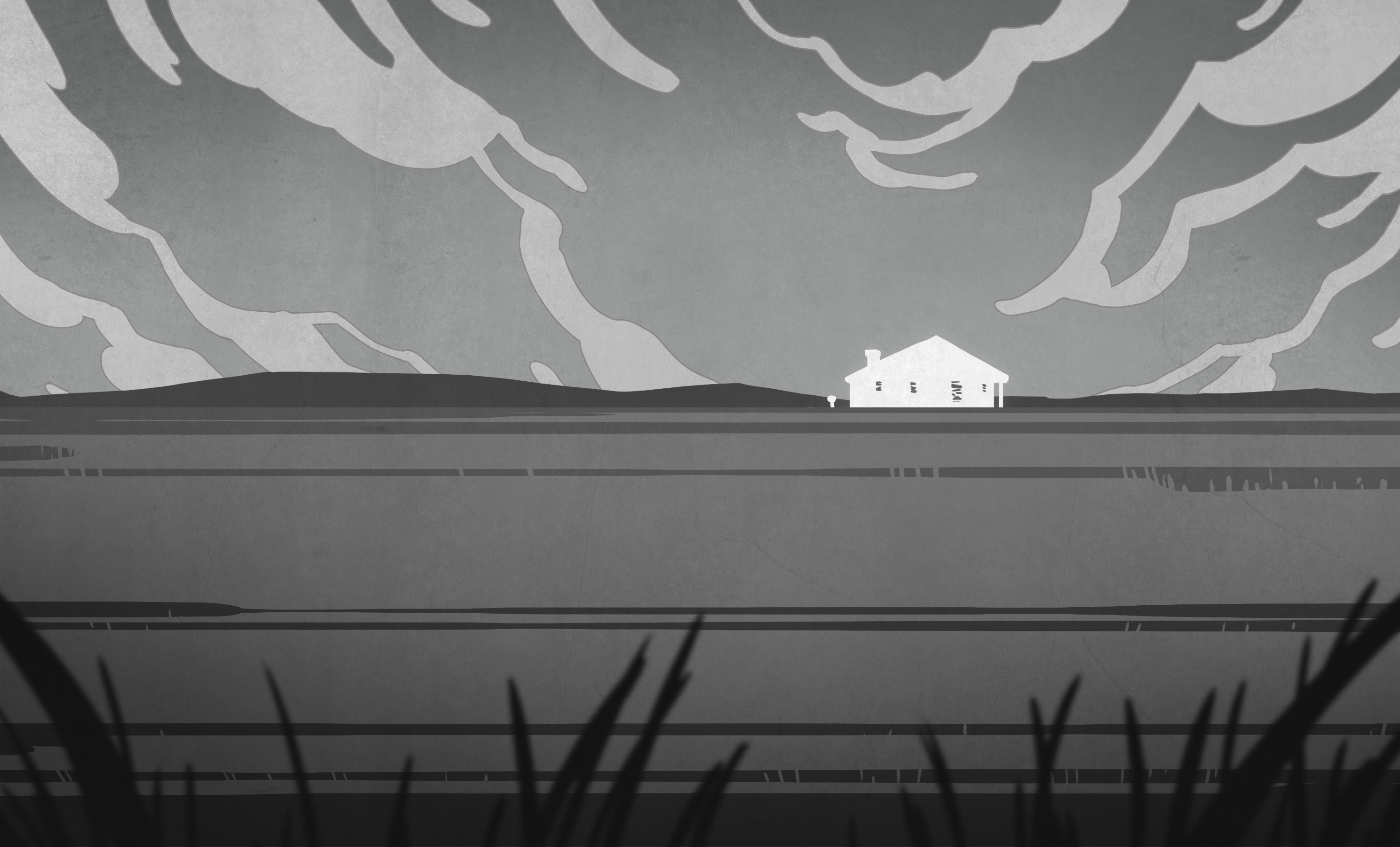
Some pieces of software history arrive with fireworks, livestreams, and a marketing team wearing matching hoodies. Others quietly appear in a repository, waiting for the right kind of nerd to shout, “Wait, is that the real thing?” The release of the original Zork MDL source code belongs to the second category, which feels perfectly appropriate. Zork was never loud in the modern sense. It had no cutscenes, no orchestra, no battle pass, and absolutely no dancing emotes. It had text, wit, puzzles, a white house, a mailbox, a lantern, and the dreadful possibility of being eaten by a grue.
The original Zork MDL source code is more than a nostalgic curiosity. It is a rare look inside one of the most influential interactive fiction projects ever created. Before Zork became a commercial trilogy from Infocom, before it appeared on personal computers, and before the Z-machine became a legendary portability trick, it was a mainframe adventure built at MIT. The code was written in MDL, also known as Muddle, a Lisp-like language used in MIT’s computing culture. Seeing that source today is like finding the handwritten recipe for a dish everyone has been trying to recreate for decades, except the recipe includes parser logic, object tables, room descriptions, and probably a few jokes that only a 1970s programmer would dare leave behind.
What Was Actually Released?
The released material centers on a 1977-era version of Zork, the original mainframe game created at MIT by Tim Anderson, Marc Blank, Bruce Daniels, and Dave Lebling. The files come from the Massachusetts Institute of Technology’s Tapes of Tech Square collection, a historically important archive of software and computing culture connected to MIT’s Project MAC, Laboratory for Computer Science, and related communities.
Most of the files are written in MDL and were originally created for a PDP-10 timesharing computer running ITS, the Incompatible Timesharing System. That sentence alone is enough to make a modern developer either smile lovingly or reach for coffee. PDP-10 computing was not “open your laptop at a café and push to GitHub” computing. It was a world of shared machines, strange file conventions, institutional memory, and code that often lived on tapes, disks, and in the brains of people who had already solved problems the rest of the industry had not yet named.
The release includes source files associated with the game, along with metadata and documentation that help researchers understand how the material was organized. Some filenames were adapted to Unix conventions during extraction, while the original naming style reflected the environment in which the files were created. That matters because source code preservation is not only about preserving characters in a file. It is also about preserving context: where the code ran, how developers thought about it, and what technical assumptions shaped the design.
Why Zork Still Matters
Zork is often described as a text adventure, but that phrase does not fully capture its importance. Earlier interactive fiction, especially Colossal Cave Adventure, showed that a computer could host a world made of words. Zork took that idea and made it richer, sharper, stranger, and more flexible. It offered a larger fictional environment, a more capable parser, memorable puzzles, and a tone that mixed fantasy, comedy, and computer-lab mischief.
The game invited players to type commands in natural language rather than simply press buttons. You could explore, examine, take, drop, open, climb, attack, and experiment. Sometimes the game rewarded you. Sometimes it punished you. Sometimes it responded like a sarcastic dungeon master who had been waiting all day for you to do something foolish. That personality became part of the magic. Zork did not merely process input; it seemed to understand the spirit of the player’s curiosity.
Its influence spread through game design, interactive fiction, parser technology, and software portability. When Infocom later brought Zork to personal computers, the team faced a major challenge: the original mainframe version was too large for early home machines. The solution was not just to cut the game into pieces, although that did happen. Infocom also developed a system in which story files could run on a virtual machine, allowing interpreters to be written for many platforms. In plain English, they separated the game’s content from the machine-specific code. That idea feels obvious now because modern software is full of abstraction layers. In the early personal computer era, it was a brilliant survival strategy.
MDL, Muddle, and the Roots of Interactive Fiction Engineering
MDL was a Lisp-descended programming language associated with MIT’s technical environment. Its nickname, Muddle, sounds like something a programmer would invent after a long debugging session and then refuse to change out of stubborn affection. The language supported expressive data structures and patterns that made it suitable for complex symbolic work. For a text adventure like Zork, that mattered.
A game such as Zork is not just a list of rooms. It needs an object system, rules for containment, commands, conditions, state changes, timed events, and language parsing. The player might type something straightforward, such as “open mailbox,” or something more ambitious. The game has to decide what the words mean, what objects are nearby, what actions are valid, and how the fictional world should respond. That is not trivial today, and it certainly was not trivial on 1970s hardware.
The original MDL source code lets modern readers see how the developers approached those problems before commercial packaging, before later ports, and before decades of fan scholarship polished the legend. It gives researchers a closer view of design decisions that are usually discussed only from the outside. How was the world represented? How did the command system connect verbs to actions? How did the game track state? How much of the famous Zork personality lived in the architecture, and how much lived in the writing? The source does not answer every question instantly, but it gives patient readers a lantern.
The Difference Between MDL Zork and the Infocom Trilogy
One important distinction can save readers from confusion: the original MIT MDL source code is not exactly the same thing as the later Infocom Zork I, Zork II, and Zork III source code. The MIT version was the mainframe ancestor. The commercial trilogy was adapted, divided, revised, and implemented for the personal computer market using ZIL, the Zork Implementation Language. ZIL itself was influenced by MDL, but it served a different production environment.
Think of the MDL version as the grand underground cavern from which the later trilogy was mined. Infocom reshaped the material so it could fit into the memory limits and business realities of early microcomputers. Zork I became the gateway for many players. Zork II and Zork III expanded and deepened the experience. The commercial releases built the legend, but the MDL source shows the earlier creature before it became a boxed product on a store shelf.
This distinction became even more visible when the later Zork I, II, and III source repositories received clearer open-source licensing under the MIT License in 2025 through Microsoft, Xbox, Activision, and preservation collaborators. That event mattered because it clarified legal use of the commercial trilogy source. The MDL release, however, carries a different historical flavor: it reaches back to MIT’s original mainframe work and the earliest shape of the game.
Why Source Code Preservation Is a Big Deal
Old games are easy to romanticize and hard to preserve. A screenshot can show what a game looked like, but it cannot show how the game thought. A manual can explain rules, but it cannot reveal the machinery behind them. A compiled binary can sometimes run in an emulator, but it may hide the design choices, comments, unused paths, and development habits that tell the deeper story.
Source code preservation is the closest thing software has to archaeology. Instead of pottery shards, researchers examine function names. Instead of ancient roads, they study dependency paths. Instead of asking why a civilization built a temple, they ask why a developer wrote a parser that handles one strange edge case but not another. Both questions are valid. One simply involves fewer sandals and more parentheses.
For Zork, source availability helps several groups. Historians can study early interactive fiction design. Programmers can learn how complex world models were built under severe constraints. Teachers can show students that powerful ideas do not require photorealistic graphics. Game designers can trace how player agency evolved from typed commands to modern dialogue systems and open-world interactions. Preservationists can compare versions and understand how software moved from academic computing to commercial entertainment.
What Developers Can Learn From the Zork MDL Source
1. Constraints Can Produce Better Design
Zork was built in a world where computing resources were precious. That limitation forced careful design. The developers could not rely on massive art assets, cinematic animation, or endless storage. They had to make every description, object, rule, and response matter. The result was a game that still feels alive because it asks the player’s imagination to do some of the rendering.
2. A Parser Is a User Interface
Modern players often think of user interfaces as buttons, menus, icons, and touch gestures. Zork reminds us that language itself can be an interface. Its parser was not perfect, but it created the feeling of conversation with a fictional world. That lesson still matters in the age of chatbots, voice assistants, AI tools, and natural-language search. A good interface does not merely accept input; it guides expectations.
3. Portability Was Revolutionary Before It Was Boring
Today, developers expect software to run across devices, browsers, operating systems, and cloud environments. Infocom’s later Z-machine approach shows how early the desire for portability shaped game technology. The MDL source stands at the beginning of that story, before the commercial system fully matured. Reading it gives developers a sense of how necessity pushed teams toward architecture that outlived the machines it was designed for.
4. Humor Belongs in Technical Work
Zork’s personality is one reason it endured. The game is clever without being sterile. It is difficult without becoming completely joyless. Even its dangers have style. That tone reflects a development culture where technical brilliance and playfulness were not enemies. For modern teams, that is a useful reminder. Code can be serious work and still carry a human fingerprint.
The Cultural Meaning of Opening the Dungeon
The release of the original Zork MDL source code feels meaningful because Zork is not just another old program. It is a bridge between academic computing, hacker culture, commercial game development, and literary experimentation. It belongs to the history of programming languages, video games, digital storytelling, and user interaction. Few works can claim all those categories without looking greedy.
Opening the source also changes how people talk about Zork. Instead of treating it only as a finished artifact, readers can study it as a process. They can see evidence of adaptation, structure, compromise, and invention. That is valuable because software history often gets flattened into legends. The actual files are messier, richer, and more interesting.
There is also something charmingly appropriate about Zork surviving as text. Many visually spectacular games age quickly because their graphics once looked futuristic and now look like a potato trying to cosplay as a dragon. Zork’s interface was already abstract. Its world lived in language, so it remains surprisingly portable across generations of imagination. The source code strengthens that portability by giving future readers access not just to the game’s output, but to its internal grammar.
Experiences and Reflections: Reading Zork Like a Time Traveler
Exploring the original Zork MDL source code is a strange experience because it feels both ancient and oddly current. At first glance, the syntax may look unfamiliar, especially to developers raised on JavaScript, Python, Java, or C#. The structure can feel like a dispatch from another planet, one where parentheses roam freely and file names carry the scent of mainframe rituals. But once the initial shock fades, the deeper patterns become recognizable. There are objects, rules, actions, states, and user inputs. There is an engine trying to make sense of human intention. There is a fictional world being held together by data and discipline.
One of the most enjoyable parts of studying old source code is realizing that developers have always been developers. They name things, revise things, work around limitations, and leave behind decisions that make future readers tilt their heads. The tools change, but the mental activity is familiar. A modern programmer looking through Zork’s source may not understand every line immediately, yet the larger struggle is recognizable: how do you turn an idea into a system that responds consistently, surprises players, and does not collapse when someone types something inconvenient?
The release also changes the emotional experience of playing Zork. When you know the source is available, the game stops being a sealed black box. The white house, the mailbox, the underground passages, and the lurking grue become not only story elements but also software artifacts. You can appreciate the illusion and then peek behind the curtain. That does not ruin the magic. If anything, it increases it. A magic trick is more impressive when you learn how much skill it required.
For students, the source offers a refreshing antidote to the idea that important software must be huge, glossy, and backed by a billion-dollar platform. Zork proves that a small team with strong ideas can create something that echoes for decades. The code also encourages patience. It does not reveal itself like a modern tutorial with cheerful screenshots and a “copy this command” button. It asks readers to investigate. That makes the learning slower, but also deeper.
For writers and game designers, the experience is equally valuable. Zork shows that worldbuilding is not only lore. It is interaction. A room description matters, but so does what the player can do in that room. A joke matters, but so does the timing of the response. A puzzle matters, but so does the parser’s ability to understand the player’s attempt. The MDL source demonstrates that interactive storytelling lives at the intersection of prose, systems, and expectation.
Finally, there is a personal kind of delight in seeing such an old game treated with seriousness. Software can disappear easily. Companies close. Disks fail. Licenses become unclear. Formats rot. People assume someone else saved the important things, and then one day the tape is unreadable. The Zork MDL source release pushes against that loss. It says that code is culture, games are literature, and a text adventure from the 1970s deserves the same care we give to books, films, and music. That is a victory for historians, developers, players, and every curious person who has ever typed “open mailbox” just to see what would happen.
Conclusion
The original Zork MDL source code release is not just a retro-gaming headline. It is a doorway into the early history of interactive fiction, language-driven interfaces, and software portability. It lets modern readers study the roots of a game that helped define how computers could tell stories and respond to imagination. More importantly, it preserves the messy, brilliant, human process behind a classic.
Zork has always asked players to explore carefully, read closely, and think creatively. Now the source code invites a new kind of exploration. Instead of wandering through the Great Underground Empire, we can wander through the architecture that made it possible. Bring a lantern. The dungeon is old, the code is fascinating, and somewhere in the dark, software history is grinning.












