
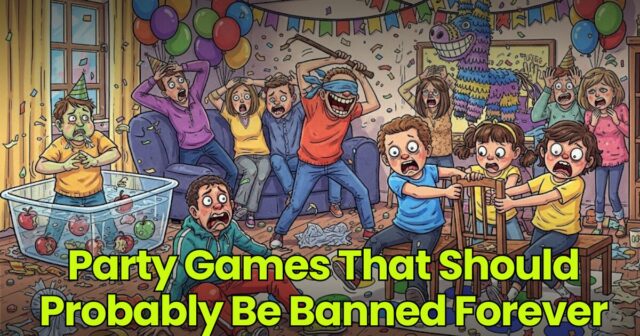
Party games are supposed to do three noble things: break the ice, make people laugh, and give everyone a reason to stop checking their phones every nine seconds. At their best, they turn strangers into friends, coworkers into actual humans, and family gatherings into something slightly less terrifying than a group tax audit.
But then there are the other party gamesthe ones that begin with “Trust me, it’ll be fun” and end with someone hiding in the bathroom, Googling “how to leave a party without using the front door.” These are the games that test dignity, balance, privacy, dental insurance, and occasionally the structural integrity of your coffee table.
This is not a call to cancel fun. Fun is innocent. Fun brings snacks. Fun knows when to stop. This is a loving, mildly dramatic intervention for party games that have overstayed their welcome, especially the ones built around humiliation, forced drinking, unwanted touching, reckless dares, or social pressure disguised as “just joking.”
So let’s talk about party games that should probably be banned foreveror at least sent to a quiet retirement community where they can play bingo and think about what they’ve done.
Why Some Party Games Go From Fun to Full-Blown Social Disaster
A good party game has a low barrier to entry. Nobody should need an engineering degree, a legal waiver, or emotional armor to participate. The best games invite people in. The worst games trap people in.
The problem usually starts when a game depends on one of four things: embarrassment, alcohol, physical risk, or pressure. A little silliness is fine. Wearing a paper crown and pretending to be a pirate? Excellent. Being forced to reveal your worst breakup story to a room that includes your boss, your cousin, and a guy named Kyle who films everything? Absolutely not.
Party games become uncomfortable when “choice” disappears. If someone says no and the room groans like they just canceled pizza, that is not a game anymore. That is group-sponsored awkwardness wearing a novelty hat.
1. Truth or Dare: The Original Chaos Machine
Truth or Dare has been around forever because it offers drama on a budget. No board, no cards, no setupjust people asking invasive questions and suggesting bad ideas. Efficient? Yes. Safe? Often questionable.
Why it should probably be banned
The “truth” side can turn into emotional strip-mining. People get pressured to reveal secrets, crushes, past mistakes, private relationships, or personal experiences they never planned to share between onion dip and a Bluetooth speaker playing 2012 pop hits.
The “dare” side is where things really go off the rails. Dares can involve alcohol, physical stunts, kissing, prank calls, trespassing, or behavior that someone will later describe with the phrase, “In my defense, everyone was yelling.” That is rarely a strong defense.
If a party game needs a safety committee, a therapist, and a lawyer in the corner, maybe it belongs in the banned pile.
A better alternative
Play “Would You Rather?” with harmless questions. For example: Would you rather fight one horse-sized duck or one hundred duck-sized horses? Nobody loses a friendship. Nobody has to climb a roof. Science remains undisturbed.
2. Never Have I Ever: Fun Until It Becomes a Public Deposition
Never Have I Ever pretends to be casual, but let’s be honest: it is basically courtroom testimony with red cups. The game often starts innocently“Never have I ever gone camping”and somehow becomes “Never have I ever lied to someone in this room.” Suddenly the guacamole has witnesses.
Why it should probably be banned
This game rewards confession and punishes privacy. The more revealing the statement, the louder the reaction. That structure pushes people to expose details about dating, family, finances, substances, work, or past mistakes. People who do not want to participate may feel boring, secretive, or judged.
When alcohol is attached, the risk increases. Drinking games can encourage people to consume faster than they intended, especially when the goal becomes keeping up with the group. A party should not turn hydration into a competitive sport, especially when water is somehow never invited.
A better alternative
Try “Never Have I Ever: Cozy Edition.” Keep it silly: never have I ever killed a houseplant, sent a text to the wrong person, pretended to understand cryptocurrency, or opened the fridge hoping new food appeared by magic.
3. Beer Pong: The Tabletop Sport of Questionable Decisions
Beer pong has the branding of a college classic, but underneath the nostalgia is a game that often combines alcohol, competition, shared cups, sticky floors, and the kind of aim that declines rapidly after round two.
Why it should probably be banned
The issue is not the ping-pong ball. The ball is innocent, although it has seen things. The issue is that the game encourages repeated drinking, fast pacing, and peer pressure. People may drink more than they planned because the rules say so, the team expects it, or someone named Brad is shouting, “House rules!” like he is announcing a Supreme Court decision.
There is also the hygiene factor. A ball bounces on the floor, under the couch, near someone’s shoe, and then lands in a cup. Yes, people rinse it. No, that does not magically turn it into a medical instrument.
A better alternative
Play water pong, snack pong, or point-based pong. Let people sip what they want, when they want. The game becomes about aim and laughter instead of turning everyone into a poorly supervised chemistry experiment.
4. Spin the Bottle: A Consent Nightmare in Vintage Packaging
Spin the Bottle has a strange cultural glow because it is treated like an innocent throwback. But let’s call it what it is: a game built around public pressure to kiss people based on the rotation of a bottle. That is not romance. That is beverage-container roulette.
Why it should probably be banned
Any game involving kissing, touching, or intimacy must make consent obvious, enthusiastic, and pressure-free. Spin the Bottle does the opposite. It turns personal boundaries into a group event and adds an audience, which makes saying no harder for some people.
Even when everyone is technically allowed to refuse, the social pressure can be intense. Nobody wants to be labeled uptight, rude, dramatic, or the person who “ruined the vibe.” But a vibe that depends on ignoring boundaries deserves to be ruined.
A better alternative
Play “Spin the Compliment.” Whoever the bottle points to receives a genuine compliment or a funny, harmless prompt. Awkward? Maybe. Sweet? Surprisingly. Less likely to make someone fake a phone call from their imaginary roommate? Definitely.
5. Two Truths and a Lie: The Corporate Icebreaker That Refuses to Retire
Two Truths and a Lie is not dangerous in the traditional sense. It rarely causes property damage. It does, however, cause spiritual fatigue. This game has been used in offices, classrooms, retreats, onboarding sessions, networking events, and probably jury duty.
Why it should probably be banned
The problem is not the concept. The problem is repetition. Everyone has heard the same format so many times that people start inventing facts about themselves just to feel alive. “I have been skydiving, I speak four languages, and I once met Beyoncé.” No, Tyler, you saw a wax figure in Las Vegas.
The game also pressures people to be interesting on command. That can be uncomfortable for shy guests or anyone who does not want their life treated like a trivia card.
A better alternative
Try “Tiny Joys.” Each person shares one small thing they love: gas station coffee, fresh socks, birds that look angry, or getting the perfect parking spot. It is simple, warm, and nobody has to pretend they once wrestled a dolphin.
6. Charades With Extremely Competitive People
Charades is lovely in theory. In practice, it can become a silent battlefield where one person acts out “The Godfather” and another screams “LASAGNA WIZARD?” for three straight minutes.
Why it should probably be banned
Charades goes wrong when competitiveness takes over. Some people treat it like an Olympic trial. They yell, accuse, point, pace, and act personally betrayed when their teammate fails to understand that flapping both arms while kneeling obviously means “The Notebook.”
Games that make quieter guests feel stupid or spotlighted can drain the room fast. Not everyone enjoys performing in front of a crowd. Some people came for chips, not community theater.
A better alternative
Use team-based drawing or guessing games with skip options. Add a rule: no yelling unless the house is on fire or the nachos are burning.
7. The Chubby Bunny Challenge: Marshmallows, But Make It Terrible
Some party games should be banned because they are awkward. Others should be banned because they involve stuffing food into your mouth until speech becomes impossible. The Chubby Bunny challenge belongs firmly in the second category.
Why it should probably be banned
Choking is not a punchline. Any game that encourages people to overfill their mouths, chew poorly, laugh while eating, or compete with food creates unnecessary risk. Marshmallows are soft, yes, but soft does not mean harmless when someone is laughing, talking, and trying to win applause from people holding phones.
Food games often seem silly until they become scary. Parties should be remembered for good music and questionable dance moves, not for someone needing emergency help because dessert became a dare.
A better alternative
Do a blind taste test with small, safe bites and no speed element. Guess the chip flavor. Rank cookies. Debate whether candy corn is food or decorative gravel. Much safer.
8. Musical Chairs: Childhood Nostalgia With Adult Knees
Musical Chairs is adorable when played by children on a soft classroom rug. It is less adorable when played by adults in a living room filled with glass tables, loose rugs, and one extremely determined uncle.
Why it should probably be banned
The game is built on speed, collisions, sudden direction changes, and the emotional violence of watching your seat disappear. Adults are larger, heavier, and far more likely to say, “I’m fine,” while visibly not being fine.
Also, elimination games can get boring for the people knocked out early. Congratulations, you lost in round one. Your prize is fifteen minutes of watching everyone else circle furniture like confused sharks.
A better alternative
Play “musical statues” or a cooperative playlist game where everyone freezes, poses, or votes on the best dramatic freeze-frame. Nobody has to body-check Grandma for a folding chair.
9. Hot Pepper Challenges: Because Pain Is Apparently Entertainment
Somewhere along the way, people decided that a great party activity is watching a friend eat something that makes their face reconsider its career path. Enter the hot pepper challenge.
Why it should probably be banned
Spicy food can be fun, but competitive pain is different. People may push past their limits to avoid seeming weak. That can lead to vomiting, panic, stomach distress, or the unforgettable experience of crying into a paper plate while someone says, “Bro, drink milk.”
Any game where the main outcome is physical suffering should be questioned. A party should warm your heart, not your entire digestive tract.
A better alternative
Offer a spice-tasting board with clear labels, tiny portions, and no pressure. Let brave people explore. Let cautious people respect their organs in peace.
10. Cards That Reward Being Cruel
Some card games are designed for edgy humor, shocking answers, and jokes that make the room gasp. They can be hilarious with the right group. They can also turn a friendly gathering into a moral obstacle course with snacks.
Why it should probably be banned
The issue is not adult humor itself. The issue is when a game rewards punching down, humiliating real people, or making guests laugh at topics that hit too close to home. A joke that feels harmless to one person may feel deeply personal to another.
In mixed groups, especially when people do not know one another well, edgy games can create tension fast. Someone laughs too loudly. Someone else gets quiet. Then everyone pretends to inspect the pretzels.
A better alternative
Choose humor games with customizable decks or house rules. Remove cards that target trauma, identity, grief, or personal hardship. Comedy has plenty of room without parking directly on someone’s pain.
11. Wink Murder: Fun, Unless You Hate Being Accused by Everyone
Wink Murder is a classic mystery party game where one secret “murderer” eliminates players by winking. It sounds harmlessand usually isbut it can get exhausting when the group becomes a miniature conspiracy convention.
Why it should probably be banned
Some people love deduction games. Others do not enjoy being stared at, accused, cross-examined, and told their blinking pattern is suspicious. Games based on deception can be fun, but they can also create tension for guests who dislike lying or being put under pressure.
And let’s be honest: some players are terrible detectives. They accuse everyone with glasses, everyone sitting quietly, and anyone who “seems too calm.” That is not strategy. That is vibes-based prosecution.
A better alternative
Use light mystery games where clues are written down and nobody has to lie aggressively. Keep the drama fictional and the snacks real.
12. Prank-Based Party Games: The Fast Lane to Not Being Invited Again
Prank games sound funny until you are the target. Then they become less “party activity” and more “why is there whipped cream in my shoe?”
Why it should probably be banned
Pranks often rely on embarrassment, surprise, mess, fear, or loss of control. That might entertain observers, but it can make the target feel singled out or disrespected. A prank that gets uploaded online can multiply the damage, especially if the person never agreed to be filmed.
The golden rule is simple: if the joke requires someone else to feel small, it is not a party game. It is unpaid villain training.
A better alternative
Use collaborative comedy prompts. Write fake product reviews, invent ridiculous movie titles, or create awards like “Most Likely to Befriend a Raccoon.” Everyone laughs together, not at one person trapped in the spotlight.
What Makes a Party Game Actually Good?
A good party game respects the room. It gives people options. It does not punish introverts, shame non-drinkers, pressure couples, expose secrets, or require a first-aid kit.
The best games usually share a few qualities:
- Clear consent: Everyone understands the rules and can pass without drama.
- Low humiliation: The joke is the situation, not a person’s vulnerability.
- No forced drinking: Adults can choose their own beverages and pace.
- Flexible participation: Guests can watch, join, skip, or leave without social punishment.
- Safe setup: No choking risks, reckless stunts, sharp objects, or furniture-based combat.
- Inclusive humor: Funny does not have to mean cruel.
When a game checks those boxes, people relax. And when people relax, they become funny on their own. You do not need to manufacture chaos. Humans will naturally provide enough of it by mispronouncing celebrity names and arguing over whether a hot dog is a sandwich.
How to Retire a Bad Party Game Without Becoming the Fun Police
Nobody wants to be the person who shuts down the room with a clipboard and a whistle. The goal is not to ban laughter. The goal is to redirect the energy before someone gets hurt, pressured, embarrassed, or texted about in a group chat called “What Was That?”
If a game starts going sideways, try one of these lines:
- “Let’s switch to something everyone can play comfortably.”
- “House rule: passes are always allowed.”
- “No drinking penaltiespoints only.”
- “Let’s keep this one PG-13 and furniture-safe.”
- “New rule: nobody has to answer personal questions.”
You can also prepare better games in advance. People are less likely to suggest dangerous nonsense when there is already a fun option on the table. Like raccoons, party guests can be redirected with snacks and shiny objects.
of Real-Life Party Game Experience: The Night Fun Needed a Manager
Almost everyone has experienced a party game that began with cheerful optimism and ended with the room collectively aging five years. I once watched a friendly gathering transform into a courtroom, gym class, and emotional escape room in less than an hour. The host wanted “just a few fun games.” That phrase should be harmless. So should “quick meeting” and “some assembly required,” yet here we are.
The first game was Truth or Dare. At first, it was adorable. Someone admitted they still slept with a childhood blanket. Someone else dared a friend to do a dramatic reading of a pizza menu. Spirits were high. Then one guest decided the truths were “too boring” and started asking questions that belonged in a sealed diary, not a living room. You could feel the air change. People laughed, but it was the tight kind of laughterthe kind that says, “Please do not let the spotlight come near me.”
Then came a dare involving a balcony, a spoon, and what was described as “a harmless stunt.” No stunt beginning with kitchen utensils and outdoor elevation has ever improved civilization. Thankfully, someone stepped in and redirected the group before the night became a cautionary tale with security deposit consequences.
Next, someone suggested a drinking game. Several guests were not drinking, but the rules treated that like a software error. Suddenly everyone needed substitutions: water, soda, imaginary shots, moral support. The game itself was not evil, but the pressure around it was. The non-drinkers had to explain themselves, which is always awkward. Nobody should need to give a TED Talk titled “Why I Prefer Ginger Ale Tonight.”
The final boss was charades. Normally, charades is safe. This version was led by a man who had apparently trained under a theater coach, a military commander, and a disappointed soccer dad. He shouted guesses with the intensity of someone defusing a bomb. When his team lost, he blamed “weak commitment to the bit.” Sir, the bit was “toaster.” Please breathe.
The best moment of the night came after the host quietly changed direction. She brought out a simple question jar with prompts like “What food is overrated?” and “What small thing makes you weirdly happy?” Suddenly everyone joined in. No dares. No confessions. No forced drinking. No one risking ankle damage for applause. People argued passionately about ranch dressing, grocery store rotisserie chicken, and whether airport bookstores are secretly magical. It was hilarious because it was low-stakes.
That night proved something important: party games do not need danger, embarrassment, or pressure to be memorable. In fact, the most memorable moments often happen when people feel safe enough to be naturally ridiculous. Give guests comfort, choices, snacks, and a reason to laugh together, and they will create better comedy than any forced dare ever could.
Conclusion: Ban the Bad Games, Save the Party
Party games should bring people closer, not make them wonder whether they can escape through the laundry room window. The games that deserve retirement are not necessarily the old ones, the silly ones, or even the awkward ones. The real problem games are the ones that pressure people, ignore boundaries, encourage unsafe behavior, or turn embarrassment into entertainment.
Good hosts do not need to control every moment. They just need to create a room where people can say yes freely, say no easily, and laugh without becoming the punchline. So retire the chaos games. Keep the snacks. Protect the furniture. And remember: if a party activity requires someone to whisper, “Is this a bad idea?” the answer is probably yes.













