
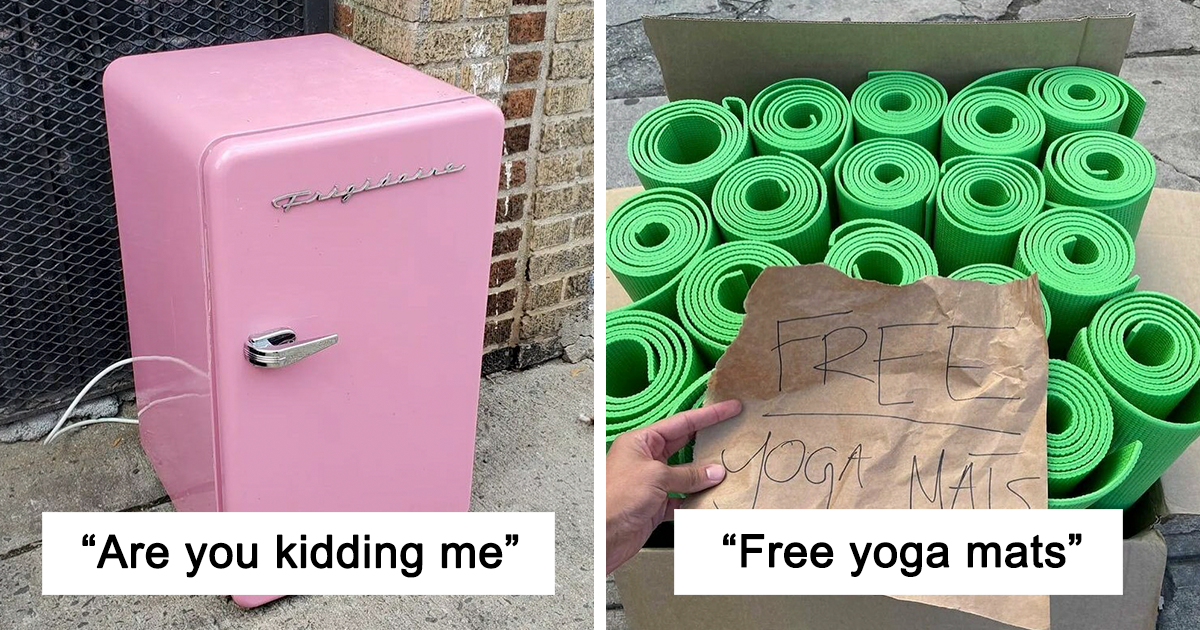
If you’ve ever walked past a perfectly good chair on the curb and felt your soul leave your body (briefly) to go sit in it, you already understand why this Bored Panda roundup hits so hard. The post collects curbside “rescues” and tossed-out surprisesstuff people found abandoned, destined for the landfill, but still wildly usable (and sometimes genuinely beautiful). Bored Panda has run versions of this theme multiple times, including a “40 new pics” edition, and the concept never gets old because the trash-to-treasure pipeline is apparently the most consistent supply chain on Earth.
But beneath the funny captions and “how is that free?!” shock is a real story about waste, moving days, consumer habits, and the quiet joy of giving objects a second act. Let’s dig into what these posts revealand how to channel that energy safely, legally, and without accidentally bringing home a couch that comes with… roommates. (Six-legged ones.)
What the Bored Panda “Trash to Treasure” Post Really Shows
At first glance, it’s simple: photos of things people found thrown awaymirrors, shelves, side tables, lamps, planters, sometimes full-on furniture setsoften with minimal damage or fixable flaws. The deeper theme is a kind of modern scavenger mythology: a city sidewalk becomes a treasure map, and the prize is a solid wood dresser that someone “couldn’t be bothered” to move.
Many of the items that go viral fall into a few repeat categories:
1) “Still Works!” household basics
- Small appliances that power on (toasters, fans, lamps) with cosmetic scratches
- Storage pieces (bookcases, shoe racks, bins) that just need a wipe-down
- Kitchenware (pots, pans, dish sets) tossed during moves
2) Furniture with “good bones”
- Solid wood dressers and nightstands with chipped veneer or sticky drawers
- Tables with water rings that sand out
- Chairs that wobble because one screw gave up on life
3) Decor that people get bored of
- Frames, mirrors, rugs, vases, holiday decor, wall art
- “Statement pieces” that were a statement… and now are a breakup
The surprise isn’t that these things exist. The surprise is how often they’re discarded as if “slightly inconvenient” equals “unusable.” And the data suggests that adds up fast.
Why Do People Throw Away Perfectly Good Stuff?
There are a few big reasons “one man’s trash” keeps showing up in public like it’s auditioning for a second career:
Moving pressure (a.k.a. the Great Apartment Purge)
When leases end, people face a brutal equation: time + stairs + a rented truck + “I’m already exhausted.” Suddenly, the old coffee table looks less like a beloved object and more like a heavy rectangle full of regret. In cities with stooping culture, curbside giveaways become a normsome communities even document finds through social accounts dedicated to curb rescues.
Fast furniture and low repair culture
When items are cheap to replace (or feel replaceable), repair stops being the default. A wobbly chair becomes “trash” instead of “tighten two screws.” That mindset helps explain why furniture and furnishings make up a meaningful chunk of municipal solid waste.
“I can’t donate this” confusion
People often assume donation centers can take everything, then learn the hard way that many organizations have rules for safety, handling, or resale. Some Goodwill regions, for example, may not accept large furniture or mattresses/bed frames (policies vary by location), which can push people toward curb disposal instead.
Minimal damage that feels bigger than it is
Water rings, scuffed paint, missing knobsthese are typically small fixes. But if you don’t know how to refinish, even a minor blemish can look like a “project” you never asked for. Meanwhile, someone else sees a weekend DIY and a future heirloom.
The Bigger Picture: “Trash Treasure” Is Also Waste Prevention
America’s waste stream is enormous. The EPA estimates total municipal solid waste generation in 2018 at 292.4 million tonsabout 4.9 pounds per person per day.
Two specific categories matter a lot for curbside treasure hunting:
Furniture and furnishings
EPA estimates furniture and furnishings generation in MSW at 12.1 million tons in 2018 (about 4.1% of total MSW).
Textiles
Textiles (clothing, linens, etc.) were estimated at 17 million tons generated in 2018, representing 5.8% of total MSW.
So when someone rescues a curbside dresser, it’s not just a cute “look what I found” momentit’s one less bulky item headed for disposal. Multiply that by thousands of finds, and suddenly the Bored Panda post looks less like internet fluff and more like accidental public service.
Is Taking Curbside “Free Stuff” Legal? A Practical, Not-Scary Guide
Here’s the plain-English version: if it’s truly abandoned on a public curb, many people treat it as “free for the taking.” But laws and enforcement vary by city and situation, and trespassing rules matter a lotespecially with dumpsters behind buildings, locked enclosures, or “No Trespassing” signs. Legal research resources often emphasize that private property is where dumpster diving gets risky without permission.
Privacy is also a real consideration. In the U.S., the Supreme Court has held that there’s generally no reasonable expectation of privacy in trash left for collection outside the homeoften cited in discussions about garbage searches. That doesn’t automatically mean “do whatever you want,” but it does show how the law tends to treat discarded items once they’re out for pickup.
Street-smart rules that keep you out of trouble
- Stay on public space. Sidewalk/curb good. Behind a fence/beside a loading dock bad.
- Respect signs and barriers. “No Trespassing” is not a suggestion.
- Don’t make a mess. Leaving trash strewn around can turn a harmless habit into a quick crackdown.
- If you’re unsure, don’t take it. A free lamp is not worth a paid court date.
Safety First: How to “Treasure Hunt” Without Bringing Home Problems
Most curb finds are harmless. Some are… a biological thriller. The biggest safety issues are pests, mold, sharp edges, and unknown chemicals. If you only remember one thing from this section, make it this: soft, upholstered items carry the highest risk.
Bed bugs and secondhand items
University extension guidance for thrift shopping recommends inspecting items carefully, cleaning on return, and using heat treatment (like a dryer) for appropriate itemswhile warning against assuming secondhand goods are sanitized.
Upholstered furniture is harder to inspect and treat than hard surfaces. If the item is fabric-heavy (sofas, mattresses, padded headboards), be extra cautious. Some donation guidance and decluttering advice also flags mattresses and similar items as commonly restricted due to hygiene and pest concerns.
Your “Curbside Check” checklist
- Look: seams, cracks, corners, undersides (that’s where surprises live).
- Smell: strong mildew/urine/smoke odors are hard to remove from porous materials.
- Test: if it plugs in, check for frayed cords or scorch marks before you even think about using it.
- Protect: wear gloves; bring a flashlight; avoid lifting alone (your back is not a renewable resource).
Cleaning and disinfecting basics
For hard surfaces, clean first, then disinfect. Public health guidance commonly recommends diluted bleach solutions like 1/3 cup bleach per gallon of water (or 4 teaspoons per quart), used properly and never mixed with other cleaners.
For wood furniture: start gentle (soap + water), dry thoroughly, then decide if you’re sanding/painting. For metal: watch for rust and sharp edges. For anything questionable: when in doubt, skip it.
How to Turn “Trash” Into Treasure: Quick Restoration Wins
Most viral curb rescues aren’t full renovationsthey’re small interventions with big visual payoffs. Here are the upgrades that punch above their weight:
Replace the “tiny parts that make it look old”
- New knobs/pulls on a dresser = instant glow-up
- Fresh felt pads on chair legs = quieter floors and fewer scratches
- A missing screw = the difference between “broken” and “solid”
Sand + seal (the classic “I watched one video” method)
Light sanding can remove surface grime, water rings, and old finish. A clear seal or simple paint job can make a sidewalk table look boutique-level. The trick is patience: let things dry, cure, and breatheespecially if you cleaned heavily.
Use “re-home” infrastructure when curbside isn’t the move
Not everything has to be a sidewalk rescue. Reuse stores like Habitat for Humanity ReStores accept and sell many used home goods and building materials, keeping items in circulation and funding community work.
And when donation centers can’t accept something, local “Buy Nothing” groups, Freecycle-style swaps, and neighborhood curb alerts can keep usable items from being trashed in the first place.
Why These Posts Go Viral: It’s Not Just the Free Stuff
Sure, people love a bargain. But “trash to treasure” posts land emotionally because they combine:
- Surprise: “Someone threw that away?!” is a universal language.
- Hope: You don’t need a big budget to build a beautiful home.
- Community: Someone discards, someone rescues, everyone wins (except the landfill).
- Story: Every object has a weird little plot twistespecially in cities with active stooping culture.
In other words, the phrase “one man’s trash is another man’s treasure” survives because it’s not a clichéit’s a business model, a sustainability strategy, and sometimes the only way you’re getting a solid wood nightstand without selling a kidney.
How to Participate Without Becoming “That Neighbor”
For finders
- Take it fast or leave it. Curb items disappear quicklyand lingering can look suspicious.
- Don’t block sidewalks. If you’re loading, be quick and respectful.
- Be honest when you share. If something has damage, say so. Karma is real, and it has receipts.
For leavers (the underrated heroes)
- Label it: “FREE” works better than psychic communication.
- Keep it clean and contained: a neat curb giveaway is a gift; a pile is a problem.
- Don’t dump hazards: paint, chemicals, and broken electronics belong in proper disposal channels, not wishful thinking.
Experience Roundup: What “Trash Treasure” Hunters Say They Learn (Add-On)
Because the Bored Panda post is photo-driven, it’s easy to forget there are real mini-adventures behind every curbside win. Here’s what people who love “stooping,” curb hunting, and secondhand rescuing tend to reportlessons that feel obvious only after you’ve hauled a “perfect” shelf home and realized it was held together by optimism.
Timing is everything. Many curbside hunters swear by end-of-month move-outs, neighborhood bulk pickup days, and early eveningswhen people set items out but before weather (or competition) destroys them. You learn fast that “I’ll come back later” is the four saddest words in free-furniture history. That lamp will be gone. That mirror will vanish. That unusually charming wooden chair will find a new family before you finish blinking.
The best finds often look mediocre at first glance. People describe walking past something that seemed “meh,” then noticing one detail: solid wood, dovetail joints, a maker’s mark, a surprisingly heavy frame. The lesson becomes: don’t judge by dust. Dust is just a removable costume. Structure is the real plot.
You develop a sixth sense for what’s fixable. Beginners grab anything that’s free. Experienced hunters get picky: they’ll skip swollen particleboard, badly warped shelves, or anything that smells like damp basement. Instead, they’ll choose cosmetic flawsscratches, missing knobs, paint scuffsbecause those are “Saturday problems,” not “new personality trait” problems.
Cleanliness is the make-or-break step. People who score big wins consistently describe a ritual: isolate the item, inspect it, clean it thoroughly, and only then bring it into the main living space. Hard-surface items feel like a safer bet because they can be scrubbed and disinfected. Soft goods make people nervous for good reasonmany hunters either avoid upholstered pieces entirely or only take them if they can confidently inspect and treat them.
Transportation is the hidden price tag. A “free” dresser is only free if you can move it. Regulars mention keeping a tape measure, a set of basic tools, bungee cords, and a folding dolly (or having a friend who can be bribed with tacos). A lot of “almost legendary” stories end with: “We got it to the lobby and realized it would not fit in the elevator.” The treasure was real. The geometry was not.
The best part is the storyespecially when you share it. People love posting before-and-after shots, curbside coordinates for others, and “rescued this from the rain” glow-ups. It turns individual wins into a neighborhood game that rewards attention, creativity, and a little bravery. The object changes hands, but the satisfaction sticks around: you didn’t just get a thingyou prevented waste, saved money, and made your home feel more like yours.
Conclusion: The Real Treasure Is the Second Chance
The Bored Panda roundup works because it captures something true: a surprising amount of what gets tossed is still useful, fixable, or even beautiful. Whether you’re scrolling for fun or ready to try your own curbside treasure hunt, the best approach is simplebe respectful, be safe, and be realistic about what you can clean, carry, and actually use.
Because yes, one person’s trash is another person’s treasure. But one person’s “quick curb find” is also another person’s “why is there a six-foot armoire in our hallway?” Choose your adventures wisely.











