
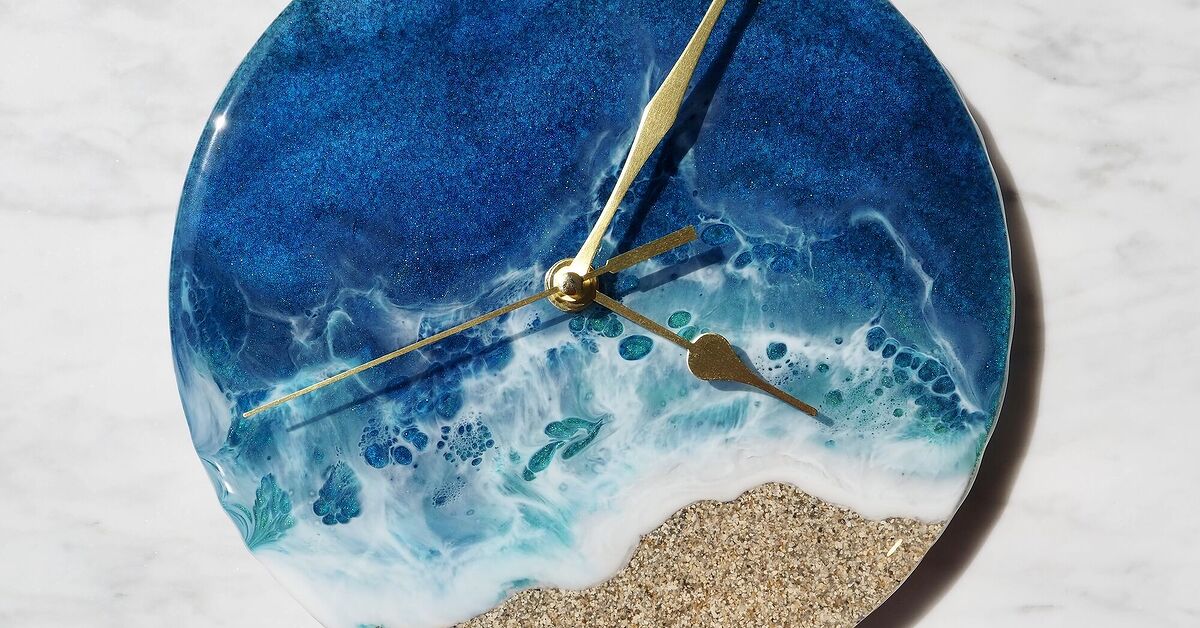
Note: This article is written for web publication and is based on real resin-art practices, epoxy safety principles, coastal sand facts, and handmade décor trends. Always follow the label instructions of your specific resin product and avoid collecting sand from protected beaches or restricted areas.
Introduction: When the Ocean Learns to Tell Time
A Resin Ocean and Miami Sand Clock sounds like something a mermaid would keep on her nightstand, but it is actually a beautiful idea in modern handmade décor: a sand clock, hourglass, or decorative timepiece inspired by Miami’s turquoise water, pale sand, sun-washed mood, and glossy resin ocean art. It blends three things people love: the beach, handcrafted objects, and the slightly dramatic feeling that time looks better when it flows through sand.
In simple terms, this design combines resin ocean art with a Miami sand clock concept. Think blue and teal epoxy resin waves, white sea-foam effects, real or sand-like grains, shells, glass, wood, acrylic, or metal framing, and a coastal color palette that says, “I have excellent taste and probably own linen shirts.” Whether it is a working hourglass, a resin-coated clock face, a desktop timer, or a decorative beach-inspired sculpture, the appeal is the same: it captures the feeling of standing on Miami Beach without getting sunscreen in your eyes.
The popularity of resin ocean décor has grown because epoxy resin can mimic water in a way paint alone cannot. Its glassy finish, depth, and clarity make it ideal for creating realistic waves, shoreline gradients, and glossy lagoon-like surfaces. Add sand, and the object becomes more tactile. Add the idea of time, and suddenly you have a conversation piece that feels personal, nostalgic, and stylish.
What Is a Resin Ocean and Miami Sand Clock?
A Resin Ocean and Miami Sand Clock is not limited to one exact product. It can refer to several creative formats, including a resin-decorated hourglass, a wall clock with an ocean resin face, a tabletop sand timer surrounded by resin waves, or a sculptural clock using sand as part of the design. The common thread is coastal storytelling: resin represents the water, sand represents the beach, and the clock represents time passing.
Miami gives the piece its personality. Miami beaches are known for pale sand, bright water, Art Deco color, tropical energy, and a luxury-meets-vacation atmosphere. A Miami-inspired sand clock might use aqua blue, deep ocean teal, pearly white, champagne beige, coral pink, gold accents, or translucent layers that look like shallow water over sand. The result feels sunny, modern, and a little glamorouslike a beach towel that got invited to an art gallery.
Common Types of Miami Sand Clock Designs
The most common design is a resin ocean wall clock. Artists pour layers of tinted epoxy resin onto a wooden, acrylic, or MDF clock base, then use white resin to create wave lacing. Clock hands are installed after the resin cures. This type is popular for coastal homes, beach houses, cafés, boutiques, and anyone who wants their wall to whisper, “Let’s move to Florida.”
Another version is a decorative hourglass with a resin ocean base. The glass timer remains functional, while the stand or base is designed with sand, shells, and resin waves. Some makers create small resin landscapes around the hourglass, making the sand timer look like it has been placed on a tiny private beach.
A third version is a desktop resin sand clock sculpture. This may not always function as a precise timer, but it works beautifully as coastal décor. These pieces often include embedded shells, mica powder, metallic flakes, sea glass, or miniature beach scenes.
Why Resin Ocean Art Works So Well With Sand Clocks
Resin and sand clocks make a surprisingly natural pair because both materials deal with flow. Resin begins as a liquid and hardens into a frozen wave. Sand moves through an hourglass and marks time grain by grain. Put them together, and you get a design that feels both still and moving. It is basically poetry, but less intimidating and easier to dust.
Epoxy resin is often used in ocean art because it can create depth, transparency, and shine. Artists tint it with alcohol inks, resin dyes, or mica powders to create gradients from deep water to shallow shoreline. White pigment is then added to create foam effects. When moved carefully with a heat gun, hair dryer, or air blower, the white resin spreads into delicate “cells” and lace-like patterns that resemble waves washing onto sand.
Sand adds contrast. Fine beige sand gives warmth against cool blue resin. Coarse grains create texture. Shell fragments, crushed glass, or small pebbles can add a natural coastal look. For a Miami-inspired piece, the goal is usually clean, bright, elegant, and sunlit rather than dark, rugged, or stormy.
The Miami Sand Aesthetic: Color, Texture, and Mood
Miami’s visual identity is instantly recognizable. The colors are bright but not childish, tropical but polished. A strong Miami sand clock design often uses a palette inspired by South Beach architecture, Biscayne Bay, and warm Atlantic shoreline tones.
Best Color Palette for a Miami Ocean Clock
Start with soft sand beige as the base. Add shallow aqua near the “shoreline,” then blend into turquoise, blue-green, or deeper ocean blue. Use white sparingly for foam because too much white can turn elegant waves into spilled toothpaste. For accents, consider gold, pearl, blush pink, coral, or sea-glass green. These shades nod to Miami’s sunny glamour without making the piece look like a souvenir magnet from 1998.
For a modern coastal interior, a minimalist palette works best: sand, clear resin, turquoise, white, and brushed gold clock hands. For a bolder Miami look, add pink, orange, or pastel blue accents inspired by Art Deco buildings and sunset skies.
Sand Texture Matters
Not all sand behaves the same in resin. Fine craft sand creates a smooth beach effect. Natural sand may contain moisture, salt, organic material, or tiny shell fragments, so it should be cleaned and completely dried before use. If the sand is damp, resin may cloud, bubble, or fail to bond properly. That is the artistic equivalent of inviting drama to dinner.
Many makers prefer sealed craft sand because it is predictable. Others use a small amount of meaningful sand from a beach trip, wedding, honeymoon, or family vacation. When using real beach sand, check local rules first. Some protected areas restrict or prohibit removing natural materials.
How a Resin Ocean and Miami Sand Clock Is Made
The process depends on the final design, but most resin ocean clocks follow a similar path: prepare the base, arrange the sand, mix the resin, tint the colors, pour the ocean layers, create waves, cure, finish, and install clock hardware.
1. Choose the Base
A wall clock usually starts with a round wooden panel, acrylic disc, or sealed MDF board. Wood is popular because it is sturdy, easy to drill, and gives the finished piece a warm handmade feel. Acrylic creates a sleek modern look, while MDF is affordable and smooth. Whatever the material, it should be clean, dry, and sealed before resin is poured.
2. Plan the Shoreline
The shoreline is the heart of the piece. Some designs place the sand along the bottom third of the clock face. Others use a diagonal shoreline for a more dynamic composition. A diagonal line often looks more natural because real waves rarely behave like they were measured with a ruler. Nature is gorgeous, but she does not care about your symmetry.
3. Apply Sand
Sand can be glued down first or mixed with a small amount of clear resin. For a clean Miami beach look, the sand layer should be even but not too thick. A few shells or tiny stones can be added, but restraint matters. The goal is “luxury beach,” not “entire souvenir shop fell onto a clock.”
4. Mix and Tint the Resin
Most epoxy resin systems include two parts: resin and hardener. The correct ratio is essential. Guessing the ratio is a bad idea unless your design goal is “sticky regret.” Mix slowly to reduce bubbles, scrape the sides and bottom of the cup, and divide the resin into smaller cups for different colors.
For the ocean effect, use clear resin, aqua resin, turquoise resin, darker blue resin, and white resin for the waves. Mica powder gives shimmer, while transparent dyes create a glassy water look. Avoid adding too much pigment because excess colorant can affect curing.
5. Pour the Water Layers
Pour the lightest blue near the sand and darker tones farther away. Blend gently with a stir stick, gloved finger, or silicone tool. The transition should feel natural, like shallow water deepening into ocean. A clear layer over the sand can create the illusion of water washing onto shore.
6. Create the Wave Foam
White resin is poured in thin lines where the water meets the sand. Air movement from a heat gun, hair dryer, or blower pushes the white resin over the blue, creating lace-like foam. Timing is important. If the resin is too thin, the white spreads too much. If it is too thick, it may clump. The sweet spot usually arrives after the resin has rested slightly but is still workable.
7. Cure, Sand, and Finish
After curing, rough edges can be sanded. A clear topcoat may be added for extra depth and shine. Clock hardware is installed once the resin is fully cured. For a wall clock, choose hands that match the design: gold for a glamorous Miami look, white for minimalism, black for contrast, or wood for natural warmth.
Safety Tips for Working With Epoxy Resin
Resin art is beautiful, but it is still chemistry wearing a cute apron. Work in a well-ventilated area, wear nitrile gloves, protect your work surface, and follow the safety instructions from the resin manufacturer. Avoid skin contact, do not breathe sanding dust, and never use food containers or kitchen tools that will return to food use.
Temperature also matters. Resin generally performs best in a stable, moderate room temperature. Cold rooms can make it thick and bubbly. Hot rooms can shorten working time. Humidity can also affect results, especially with some coatings. In other words, resin has preferences. Respect them, and it behaves. Ignore them, and it writes a tiny disaster novel on your table.
Buying a Resin Ocean and Miami Sand Clock
If you are buying instead of making, look for craftsmanship details. The resin should be clear, glossy, and fully cured. Waves should have movement and depth rather than looking flat. Sand should be sealed, not loose or shedding. Clock hands should move freely without scraping the resin surface. The back should be neat, with secure hardware and a reliable clock mechanism.
Handmade resin ocean clocks vary widely in price depending on size, materials, complexity, and whether the piece includes custom sand, names, dates, or special colors. A small desktop piece may be affordable, while a large custom wall clock with layered ocean waves and premium materials may cost significantly more. The value comes from time, technique, and the fact that no two resin waves are identical.
Customization Ideas
A Miami sand clock can be customized for weddings, anniversaries, beach homes, vacation rentals, retirement gifts, or corporate décor. Popular custom options include names, dates, coordinates, beach sand from a meaningful location, metallic numbers, shell inlays, or a color palette matched to a room. For a Miami theme, consider adding subtle Art Deco numerals or pastel accents inspired by Ocean Drive.
Where to Display a Miami Sand Clock
A resin ocean clock works beautifully in coastal living rooms, bedrooms, bathrooms, home offices, spas, yoga studios, cafés, beach rental properties, and boutique hotel spaces. It pairs well with white walls, rattan furniture, linen curtains, light wood, glass, brass, and plants. Basically, if the room already looks like it drinks iced coffee near a window, the clock will fit right in.
For a dramatic look, hang a large resin ocean wall clock above a console table. For a subtle touch, place a small sand timer on a bookshelf or desk. In a bathroom, use moisture-resistant placement and avoid direct water exposure. Resin is durable when cured, but clock mechanisms and wooden bases still prefer not to live inside a steam cloud.
Care and Maintenance
To keep a Resin Ocean and Miami Sand Clock looking fresh, dust it with a soft microfiber cloth. Avoid harsh cleaners, abrasive pads, and prolonged direct sunlight. Even UV-resistant resin can slowly amber over time if exposed to strong sun every day. If the piece has a glass hourglass component, clean it gently with glass cleaner applied to the cloth rather than sprayed directly onto the artwork.
For wall clocks, replace batteries as needed and check that the hands are not bent. If the clock includes raised shells or textured sand, use a soft brush to remove dust from small crevices. Treat it like art, not like a kitchen cutting board, and it will reward you by staying shiny and photogenic.
Design Mistakes to Avoid
Using Too Much Sand
Sand is beautiful, but too much can make a clock heavy, uneven, or visually crowded. Keep the beach area balanced with the ocean area.
Overheating the Resin
Heat tools help move resin and pop bubbles, but too much heat can cause ripples, smoke, yellowing, or damaged surfaces. Gentle movement is better than attacking the piece like you are blow-drying a golden retriever in a wind tunnel.
Choosing the Wrong Clock Hands
Clock hands should be long enough to read but not so long that they hit raised resin or shells. Lightweight hands are usually best.
Skipping the Seal Coat
Porous materials like wood and sand can release air bubbles into resin. Sealing the base and sand helps reduce bubbles and improves the final finish.
Why This Décor Trend Feels So Personal
People connect with beach-inspired resin art because it preserves a feeling. The ocean is relaxing, but most of us cannot keep an actual wave in the living room. Resin gets close. A sand clock adds symbolism: time, memory, movement, patience, and the small reminder that life keeps flowing whether your inbox is under control or not.
Miami adds another layer. It is not just any beach mood. It is bright, confident, tropical, and stylish. A Miami-inspired resin clock can feel like summer, vacation, art, and architecture all at once. It is the kind of object that makes people ask, “Where did you get that?” which is the highest achievement of home décor after “this chair is actually comfortable.”
Experience Notes: Living With a Resin Ocean and Miami Sand Clock
The first thing you notice about a Resin Ocean and Miami Sand Clock is that it changes with the light. In the morning, the turquoise resin can look soft and glassy, almost like shallow water before the beach gets busy. By afternoon, when sunlight moves across the wall or desk, the mica shimmer wakes up and the whole piece becomes brighter. At night, under warm indoor lighting, the sand tones become cozy and the white resin waves stand out like little lines of moonlit foam.
As a décor piece, it has a different personality from a printed beach photo. A photo shows the beach. A resin ocean clock feels more like a small piece of the beach has been translated into an object. The shine gives it depth. The sand gives it texture. The clock hands give it purpose. It is not just sitting there looking pretty, although, to be fair, it is absolutely doing that too.
One of the best experiences is placing it in a workspace. A regular clock can feel like a tiny supervisor reminding you that lunch ended 47 minutes ago. A Miami sand clock feels gentler. It still tells time, but the ocean design softens the message. It says, “Yes, time is passing, but lookwaves.” That small shift matters in a room where you answer emails, study, create, or try to remember why you walked in.
In a living room, the piece works as an easy conversation starter. Guests notice the wave patterns first, then lean closer to see the sand, shells, or shimmer. Because resin waves form organically, each piece has small surprises: a foam cell that looks like a breaking wave, a transparent section that resembles tidewater, or a tiny sparkle that appears only from one angle. These details make the clock feel handmade rather than manufactured.
If the sand has personal meaning, the emotional value becomes even stronger. Sand from a honeymoon, family vacation, beach proposal, or favorite Miami trip can turn a simple object into a memory keeper. It is not loud or overly sentimental. It does not need a giant engraved plaque announcing, “WE HAD FEELINGS HERE.” It simply holds a place in a quiet, visual way.
There is also something satisfying about the contrast between resin and time. Resin freezes movement. A clock measures movement. Together, they create a pleasing tension: a wave that never crashes and hands that never stop moving. That is why the concept works so well. It is decorative, practical, symbolic, and just unusual enough to feel special without being confusing.
For people who enjoy handmade coastal décor, the Resin Ocean and Miami Sand Clock offers more than a beach theme. It offers atmosphere. It brings in the color of water, the warmth of sand, and the rhythm of time. It can make a room feel calmer, brighter, and more personal. And unlike an actual beach day, it does not require parking, towels, or discovering sand in your shoes three weeks later.
Conclusion
A Resin Ocean and Miami Sand Clock is a creative blend of ocean resin art, coastal décor, and meaningful timekeeping. It can be a handmade wall clock, a sculptural hourglass, or a custom beach-inspired keepsake. What makes it special is the way it captures movement: flowing resin, drifting sand, rolling waves, and passing time.
For makers, it is a rewarding project that combines technique and imagination. For buyers, it is a stylish piece of functional art. For gift-givers, it is personal without being predictable. And for anyone who loves Miami’s bright coastal energy, it is a way to bring a little turquoise water and warm sand indoorsminus the sunburn, the seagulls, and the mysterious beach snack prices.













