
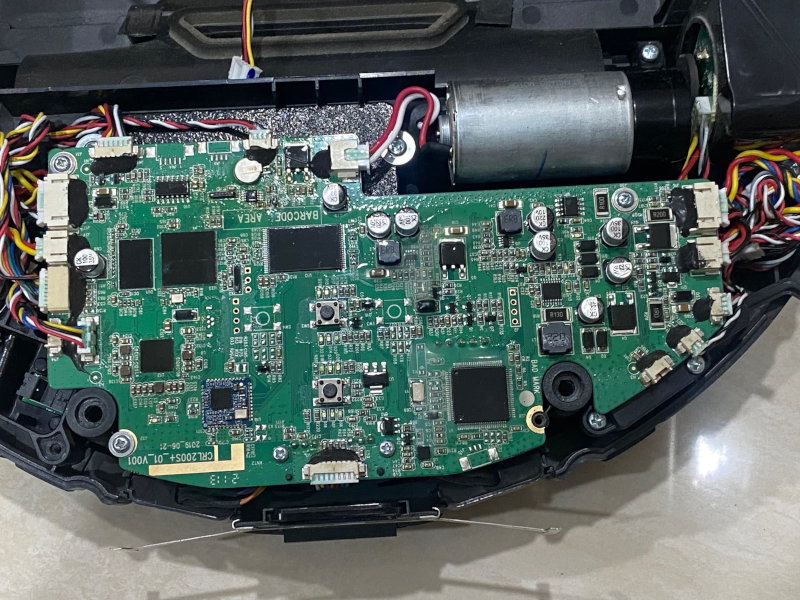
Robot Phone Home…Or Else sounds like the title of a sci-fi comedy where a toaster develops abandonment issues. In real life, it is less funny and more expensive. Today’s home robots, robot vacuums, AI companions, smart toys, delivery bots, and connected appliances often depend on cloud servers to function. When those servers are healthy, the robot feels magical. It maps your living room, recognizes your voice, schedules cleaning, chats with your kid, updates itself overnight, and politely pretends not to judge the sock situation under your couch.
But when the cloud disappears, the magic can vanish too. A “smart” robot may become a very polished paperweight with wheels. This is the modern problem of cloud-dependent robotics: your device does not merely live in your home; part of its brain lives somewhere else. It “phones home” to authenticate, process speech, receive commands, update maps, sync data, and unlock features. If it cannot phone home, the robot may sulk, freeze, forget, lose app control, or stop working altogether.
This article explores why robots phone home, what consumers gain, what they risk, and why the future of consumer robotics must include better privacy, clearer software support, offline functionality, and a graceful plan for the day the servers go dark. Because when your robot’s survival depends on a company’s cloud bill, you are not just buying hardware. You are buying a promise.
What Does “Robot Phone Home” Mean?
In connected technology, “phoning home” means a device regularly contacts a remote server owned or controlled by the manufacturer or a partner company. That contact may be harmless and useful. A robot vacuum might upload a cleaning map to your account, download firmware updates, check whether the app has sent a command, or sync a schedule across family phones. A companion robot may send voice requests to cloud-based AI systems because its small onboard computer cannot process complex language on its own.
The problem is not that robots connect to the internet. The problem is when connection becomes dependency. A robot that works better online is convenient. A robot that works only online is fragile. If the company changes its business model, goes bankrupt, ends support, locks features behind a subscription, or shuts down the server, the customer may lose functions that were part of the original appeal.
That is the “or else” in the title. Phone home, or else no scheduling. Phone home, or else no voice control. Phone home, or else no maps. Phone home, or else your $800 emotional-support robot becomes a silent sculpture with excellent posture.
Why Robots Depend on the Cloud
Cloud Computing Gives Small Robots Big Brains
Robots are physical machines with limited space, battery, heat tolerance, and processing power. Cloud computing allows companies to offload demanding tasks such as speech recognition, natural language processing, object detection, mapping, user profiles, and software updates. This can make a small, affordable robot behave as if it has a much larger brain.
For example, a robot vacuum can use onboard sensors to move around a room, but cloud services can help manage maps across devices, store cleaning history, enable remote app commands, and support smart-home integrations. A social robot can recognize a wake word locally, then send a voice request to a server for more advanced interpretation. A delivery robot fleet can use cloud dashboards to monitor location, battery status, maintenance needs, and route performance.
Cloud Services Make Updates Easier
Connected robots can improve after purchase. Manufacturers can push bug fixes, add features, patch security vulnerabilities, and update navigation systems. In the best case, your robot gets smarter without you opening a toolbox or reading a manual thick enough to stun a raccoon.
Security updates are especially important. Connected devices can become targets for hackers, and robots may include cameras, microphones, location data, home maps, or account credentials. A robot that never receives updates can become a weak point on a home network. That is why software support duration matters: consumers need to know not only what a device does today, but how long it will be maintained tomorrow.
The Hidden Cost of Cloud-Tethered Robots
The tradeoff is simple: cloud robotics can make devices smarter, but it can also make ownership conditional. If a robot’s core features require remote servers, you do not fully control the product sitting in your home. You control access to it as long as the company keeps the lights on.
This is often called software tethering. The hardware is physically yours, but key functions are tied to software, accounts, cloud authentication, subscriptions, or proprietary apps. It is similar to buying a refrigerator that chills your groceries only after receiving motivational approval from a server in another state. Technically impressive? Sure. Comforting? Not exactly.
When the Server Dies, the Robot Shrinks
Some connected products do not completely die when cloud support ends, but they lose the features that made them worth buying. A robot vacuum may still clean when you press a physical button, but app scheduling, room selection, remote control, and mapping may disappear. A companion robot may still power on, but lose conversation, learning activities, facial recognition, or personality features. The robot remains present, but its usefulness contracts.
That is frustrating because consumers often pay a premium for smart functionality. The value is not just motors, wheels, plastic, and sensors. The value is the experience. When cloud access vanishes, the product can feel like it has been downgraded after purchase.
Real-World Examples: When Robots Lost Their Cloud
Jibo: The Social Robot That Had to Say Goodbye
Jibo was one of the most memorable home robots of the 2010s. It had a friendly body, expressive movement, cameras, microphones, and a personality designed to make it feel like part of the household. It could recognize people, respond to questions, dance, and perform small assistant-like tasks. The emotional design worked almost too well. People did not treat Jibo like a toaster. They treated it like a tiny roommate who happened to need Wi-Fi.
When the company behind Jibo shut down, the robot’s future became uncertain because many features relied on remote services. Owners eventually saw farewell-style messages explaining that the servers enabling Jibo’s abilities would be turned off. The case became a landmark example of why emotional robots need end-of-life planning. If a device is designed to build attachment, the shutdown should not arrive like a surprise breakup delivered by firmware.
Moxie: A Companion Robot and a Hard Lesson for Families
Moxie, an AI-powered companion robot for children, raised another difficult question: what happens when a robot built for emotional development loses the cloud that gives it a voice? Moxie was marketed as a supportive, interactive robot for kids, with activities, conversations, and social-emotional learning features. When its maker faced financial collapse, families learned that the robot’s future depended on cloud services the company could no longer sustain.
This was not merely a gadget inconvenience. Parents had to explain to children why a companion they had talked to might stop responding. The situation showed that consumer robotics is not just hardware engineering; it is relationship design. If companies create robots that invite emotional bonds, they also carry responsibility for transparency, continuity, and compassionate shutdown procedures.
Robot Vacuums: Still Rolling, But Not Always Fully Smart
Robot vacuums are among the most successful consumer robots, and they show both the promise and risk of cloud dependence. Many models can map rooms, avoid obstacles, schedule cleaning, empty themselves, and integrate with voice assistants. But if cloud features end, users may be left with a machine that can still clean manually while losing app-based control and advanced customization.
That distinction matters. A robot vacuum stuck in manual mode is not useless, but it is no longer the same product customers bought. Imagine purchasing a car with navigation, climate control, and cruise control, then later being told, “Good news: the wheels still turn.” Technically true. Emotionally spicy.
Privacy: Your Robot May Know More Than Your Mail Carrier
Cloud-connected robots can collect sensitive information because they operate in intimate spaces. A robot vacuum may create floor plans, detect furniture, record cleaning schedules, and sometimes use cameras for navigation or obstacle avoidance. A companion robot may process voices, faces, names, routines, preferences, and household interactions. These details can reveal when people are home, what rooms exist, how a family lives, and what objects are visible in private spaces.
Even when companies use encryption and privacy policies, risk does not disappear. Data can be over-collected, retained too long, shared with vendors, exposed through breaches, or misunderstood by consumers. Privacy policies often read like they were written during a thunderstorm inside a law library. Users click “agree” because dinner is getting cold and the robot refuses to connect until they do.
Maps, Cameras, and Metadata
Some people shrug at robot vacuum maps because a floor plan may seem harmless. But privacy is rarely about one data point. It is about combinations. A map plus cleaning times plus device location plus images plus account information can become a detailed portrait of a household. Even network metadata can reveal patterns, such as when a robot is active or what kind of command it may be processing.
Cameras add another layer. Visual navigation can improve obstacle detection, but cameras in private spaces require strong safeguards. A robot that sees socks is convenient. A robot that sees documents, children, medication bottles, or personal moments is a privacy concern wearing wheels.
Security: A Robot Is Also a Computer With Motors
Every connected robot is part machine, part computer, and part network citizen. If poorly secured, it can become a doorway into a home network or a source of exposed data. Good security requires unique credentials, encrypted communication, secure update mechanisms, vulnerability reporting, access controls, and a plan for long-term patching.
Security is not a one-time sticker on the box. It is a lifecycle obligation. A robot sold in 2026 may still be rolling under couches in 2031, bravely eating dust bunnies like a tiny appliance gladiator. If software support ends after two years, consumers deserve to know that before purchase.
The FTC, Software Support, and the Push for Transparency
U.S. consumer protection discussions increasingly focus on whether manufacturers clearly disclose how long smart devices will receive software updates. The Federal Trade Commission has highlighted a major transparency gap: many connected-product pages do not plainly state the duration of software support. That matters because updates help devices operate properly and remain protected against security threats.
For robots, this issue is urgent. A smartphone without updates is risky; a home robot without updates can be risky and functionally diminished. Consumers should not have to search forums, archived PDFs, or the fine print equivalent of a cave wall to learn how long a device will be supported.
The U.S. Cyber Trust Mark and Better IoT Labels
The U.S. Cyber Trust Mark was introduced as a voluntary labeling program for qualifying consumer Internet of Things products. The idea is similar to an energy-efficiency label, but for cybersecurity. Instead of guessing whether a smart device follows basic security practices, shoppers can look for a recognizable mark indicating that a product has been tested against defined criteria.
This kind of label could help buyers compare connected robots and smart-home products more easily. However, labels should not stop at “secure today.” Consumers also need clear answers about software update duration, data retention, offline mode, repairability, and what happens if the company shuts down. A secure robot that becomes useless after cloud support ends is still a bad bargain. It is like buying a very safe parachute that expires halfway through the jump.
What Good Robot Design Should Include
1. Useful Offline Mode
A robot should retain core functionality without the cloud. A vacuum should clean, return to its dock, and respond to basic controls. A companion robot should offer at least limited local interactions, settings access, and data export. Offline mode does not need to include every advanced feature, but it should preserve enough value that the product does not become electronic waste overnight.
2. Clear Software Support Dates
Manufacturers should state the minimum support period on the product page, box, and setup screen. Consumers deserve plain language such as: “Security updates through at least December 2030” or “Cloud features guaranteed for five years from purchase.” Vague phrases like “continuous improvement” sound lovely but are not a plan.
3. Data Export and Deletion
Users should be able to download and delete personal data, including maps, voice history, images, account details, and activity logs where applicable. If a company shuts down, customers should receive instructions before services end. Data should not be trapped in a dying cloud like a ghost in a filing cabinet.
4. Repair and Community Continuity
When a manufacturer can no longer support a robot, it should consider releasing tools, documentation, local server options, or open-source components that allow owners and repair communities to preserve basic functions. Not every codebase can be opened easily, but companies can design for graceful failure from the beginning.
5. Honest Subscription Policies
Subscriptions are not automatically bad. Servers cost money. AI processing costs money. Customer support costs money. But companies should be honest about which features require ongoing payment and which are included with the purchase. Locking previously advertised features behind a paywall after customers buy the device is a fast way to turn loyal users into keyboard philosophers with pitchfork energy.
How Consumers Can Shop Smarter
Before buying a connected robot, ask practical questions. Does it work without Wi-Fi? What features disappear offline? How long will it receive security updates? Can you use it without a subscription? Can you delete your maps and recordings? Does it have a physical microphone or camera control? Is the company financially stable? Are replacement parts available? Does the app still receive updates? Are owners complaining about server outages?
Also consider whether the robot is meant for a child, an elderly family member, or someone likely to form an emotional bond with it. The more personal the relationship, the more important the shutdown plan becomes. A robot vacuum can disappoint you. A companion robot can genuinely upset a child when it vanishes from their daily routine.
For Businesses: Cloud Robotics Needs a Trust Strategy
Companies building robots should treat cloud dependence as a trust issue, not just an engineering architecture. Customers are more likely to accept cloud features when they understand the bargain. Tell them what is processed locally, what goes to the cloud, what data is stored, how long support lasts, and what happens at end of life.
Businesses should also design for degraded operation. A robot should fail soft, not fail dramatic. If the cloud is unavailable, the product should explain the problem clearly and continue doing what it can. Nobody wants a robot that reacts to a server outage like a Victorian poet fainting onto a chaise lounge.
The Future: Local AI, Edge Computing, and More Durable Robots
The next wave of robotics may shift more intelligence back onto the device. Local AI chips, improved edge computing, efficient language models, and better onboard sensors can reduce reliance on remote servers. This does not mean the cloud will disappear. Instead, the best robots may use a hybrid approach: local processing for essential functions and privacy-sensitive tasks, cloud services for optional enhancements, backups, updates, and heavy computation.
This would give consumers the best of both worlds. The robot remains useful at home, private by default where possible, and upgradeable when connected. In other words, it can phone home without needing home to answer every time.
Experiences Related to “Robot Phone Home…Or Else”
Anyone who has lived with a connected robot knows the relationship is a little strange. At first, the robot feels like a gadget. You unbox it, charge it, download the app, create an account, accept the terms you definitely read in full, and watch it come alive. Then, after a few days, it becomes part of the house. The robot vacuum has a route. The family gives it a nickname. Someone rescues it from a shoelace. Someone else apologizes to it after it bumps into a chair. This is how machines sneak into our emotional lives: not through grand speeches, but through routine.
The first lesson from using cloud-connected robots is that convenience arrives quickly. Scheduling a robot vacuum from your phone while away from home feels powerful in a tiny domestic way. You tap a button at lunch, and by the time you return, the floor looks less like a cracker festival. Voice commands feel even better. “Clean the kitchen” sounds like something a person with a butler would say, except the butler is round, short, and occasionally defeated by rug tassels.
The second lesson is that the app becomes the real remote control. Many users stop thinking of the robot as a standalone machine. They think of it as an app with a body. That works beautifully until the app fails, the login breaks, the server is down, or the company changes its terms. Suddenly, the machine in front of you feels less yours. You can touch it, charge it, and stare at it, but a distant server decides whether the premium features still exist.
The third lesson is that privacy settings are easy to ignore until the robot enters a private room. A mapping vacuum can make a home feel visible in a new way. Even if the company handles data responsibly, the user becomes aware that a device is learning the shape of personal space. Bedrooms, offices, kids’ rooms, pet areas, and daily routines are not abstract data. They are life patterns. A good robot should make those patterns easier to manage, not quietly turn them into a mystery file stored somewhere you will never visit.
The fourth lesson is that robots create expectations. If a product greets a child, remembers a name, tells jokes, celebrates progress, or appears sad when ignored, the experience becomes emotional. Designers know this. Movement, voice, eye animations, and timing are crafted to create personality. That can be delightful, but it raises the ethical stakes. When the cloud shuts down, families are not just losing a function. They may be losing a ritual.
The fifth lesson is practical: always test offline mode early. Disconnect Wi-Fi and see what still works. Can the robot start? Can it dock? Can it clean? Can it respond to buttons? Can you access settings? Can you export data? This small experiment reveals the truth hidden beneath the marketing. A robot that remains useful offline is a product. A robot that collapses without the cloud is closer to a service wearing a plastic costume.
The best experience is not a robot that never phones home. The best experience is a robot that phones home respectfully, securely, and optionally. It should ask only for what it needs, explain what it sends, keep working when the connection fails, and retire gracefully when support ends. A good robot should be helpful, not needy. After all, the whole point of bringing robots into the home is to make life easiernot to add one more dependent creature that panics when the Wi-Fi blinks.
Conclusion: A Smarter Robot Should Also Be a Fairer Product
Robots are becoming more capable, more personal, and more common in American homes. They clean floors, entertain children, monitor spaces, deliver goods, assist workers, and promise a future where machines handle more of the boring stuff. That future can be wonderful. It can also be wasteful, invasive, and frustrating if companies build robots that depend too heavily on remote servers without clear commitments to support, privacy, security, and end-of-life care.
The lesson of Robot Phone Home…Or Else is not “avoid connected robots.” It is “demand better connected robots.” Consumers should ask harder questions. Regulators should push for clearer disclosures. Manufacturers should design devices that keep useful core functions even when the cloud goes quiet. And everyone should remember that a robot in the home is not just a device. It is a guest with sensors.
Let robots phone home when it helps. But do not let the cloud hold the entire product hostage. The future belongs to robots that are smart online, useful offline, respectful with data, secure by design, and honest about their lifespan. Anything less is not innovation. It is a subscription-shaped boomerang waiting to come back and bonk the customer.
Note: This article synthesizes current public information from U.S. consumer technology reporting, cybersecurity guidance, connected-device policy discussions, robotics industry examples, and smart-home privacy research. Source links are intentionally not inserted in the article body for clean web publication.











