
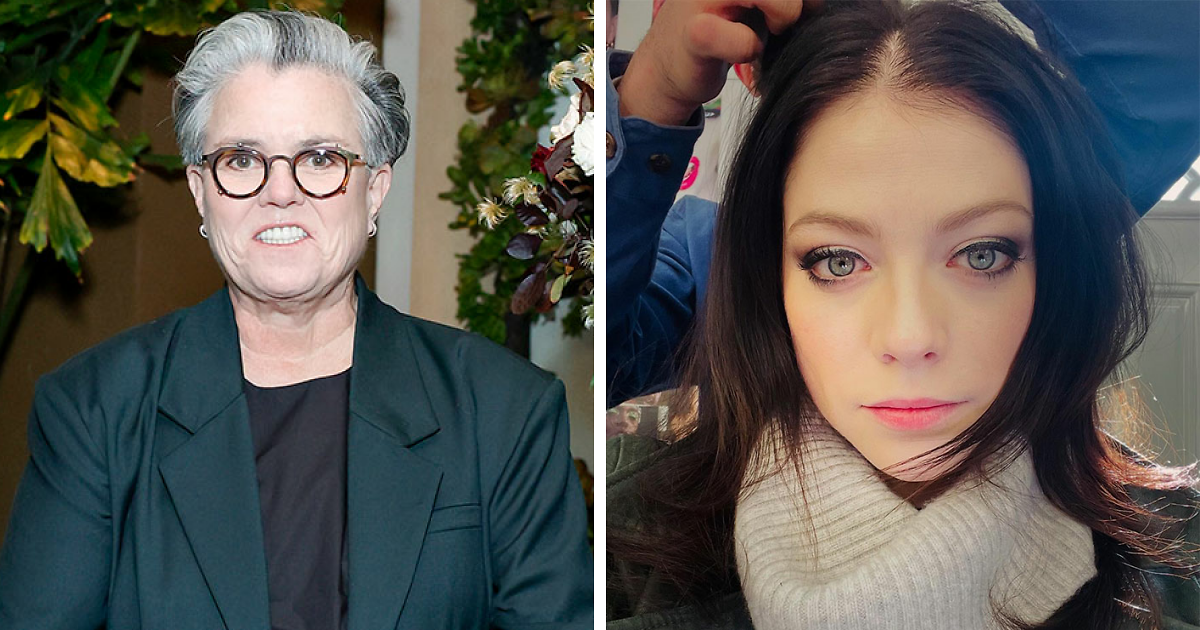
Some entertainment news lands like a headline. Other news feels like a childhood book suddenly closing. When Rosie O’Donnell reacted to the passing of Michelle Trachtenberg, her young co-star from the 1996 family classic Harriet the Spy, the moment carried both public grief and private tenderness. O’Donnell said Trachtenberg had “struggled” in recent years and added that she wished she could have helpeda short statement, but one that instantly shifted the conversation from celebrity nostalgia to something more human.
Michelle Trachtenberg was not just “that actress from Gossip Girl” or “Dawn from Buffy the Vampire Slayer.” For a generation, she was Harriet M. Welsch: curious, stubborn, notebook-ready, and allergic to fake niceness. She was also Georgina Sparks, the kind of Upper East Side chaos agent who could walk into a room and make every character check their emotional insurance policy. Her career moved through Nickelodeon, network television, teen drama, comedy, and cult-favorite roles with a confidence that made her feel familiar even when she disappeared from the spotlight.
That is why Rosie O’Donnell’s tribute mattered. It came from someone who knew Trachtenberg not as a headline, but as a child actor on a bustling movie set, learning lines, carrying a film, and becoming part of pop-culture memory before most kids are trusted with a house key.
A Tender Tribute From Rosie O’Donnell
After news broke that Michelle Trachtenberg had died at age 39, Rosie O’Donnell described the loss as heartbreaking. Her words were simple and direct: she loved Trachtenberg very much, believed she had struggled during the last few years, and wished she could have helped. In an age when celebrity statements can sound like they were assembled by a committee wearing beige cardigans, O’Donnell’s message felt painfully personal.
The word “struggled” naturally caught public attention. It is a heavy word, but it is also a broad one. It does not give strangers permission to speculate, diagnose, or turn someone’s life into a guessing game. In this case, the most responsible reading is also the most compassionate one: O’Donnell was expressing grief, regret, and love for a former co-star whose final years were not fully visible to the public.
That matters because entertainment culture often treats former child stars like open books with missing pages. Fans remember the bright scenes, the red carpets, the punchlines, and the characters. But behind every familiar face is a private life, and not every chapter is meant for public consumption.
Michelle Trachtenberg and the Legacy of Harriet the Spy
Released in 1996, Harriet the Spy gave Michelle Trachtenberg her first major film role. She played Harriet, a sharp-eyed young writer who observes everyone around her and records what she sees in a notebook. The movie was quirky, clever, and proudly odd in that very ’90s Nickelodeon wayback when children’s films were allowed to have personality, muddy sneakers, and emotional consequences.
Rosie O’Donnell played Ole Golly, Harriet’s beloved nanny and mentor. Their on-screen relationship became one of the emotional anchors of the film. Ole Golly encouraged Harriet’s curiosity while also teaching her that honesty without kindness can become a tiny emotional lawn mower. Harriet, in return, gave young viewers permission to be observant, opinionated, and maybe a little too committed to office supplies.
For many fans, Harriet the Spy was more than a movie. It was an initiation into journaling, people-watching, and the thrilling idea that kids could have complicated inner lives. Trachtenberg carried that role with unusual confidence. She did not play Harriet as a polished little angel. She played her as nosy, funny, wounded, intense, and real. That is why the performance still holds up: it respected children enough to let the main character be messy.
From Nickelodeon Kid to Cult-TV Favorite
Before Harriet the Spy, Michelle Trachtenberg had already appeared on television, including Nickelodeon’s The Adventures of Pete & Pete and the daytime soap All My Children. But Harriet made her a recognizable young star. From there, she built a career that moved between family-friendly projects and more mature roles.
She later appeared in Inspector Gadget and Ice Princess, both of which introduced her to younger audiences in different ways. Then came one of her most beloved television roles: Dawn Summers on Buffy the Vampire Slayer. Joining an already-iconic series is not easy. Joining it as a new younger sister character with a mysterious origin? That is like stepping into a fan convention wearing a sign that says, “Please judge me immediately.” Yet Trachtenberg made Dawn memorable, vulnerable, and central to some of the show’s most emotional arcs.
Years later, she gained a new wave of fans as Georgina Sparks on Gossip Girl. Georgina was deliciously unpredictablethe human equivalent of a champagne flute filled with espresso and secrets. Trachtenberg understood the assignment. She brought wit, bite, and theatrical confidence to a character who could have become cartoonish in less capable hands.
Why Her Passing Hit So Many Generations
Michelle Trachtenberg’s death touched several audiences at once. Millennials remembered her as Harriet. Fantasy-TV fans remembered Dawn. Teen-drama fans remembered Georgina. Others remembered her from EuroTrip, 17 Again, Six Feet Under, or her later return to the Gossip Girl universe. That kind of cross-generational recognition is rare.
Her career also symbolized a particular kind of entertainment era: the bridge between ’90s Nickelodeon, early-2000s genre television, and the glossy teen dramas that dominated pop culture before streaming rearranged the furniture. Trachtenberg was part of all of it, moving from orange-splat childhood fame to supernatural drama to Upper East Side scheming without losing her distinctive presence.
When co-stars and fans shared tributes, one theme appeared again and again: she was vivid. People remembered her energy, humor, warmth, and intensity. That is often what stays after a performer is gonenot only the credits, but the emotional temperature they brought into a room.
The Public Facts and the Importance of Not Speculating
After Trachtenberg’s passing, authorities reported that she had been found unresponsive in New York City and that criminality was not suspected. Later, the New York City medical examiner’s office said her death was natural and attributed it to complications of diabetes mellitus after laboratory testing provided more clarity.
Those facts are important, but so is restraint. The internet loves filling silence with theories, and celebrity deaths often become magnets for rumor. But Trachtenberg was a real person with family, friends, colleagues, and private experiences. Her life deserves more than a comment-section investigation conducted by people whose main qualification is having Wi-Fi.
Rosie O’Donnell’s statement should be understood as grief, not an invitation to speculate. Saying someone “struggled” can refer to many things: health challenges, personal hardships, professional pressure, emotional exhaustion, or simply the difficult weight of life away from public view. Responsible coverage honors what is known, avoids exaggeration, and leaves room for dignity.
Child Stardom, Memory, and the Weight of Growing Up On-Screen
Michelle Trachtenberg’s career also reminds us how complicated child stardom can be. Audiences meet young performers at one age and sometimes freeze them there forever. But actors grow up. They change. Their careers evolve. Their private lives become more complex. The public, unfortunately, does not always evolve with them.
Child stars often carry a strange burden: they are expected to remain familiar while constantly reinventing themselves. If they step away, people ask what happened. If they return, people compare them to a childhood role. If they look different, strangers comment. If they protect their privacy, rumors grow in the empty space.
Trachtenberg handled that transition better than many. She did not remain only Harriet. She became Dawn, Georgina, and many other characters. She showed range, timing, and a willingness to take roles that played against audience expectations. Still, the public nature of growing up in entertainment can be unforgiving. O’Donnell’s regret“I wish I could have helped”lands with extra force because it echoes a feeling many people understand: the ache of wondering whether they could have reached out sooner.
Rosie O’Donnell and Michelle Trachtenberg: A Bond Fans Remember
The connection between O’Donnell and Trachtenberg remains tied to Harriet the Spy because the film itself was about mentorship. Ole Golly was not just Harriet’s caretaker; she was the adult who saw Harriet’s mind and took it seriously. That dynamic made O’Donnell’s real-life tribute feel even more poignant. Fans who grew up with the movie could not help but see echoes of Ole Golly’s protective affection in O’Donnell’s words.
Of course, real life is not a movie. There is no perfect final scene, no tidy lesson, no swelling soundtrack that explains grief in 90 seconds. But pop culture gives people emotional language. For many viewers, the memory of Rosie and Michelle together on-screen became a way to process the news: the nanny and the little spy, decades later, connected by love, memory, and loss.
What Fans Can Take From This Moment
One meaningful takeaway is simple: check on people, but do it with care. Public figures often seem surrounded by attention, but attention is not the same as support. A person can be famous and lonely, successful and hurting, admired and unseen. That does not mean fans are responsible for celebrities’ private lives, but it does mean we can practice a more humane kind of fandom.
Instead of demanding details, fans can honor Trachtenberg by revisiting her work, sharing thoughtful memories, and avoiding rumor-driven conversations. Watch Harriet the Spy with fresh eyes. Notice how fearless she was at 10. Revisit Buffy and recognize how difficult Dawn’s role actually was. Enjoy Georgina Sparks as one of television’s great chaos gremlins, a character who could probably ruin brunch and a board meeting before noon.
That is the better tribute: remembering the craft, the humor, and the spark.
Experiences Related to Rosie O’Donnell’s Tribute and Michelle Trachtenberg’s Passing
For many people, the news of Michelle Trachtenberg’s passing felt strangely personal because she belonged to the background music of growing up. Not every actor becomes a daily obsession. Some become something quieter: a familiar face from sick days on the couch, Saturday afternoon reruns, sleepover movie nights, or the first TV show that made adolescence feel dramatic enough to deserve a theme song.
That is why Rosie O’Donnell’s reaction resonated. Almost everyone has experienced a version of that regret: hearing that someone from the past was going through more than they let on and wondering whether a call, a message, or a small act of care might have mattered. It is a deeply human feeling. It does not mean someone failed. It means love often becomes clearest when time has already moved forward.
Fans may also relate to the way Trachtenberg’s roles marked different stages of life. As Harriet, she represented curiosity and the awkward bravery of being a kid with too many thoughts. As Dawn Summers, she reflected the vulnerability of being young in a world full of danger, confusion, and people who do not always explain what is happening. As Georgina Sparks, she became a symbol of adult confidence turned wickedly entertaining. Watching those roles now can feel like flipping through an old photo album, except the photos talk back with perfect timing.
There is also an experience here for anyone who has watched a friend change from a distance. Sometimes people retreat. Sometimes they post cheerful updates while carrying private difficulty. Sometimes they seem fine because “fine” is the costume most socially acceptable to wear in public. O’Donnell’s words remind readers that compassion should not require complete information. You do not need someone’s full story to be gentle with them.
At the same time, this story is a reminder to respect boundaries. Care is not the same as curiosity. Support is not the same as investigation. When public figures pass away, fans may feel grief, but that grief should not become entitlement. The healthiest response is to honor what the person gave to the world while allowing their private life to remain private.
Michelle Trachtenberg gave audiences characters with bite, humor, intelligence, and vulnerability. Rosie O’Donnell’s tribute gave that legacy a softer frame: not just what Trachtenberg performed, but how deeply she was remembered by people who worked beside her. In the end, the most lasting experience may be this one: a renewed urge to appreciate people while they are here, to say the kind thing sooner, and to remember that even the brightest screen presence may be carrying something the audience cannot see.
Conclusion
Rosie O’Donnell’s statement about Michelle Trachtenberg “struggling” before her passing has become part of a larger conversation about memory, child stardom, grief, and the limits of what the public can truly know. Trachtenberg’s death at 39 was a painful shock, but her legacy is not defined by her final years. It lives in Harriet’s notebook, Dawn’s emotional courage, Georgina’s wicked grin, and the many performances that made her unforgettable to more than one generation.
The most respectful way to remember her is not through speculation, but through appreciation. Michelle Trachtenberg was talented, funny, bold, and deeply woven into the pop culture memories of millions. Rosie O’Donnell’s tribute reminds us that behind every familiar screen face is a person who deserved kindness, privacy, and love.











