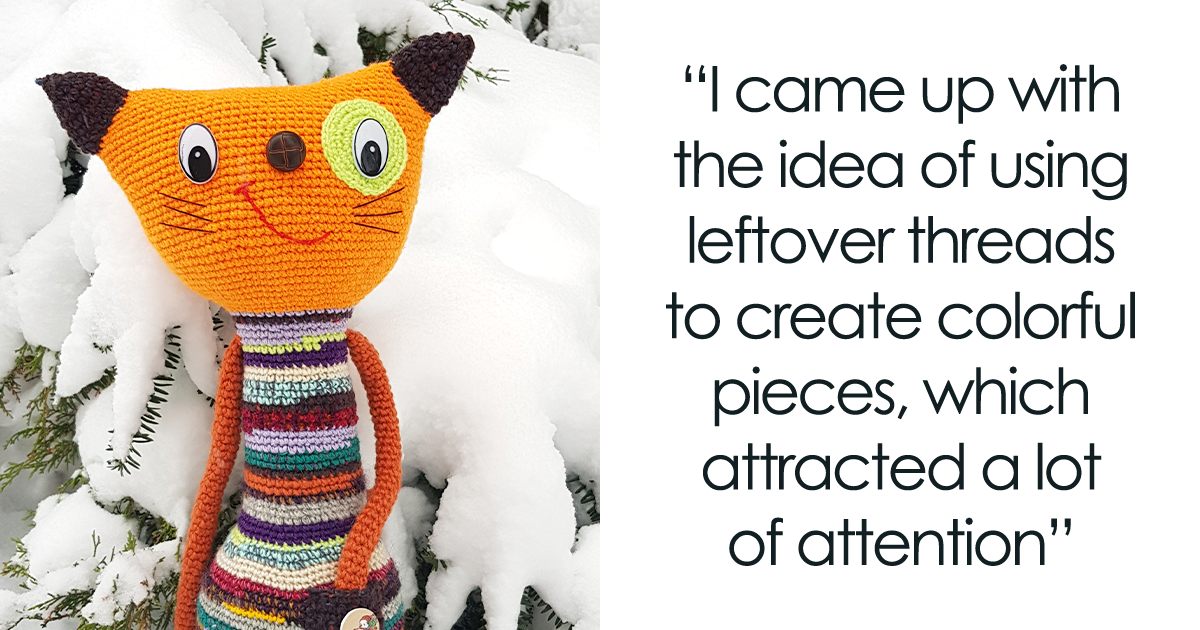
Every knitter or crocheter eventually acquires a mysterious collection of yarn leftovers. Some pieces are long enough to become something useful. Others are barely long enough to tie around a very patient pencil. Yet throwing them away feels strangely personal, as if those tiny strands remember every sweater, scarf, and blanket they helped create.
My solution is to turn them into scrap yarn toys: cheerful monsters, striped snakes, miniature animals, pretend food, dolls, and other soft characters that benefit from being gloriously mismatched. A green ear, a purple leg, and a bright orange tail are not mistakes here. They are character development.
Making toys from leftover yarn is economical, creatively liberating, and potentially less wasteful than continually buying new materials. The U.S. Environmental Protection Agency reported that only 14.7% of textiles generated in 2018 were recycled. Reusing yarn at home will not solve textile waste by itself, but it keeps useful material in circulation and turns an awkward pile of scraps into something worth keeping.
Why Scrap Yarn Is Perfect for Colorful Toys
Large wearable projects usually demand consistency. A sweater needs predictable gauge, enough yardage, and colors that do not suddenly disappear halfway through a sleeve. Small handmade toys are much more forgiving. Their bodies can be divided into short rounds, stripes, patches, limbs, spots, and accessories, allowing even modest yarn remnants to earn a starring role.
A scrap yarn toy also comes with a built-in design story. The yellow stripe might be left from a baby blanket, while the blue feet came from a winter hat. Instead of becoming anonymous waste, those materials form a miniature record of earlier projects.
Imperfection Becomes Part of the Design
Scrap crafting rewards decisions that would look unusual elsewhere. Unequal stripes make a snake more playful. Different-colored arms give a monster personality. A bear with one speckled ear looks as though it has adventures to discuss and possibly an unpaid parking ticket.
Because no two yarn stashes are identical, every toy is naturally one of a kind. A pattern can provide the basic construction, but the available colors determine the final personality.
Small Projects Encourage Experimentation
A toy is an excellent place to practice unfamiliar techniques without committing to a month-long project. I can test color changes, embroidery, shaping, surface crochet, knitting in the round, or a new joining method on a small creature. If the experiment behaves unexpectedly, I have made a quirky monster instead of ruining a cardigan. That is a much friendlier outcome.
How I Organize Leftover Yarn Before Making Toys
A usable scrap collection needs more structure than one enormous bag labeled “probably yarn.” Before choosing a project, I sort leftovers by yarn weight, fiber content, washability, color, and approximate length.
The Craft Yarn Council classifies yarn thickness from 0, or lace weight, through 7, or jumbo. When a label is missing, wraps per inch can help estimate the category. Exact matching is not always essential for decorative details, but similar weights produce more predictable fabric and stuffing coverage.
Keep Useful Information With Every Scrap
Whenever possible, I save part of the original yarn label. It identifies the fiber, weight, care instructions, yardage, color, and recommended hook or needle size. I attach that information to the leftover ball with a paper band or place both in a small resealable bag.
For unlabeled yarn, I record my best guess. A mystery strand may still become hair, a scarf, or an embroidered smile, but I avoid using uncertain materials in washable toys intended for very young children.
Sort Scraps by Practical Length
- Long remnants: Useful for bodies, heads, wide stripes, and larger limbs.
- Medium remnants: Ideal for ears, tails, feet, clothing, spots, and narrow stripes.
- Short strands: Suitable for embroidery, tassels, pom-poms, decorative hair, or carefully contained stuffing.
- Thread-sized pieces: Best reserved for filling decorative items rather than becoming loose attachments.
Clear containers make the collection easy to scan. Separating works in progress from future materials also prevents the classic craft-room mystery: “Was this yarn left over, or was it about to become a sleeve?”
My Favorite Scrap Yarn Toy Ideas
1. A Striped Stash-Buster Snake
A knitted or crocheted snake is one of the easiest ways to use many short lengths. Its long tubular body welcomes frequent color changes, and the finished size can depend entirely on how much yarn is available.
I keep yarn weights reasonably similar, change colors every few rounds, and stagger transitions so the joins do not form one obvious ridge. A soft curve can be created by adjusting increases and decreases or by shaping the toy gently during stuffing.
2. A Mismatched Scrap Yarn Monster
Monsters have no official color chart, which is excellent news for an unruly yarn basket. I begin with a simple oval body, then add mismatched arms, stubby legs, ears, horns, or antennae. An embroidered face provides expression without requiring plastic pieces.
This design is particularly useful when scraps vary slightly in thickness. A thicker yarn can become a chunky foot, while a thinner strand can be doubled for an ear. Yarnspirations notes that holding two strands of the same weight together generally creates a working yarn one or two size categories thicker, although making a test swatch remains wise.
3. Tiny Amigurumi Animals
Small whales, turtles, birds, frogs, cats, and octopuses consume surprisingly little yarn. A tiny animal can be built from one main remnant plus several shorter colors for fins, wings, shells, spots, or facial embroidery.
For amigurumi, I use a hook small enough to create dense stitches so the stuffing does not show through. I also change color on a less-visible side and weave every tail securely into the fabric. Loose ends have a special ability to appear five minutes after I announce that a project is finished.
4. Pretend Food for Play Kitchens
Scraps in bright colors are perfect for crocheted fruit, vegetables, cupcakes, eggs, sandwiches, and ice cream cones. These shapes are usually compact, easy to recognize, and naturally divided into sections. A burger, for example, can use tan, green, red, yellow, and brown remnants without demanding much of any one shade.
Embroidered seeds, sprinkles, and grill marks make the pieces more expressive. For children, I avoid detachable decorations that could become small parts.
5. Pom-Pom Characters and Soft Critters
Pom-poms can turn assorted short yarn into birds, fuzzy monsters, or decorative animals. Martha Stewart’s craft guidance specifically recommends giving leftover yarn a second life through colorful pom-poms.
However, pom-pom strands can pull free under rough handling. I treat these creations as supervised crafts or decorations unless their construction, age grading, and durability have been evaluated for the intended child.
6. Dolls With Changeable Accessories
A basic doll can absorb scraps indefinitely through hats, scarves, skirts, capes, bags, and tiny blankets. Accessories are useful when a leftover is too short for a complete toy but too attractive to hide inside one.
I prefer simple garment shapes that close without buttons when the toy is meant for younger children. For a collectible or display doll, I can be more elaborate with beads and decorative fasteners, provided the intended use is made clear.
Techniques That Make Mixed Yarn Look Intentional
Choose a Repeating Color Rule
Random color can still benefit from a small amount of order. I might alternate warm and cool colors, place a neutral stripe between bright shades, repeat one anchor color throughout the toy, or use the darkest remnants for feet and ears.
These simple rules create visual rhythm without requiring a perfectly coordinated palette. They also stop me from spending 40 minutes deciding whether turquoise is emotionally prepared to sit beside mustard yellow.
Match Fiber Behavior When Washability Matters
Cotton, wool, acrylic, and blended yarns may stretch, shrink, soften, or dry differently. Combining them can work beautifully in decorative toys, but washable playthings benefit from compatible care requirements.
I test questionable colors for bleeding and wash a small swatch when possible. If one strand requires hand washing while the rest can be machine washed, the finished toy should follow the most delicate care instructions.
Use Color Changes as Features
Instead of hiding every transition, I design around them. A join can sit beneath an arm, become the edge of a shirt, or mark the beginning of a stripe. Small embroidered dots placed across several colors can tie an otherwise chaotic palette together.
Frequent color changes create many yarn tails. I weave each tail in several directions rather than relying on a single knot, particularly in stuffed pieces that will be squeezed, carried, or washed.
Important Safety Rules for Handmade Yarn Toys
A handmade object is not automatically safe simply because it is soft. The intended child’s age, the durability of the construction, and every attached component matter.
Avoid Detachable Small Parts
The U.S. Consumer Product Safety Commission bans small parts in toys intended for children younger than three when those parts present choking, ingestion, or aspiration hazards. Removable eyes and noses on stuffed toys are specifically cited as examples.
For babies and toddlers, I embroider eyes, noses, and mouths directly into the fabric. I avoid buttons, beads, bells, loose ribbons, long yarn hair, and other pieces that could detach or create an entanglement risk. Every limb and ear is sewn through multiple stitches and tug-tested firmly.
Consider Stuffing and Stitch Density
A dense fabric helps contain filling. I add stuffing gradually so it reaches corners without forcing large gaps between stitches. Overstuffing can distort the toy and expose the filling; understuffing can leave it shapeless.
Clean yarn snippets may be reused as filling in decorative toys, but they create a heavier, firmer, and sometimes lumpier result than standard fiberfill. I chop long strands, distribute them evenly, and never use dirty, musty, pest-damaged, or chemically treated scraps. For children’s toys, I choose a washable filling appropriate to the design and intended age.
Inspect and Maintain the Toy
Before gifting a scrap yarn toy, I check seams, attachments, embroidered details, and care instructions. Caregivers should inspect handmade toys periodically and remove them from use if yarn breaks, stuffing escapes, or components loosen.
Anyone selling toys in the United States should understand that handmade does not mean exempt from safety law. Toys primarily intended for children age 12 or younger can be subject to federal testing, certification, labeling, tracking, and material requirements. Sellers should consult current CPSC guidance before listing a product.
What Making Scrap Yarn Toys Has Taught Me
My first serious scrap yarn toy began as an attempt to clean a drawer. I found small balls from at least nine earlier projects, arranged them in a hopeful rainbow, and decided to crochet a monster. The creature acquired a teal body, one yellow foot, one red foot, purple ears, and a striped arm because the purple yarn surrendered earlier than expected.
At first, I kept trying to make everything symmetrical. Then I realized symmetry was fighting the material. The scraps were telling me exactly how large each feature could be. Once I accepted that limitation, the project became easier and much more interesting. The monster did not need matching legs; it needed confidence.
I also learned that preparation matters more when materials are mixed. During one early project, I combined a soft acrylic with a much stiffer cotton. Both looked like medium-weight yarn in the basket, but they behaved differently in the finished fabric. The cotton section held its shape while the acrylic stretched, giving the toy the posture of someone waiting impatiently at the Department of Motor Vehicles.
Now I compare thickness, stretch, texture, and care instructions before starting. When two yarns are not compatible, I give them separate jobs. The springy acrylic might form the body, while the cotton becomes a firm hat or embroidered patch. Differences become useful when I stop pretending they are not there.
Color planning has changed too. I once believed scrap projects had to use every available shade at the same time. The result was energetic but visually loud enough to direct airport traffic. I began choosing one recurring neutral or dominant color to connect the smaller fragments. A gray stripe repeated every few rounds can make six unrelated colors look like members of the same slightly eccentric family.
The smallest remnants have taught me to think in details. Ten yards might create an ear. Three yards can become a pocket. A strand too short for knitting may still embroider eyebrows that completely change a character’s expression. One accidental eyebrow angle turned a gentle rabbit into a rabbit who appeared to know exactly who had eaten the last cookie.
Making toys this way also changes how I finish larger projects. I leave cleaner yarn tails, wind remnants instead of tangling them, and keep labels with usable leftovers. I have become more realistic about what deserves storage. Clean, sound yarn with enough length for a future detail stays. Frayed or contaminated material does not receive honorary membership in the collection merely because I feel sentimental.
The most rewarding lesson is that constraints can create identity. New yarn allows complete control, but leftovers bring surprises. A short orange remnant can turn into a fox tail, a carrot, or a tiny monster hat. The decision grows from what is available, not from a shopping list.
That process makes every finished toy feel connected to several earlier pieces. A colorful creature may contain the history of a scarf, a blanket, a pair of mittens, and three overly ambitious holiday gifts. It is not simply a way to empty the scrap basket. It is a way to turn the end of one project into the beginning of another.
Conclusion
Scrap yarn toys prove that leftover material does not have to produce leftover-looking results. With thoughtful sorting, secure construction, compatible fibers, and a playful approach to color, small remnants can become distinctive handmade animals, dolls, monsters, and pretend food.
The best designs work with the available yarn instead of forcing perfect matches. Uneven stripes become personality, limited yardage inspires new features, and old project remnants gain a useful second life. Just remember that toys intended for children require careful age grading, durable seams, appropriate materials, and close attention to small-part hazards.