Paris has no shortage of shops capable of turning an innocent afternoon walk into a serious discussion with your credit card. Yet the Alix D. Reynis shop in Paris does something more interesting than simply display beautiful objects. It creates a complete little universeone built from glowing white porcelain, historical references, sculptural jewelry, soft light, and the radical French belief that even a sugar bowl deserves excellent cheekbones.
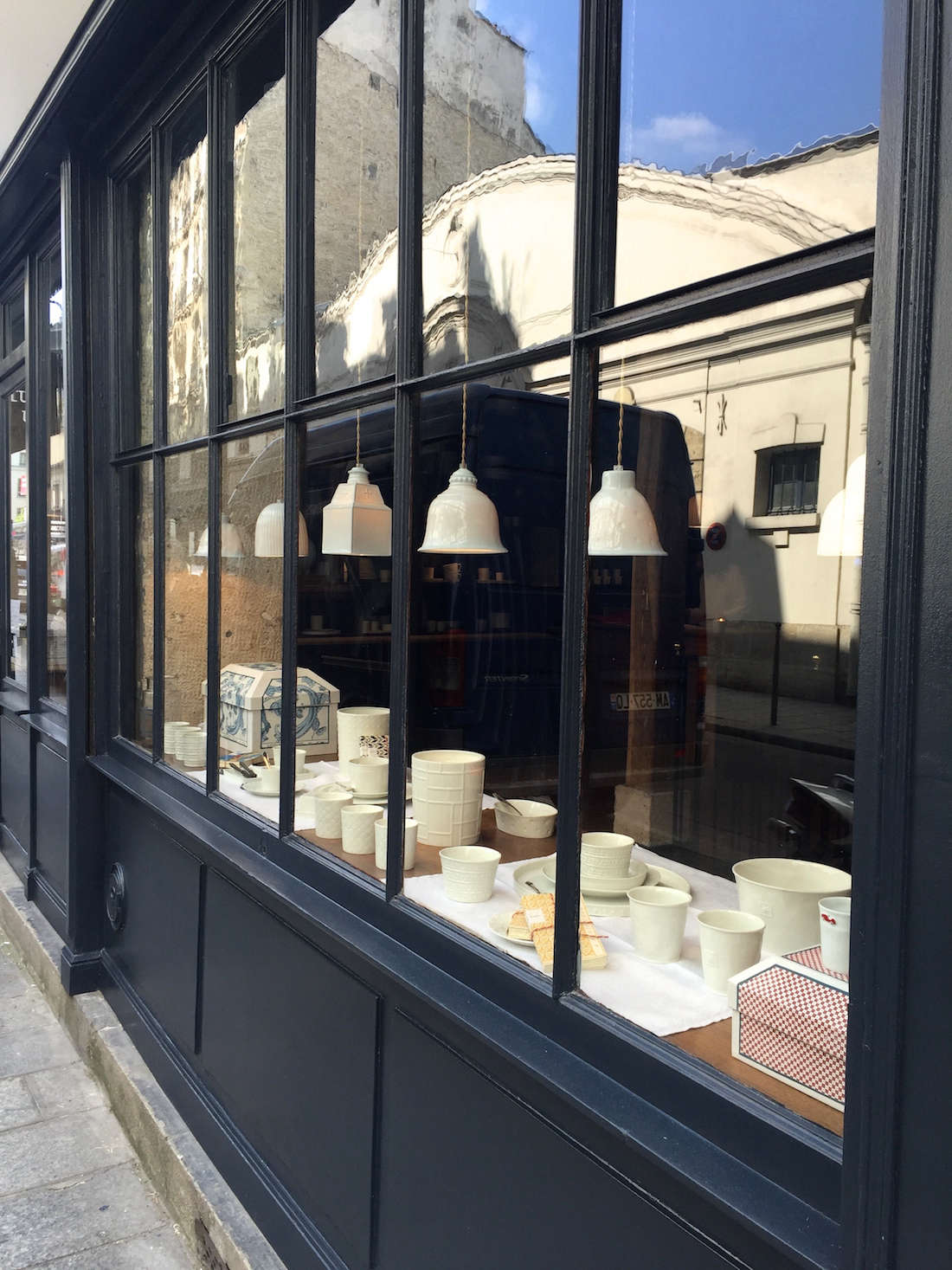
The Maison’s historic boutique at 14 Rue Commines sits in the Haut Marais, an area where centuries-old streets coexist comfortably with contemporary galleries and independent design stores. Behind the dark facade, pale porcelain appears almost luminous. Plates, bowls, cups, candle vessels, lamps, and decorative objects are presented less like merchandise and more like pieces collected over generations in an unusually elegant family home.
For travelers interested in Parisian craftsmanship, French interior design, or memorable gifts that do not have the Eiffel Tower printed on them, this is a destination worth adding to the shopping itinerary.
A Paris Boutique Built Around Contrast
The first impression is dramatic but restrained. Dark walls, old wood, simple shelving, and carefully controlled lighting form a shadowy background for the shop’s predominantly white collections. The result is visual theater without the jazz hands. Every porcelain cup and pendant lamp seems to glow against the charcoal-colored interior.
This contrast is central to the store’s appeal. A conventional white showroom might make pale ceramics disappear into the walls. Here, their silhouettes become clearer. Scalloped borders, engraved patterns, modeled faces, classical curves, and hand-finished irregularities are easier to notice. The boutique effectively teaches visitors how to look at white porcelain rather than treating it as blank tableware.
The setting also feels refreshingly domestic. Pieces are grouped in cabinets, arranged on tables, or suspended as working lights. Customers can imagine a bowl filled with pears, a candle vessel reused as a small vase, or a porcelain pendant warming a kitchen corner. Nothing requires a velvet rope or a museum guard prepared to tackle anyone who gets too friendly with a teacup.
Who Is Alix D. Reynis?
Alix Depondt-Reynis is a Paris-based designer and sculptor whose work connects historical forms with contemporary daily life. A self-taught ceramicist, she develops her designs in Paris before they are produced by skilled porcelain makers in Limoges, the French city internationally associated with fine porcelain craftsmanship.
Her creative references range widely. Ancient civilizations, Renaissance ornament, medieval architecture, nineteenth-century motifs, classical portraiture, and French decorative arts all make appearances. However, the finished objects rarely feel like historical reproductions. A classical profile may become the handle of a cup. The shape of an old ceremonial vessel may be simplified into a modern lamp. An architectural rosette might reappear as a subtle relief on a plate.
That tension between old and new gives the Maison its identity. The designs feel familiar without being predictable, and refined without becoming stiff. They are objects for people who appreciate history but would still like to put the dishes in the dishwasher and get on with dinner.
Why Limoges Porcelain Matters
Porcelain is not simply a color choice in the Alix D. Reynis collection. It is the material that allows the designs to work. Fine Limoges porcelain can capture detailed relief, delicate edges, smooth curves, and a distinctive translucency when illuminated. It feels visually light even when a piece has a substantial sculptural form.
The production process begins with ideas, drawings, and prototypes created in Paris. The designs are then manufactured in Limoges using traditional expertise. The human hand remains visible in the finished work, whether through subtle variations in shape, molded decoration, glazing, or finishing. That quality prevents the pieces from looking overly mechanical.
White is also remarkably versatile. It can look crisp in a modern apartment, romantic in a country kitchen, or theatrical against dark walls. Different collections can be mixed without creating visual chaos. One plate may have a star pattern, another a classical border, and a third a nearly plain surface, yet the shared material ties everything together.
What You Will Find Inside the Alix D. Reynis Shop
Porcelain Tableware for Everyday Rituals
Tableware forms the heart of the collection. The boutique carries dinner plates, small plates, serving dishes, soup plates, bowls, cups, tumblers, pitchers, teapots, sugar bowls, oven dishes, and other pieces designed for both daily meals and special tables.
Some forms are almost minimalist, relying on proportion and a beautifully modeled rim. Others feature stars, beading, sculpted faces, botanical details, architectural patterns, or references to historic European porcelain. The decoration is usually subtle enough to reward close inspection rather than announcing itself from across the room.
This makes the pieces easy to collect gradually. A shopper can begin with two coffee cups or a serving bowl and add coordinating but not identical objects later. The result looks more personal than a rigid matching dinner serviceand is far less stressful when someone breaks a plate while enthusiastically explaining a story with both hands.
Porcelain Lighting That Changes After Dark
The lighting collection is one of the boutique’s most distinctive categories. Pendant lights, portable lamps, wall fixtures, and table lamps use porcelain shades that appear sculptural during the day and softly translucent when switched on.
Some lamps have perforated or engraved patterns that emerge more clearly after dark. A star-covered shade, for example, becomes a field of tiny illuminated points. Other fixtures borrow forms from classical vases or historic vessels. The warm glow softens their architectural outlines and demonstrates why porcelain can be as expressive overhead as it is on a dining table.
Visitors considering a lamp should discuss electrical specifications, cord options, dimensions, and installation requirements with the boutique staff, particularly when purchasing for a home outside France. Beauty is important, but so is ensuring that the electrician does not stare at the fixture as though it has arrived from another planet.
Candles Designed for a Second Life
Alix D. Reynis candles combine fragrance with collectible porcelain vessels. The containers often draw inspiration from historical cups, classical ornaments, or sculptural forms. Fragrances are developed in connection with Grasse, the French center long associated with perfumery.
Once the candle has burned down, the porcelain container can be cleaned and reused as a cup, vase, pencil holder, bathroom container, or decorative object. This second life makes the candle feel less disposable and gives practical shoppers an excellent argument when confronted with the phrase, “Did you really buy another candle?”
Jewelry With the Same Sculptural Vocabulary
The Maison’s jewelry extends the design language into smaller, wearable forms. Rings, earrings, bracelets, and necklaces often echo the ridges, medallions, symbols, and historical motifs seen in the porcelain collections. Materials include vermeil, gold, and selected stones, depending on the design.
Displayed alongside the tableware, the jewelry does not feel like an unrelated side project. Both categories begin with sculpture. A decorative ridge on a candle vessel may inspire a ring, while an ancient symbol can move easily from a porcelain medallion to a pendant.
Small Decorative Objects and Thoughtful Gifts
Not every purchase needs to involve an entire table service or a lighting installation. Small bells, candleholders, decorative dishes, cups, soaps, scented objects, cabinet hardware, and other accessories provide more portable introductions to the brand.
These pieces are especially useful for travelers. They feel distinctly Parisian and artisanal without depending on obvious tourist imagery. A small porcelain cup or dish also fits into a suitcase more politely than an antique wardrobe, although careful padding remains highly recommended.
Personalized Porcelain and Custom Table Settings
Personalization is another reason to shop in person. Selected porcelain pieces can be decorated with initials, names, monograms, dates, or small motifs. Depending on the item and technique, customers may choose among different lettering styles and colors.
A monogrammed coffee tumbler makes a refined wedding, anniversary, housewarming, or milestone gift. Customized table services are also available for shoppers planning a larger collection. Because personalized work requires additional production time, it is wise to ask about deadlines before promising anyone that their twelve-piece monogrammed breakfast set will arrive next Tuesday.
When ordering personalization, check spelling slowly and more than once. Elegant gold lettering cannot rescue the wrong initials. Travelers should also confirm whether the finished order will be collected in Paris or shipped internationally.
What to Buy: A Practical Shopper’s Guide
For a First Purchase
Begin with an object you will use regularly: a coffee tumbler, small bowl, dessert plate, candleholder, or compact serving dish. Frequent use allows the quality of the shape and material to become part of daily life rather than an object saved indefinitely for a royal visit that is probably not happening.
For a Memorable Gift
Consider a personalized cup, a scented candle in a reusable porcelain vessel, a small jewelry piece, or a decorative dish. Ask the boutique about gift packaging and production timing for customized items.
For an Interior Design Statement
A porcelain pendant or wall lamp provides the strongest visual impact. Photograph the intended room, record ceiling height and measurements, and bring information about the existing electrical setup. A beautiful fixture is easier to select when everyone knows whether it will hang above a kitchen island or collide with the forehead of the tallest person in the household.
For a Growing Collection
Choose a shared material and color rather than insisting on one pattern. White porcelain collections with different historical details can mix gracefully. Start with plates and bowls used most often, then add serving pieces, cups, and specialty items over time.
Planning a Visit in Paris
The historic Marais boutique is located at 14 Rue Commines in the 3rd arrondissement. The Maison also operates a boutique-workshop at 22 Rue Jacob in Saint-Germain-des-Prés and maintains a presence at Le Bon Marché on Rue de Sèvres.
The Rue Commines shop is a natural stop during a design-focused walk through the Haut Marais. The surrounding neighborhood offers galleries, fashion boutiques, cafés, stationery stores, and independent home shops. The Rue Jacob location suits a Left Bank itinerary involving Saint-Germain-des-Prés, the Seine, art galleries, and the area’s historic streets.
Opening hours can change for holidays, private events, seasonal schedules, or the occasional French national celebration that an overseas visitor has completely forgotten exists. Confirm current hours with the Maison before traveling across Paris.
The Shopper’s Experience: An Unhurried Afternoon at Alix D. Reynis
A satisfying visit begins before entering the shop. Rue Commines is quieter than the Marais’s busiest commercial streets, allowing the dark storefront to feel like a discovery rather than another stop on a shopping conveyor belt. The window offers a preview of the Maison’s visual formula: pale sculptural objects, shadowy backgrounds, and warm light.
Inside, the eye needs a moment to adjust. At first, the collection appears almost monochromatic. Then individual details begin to separate. A plate has a border resembling a string of pearls. A cup carries the profile of a classical face. A pendant shade has tiny openings that would be invisible if the lamp were not glowing. A sugar bowl possesses more architectural dignity than several municipal buildings.
The best strategy is to make one complete circuit without immediately deciding what to buy. Notice which pieces repeatedly attract attention. Porcelain rewards handling, so ask whether an item may be picked up. Weight, balance, surface, and scale can be difficult to judge from photographs. A bowl that looked purely decorative on the shelf may turn out to be the perfect size for breakfast fruit, keys, or the emergency chocolate supply nobody else is supposed to know about.
Next, compare related collections. Place two cups side by side. Look at matte and glazed surfaces under the light. Consider whether engraved details suit an existing dinner set. Customers who arrive convinced they need perfectly matching plates may discover that mixing several white patterns creates a more relaxed and collected table.
Lighting deserves extra time. A porcelain lamp changes character when illuminated, and the store’s own fixtures provide the most persuasive demonstration. Step back to observe the shape, then move closer to study how the material filters light. Ask whether the cord, finish, or dimensions can be adapted to the intended room.
For a gift, personalization introduces another pleasant layer of decision-making. Initials can make a modest cup feel ceremonial, while a name or date turns tableware into a keepsake. The important questions are practical: How long will customization take? Can the order be shipped? Is the recipient the kind of person who will use a beautiful cup every morning, or will they place it in a cabinet and guard it like a minor crown jewel?
Eventually, the sensible traveler confronts the suitcase. Small dishes, cups, bells, and jewelry are easiest to carry. Larger serving pieces require confident packing, while lamps may be better shipped. Request protective wrapping and keep fragile objects in hand luggage when possible. Baggage handlers are talented professionals, but interpreting “fragile” as a personal challenge is not entirely unheard of.
After leaving, pause at a nearby café rather than rushing to the next address. This is where a good Paris purchase begins to settle into memory. The object is no longer just merchandise. It becomes connected to the street, the dark shop interior, the warm porcelain light, and the small ceremony of choosing something carefully.
That is the lasting appeal of shopping at Alix D. Reynis. The store encourages a slower rhythm in which materials, craftsmanship, and usefulness matter. It offers luxury without shouting, history without dust, and household objects that make everyday routines feel slightly more considered. Back home, a porcelain cup may simply hold coffeebut it also carries a very Parisian reminder that ordinary life can stand a little decoration.
Why This Paris Design Shop Is Worth the Stop
The Alix D. Reynis shop in Paris succeeds because its beauty is not limited to the showroom. The porcelain pieces are intended to move into kitchens, bedrooms, dining rooms, entryways, and daily routines. Historical inspiration gives them depth, while practical functions keep them from becoming precious museum pieces.
Whether you leave with a personalized cup, a sculptural candle, a pair of earrings, or ambitious plans for three glowing pendant lamps, the visit offers a memorable introduction to contemporary French craftsmanship. Just remember to measure your ceiling, check your suitcase space, and accept that your existing sugar bowl may suddenly seem to lack emotional range.