
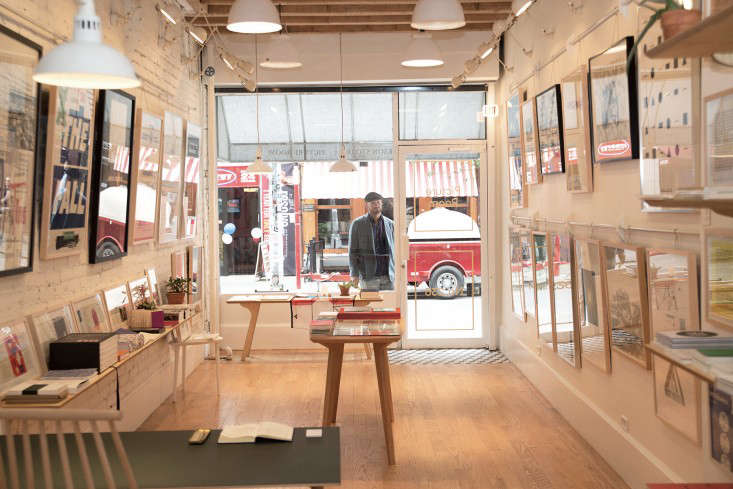
Picture Room in Nolita is the kind of place that makes a person suddenly care very deeply about paper. Not printer paper, not the sad receipt at the bottom of your tote bag, but beautiful paper: artist prints, vintage posters, rare editions, framed book jackets, art books, and works that seem to whisper, “Your wall deserves better than that one crooked calendar.”
Originally opened on Mulberry Street in Manhattan’s Nolita neighborhood as part of the McNally Jackson universe, Picture Room helped make collecting art feel less intimidating and more delightfully human. It was not a white-glove gallery where visitors feared breathing near the artwork. It was closer to a thoughtful shop, a visual library, and a collector’s cabinet all at once. You could browse, ask questions, fall in love with a print, and leave with something that made your apartment feel like it had opinions.
Today, Picture Room continues as a curated art destination, known for works on paper, photography, objects, editions, and custom framing. Its story remains closely tied to the charm of Nolita: independent shops, café corners, design-minded pedestrians, and that rare New York mood where a ten-minute errand accidentally becomes an afternoon of discovery.
What Is Picture Room?
Picture Room is an art retail concept built around accessibility, curiosity, and serious visual taste. Its focus is on affordable art, limited editions, rare prints, posters, artists’ books, photography, and collectible works on paper. The shop’s approach has always stood apart from the more formal gallery model. Instead of representing artists in the traditional gallery sense, Picture Room gathers, sources, publishes, and presents works that can be browsed and purchased in a more approachable setting.
That distinction matters. For many people, art buying feels like entering a mysterious club where everyone knows the password except you. Picture Room lowers the velvet rope. It says: come in, look closely, ask what a risograph is, ask why a vintage exhibition poster matters, ask whether that small framed print will work above your desk. The answer is probably yes, especially if your desk currently features one lonely coffee ring and a charger cable pretending to be sculpture.
The selection has included emerging and established contemporary artists, rare posters, artists’ publications, framed book jackets, and special editions. The result is a shop that bridges the gap between bookstore, gallery, design store, and collector’s resource.
Why Nolita Was the Perfect First Home
Nolita, short for North of Little Italy, has long been one of downtown Manhattan’s most walkable and visually layered neighborhoods. It sits near SoHo, Little Italy, the Lower East Side, and NoHo, yet it has a softer rhythm than its louder neighbors. The streets are smaller, the storefronts more intimate, and the shopping experience often feels personal rather than commercial.
Picture Room’s original location on Mulberry Street fit that environment beautifully. Nolita is built for wandering. A person might start with coffee, pause at a boutique, peek into a stationery shop, admire old brickwork, and then stumble into a room full of framed prints. That is not shopping; that is urban choreography.
The neighborhood’s mix of old New York texture and modern design culture gave Picture Room the right audience: readers, decorators, collectors, artists, editors, students, tourists with good shoes, and locals who “just wanted to look” before somehow leaving with a print under one arm.
The McNally Jackson Connection
Picture Room’s early identity was closely linked with McNally Jackson, the beloved independent bookstore known for creating spaces where books are treated as both intellectual objects and design objects. Around the corner, Goods for the Study expanded that world into stationery, writing tools, desk accessories, and lamps. Picture Room completed the triangle: books for the mind, stationery for the hand, art for the wall.
This relationship helped shape Picture Room’s personality. It was never only about decoration. It was about printed culture, book culture, and image culture. A framed book jacket could sit beside an exhibition poster. A contemporary print could share space with an artist’s publication. The shop made a simple but powerful argument: art does not have to be sealed away from everyday life. It can belong beside novels, notebooks, lamps, desks, and the daily rituals of living.
Inside the Picture Room Experience
The original Nolita shop was often described as bright, spare, and carefully arranged. Whitewashed walls, classic lighting, and well-spaced works allowed visitors to slow down. That kind of environment is important when buying art. Online shopping is efficient, but art benefits from presence. Scale, texture, paper tone, framing, and color all behave differently in person.
At Picture Room, the experience was not about being overwhelmed by hundreds of identical prints. It was about discovery. A visitor might notice a graphic poster first, then a small edition, then a framed literary cover, then a print by an artist they had never heard of but suddenly needed to know. The shop rewarded attention.
This is one reason the Shopper’s Diary format fits Picture Room so well. The store itself feels like a diary entry: specific, visual, personal, and full of little finds. It is less “massive shopping guide” and more “here is a place you will remember because it made your eyes wake up.”
What to Shop For at Picture Room
Works on Paper
Works on paper are the heart of Picture Room. They can include drawings, prints, photographs, silkscreens, lithographs, risographs, and other editioned pieces. For new collectors, works on paper are often a smart entry point because they tend to be more accessible than large paintings while still offering depth, craft, and collectibility.
Limited Editions
Limited editions are especially appealing because they balance accessibility with scarcity. Unlike mass-produced posters, editioned prints are produced in controlled quantities. The edition number, paper quality, printing method, and artist involvement all affect value and character. Translation: yes, the tiny number in the corner matters.
Vintage Posters
Vintage posters bring instant personality to a room. Exhibition posters, literary posters, and design-related posters can act as visual time capsules. They carry history without feeling dusty. A good poster can make a blank hallway look like it has spent summers in Europe and knows a little about jazz.
Artists’ Books and Publications
Artists’ books are perfect for people who love the object-ness of books: paper, binding, sequence, typography, image, and pacing. They are not always books in the conventional sense. Sometimes they are visual essays, experiments, archives, or portable exhibitions. Picture Room’s connection to book culture makes this category feel especially natural.
Custom Framing
Framing is not the glamorous part of art buying, but it is the part that makes everything look intentional. Picture Room offers custom framing, including natural wood frame options. For works on paper, proper framing also helps protect delicate materials. It is the difference between “I bought a print” and “I own artwork.”
Why Picture Room Matters in the Age of Online Art
Buying art online has become normal, and platforms offering affordable prints have helped introduce more people to collecting. That is a good thing. A blank wall should not require a hedge fund. But physical art spaces still offer something the internet struggles to replicate: trust, scale, surprise, and conversation.
Picture Room sits at the intersection of online accessibility and in-person curation. It understands that people want approachable prices and clear information, but they also want taste. The shop’s model is built on research and selection. Instead of asking shoppers to scroll through thousands of images until their eyeballs file a formal complaint, Picture Room narrows the field to works that feel considered.
This kind of curation is valuable because art buying is emotional. A print may be technically beautiful, historically interesting, and reasonably priced, but the real test is whether you want to keep looking at it on an ordinary Tuesday. Picture Room encourages that slower, more personal decision-making.
How to Buy Art Like a Picture Room Shopper
Start With Feeling, Then Ask Smart Questions
The best first step is simple: notice what you keep returning to. Do you like graphic shapes, quiet photography, expressive line drawings, botanical forms, bold color, or text-based work? Once something catches your eye, ask about the artist, edition size, medium, paper, provenance, and framing.
Measure Before You Fall in Love
This is deeply unromantic advice, but it will save you. Measure your wall. Measure the space above your sofa, bed, desk, or console. A small print can look powerful when framed well, but a tiny piece floating alone above a giant couch may look like it is asking for directions.
Consider the Room’s Mood
Art does not have to match the sofa. In fact, please do not force art to match the sofa like it is auditioning for a furniture catalog. Instead, think about mood. Do you want the room to feel calmer, sharper, warmer, stranger, more playful, or more grown-up? Choose artwork that pushes the room toward that feeling.
Respect the Frame
A good frame does not shout. It supports the artwork, protects it, and gives it presence. Natural wood frames work beautifully with many works on paper because they feel warm without stealing attention. Matting can also help a smaller work breathe.
Buy What You Will Still Like Later
Trends are fun, but art lives with you. Before buying, imagine seeing the piece every morning for years. If the thought makes you smile, lean in. If it already feels like a phase, keep browsing.
Picture Room and the Democratization of Collecting
One of the most interesting things about Picture Room is its quiet challenge to the idea that art collecting must be elite. The shop’s history shows a belief that collecting can begin with curiosity, not status. A person can start with a modest print, a small edition, or an artist’s book and still participate meaningfully in visual culture.
This is part of a larger movement in contemporary art retail. Affordable art fairs, limited-edition print platforms, art book fairs, and independent shops have all helped broaden access. They give new collectors a way to learn by looking and buying thoughtfully, rather than standing outside the art world with their noses pressed to the glass.
Picture Room’s strength is that it combines access with seriousness. It does not water down the work. It simply changes the setting. The art remains researched, intentional, and often rare, but the experience feels warmer.
Design Lessons From Picture Room
Even if you do not buy anything, Picture Room offers useful design lessons for the home. First, a wall does not need to be crowded to feel finished. One strong framed print can do more than a dozen random pieces fighting for oxygen. Second, paper has texture and subtlety. A print is not just an image; it is ink, surface, edge, and shadow. Third, art and books belong together. A room with both instantly feels more lived-in and intelligent.
Another lesson: small works deserve respect. Many people assume bigger is always better, but a small framed piece can create intimacy. It invites people closer. It rewards attention. In a hallway, reading nook, powder room, or bedside corner, a small artwork can be surprisingly powerful.
A Perfect Nolita Afternoon Inspired by Picture Room
To understand Picture Room’s original spirit, imagine a slow Nolita afternoon. Start near Prince Street with coffee. Walk Mulberry, Elizabeth, and Mott Streets without rushing. Look at storefronts. Notice the old facades, stylish boutiques, tiny restaurants, and people who somehow look casually editorial while carrying groceries.
Then step into the world of paper and print. Browse stationery at Goods for the Study. Visit an independent bookstore. Let the neighborhood’s creative rhythm set the pace. Picture Room belonged to this kind of itinerary: a place where shopping was not about grabbing products, but about sharpening taste.
The best souvenir from Nolita is not necessarily a T-shirt or a pastry, although nobody here is anti-pastry. It might be a print that reminds you of the afternoon: the light, the walking, the sense that New York still hides small rooms full of good ideas.
Experience Notes: Living With the Picture Room State of Mind
The real magic of a shop like Picture Room begins after the purchase. You bring home a print, lean it against the wall “just for now,” and suddenly begin rearranging your entire life around it. The chair moves six inches. A lamp becomes unacceptable. The old poster from college is thanked for its service and quietly retired. Art has a funny way of exposing the weak links in a room.
One of the best experiences related to Picture Room is learning how personal art selection can be. In a big-box décor aisle, the question is often, “Will this match?” In a curated art shop, the better question is, “Why am I drawn to this?” Maybe it is the color. Maybe it reminds you of a place. Maybe the composition feels calm. Maybe it is strange in exactly the way your apartment needs. That small act of noticing turns shopping into self-knowledge, which sounds dramatic until you realize you have spent twenty minutes debating the emotional temperature of a blue rectangle.
Another memorable part of the experience is talking through options with someone knowledgeable. Good art retail is not pushy. It is conversational. You might ask whether a piece is part of an edition, whether it should be floated or matted, whether the paper is delicate, or whether sunlight will be a problem. Those details build confidence. They also make the artwork feel less like décor and more like something with a life before and after you.
For first-time buyers, the biggest surprise is often how satisfying a modest piece can be. You do not need a museum-scale work to transform a room. A small print above a nightstand can change the way the whole corner feels. A framed poster in a kitchen can make breakfast feel less like a sleepy negotiation with toast. A photograph near the entryway can set the mood before anyone has even taken off a coat.
There is also joy in giving art as a gift, especially when it is chosen carefully. A print can say, “I know your taste,” much better than another candle, though candles are doing their best and should not be mocked too harshly. Picture Room’s gift-friendly nature comes from the variety of works on paper, books, and objects. Art can be intimate without being overly sentimental, useful without being practical, and beautiful without needing an instruction manual.
Perhaps the most valuable experience is developing an eye over time. The first visit may feel like browsing. The second visit becomes comparison. By the third, you start noticing printing methods, paper edges, edition numbers, and artists whose names stay with you. That gradual education is part of the pleasure. Picture Room’s world rewards repeat looking.
In that sense, “Shopper’s Diary: Picture Room in Nolita” is not only about one shop or one neighborhood. It is about a way of shopping that feels slower, smarter, and more connected to place. It reminds us that a good store can be a teacher, a mood board, a community node, and a tiny museum where the exit sign leads directly to your own living room.
Conclusion
Picture Room in Nolita remains a compelling story because it captures what makes independent retail meaningful: curation, personality, expertise, and discovery. It turned art buying into something approachable without making it feel ordinary. From works on paper and limited editions to vintage posters and artists’ books, Picture Room showed that collecting can begin with a single piece you genuinely love.
For design lovers, new collectors, and anyone trying to make a home feel more personal, the lesson is simple: choose art with attention. Let it surprise you. Ask questions. Frame it well. And never underestimate the power of one excellent print to make a room look like someone interesting lives there.
Note: This article is written for web publication and is based on publicly available information about Picture Room, Nolita, independent art retail, print collecting, and New York design-shopping culture.











