
Note: Source links are intentionally omitted by request. This article is written for web publication and based on reported interviews and historical coverage.
Before The Kids in the Hall became the kind of comedy obsession people recommend with the intensity of a very committed cult member, part of the troupe took a weird detour through Saturday Night Live. And by “weird detour,” I mean Bruce McCulloch and Mark McKinney got pulled into SNL’s writing machine in the mid-1980s, only for the whole thing to go over like a canoe on a freeway.
That sounds dramatic, but comedy history loves drama. More important, it loves irony. Because the same failed stint that made SNL a lousy fit for them also helped clarify what made The Kids in the Hall special in the first place. Sometimes the best career move is not landing the dream job. Sometimes it is discovering, in front of a national audience and a stressed-out producer, that the dream job is somebody else’s nightmare.
So yes, some of the Kids really did write for SNL. Yes, it went badly. But “failed miserably” only tells half the story. The more interesting half is why it failed, what that revealed about sketch comedy, and how bombing in one legendary institution helped create another.
The Detour That Almost Broke Up the Band
In the early days, The Kids in the Hall were not yet a brand, a prestige comedy property, or a T-shirt sold to people who say things like, “You really have to watch the early stuff.” They were just a ferociously odd live troupe building chemistry the old-fashioned way: by working together, fighting together, and generating the kind of shared comic language that usually scares network executives.
Then Lorne Michaels noticed them. Or more precisely, he noticed enough of them to make things complicated. McCulloch and McKinney were hired into the SNL writing world in 1985, at exactly the wrong possible moment. If you were building a comedy stress simulator in a laboratory, you would struggle to improve on the circumstances.
This was Season 11, the now-infamous “Weird Year,” when Michaels returned to SNL after a five-year absence and tried to reboot the show with a young cast, a fresh staff, and a whole lot of ambition. What he got instead was turbulence, clashing sensibilities, rough reviews, and the very real smell of cancellation floating around Studio 8H like burnt coffee and panic. Not ideal conditions for two writers arriving from a developing sketch troupe with a taste for surreal character work.
Meanwhile, back in the Kids universe, the group itself nearly split. Kevin McDonald later recalled that once McCulloch and McKinney were hired to write for SNL, it looked like the troupe might be done. Imagine building a promising comedy gang, only to watch two members get yanked into America’s most famous sketch factory. That is not exactly a recipe for emotional stability. Or any stability, really.
Why the SNL Experiment Went Sideways
1. They Arrived During an SNL Identity Crisis
Plenty of talented people have struggled at SNL, but McCulloch and McKinney didn’t just walk into a hard job. They walked into a famous hard job during one of its least stable eras. That matters. There is a big difference between joining a machine that is humming and joining one that is coughing sparks into the carpet.
Season 11 was not a smooth continuation of a proven system. It was a repair job in public. The cast was new. The expectations were huge. The reviews were often brutal. Even people involved with the season have looked back on it as a noble mess. That kind of environment can be unforgiving to anyone, but especially to writers still figuring out how their voice fits a show with live deadlines, celebrity hosts, shifting cast strengths, and the weekly possibility that your idea will die in a table read before it even learns to walk.
McKinney later described himself as incredibly green in that period, which is refreshing because comedy history is usually packed with people who remember themselves as prophets. Instead, his recollection sounds like what it probably felt like: surreal, overwhelming, and faster than common sense. One minute you are building material with your troupe; the next minute you are in a high-pressure TV ecosystem being told, directly or indirectly, not to give notes to Madonna. Welcome to television, kid. Please try not to cry near the cue cards.
2. SNL Wanted Speed; the Kids Thrived on Voice
The weekly SNL process is famously brutal. Writers pitch on Monday, write through the night, survive the Wednesday read-through, rewrite in groups, block on Friday, rehearse on Saturday, and then the whole machine goes live because, as Tina Fey once put it, the show does not go on because it is ready; it goes on because it is 11:30. That is less a workflow than a legally sanctioned stress response.
Now compare that with what made The Kids in the Hall work. Their comedy came from a tightly developed group identity. They had built rhythms, recurring characters, shared instincts, and a willingness to push an idea beyond “timely” into “beautifully deranged.” Their sketches often felt less like topical packets and more like little haunted worlds. They could begin with something that looked ordinary, then slide sideways into total lunacy while keeping a straight face.
Dave Foley once pointed to the sketch “Reg” as a useful KITH archetype: it begins as a solemn remembrance of a dead friend and ends with the revelation that the mourners killed him. That is a perfect Kids move. It starts as pathos, veers into darkness, and somehow lands as comedy without winking at the audience. On SNL, where the week’s news, the host, the clock, and the room all shape what survives, that kind of carefully tuned wrongness does not always get room to breathe.
In other words, the Kids were not built for comedy triage. They were built for comedy architecture. SNL often asks, “What can work by Saturday?” The Kids were more interested in, “What kind of bizarre people live in this sketch, and what’s the saddest, funniest way to trap them there?” Those are not the same question.
3. The Troupe Worked as a Unit, Not as Spare Parts
One of the smartest observations ever made about sketch comedy is that successful sketch shows usually come from groups who have already worked together long enough to develop trust, tone, and shorthand. That is a big reason so many “assembled” sketch shows feel like six talented people taking turns being on different programs. Chemistry is not a garnish. It is the meal.
The Kids in the Hall had that chemistry in spades. The troupe functioned, as later writers and critics have noted, almost like a band: complementary talents, overlapping comic obsessions, friction that was productive until it was not, and a sense that the group’s identity was bigger than any single member. That is exactly why pulling two of them out and dropping them into the SNL machine did not magically create the same result. You cannot remove the drummer and the guitarist from one band, toss them into another rehearsal space, and act surprised when the songs feel different.
Lorne Michaels eventually seemed to understand this. According to later accounts, the failed SNL fit helped convince him that the troupe was “of one piece.” That phrase matters. It suggests that what he saw was not two writers who needed a better week at SNL, but a comedy organism that made more sense whole than divided.
The Bigger Reason They “Failed Miserably”
Let’s be fair to the word “failed.” McCulloch and McKinney did not fail because they lacked talent. They failed because SNL and The Kids in the Hall were solving different comedic problems.
SNL has always lived partly in the now. It feeds on public figures, topical recognition, live-wire energy, celebrity hosting, and the thrill of making something air before it has fully stopped smoking. Even when it gets surreal, it is still operating inside a highly specific American television framework. It is a mainstream institution that periodically lets weirdness through customs.
The Kids in the Hall, by contrast, often felt timeless precisely because it was less tethered to the week’s headlines. Their work had absurdism, drag played without apology, emotional sincerity, recurring eccentrics, and a fascination with the bizarre hidden under the everyday. They were not primarily satirizing the culture from outside. They were crawling inside it and discovering there was an alien in accounting, a deeply wounded Chicken Lady in the suburbs, or a tiny tyrant crushing your head from across the street.
That tonal difference is everything. If SNL is often built to catch the mood of the country by Saturday night, The Kids in the Hall was built to make you laugh on a Tuesday in 1992 and then again on a Thursday in 2026 because the sketch is not chained to a headline. One is an elite sprint. The other is a weird little durability machine.
How Bombing at SNL Helped Create a Better Show
Here is the fun part: the failure was useful. Maybe even essential.
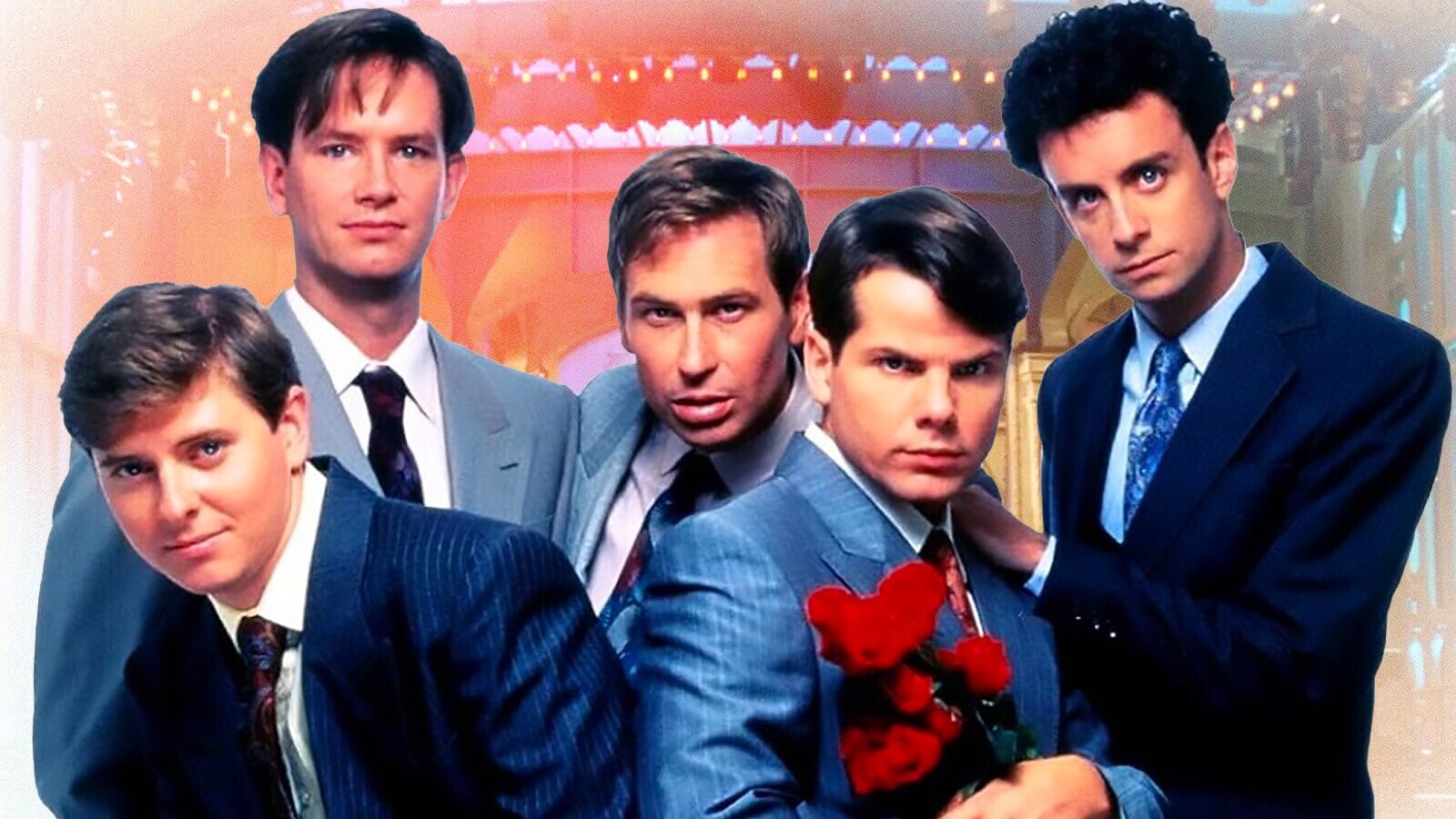
After the SNL stint did not work out, Michaels put his energy into helping the troupe get its own show. That turned out to be the right call. Once the Kids were allowed to operate as the Kids, instead of as junior pieces in another institution’s puzzle, the results were unmistakable. Their series debuted in the United States on HBO in 1989 and quickly developed the kind of cult following that comedy people never shut up about because, frankly, they should not.
The show’s voice was instantly distinct. It was stranger than SNL, more character-driven, less dependent on celebrity imitation, and often more emotionally committed to the bit. It could be silly, dark, intimate, grotesque, and weirdly sweet in the same half hour. Sometimes it felt like sketch comedy. Sometimes it felt like five very funny men staging a philosophical nervous breakdown in wigs.
And that was the point. On their own show, the Kids did not need to compress themselves into a format that did not quite want what they did best. They could create a world where Head Crusher, Buddy Cole, Chicken Lady, and all the rest did not feel like detours. They felt like citizens.
What This Story Says About Comedy Careers
There is a lazy way to read this history: “They couldn’t cut it at SNL.” That version is neat, tidy, and wrong.
The smarter reading is that creative failure is often diagnostic. It tells you what environment cannot use you properly. It tells you whether your talent is underdeveloped or merely misplaced. It tells you whether the room needs your voice, or just a version of your voice that is easier to schedule between commercial breaks.
McCulloch and McKinney’s SNL year now looks less like a humiliating collapse and more like a brutal compatibility test. They were not revealed as frauds. They were revealed as members of a troupe with its own comic grammar, one that got diluted when removed from the group that made it meaningful.
This is not a rare story, either. Prestigious institutions are full of talented people who were brilliant somewhere else first. Sometimes the institution refines them. Sometimes it flattens them. Sometimes it teaches them what they never want to do again. Which, in its own twisted way, is also an education.
Examples of the Comic Mismatch
Take a typical modern understanding of SNL: news hooks, political cold opens, guest hosts, famous impressions, commercial parodies, and sketches designed to play well in recap culture by Sunday morning. Even in its strongest eras, the show often gains force from recognition. You laugh because the target is familiar, the reference is timely, or the performance attacks a public figure from exactly the angle you hoped it would.
Now put that next to the Kids. Their best material often works because it feels like it came from nowhere obvious. It is not simply “topical,” and it is not always chasing applause lines. It is more interested in comic commitment. A sketch can hinge on a bizarre premise, but the performers treat it with such emotional seriousness that the absurdity becomes irresistible. That is why the group could make something as ridiculous as Head Crusher iconic, or turn a deadpan memory piece into a murder confession, or build entire worlds out of social discomfort, gender performance, buried resentment, and surreal menace.
That sensibility is harder to plug into a fast, host-driven show where every week resets the chemistry. The Kids were a closed circuit. SNL is a power grid.
Extra Reflections: What This Feels Like in Real Creative Life
The reason this story still lands is that it is not really just about television history. It is about a familiar creative experience: entering the room everyone says you are supposed to want, then realizing the room is wrong for your brain, your process, your collaborators, or your sense of what the work is actually for.
Anybody who has ever joined a prestigious workplace and immediately felt their internal organs try to resign will recognize the outline. At first it feels glamorous. The badge works. The building is impressive. Important people say important-looking things while holding legal pads. You think, “Well, I made it.” Then the week starts. The pace is wrong. The feedback is weird. Half the room is speaking in shortcuts you do not understand, and the other half is pretending not to panic because panic is apparently bad for morale.
That is what makes the McCulloch-McKinney detour so relatable. Not because most people have been kicked under a table for giving notes to Madonna, though that would certainly spice up a LinkedIn profile. It is relatable because success often arrives wearing the wrong name tag. You think you wanted the institution, but what you really wanted was the chance to make the thing only you and your people know how to make.
There is also something painfully human in how creative groups get misunderstood by outsiders. A troupe, band, writing duo, or startup team can look interchangeable from far away. “These people are all funny,” or “these people are all smart,” so the logic goes, “surely they can be redistributed like office chairs.” But that is not how groups work. A real group has habits, grudges, rhythms, shorthand, old jokes, and little invisible bridges between members. Remove one person and the whole structure changes. Remove two and suddenly the voltage drops.
That is why stories like this can feel encouraging even when they involve public failure. They remind you that mismatch is not proof of mediocrity. Sometimes it is proof of specificity. Sometimes your worst professional fit is merely the fastest possible route to figuring out your best one.
And yes, that realization usually arrives in an ugly wrapper. It arrives after the bad meeting, the dead table read, the email that sounds upbeat but feels like a shovel, the pilot that collapses, the collaboration that never clicks, or the dazzling opportunity that somehow turns your own strengths into dead weight. Nobody frames those moments and hangs them over the fireplace. But careers are often built on exactly that wreckage.
So if there is a moral here, it is not that rejection is secretly awesome. Rejection still stinks. Bombing still hurts. High-status disappointment still makes you want to go home and stare at a wall like it owes you money. The useful part comes later, when the noise dies down and you can finally ask the better question: not “Why didn’t they want me?” but “What kind of work only makes sense when I do it my way, with my people, in my strange little language?”
That is the real legacy of this odd SNL footnote. Two future cult legends went into the biggest sketch-comedy institution in America and did not become what the institution needed. Good. Lucky, even. Because what came next was weirder, more original, and far more lasting.
Conclusion
Some of the Kids in the Hall wrote for SNL, and yes, by the usual scorecard, they failed. The fit was bad. The timing was worse. The room was not built for the exact kind of comic chemistry that made them special. But failure is too blunt a word if it makes the story sound pointless.
What happened was more interesting than a flop. A legendary troupe briefly got squeezed through the wrong comedy machine, learned that the machine was not built for them, and came out with a sharper sense of identity. SNL did not turn McCulloch and McKinney into stars. It accidentally helped prove that The Kids in the Hall needed to exist on their own terms.
And that may be the funniest part of all: one of the best things to happen to the Kids in the Hall was failing at the biggest sketch show in America. Sometimes destiny does not open a door. Sometimes it politely kicks you out of the wrong building.













