
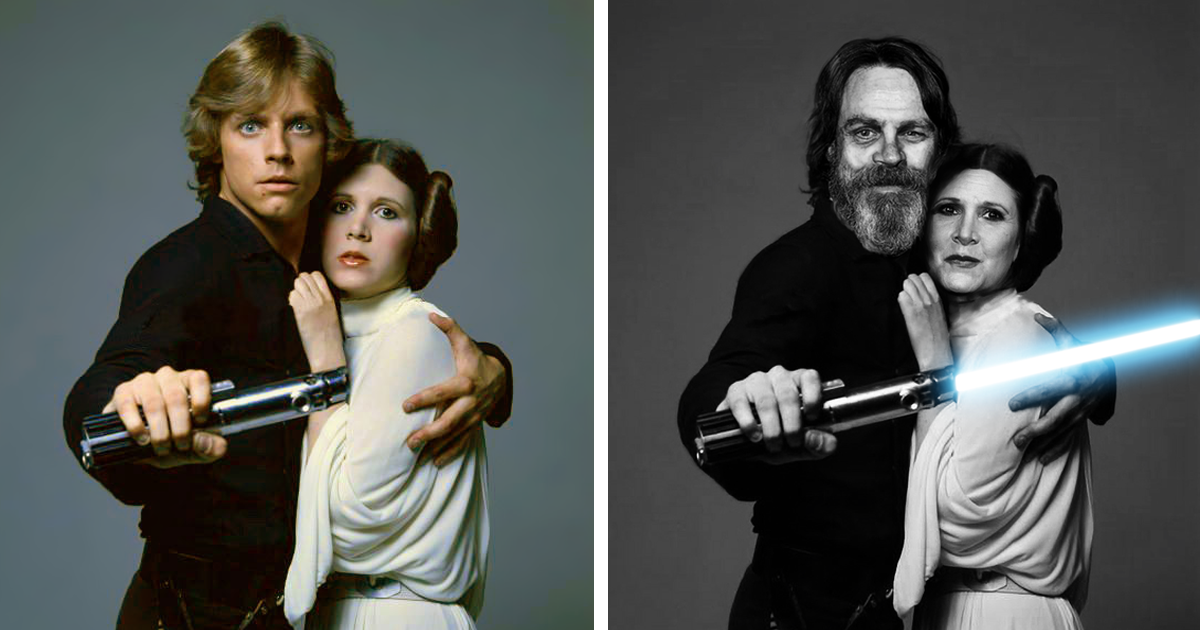
Few movie franchises have aged quite like Star Wars. Some films get old and start creaking like an un-oiled droid. Star Wars, meanwhile, keeps finding new generations of fans, new streaming homes, new Lego sets, and new debates about whether Han shot first. Spoiler: people will still be arguing about that when we are all holograms.
But the real magic of the galaxy far, far away has always been its actors. They turned farm boys, princesses, smugglers, Jedi, Sith Lords, droids, rebels, scavengers, and helmet-wearing space dads into pop-culture landmarks. Looking at Star Wars actors then and now is not just a celebrity nostalgia trip. It is a tour through nearly 50 years of Hollywood change: blockbuster filmmaking, fan culture, digital effects, streaming television, convention fame, and the strange career gravity of a franchise that can make one line, one cape, or one golden robot suit unforgettable.
So grab your blue milk, adjust your robe, and let’s revisit the stars who helped build the sagawhere they began, what happened after the hyperspace jump, and why their legacies still feel bigger than the Death Star’s maintenance bill.
The Original Trilogy Cast: From Unknown Rebels to Hollywood Legends
Mark Hamill: From Tatooine Farm Boy to Pop-Culture Jedi Master
Then, Mark Hamill was a young television actor stepping into the role of Luke Skywalker, the wide-eyed dreamer who wanted to escape Tatooine and ended up carrying the emotional center of the original trilogy. In 1977, Luke was not yet “iconic.” He was simply sincere, restless, and very good at staring dramatically at twin suns.
Now, Hamill is far more than Luke Skywalker. He became one of the most respected voice actors in entertainment, especially famous for voicing the Joker in animated Batman projects. He also returned to Star Wars in the sequel trilogy and appeared through modern digital techniques in newer stories such as The Mandalorian. His career shows how a role can define an actor without trapping him. Hamill leaned into the fandom, joked with it, questioned it, and ultimately became one of its most beloved guardians.
Harrison Ford: From Han Solo’s Smirk to Hollywood Royalty
Then, Harrison Ford entered Star Wars as Han Solo, the cynical smuggler who acted like he cared only about money until his conscience ruined his whole “cool loner” brand. Ford brought Han a dry wit, impatient charm, and the energy of a man who absolutely would fix the Millennium Falcon with a kick.
Now, Ford is one of the most recognizable movie stars in the world. After Star Wars, he became Indiana Jones, returned to Blade Runner, starred in thrillers, dramas, action films, and prestige television, and kept his reputation for being both charming and hilariously allergic to nonsense. His return as Han Solo in The Force Awakens gave the sequel trilogy emotional weight. Ford’s “then and now” story proves that Han Solo was not the peak of his careerit was the launch ramp.
Carrie Fisher: From Princess Leia to Fearless Cultural Icon
Then, Carrie Fisher was Princess Leia Organa, a royal leader with a blaster, a sharper tongue than most Sith weapons, and absolutely no time for male incompetence. Leia changed the way audiences saw princess characters. She was not waiting in a tower. She was leading rebellions, roasting stormtroopers, and helping rescue the men who technically showed up to rescue her.
Now, Fisher’s legacy remains enormous. She became not only an actress but also a bestselling author, script doctor, humorist, and public figure known for honesty and wit. Her later return as General Leia in the sequel trilogy allowed fans to see Leia as a seasoned leader shaped by war, loss, and responsibility. Fisher died in 2016, but her presence still defines the franchise. In a galaxy full of lightsabers, her sharpest weapon was always her voice.
Anthony Daniels: The Man Inside the Golden Droid
Then, Anthony Daniels was a stage-trained performer who stepped into the uncomfortable, shiny, and extremely fussy suit of C-3PO. The role required mime skills, vocal precision, patience, and the ability to look dignified while dressed like a nervous Oscar statue.
Now, Daniels is one of the most consistent human links across the Star Wars universe. He has played or voiced C-3PO across films, television projects, specials, games, and live events. His performance made C-3PO more than comic relief. The droid became a symbol of continuity: anxious, polite, dramatic, and somehow always present when history happens. Daniels turned a metal suit into one of cinema’s most recognizable personalities.
James Earl Jones: The Voice That Made Darth Vader Immortal
Then, James Earl Jones gave Darth Vader the voice that made audiences sit up straighter in their seats. David Prowse provided Vader’s physical presence in the suit, but Jones supplied the thunder. Without that voice, Vader might have been intimidating. With it, he became mythic.
Now, Jones is remembered as one of the great actors of stage and screen, with a career that reached far beyond Star Wars. He voiced Mufasa in The Lion King, won major theater honors, and became a standard for vocal performance. Jones died in 2024, but Darth Vader’s voice remains one of the most famous sounds in film history. Not bad for a role he once chose not to be credited for in the original release.
The Prequel Trilogy Cast: Reappraised, Rewatched, and Redeemed by Fans
Ewan McGregor: The Young Obi-Wan Who Grew Into the Role
Then, Ewan McGregor stepped into one of the most intimidating jobs in cinema: playing a younger version of Alec Guinness’s Obi-Wan Kenobi. In The Phantom Menace, he was disciplined, calm, and still learning. By Revenge of the Sith, he had become the emotional anchor of the prequel trilogy.
Now, McGregor is widely loved by fans who grew up with the prequels. His return in the Disney+ series Obi-Wan Kenobi gave him room to explore grief, guilt, and hope in a way the films could only suggest. Outside Star Wars, McGregor built a versatile career in films such as Trainspotting, Moulin Rouge!, Doctor Sleep, and multiple prestige television projects. He is a perfect example of how time can change a performance’s reputation. Yesterday’s debated casting can become today’s beloved canon.
Natalie Portman: From Queen Amidala to Oscar-Winning Star
Then, Natalie Portman played Padmé Amidala, a queen, senator, and secret romantic lead whose wardrobe seemed to require its own diplomatic staff. Portman was still a teenager when she entered the franchise, and the role placed her under a global spotlight very early in her career.
Now, Portman is an Academy Award-winning actress with a career that includes Black Swan, V for Vendetta, Jackie, Thor, and many independent films. She also graduated from Harvard, because apparently starring in a global franchise was not enough homework. Padmé remains important in Star Wars because she represents the political tragedy behind Anakin Skywalker’s fall: a leader trying to preserve democracy while the system collapses around her.
Hayden Christensen: From Divisive Anakin to Fan-Favorite Return
Then, Hayden Christensen was cast as Anakin Skywalker, which might be one of the hardest roles in film history. He had to portray a gifted but unstable young Jedi, a romantic lead, a tragic hero, and the future Darth Vader. The prequels received heavy criticism at the time, and Christensen took more than his fair share of fan heat.
Now, the mood has changed dramatically. Many fans who grew up with the prequels view Christensen with affection and respect. His returns in Obi-Wan Kenobi and Ahsoka gave him new opportunities to play Anakin with maturity and emotional depth. His comeback is one of the most interesting Star Wars cast then and now stories because it shows how fandom can soften, reconsider, and eventually celebrate what it once mocked.
Samuel L. Jackson: Mace Windu and the Coolest Jedi Posture in the Council
Then, Samuel L. Jackson joined the prequels as Mace Windu, the stern Jedi Master with a purple lightsaber and the expression of a man who has read every rulebook and will absolutely quote it at you. Jackson was already famous, so his presence gave the Jedi Council instant authority.
Now, Jackson remains one of Hollywood’s most prolific and charismatic actors. His Star Wars role is only one chapter in a career filled with Quentin Tarantino films, Marvel blockbusters, thrillers, dramas, and action classics. Fans still regularly speculate about whether Mace Windu survived his fall in Revenge of the Sith. In Star Wars, nobody is fully gone until the story stops making moneyand sometimes not even then.
The Sequel Trilogy Cast: New Faces for a New Generation
Daisy Ridley: From Unknown Actress to Rey Skywalker
Then, Daisy Ridley was a relatively unknown British actress when she was cast as Rey in The Force Awakens. Rey began as a scavenger on Jakku, toughened by loneliness but still hopeful enough to believe her life could mean something more. Ridley carried the emotional center of the sequel trilogy with physical commitment and wide-open sincerity.
Now, Ridley has worked in dramas, thrillers, voice roles, and historical films, including Young Woman and the Sea. She has also been attached to return as Rey in a future Star Wars film focused on rebuilding the Jedi. Whether that project arrives quickly or takes the scenic hyperspace route, Ridley’s place in the saga is secure. For younger fans, Rey is not “new Star Wars.” She is simply their Star Wars.
John Boyega: Finn, Fan Expectations, and a Career With Range
Then, John Boyega arrived as Finn, a stormtrooper who rejects the First Order and chooses conscience over obedience. His introduction in The Force Awakens was electric: terrified, funny, brave, and morally awake. Many fans expected Finn’s story to grow into a major Jedi arc.
Now, Boyega has built a strong post-Star Wars career in projects such as Small Axe, The Woman King, and They Cloned Tyrone. He has also spoken openly about his hopes and frustrations with Finn’s development. That honesty made him a major voice in conversations about representation, character arcs, and blockbuster responsibility. Finn remains one of the sequel trilogy’s most intriguing “what could happen next?” characters.
Adam Driver: Kylo Ren and the Art of Beautifully Bad Decisions
Then, Adam Driver became Kylo Ren, a villain with legacy pressure, emotional volatility, and the galaxy’s most dramatic interior decorating choices. Driver brought unusual vulnerability to a dark-side character. Kylo was frightening, but he was also wounded, insecure, and painfully human.
Now, Driver is one of the most respected actors of his generation, with acclaimed performances in Marriage Story, BlacKkKlansman, Paterson, Ferrari, and more. His Star Wars work remains a major part of his public profile, but his career has expanded far beyond the mask. Kylo Ren could have been a one-note villain. Driver made him a walking therapy bill with a lightsaber.
Oscar Isaac: Poe Dameron and the Charm Offensive
Then, Oscar Isaac played Poe Dameron, the hotshot Resistance pilot with enough charisma to power an X-wing without fuel. Poe brought swagger, humor, and classic space-adventure energy to the sequel trilogy.
Now, Isaac has become a major force in film and television, starring in projects such as Ex Machina, Inside Llewyn Davis, Dune, Moon Knight, and prestige dramas. Like many sequel actors, he has expressed mixed feelings about returning unless the story is right. That is fair. Even the best pilots check the mission briefing before jumping into hyperspace.
The Streaming Era: New Stars, Old Mythology, Bigger Universe
Pedro Pascal: The Mandalorian Behind the Helmet
Then, Pedro Pascal was already known for standout roles in Game of Thrones and Narcos before becoming Din Djarin in The Mandalorian. The challenge was unusual: create a lead character whose face is hidden most of the time. Pascal’s voice performance, combined with physical work from performers in the suit, made Din feel stoic, weary, funny, and deeply protective.
Now, Pascal is one of the busiest actors in Hollywood, with major roles in The Last of Us, superhero films, and prestige projects. His Star Wars character helped introduce Grogu to the world, which means he is partly responsible for millions of people saying “Baby Yoda” even after being corrected. That is power.
Rosario Dawson: Ahsoka’s Leap From Animation to Live Action
Then, Ahsoka Tano was best known as an animated character voiced by Ashley Eckstein in The Clone Wars and Rebels. When Rosario Dawson brought Ahsoka into live action in The Mandalorian, she carried years of fan expectations on her shoulders.
Now, Dawson has led her own Ahsoka series, connecting animated storytelling to live-action Star Wars. Her version of Ahsoka is quieter and more meditative than the younger animated Padawan, which makes sense for a character shaped by war, betrayal, survival, and spiritual discipline. Dawson’s casting shows how modern Star Wars is no longer only a movie franchise. It is an interconnected television universe with room for long character journeys.
Diego Luna: Cassian Andor and the Ground-Level Rebellion
Then, Diego Luna appeared as Cassian Andor in Rogue One, a rebel intelligence officer living in the morally gray corners of resistance. He was not a chosen one, not a Jedi, and not a secret Skywalker. He was a person doing difficult work in a dangerous political world.
Now, Luna’s Andor has become one of the most critically admired parts of modern Star Wars. The series uses Cassian’s story to explore surveillance, sacrifice, radicalization, bureaucracy, and everyday courage. Luna’s performance helped prove that Star Wars can thrive without lightsabers every five minutes. Sometimes the most powerful weapon is a good script. Shocking, but true.
Why Star Wars Actors Age Differently in Pop Culture
The phrase Star Wars actors then and now is popular because these performers do not simply age in public. They evolve alongside the audience. A child who first saw Luke as a hero may now see him as a symbol of failure, recovery, and mentorship. A viewer who once mocked Anakin’s dialogue may now appreciate the tragedy beneath it. A fan who met Rey as a teenager may one day introduce Rey to their own kids as a classic character.
That is the strange strength of Star Wars. It keeps recontextualizing its actors. The original cast became legends. The prequel cast became redeemed favorites. The sequel cast became the center of heated debate and younger nostalgia. The streaming cast became proof that the galaxy can expand beyond the Skywalker family tree, which was honestly getting a little crowded.
These careers also reveal how demanding franchise fame can be. Some actors embrace conventions and fan events. Some keep distance. Some return after decades. Some become more loved after time gives audiences a new perspective. In every case, Star Wars acts like a second moon orbiting their careers. Even when they move on, the pull remains.
Fan Experience: Watching Star Wars Actors Then And Now
One of the best experiences related to Star Wars actors then and now is rewatching the saga in release order and noticing how differently the performances land over time. When you are young, Luke seems like the obvious hero because he wants adventure. When you are older, Uncle Owen suddenly makes more sense. The man was not trying to crush dreams; he was trying to keep one dramatic Skywalker from setting the galaxy on fire again. Honestly, fair concern.
Seeing Harrison Ford as young Han Solo after watching his later work is also a treat. You realize that much of the Ford persona was already there: the sideways glance, the irritated bravery, the sense that he would rather be anywhere else but will still save everybody before leaving. Carrie Fisher’s Leia becomes more impressive with every rewatch. As a kid, you remember the hair and the blaster. As an adult, you notice the command presence, the comic timing, and the way Fisher made Leia feel like the smartest person in nearly every room.
The prequels create another kind of viewing experience. Many fans who dismissed them years ago now watch them with more patience. Ewan McGregor’s Obi-Wan feels warmer. Natalie Portman’s Padmé feels more tragic. Hayden Christensen’s Anakin feels less like a simple fall-from-grace story and more like a portrait of fear, manipulation, and emotional collapse. The dialogue may still be famously operatic, but the performances have gained context through The Clone Wars, Obi-Wan Kenobi, and Ahsoka.
The sequel actors offer a different experience because their era unfolded in the social-media storm. Daisy Ridley, John Boyega, Adam Driver, and Oscar Isaac became global stars while fans debated every plot choice in real time. Watching them now, away from the opening-week noise, makes it easier to appreciate the energy they brought. Ridley gave Rey earnestness. Boyega gave Finn humor and heart. Driver gave Kylo Ren depth. Isaac gave Poe movie-star sparkle with a pilot jacket.
At conventions, online fan communities, and family movie nights, the “then and now” appeal becomes even clearer. Parents introduce children to the original trilogy. Teenagers discover the prequels through memes and then realize the story actually hurts. New viewers meet Grogu first and work backward, which is chaotic but somehow very on-brand for Star Wars. The actors become markers of time. They remind us who we were when we first watched, what we missed, and why we keep returning to a galaxy full of space wizards, family drama, political warnings, and extremely marketable droids.
Conclusion: The Force Is Strong With These Careers
Star Wars has always been bigger than one generation, and its actors are the living proof. Mark Hamill, Harrison Ford, Carrie Fisher, Anthony Daniels, James Earl Jones, Ewan McGregor, Natalie Portman, Hayden Christensen, Daisy Ridley, John Boyega, Adam Driver, Oscar Isaac, Pedro Pascal, Rosario Dawson, and Diego Luna all entered the franchise at different moments. Some were unknown. Some were established. Some were celebrated immediately. Others had to wait years for fans to catch up.
Looking at Star Wars actors then and now reminds us that fame is not frozen in carbonite. It changes. Careers grow, reputations shift, audiences mature, and old performances find new meaning. That is why the saga keeps working. The spaceships are cool, the lightsabers are cooler, and the sound design deserves a medal. But the actors are the ones who make the galaxy feel human.
In the end, the cast of Star Wars did more than perform in a franchise. They became part of a shared cultural language. Say “I love you,” and someone will answer, “I know.” Mention a bad feeling, and the room understands. Breathe heavily into a microphone, and everyone thinks of Darth Vader. That is not just nostalgia. That is legacy.
Note: This article is written as original publish-ready content based on publicly available entertainment history, actor biographies, franchise records, and current career information.














