
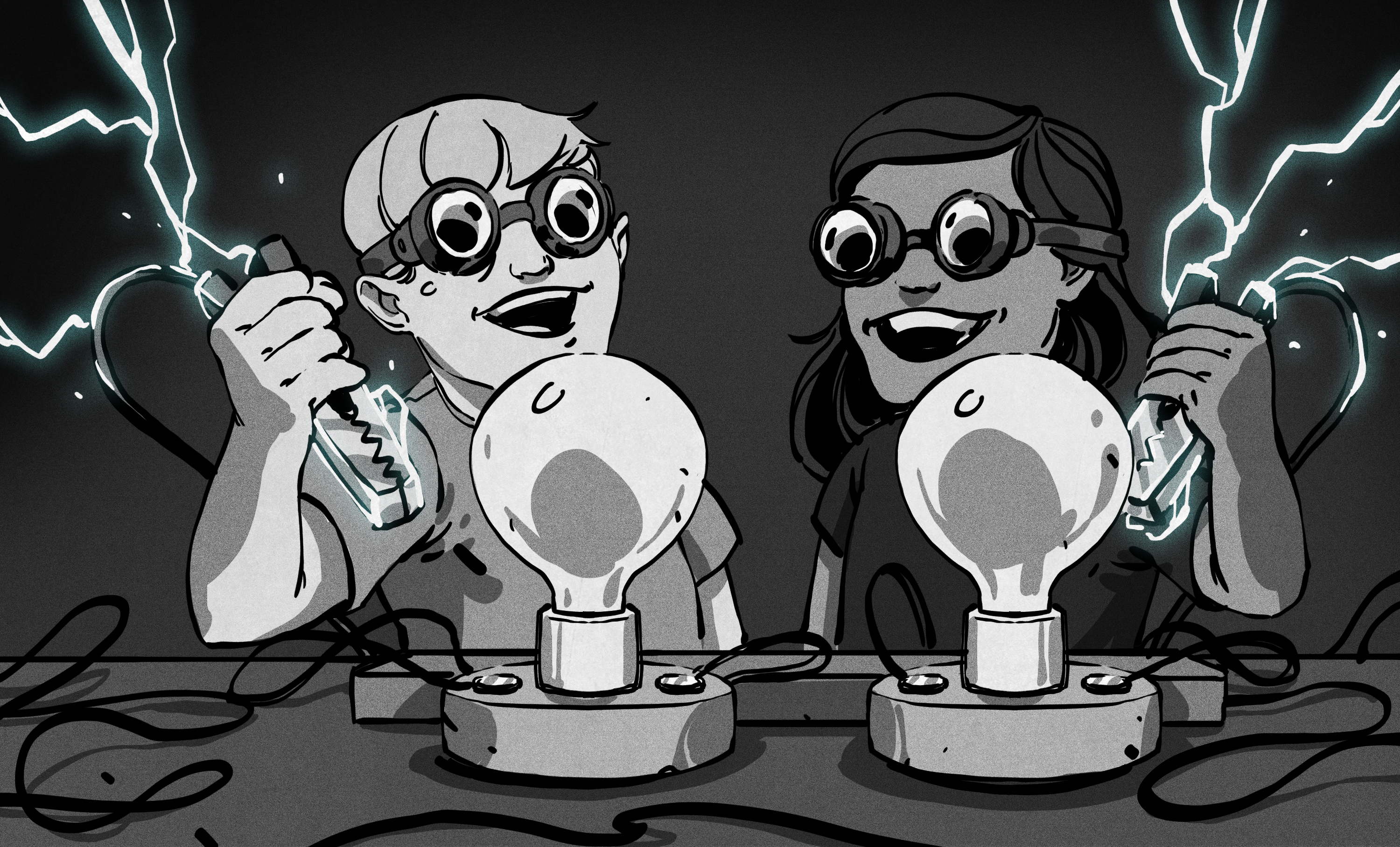
Static electricity is the tiny troublemaker of the electrical world. It makes your sweater cling, your hair stand up like it has just seen a ghost, and your finger regret touching a metal doorknob in winter. But behind that familiar snap is a surprisingly powerful scientific story. Static electricity is not just a parlor trick or a balloon’s favorite hobby. It is a real electrical phenomenon used in laboratories, factories, printers, pollution-control systems, and classic physics demonstrations.
At its simplest, static electricity is an imbalance of electric charge on or inside a material. Unlike current electricity, where charge flows continuously through a wire, static charge stays put until it finds a path to move. When it finally moves, the result may be a harmless spark, a dramatic laboratory discharge, or, at nature’s grandest scale, lightning. Yes, the same basic idea that makes socks stick together in the dryer also helps explain one of the loudest light shows on Earth. Static electricity likes range.
This article explores what static electricity is, how it forms, why certain machines are designed to make it, and how electrostatic technology appears in daily life. We will look at the Van de Graaff generator, electrophorus-style devices, Wimshurst machines, laser printers, photocopiers, electrostatic precipitators, and newer triboelectric generators. The goal is simple: to turn an invisible force into something clear, useful, and just a little entertaining.
What Is Static Electricity?
Static electricity begins with electric charge. Atoms contain positively charged protons, negatively charged electrons, and neutral neutrons. In everyday objects, positive and negative charges usually balance each other, so the object behaves as electrically neutral. But electrons can sometimes move from one surface to another. When that happens, one object may gain extra electrons and become negatively charged, while the other loses electrons and becomes positively charged.
The word “static” means the charge is not flowing as a steady current. Instead, it accumulates. A charged balloon can stick to a wall. A plastic comb can attract tiny bits of paper. A person walking across a carpet can build up enough charge to create a spark when touching a grounded object. The charge waits, quietly and mischievously, until a path opens.
The Triboelectric Effect: Rubbing, Contact, and Separation
The most familiar way to create static electricity is through the triboelectric effect. This occurs when two materials touch and then separate, often with rubbing involved. Rubbing is not magic; it simply increases the number of contact points between surfaces. The more microscopic contact and separation events occur, the more opportunities electrons have to transfer.
For example, when a rubber balloon is rubbed on hair or wool, electrons may transfer to the balloon. The balloon becomes negatively charged, while the hair or wool becomes positively charged. Opposite charges attract, which is why the balloon can cling to a wall or pull hair toward it. The hair is not “excited.” It is obeying electrostatic attraction, although it does look like it just drank three espressos.
Different materials have different tendencies to gain or lose electrons. This relationship is often shown in a triboelectric series, a ranking of materials based on how likely they are to become positively or negatively charged after contact. Glass, wool, rubber, plastic, silk, and human hair all behave differently, which explains why some combinations produce more noticeable static than others.
Why Static Electricity Builds Up More in Dry Air
Static electricity is especially noticeable in dry conditions. Moist air helps charge leak away slowly because water molecules on surfaces can provide a weak path for charge movement. Dry air acts more like an insulator, allowing charge to remain trapped longer. That is why winter often turns ordinary life into a tiny shock festival. Carpets, synthetic clothing, plastic objects, and low humidity work together like a mischievous electrical committee.
Humidity does not eliminate static electricity, but it can reduce how often large charges build up. This matters in homes, offices, factories, laboratories, and electronics facilities. In places where sensitive components are handled, static control is not optional. A spark too small for a person to feel can still damage a microchip. Static electricity may be fun with balloons, but it is less charming when it fries a circuit board.
How Machines Make Static Electricity
Electrostatic machines are devices designed to generate, collect, store, or control static charge. Some are built for education, some for research, and some for practical industry. They usually rely on one or more charging methods: friction, contact, induction, corona discharge, or charge transport.
Charging by Friction
Charging by friction is the classic balloon-and-hair method. Two materials are rubbed together, electrons transfer, and both materials become charged. Many early electrostatic machines used rotating glass plates, leather pads, silk, or other materials to produce charge through repeated contact and separation.
Charging by Conduction
Charging by conduction happens when a charged object touches another object and transfers some of its charge. If a charged metal sphere touches a neutral metal sphere, electrons may move between them until charge is redistributed. Both objects can end up with the same type of charge.
Charging by Induction
Charging by induction does not require direct contact. A charged object is brought near a conductor, causing charges inside the conductor to separate. If the conductor is grounded at the right moment, electrons can enter or leave. Remove the ground, then remove the nearby charged object, and the conductor is left with a net charge. Induction is elegant, a little sneaky, and very useful in electrostatic experiments.
The Van de Graaff Generator: The Hair-Raising Celebrity
The Van de Graaff generator is probably the most famous static electricity machine. It is the shiny metal sphere often seen in science museums, classrooms, and demonstrations where someone’s hair rises dramatically while everyone else pretends not to be delighted.
A Van de Graaff generator uses a moving belt made of insulating material to carry electric charge up into a hollow metal sphere. Metal combs or pointed electrodes help transfer charge onto the belt and then onto the sphere. Because excess charge on a conductor moves to the outside surface, the sphere can accumulate a large voltage. The result can be impressive sparks, crackling sounds, and the unforgettable sight of human hair standing up because each strand carries the same type of charge and repels its neighbors.
Although small Van de Graaff generators are used for teaching, larger versions were historically important in physics research. They served as high-voltage electrostatic generators and helped accelerate particles before modern accelerator technology became more advanced. In other words, the same machine that makes schoolchildren laugh also has serious scientific credentials. It is the rare device that can both educate and give your hairstyle a promotion.
The Electrophorus: A Simple Machine With Clever Physics
The electrophorus is a classic electrostatic device that shows how charge can be produced repeatedly using induction. It usually consists of an insulating plate and a metal plate with an insulated handle. The insulating plate is charged by rubbing. The metal plate is placed on top, touched briefly to ground it, and then lifted away. Through induction, the metal plate becomes charged and can produce a spark when brought near another conductor.
The clever part is that the charged insulating base is not used up quickly. The same base charge can help charge the metal plate again and again. That makes the electrophorus an excellent teaching tool for explaining induction, grounding, and charge separation without needing a complex machine.
The Wimshurst Machine: Spinning Disks and Beautiful Sparks
The Wimshurst machine is another classic electrostatic generator. It uses two counter-rotating disks fitted with metal sectors, along with brushes, neutralizer bars, and collectors. As the disks spin, electrostatic induction builds opposite charges on different parts of the machine. Charge is collected and stored, often in Leyden jars, until the voltage becomes high enough for a spark to jump across a gap.
Unlike the Van de Graaff generator, which uses a belt to transport charge, the Wimshurst machine relies heavily on induction and mechanical rotation. It is visually beautiful: spinning disks, brass parts, and bright sparks make it look like it belongs in a Victorian inventor’s workshop. It also demonstrates an important principle: static electricity machines do not create charge from nothing. They separate and move existing electric charge using mechanical work.
Leyden Jars: Early Static Electricity Storage
A Leyden jar is an early form of capacitor, a device that stores electric charge. Traditionally, it was made with a glass jar lined inside and outside with metal foil. The glass acts as an insulating layer, while the metal surfaces hold separated charges. When connected, the stored charge can discharge suddenly as a spark.
Leyden jars were crucial in early electrical experiments because they allowed researchers to store static electricity and release it later. They also taught a memorable lesson: static electricity can store real energy. Early experimenters sometimes learned this lesson with uncomfortable enthusiasm. Science has always had a way of saying, “Please read the safety instructions.”
Lightning: Nature’s Giant Static Discharge
Lightning is not produced by a classroom machine, but it is the biggest static electricity demonstration most people will ever witness. Inside storm clouds, turbulent air currents move water droplets, ice crystals, and hailstones up and down. Collisions between these particles help separate charge within the cloud. The upper parts of the cloud often become positively charged, while lower regions become negatively charged.
As the electric field grows stronger, air that normally acts as an insulator can break down. When a conductive path forms, charge moves rapidly between cloud regions, between clouds, or between a cloud and the ground. That sudden electrostatic discharge produces a flash of lightning. The thunder that follows comes from air heating and expanding rapidly around the lightning channel.
Lightning is a reminder that static electricity is not always small. A doorknob spark may be annoying, but lightning is powerful, dangerous, and worthy of respect. The lesson is clear: enjoy static electricity indoors with a balloon, not outdoors under a storm cloud holding a metal pole. Nature has enough dramatic lighting already.
Static Electricity in Printers and Photocopiers
One of the most practical uses of static electricity is found in laser printers and photocopiers. These machines use electrostatic charge to control where toner sticks. In a copier or laser printer, a photoreceptor drum is electrically charged. Light or a laser changes the charge pattern on the drum, creating an invisible electrostatic image. Toner powder is then attracted to the charged areas, transferred to paper, and fused by heat.
This process is why laser printers can produce crisp text quickly. Instead of spraying liquid ink, they guide dry toner particles using electric charge. Static electricity becomes a precision tool, not just a source of random socks clinging to laundry. Every printed page from a laser printer is a small victory for controlled electrostatics.
Electrostatic Precipitators: Cleaning Air With Charge
Electrostatic precipitators are industrial machines that use static electricity to remove particles from gas streams. They are common in power plants, factories, and other facilities where smoke, ash, dust, or fine particles need to be captured before exhaust is released.
Inside an electrostatic precipitator, particles are given an electric charge as they pass through a high-voltage region. Once charged, they are attracted to collector plates with the opposite charge. The collected material can then be knocked loose into hoppers or washed away, depending on the system design. This technology is valuable because it can remove very small particles with high efficiency when properly designed and maintained.
In this case, static electricity is not a nuisance. It is an environmental tool. The same force that pulls lint to your shirt can pull soot from exhaust gas. The scale is different, the engineering is more serious, and thankfully nobody has to rub a balloon on a smokestack.
Electrostatic Painting and Powder Coating
Electrostatic principles are also used in painting and powder coating. In electrostatic painting, paint droplets are electrically charged as they leave a spray gun. The object being painted is given the opposite charge or is grounded. The charged paint is attracted to the surface, helping create a more even coating with less overspray.
Powder coating works in a similar way. Dry powder particles are charged and sprayed onto a metal surface. The powder sticks electrostatically until it is heated and cured into a durable finish. This method is used for appliances, automotive parts, furniture, tools, and many metal products. Static electricity helps reduce waste and improve coverage, proving once again that invisible forces can be very practical when engineers put them to work.
Triboelectric Nanogenerators: A Modern Twist
Newer research has explored triboelectric nanogenerators, often called TENGs. These devices convert mechanical motion into electrical energy using contact electrification and electrostatic induction. When two carefully chosen materials touch and separate, charge transfer occurs. If the device is designed properly, repeated motion can drive electrons through an external circuit.
Triboelectric nanogenerators are being studied for sensors, wearable electronics, wave-energy systems, and small power-harvesting devices. They are not replacing power plants tomorrow morning, so please do not unplug the refrigerator in celebration. But they show how an old phenomenon can inspire new technology. Static electricity may be ancient, but it is still getting invited to modern engineering meetings.
Static Electricity Hazards and Safety
Static electricity can be useful, but it can also create hazards. In electronics manufacturing, electrostatic discharge can damage sensitive components. In areas with flammable vapors, powders, or gases, a static spark can ignite a fire or explosion. Fuel transfer, grain handling, chemical processing, and printing operations all require careful static control.
Common safety methods include grounding, bonding, humidification, antistatic mats, conductive flooring, wrist straps, ionizers, and proper material selection. Grounding gives charge a safe path to leave an object. Bonding connects objects together so dangerous voltage differences do not build between them. Antistatic packaging protects electronics during storage and shipping.
At home, static electricity is usually harmless, but it can still be annoying. Using a humidifier, choosing natural fibers, applying moisturizer, and avoiding excessive friction with synthetic materials can reduce static buildup. For electronics, it is wise to touch a grounded metal object before handling internal computer parts. Your motherboard will not send a thank-you card, but it will appreciate the courtesy.
Everyday Examples of Static Electricity
Static electricity shows up in small moments that are easy to overlook. Clothes stick together in the dryer because fabrics rub and exchange charge. Plastic wrap clings to containers because charge attraction helps it grip surfaces. Dust sticks to screens because charged surfaces attract tiny particles. A cat’s fur may crackle in dry weather, although the cat will likely blame you personally.
Even walking across a carpet can turn your body into a temporary charge holder. Your shoes and the carpet exchange electrons with each step. When you touch a metal object, the charge suddenly moves, creating a spark. The shock is brief because the amount of energy is usually small, but the voltage can be surprisingly high. Static electricity specializes in being dramatic without necessarily being powerful.
Experience Notes: Learning Static Electricity the Hands-On Way
One of the best ways to understand static electricity is to experience it directly. A simple balloon experiment can teach more than a page of definitions. Rub a balloon on clean, dry hair or wool, then hold it near small bits of paper. The paper jumps because the charged balloon polarizes the paper pieces, attracting the nearer opposite charge more strongly than it repels the farther like charge. It is a tiny physics show starring office supplies.
Another memorable experience is using a plastic comb after running it through dry hair. Bring the comb near a thin stream of water from a faucet, and the stream may bend toward it. The water molecules are polar, meaning their electric charge is not distributed perfectly evenly. The charged comb influences the water molecules, causing attraction. This experiment is simple, safe, and excellent for proving that static electricity can affect more than hair and paper.
Anyone who has used a Van de Graaff generator in a classroom remembers the moment the machine hums, the metal dome charges, and hair begins to rise. The effect is funny, but the explanation is serious. Each strand of hair receives the same kind of charge and repels the others. Because hair is light and flexible, that repulsion becomes visible. The person touching the dome must stand on an insulating surface and follow safety instructions, because electrostatic demonstrations should be fun, not foolish.
Static electricity also teaches patience. Conditions matter. A balloon experiment works better on a dry day than on a humid one. Some materials charge easily, while others barely cooperate. A cotton shirt may behave differently from a polyester sweater. A wooden table may not respond like a metal doorknob. These differences help learners see that science is not just a list of facts; it is a conversation between materials, conditions, and careful observation.
In daily life, static electricity becomes most noticeable when it misbehaves. A sweater clings to a shirt at exactly the wrong social moment. A printer pulls two sheets of paper because static makes them stick together. Dust gathers on a television screen. A tiny spark jumps from a fingertip to a car door after sliding across the seat. These moments are annoying, but they are also reminders that electric charge is everywhere. Static electricity is not hiding in a physics textbook. It is riding in your laundry basket, your office printer, your carpet, your weather, and possibly your cat.
The most useful personal lesson is respect. Static electricity can be playful at home, powerful in a lab, productive in machines, and dangerous in industrial settings. The difference depends on energy, environment, and control. A balloon on a wall is safe. A spark near fuel vapor is not. A Van de Graaff generator in a supervised classroom is educational. Random discharge inside a computer case is expensive. Learning static electricity means learning how invisible charge behaves, how to use it, and when to give it a safe way out.
Conclusion
Static electricity is much more than a quick shock from a doorknob. It is the result of charge imbalance, electron transfer, induction, and discharge. It explains everyday surprises, powers classic machines, helps printers create sharp pages, cleans industrial exhaust, improves coating processes, and inspires new energy-harvesting devices. From the electrophorus to the Van de Graaff generator, from photocopiers to electrostatic precipitators, machines that make or control static electricity reveal how useful this invisible force can be.
The next time your hair stands up, your laundry clings, or your finger gets zapped, remember that you are not just being personally attacked by your sweater. You are witnessing electrostatics in action. Static electricity may be small in daily life, but the machines that make it show a bigger truth: when charge is separated, guided, and controlled, even a spark can become science, technology, and a pretty good story.












