Choosing the best door lock sounds simple until you stand in the hardware aisle and realize there are more options than there are mystery keys in your junk drawer. Deadbolts, smart locks, keypad locks, rekeyable locks, garage locks, rental-friendly lockssuddenly “just buy a lock” feels like preparing for a tiny home-security thesis.
The good news: you do not need to turn your front porch into Fort Knox. The best door locks for your home, garage, or rental are the ones that match the door, the risk level, the people using it, and your tolerance for apps that send notifications at 2:14 a.m. because a raccoon looked suspicious.
This guide breaks down the best lock types, features, and buying tips for homeowners, renters, landlords, Airbnb hosts, garage owners, and anyone who has ever whispered, “Did I lock the door?” halfway to the grocery store.
What Makes a Door Lock “The Best”?
A good door lock does three things well: it resists forced entry, works reliably every day, and fits your lifestyle. A lock that is technically strong but impossible for your family to use is not a security upgrade; it is a daily comedy sketch.
For most exterior doors, the best starting point is a deadbolt. Unlike a spring latch in a knob or lever, a deadbolt uses a solid bolt that extends into the door frame. That makes it harder to force open, especially when paired with a reinforced strike plate and long screws. In plain English: the lock is only as tough as the wood and hardware holding it in place.
Understand ANSI and BHMA Lock Grades
When comparing door locks, look for ANSI/BHMA grading. These standards help measure security, durability, and finish performance. Grade 1 is the highest traditional performance grade, Grade 2 is strong mid-tier protection, and Grade 3 is basic residential performance. For main entry doors, Grade 1 or Grade 2 is usually worth the extra money. For a low-risk interior storage room, Grade 3 may be enough.
Some residential locks also use BHMA’s A/B/C rating system for security, durability, and finish. AAA is the strongest overall rating in that system. Do not panic if this sounds like report-card season. The simple version: choose the highest grade you can afford for exterior doors, and do not rely on a bathroom-style knob lock to guard your home. That little button lock is for privacy, not battle.
Best Overall Door Lock: A Grade 1 Single-Cylinder Deadbolt
For most homes, a Grade 1 single-cylinder deadbolt is the best all-around choice. It uses a key on the outside and a thumb turn on the inside. That makes it secure, easy to exit during an emergency, and simple enough for guests, kids, and sleepy adults carrying too many grocery bags.
Popular examples in this category include traditional deadbolts from Schlage, Kwikset, Yale, and other established lock brands. The Schlage B60N is often recommended as a strong standard deadbolt because it focuses on what matters most: physical security without batteries, Wi-Fi, or a tiny robot living in the door.
Best for:
Main entry doors, side doors, back doors, garage-to-house doors, and homeowners who want strong security without smart-home complexity.
Buying tip:
Look for a lock with a solid bolt, anti-pick or anti-bump design features, a reinforced strike plate, and long screws that reach the wall framingnot just the thin door jamb.
Best Budget Door Lock: A Reliable Grade 2 or Grade 3 Deadbolt
If you need to secure a secondary entrance without spending premium money, a budget deadbolt can still be a smart purchase. The Kwikset 660, for example, is widely known as an affordable residential deadbolt and includes SmartKey rekeying technology on compatible models. That feature lets you rekey the lock yourself, which is useful when keys go missing, tenants move out, or your cousin “borrows” a key and treats it like a family heirloom.
A budget lock should not mean a flimsy lock. Avoid unknown brands with no grading information, suspiciously light hardware, or instructions that look like they were translated by a toaster. Even on a budget, choose a lock from a reputable manufacturer with clear specifications.
Best for:
Secondary doors, interior garage entry doors, rental turnovers, and homeowners who need multiple locks without draining the vacation fund.
Best Smart Lock: A Wi-Fi or Matter-Compatible Deadbolt
Smart locks are no longer just gadgets for people who name their routers. A good smart door lock can let you lock and unlock the door from your phone, create temporary guest codes, check whether the door is locked, and connect with smart-home systems such as Alexa, Google Home, Apple Home, or Matter-compatible hubs.
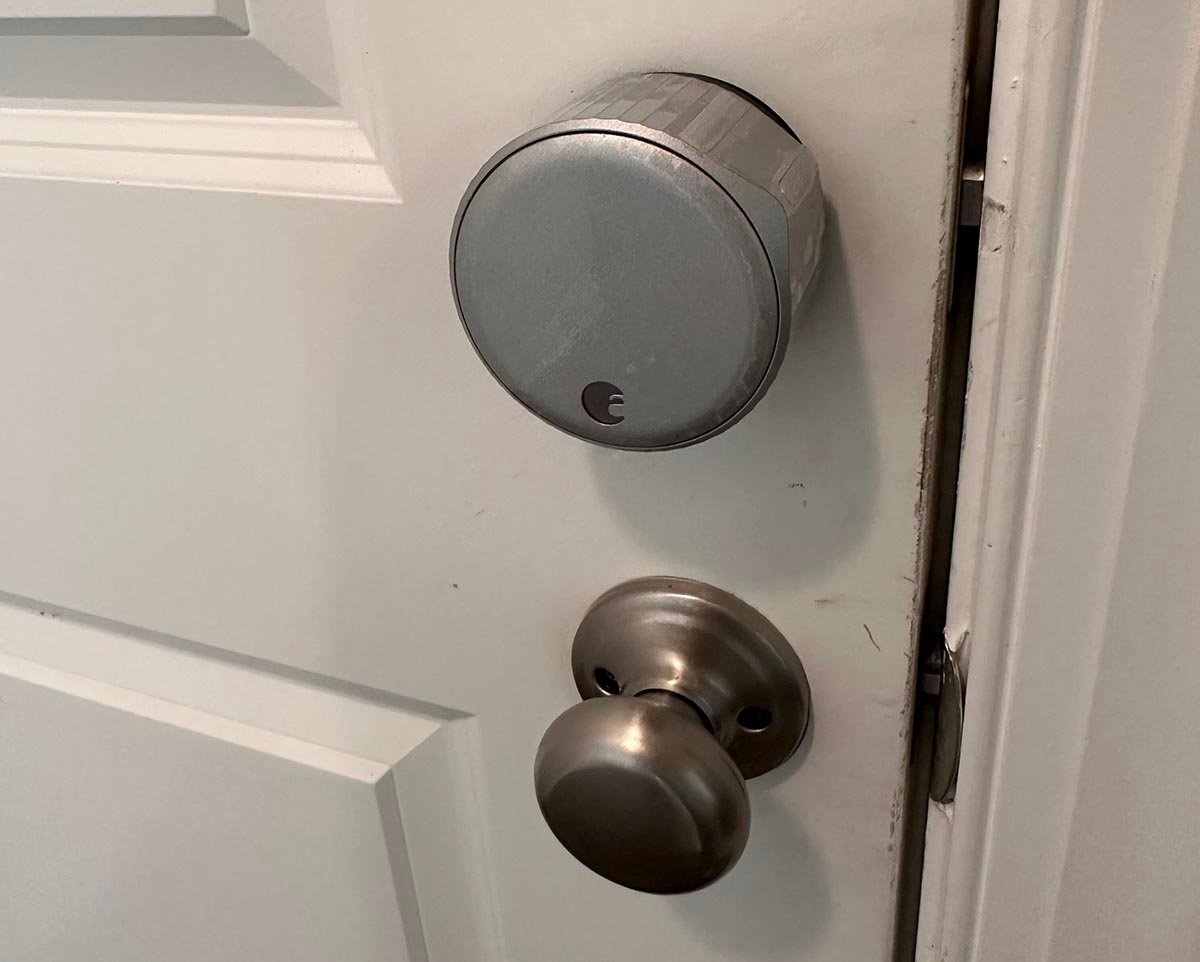
Strong examples include the Schlage Encode Plus, Yale Assure Lock 2, Aqara Smart Lock U50, August Wi-Fi Smart Lock, Level Lock Pro, and Ultraloq U-Bolt Pro. Each has a different personality. Some replace the full deadbolt. Some retrofit over your existing deadbolt. Some love Apple Home Key. Some love fingerprints. Some love making you download yet another app. Technology is beautiful, and also occasionally dramatic.
Best for:
Busy families, frequent travelers, smart-home users, short-term rentals, and anyone who wants to stop hiding a spare key under the most obvious fake rock in America.
Smart-lock security checklist:
- Choose a lock with a strong ANSI/BHMA grade.
- Use a unique account password.
- Turn on two-factor authentication when available.
- Update the lock firmware and app regularly.
- Delete old access codes when guests, workers, or tenants no longer need entry.
- Keep a physical backup key or emergency power option when possible.
Smart locks add convenience, but they do not magically fix a weak door. A premium smart lock installed on a hollow exterior door with tiny strike-plate screws is like putting a racing helmet on a cardboard box. Upgrade the door hardware and frame support too.
Best Keypad Lock: Electronic Access Without Full Smart Features
A keypad lock is a great middle ground between traditional and smart. It lets users enter a PIN code instead of using a key, but many models do not require Wi-Fi, hubs, or app accounts. That makes keypad locks practical for families, workshops, side doors, detached garages, and rental spaces where you want fewer copied keys floating around.
Keypad deadbolts such as the Schlage BE365 or Kwikset SmartCode models are popular because they combine everyday convenience with straightforward installation. You can give each family member a code, create a temporary code for a pet sitter, and delete it afterward. The pet sitter may still judge your dog’s snack schedule, but at least they will not keep a key forever.
Best for:
Homes with kids, shared households, side entrances, rental units, and people who lose keys with Olympic-level consistency.
Best Lock for Rentals: Rekeyable or Code-Based Access
Rental properties have one major lock problem: people change. Tenants move out, cleaners come and go, contractors need access, and guests arrive after midnight because their flight was delayed and apparently the universe enjoys landlord cardio.
For long-term rentals, a rekeyable deadbolt can save money and time between tenants. Kwikset SmartKey locks are popular because compatible models can be rekeyed without replacing the entire lock. For higher-traffic rentals, a keypad or smart lock with unique codes is often better. The best practice is to create individual codes for each tenant, cleaner, vendor, or guest, then remove access when it is no longer needed.
For short-term rentals, smart locks can be especially useful. Platforms such as Airbnb support smart-lock integrations for eligible hosts and compatible locks, allowing unique codes to be generated and shared with guests. Even if you manage codes manually, the rule is simple: one guest, one code, one stay window. Reusing the same code for every guest is convenient in the same way leaving the door open is convenient.
Best for:
Airbnb hosts, vacation rentals, duplexes, apartment units, property managers, and landlords who want fewer emergency key handoffs.
Best Garage Door Lock: Layered Security
Garage security deserves more attention than it gets. Many homeowners protect the front door like a bank vault and then leave the garage side door guarded by a tired latch and hope. That is not a strategy; that is a polite invitation.
For the door between the garage and the house, install a solid-core door with a quality deadbolt. Treat it like an exterior door, because if someone gets into the garage, that door becomes the final barrier to the living space.
For overhead garage doors, consider the type of door. Older manual doors may use a lockable T-handle. Roll-up doors can often be secured with slide bolts, padlocks, or track locks. When leaving town, some homeowners use a C-clamp on the garage door track as a temporary secondary lock, but this should be done carefully and removed before operating the opener. Otherwise, the opener may protest loudly and expensively.
Garage security tips:
- Do not leave the garage remote in a parked car outside.
- Use a keychain remote instead of a visor remote.
- Add a keypad opener with a strong code.
- Cover garage windows so tools, bikes, and empty parking spaces are not on display.
- Install motion lights near garage entrances.
- Lock the interior garage-to-house door every night.
Best Lock for Apartments and Renters
Renters have a special challenge: they need security, but they may not be allowed to permanently alter the door. Before replacing a lock, check your lease and local rules. Some landlords require a copy of the key or written permission before changes are made.
For renters, the best options may include a landlord-approved rekey, a retrofit smart lock that keeps the exterior hardware unchanged, or a removable interior security device. A retrofit smart lock, such as an August-style design, can sometimes fit over the inside thumb turn while leaving the outside key cylinder alone. That means the landlord’s key may still work, but you gain app control and guest access features.
For extra nighttime security, door reinforcement devices, security bars, and hinge reinforcement may help, but always choose products that allow safe emergency exit. A lock that traps you inside is not security; it is a horror-movie plot device.
Single-Cylinder vs. Double-Cylinder Deadbolts
A single-cylinder deadbolt has a keyhole outside and thumb turn inside. A double-cylinder deadbolt requires a key on both sides. Double-cylinder locks can help near glass panels because someone cannot simply break the glass and turn the inside knob. However, they can slow emergency exits, especially during a fire.
Many homes are better served by a single-cylinder deadbolt plus stronger glass protection, better lighting, and a reinforced strike plate. If you are considering a double-cylinder deadbolt, check local building and fire codes first. Safety should not require a treasure hunt for keys when seconds matter.
Do Not Forget the Strike Plate
The strike plate is the metal plate on the door frame where the bolt enters. It is small, boring, and extremely importantbasically the accountant of door security. A strong deadbolt with a weak strike plate is a half-upgrade.
Choose a reinforced strike plate with long screws, ideally 3 inches or longer, so the screws bite into the structural framing behind the jamb. This simple improvement can make forced entry harder and is often one of the best low-cost home security upgrades.
How to Choose the Right Door Lock
1. Match the lock to the door
Exterior doors need deadbolts, mortise locks, electronic deadbolts, or smart deadbolts. Interior privacy doors can use knob or lever locks. Sheds, gates, and some garage doors may use padlocks or hasps. File cabinets and drawers use cam locks. Do not ask a cam lock to protect a house. That is not its job, and frankly it would like to be excluded from this narrative.
2. Measure before buying
Most residential doors use standard bore holes and backsets, commonly 2 3/8 inches or 2 3/4 inches. Check door thickness, backset, bore hole size, and handing before buying. Many modern locks are adjustable, but “probably fits” is not the same as “fits.”
3. Think about who needs access
A traditional key is fine for one or two people. A keypad is better for families, roommates, or workers. A smart lock is best when you need temporary codes, remote control, access logs, or rental automation.
4. Consider battery life
Electronic and smart locks need power. Look for low-battery alerts, emergency key access, or backup power terminals. Replace batteries before they die. Waiting until the lock gives up during a rainstorm is not character-building; it is just wet.
5. Balance convenience and security
The most secure lock is the one you actually use. Auto-lock features can help forgetful households, but set a delay that makes sense. Too short, and you lock yourself out while taking out the trash. Too long, and the door sits unlocked while you unload groceries, answer a text, and discover a 17-minute video about raccoons washing grapes.
Installation Tips for Better Results
Many deadbolts and keypad locks are DIY-friendly if your door is already drilled correctly. You will usually need a screwdriver, measuring tape, and patience. A drill helps, but do not over-tighten screws. If the bolt does not slide smoothly into the strike plate, adjust the strike plate instead of forcing the lock. A deadbolt should extend easily; if it grinds or sticks, the motor in a smart lock may wear out faster.
When replacing an old lock, inspect the door edge, hinges, frame, and weatherstripping. A sagging door can make even an expensive lock behave like a stubborn vending machine. Tighten hinge screws, repair stripped holes, and align the latch before blaming the lock.
of Practical Experience: What Actually Matters After You Install the Lock
After living with different door locks, testing access routines, helping friends choose hardware, and watching homeowners make the same small mistakes, one lesson becomes obvious: the best door lock is not always the fanciest one. It is the one that works smoothly every day and fits the habits of the people using it.
For example, a smart lock is fantastic for a busy family if everyone understands how to use it. Parents can create codes for kids, grandparents, dog walkers, and neighbors. The app can confirm the door is locked. Auto-lock can save the day when someone leaves in a hurry. But if the Wi-Fi is unreliable, the door is misaligned, or nobody updates the batteries, the smart lock becomes a very expensive conversation starter.
On the other hand, a simple Grade 1 deadbolt can be the best decision for a homeowner who wants strength without maintenance. No app, no firmware, no Bluetooth tantrums. Insert key, turn key, done. The downside is key management. Once too many spare keys exist, security becomes a guessing game. Who has one? The neighbor? The old babysitter? The contractor from three years ago? The sock drawer? This is where rekeyable locks shine. Being able to change the key after a move, breakup, roommate change, or lost key can be incredibly practical.
For rentals, codes are usually better than keys. A landlord or host can create a code for a tenant, another for maintenance, and a temporary one for a cleaner. When someone leaves, access disappears without a locksmith appointment. The mistake many owners make is using one master guest code forever. That may feel easy, but over time the code spreads. Former guests, cleaners, friends of guests, and possibly someone named “Derek” who stayed there in 2022 may still know it. Unique codes are not just convenient; they are basic hygiene for access control.
Garage security is another area where experience changes opinions. People often assume the automatic opener is enough. It is not. The interior door between the garage and the home should have a real deadbolt. The garage remote should not live in a vehicle parked outside. Garage windows should be covered. Tools should be stored out of sight. A thief who can see ladders, drills, and bikes through a window is basically browsing a very illegal catalog.
The biggest overlooked upgrade is still the strike plate. Many break-ins are not cinematic lock-picking scenes. They are force, speed, and weak hardware. A reinforced strike plate with long screws is inexpensive and powerful. It is not glamorous, but neither are seat belts, and those work too.
Finally, test your lock like a real user. Lock and unlock it with the door open. Then with the door closed. Try the keypad at night. Check whether the thumb turn is easy to use. Confirm guests can understand the instructions. Replace batteries on a schedule. Keep backup access available. Good security should feel boring most days. When a door lock does its job, nothing dramatic happensand that is exactly the point.
Final Verdict: The Best Door Lock Depends on the Door
For most homes, the best door lock is a Grade 1 or Grade 2 deadbolt with a reinforced strike plate. For convenience, add a keypad or smart lock. For rentals, prioritize unique access codes, easy rekeying, and remote management. For garages, secure both the overhead door and the door leading into the house. For renters, choose lease-friendly upgrades that improve safety without causing trouble with the landlord.
A lock is not the entire home-security plan, but it is the part you touch every day. Choose well, install it properly, use it consistently, and give your future self the gift of not turning the car around to check the front door again.
Editorial note: Always verify door measurements, lease rules, fire-safety requirements, and local building codes before replacing or adding locks.