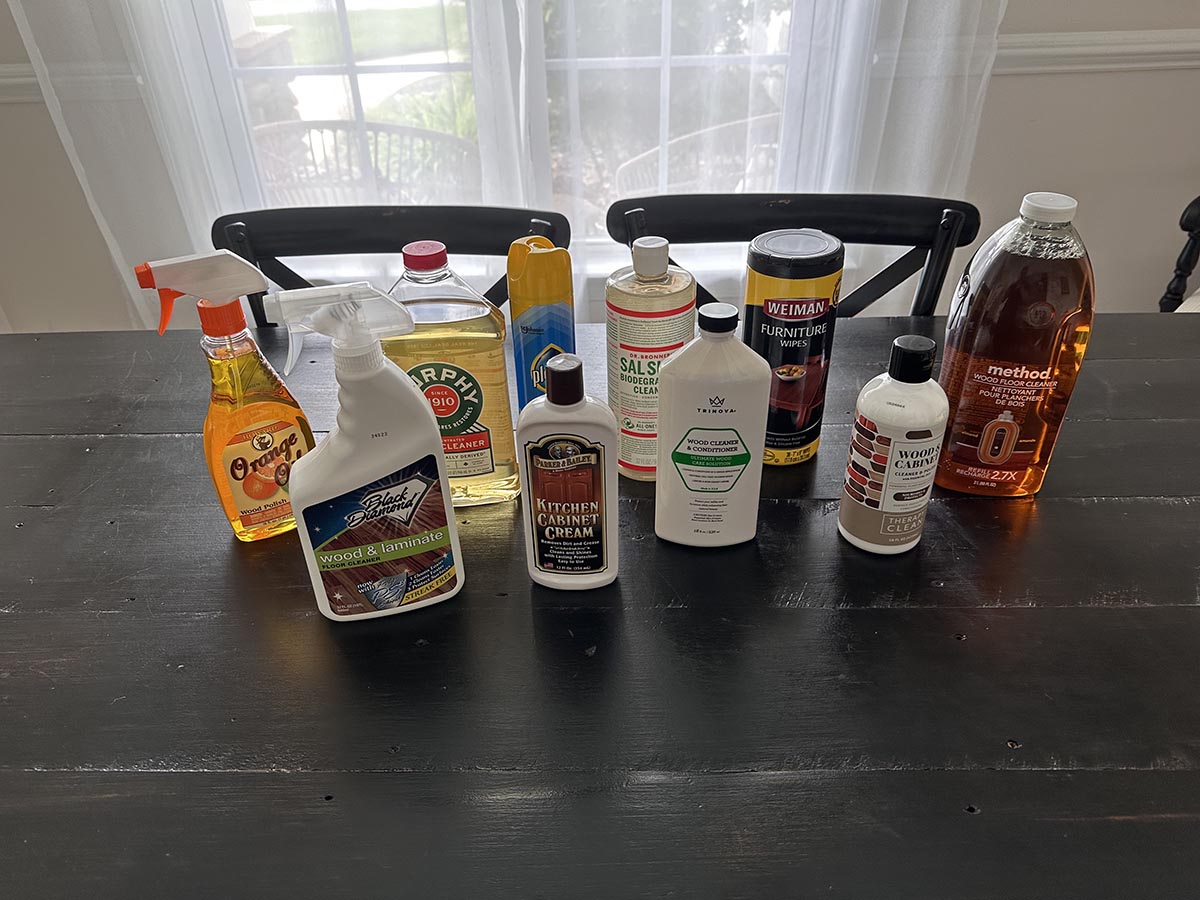
Wood is the charming overachiever of home materials. It can become a gleaming hardwood floor, a century-old dining table, a kitchen cabinet, a butcher block, or a decorative panel that instantly makes a room feel warmer. Unfortunately, wood is also slightly dramatic. Give it too much water, the wrong chemical, or an enthusiastic scrubbing with an abrasive sponge, and it may respond with cloudiness, scratches, swelling, or a finish that suddenly looks twenty years older.
The best wood cleaner is therefore not necessarily the strongest bottle on the shelf. It is the product that removes dust, grease, fingerprints, footprints, and everyday grime without attacking the surface underneath. That choice depends on whether the wood is sealed, waxed, oiled, unfinished, laminated, antique, or hiding beneath a modern protective coating.
This guide compares excellent wood cleaners for furniture, hardwood floors, cabinets, laminate, and dry-looking older pieces. The selections are based on manufacturer specifications, current wood-care guidance, and comparative product testingnot on the optimistic assumption that one magical spray should clean everything from an oak floor to Grandma’s walnut secretary desk.
Our Top Wood Cleaner Picks
| Category | Recommended Cleaner | Best For |
|---|---|---|
| Best overall for hardwood floors | Bona Hardwood Floor Cleaner | Sealed, unwaxed hardwood floors |
| Best concentrated cleaner | Murphy Oil Soap Original Formula | Finished wood floors, cabinets, and furniture |
| Best for multiple flooring types | Black Diamond Wood & Laminate Floor Cleaner | Hardwood, engineered wood, laminate, and vinyl plank |
| Best scented floor cleaner | Method Squirt + Mop Wood Floor Cleaner | Sealed hardwood and laminate |
| Best everyday furniture spray | Method Daily Wood Cleaner | Tables, shelves, panels, and finished wood furniture |
| Best cleaner and polish combination | Weiman Wood Furniture Cleaner & Polish | Finished furniture and decorative wood surfaces |
| Best for greasy cabinets | Guardsman Deep Clean Purifying Wood Cleaner | Kitchen cabinets, tables, doors, and molding |
| Best conditioner for dry wood | Howard Feed-N-Wax | Antiques, cabinets, trim, and faded wood |
| Best EPA Safer Choice option | Quick Shine Multi-Surface Floor Cleaner | Households wanting a certified multi-surface formula |
How to Choose the Right Wood Cleaner
Identify the finish before cleaning
Most modern hardwood floors are protected by polyurethane or another film-forming finish. In that case, you are primarily cleaning the finish rather than the raw wood. A water-based, fast-drying, pH-neutral cleaner is usually the safest starting point.
Oiled, waxed, and unfinished surfaces require different care. A cleaner designed for polyurethane-coated flooring may be unsuitable for a natural oil finish, while a wax-rich furniture conditioner may leave a slippery film on a modern floor. The National Wood Flooring Association recommends following the floor or finish manufacturer’s instructions and warns that products intended for film finishes should not automatically be used on naturally oiled flooring.
Distinguish cleaning from polishing
A cleaner removes grime. A polish changes the appearance of the surface by adding shine, oils, waxes, or protective ingredients. Some products do both, but the distinction matters.
Repeatedly polishing a floor that only needs cleaning can create residue, make refinishing more complicated, or produce a surface slick enough to turn an innocent sock-wearing stroll into an unplanned skating routine. Use polishes and restorative coatings selectively, especially on floors.
Keep moisture under control
Wood and standing water are not friends. Excess moisture can enter seams, contribute to swelling, and damage flooring or furniture finishes. Use a lightly damp microfiber cloth or mop, clean small sections, and wipe up spills promptly. Harsh chemicals, abrasive scrubbers, steam cleaners, and excessive water are commonly discouraged for hardwood surfaces.
The Best Wood Cleaners for Floors and Furniture
1. Best Overall for Hardwood Floors: Bona Hardwood Floor Cleaner
Bona Hardwood Floor Cleaner is a strong all-around choice for sealed, unwaxed wood flooring. Its ready-to-use formula is water-based, pH-neutral, quick-drying, and designed not to leave a dulling residue. That combination addresses the two biggest complaints people have about hardwood cleaners: sticky film and mysterious streaks that only appear when sunlight hits the room.
It works particularly well for routine cleaning in living rooms, bedrooms, hallways, and other areas where dust and footprints are more common than industrial-strength grease. Spray a light mist onto a manageable section, wipe with a microfiber mop, and allow it to dry before moving furniture or releasing the household stampede.
Bona’s professional and homeowner formulas are intended for clear-coated, unwaxed hardwood floors, and comparative testing by Better Homes & Gardens also ranked the brand highly for stain removal, usability, drying performance, and lack of residue.
Potential drawback: It is not a universal cleaner for unfinished, waxed, or naturally oiled floors. Confirm the finish before use.
2. Best Concentrated Wood Cleaner: Murphy Oil Soap Original Formula
Murphy Oil Soap remains popular because one concentrated bottle can handle a wide range of finished surfaces. When properly diluted, it can clean finished wood floors, furniture, cabinets, tile, and linoleum. It is particularly useful for larger cleaning jobs where buying endless ready-to-use spray bottles feels financially and environmentally silly.
The important words are properly diluted. More soap does not produce more cleanliness. It usually produces more residue and more time spent wondering why the floor feels tacky. Follow the label measurements, wring the mop or cloth thoroughly, and never flood the wood.
The manufacturer describes the original formula as suitable for finished wood and advises using a lightly damp microfiber cloth or mop because excess moisture can warp wood.
Potential drawback: Some flooring manufacturers discourage oil-soap products on specific modern finishes. The warranty and care instructions for your floor should overrule any general recommendation.
3. Best for Hardwood, Laminate, and Vinyl Plank: Black Diamond Wood & Laminate Floor Cleaner
Homes rarely contain just one kind of flooring. You may have hardwood in the dining room, engineered wood in the bedroom, laminate upstairs, and luxury vinyl plank in the kitchen. Black Diamond Wood & Laminate Floor Cleaner is useful in these mixed-surface homes because it is formulated for several sealed floor types.
The ready-to-use spray targets dirt, footprints, and sticky everyday grime without requiring rinsing. Its fine application method also makes it easier to avoid puddles around laminate seams. Independent testing by The Spruce praised its quick drying and lack of streaky residue, although stubborn sauce and crayon marks required additional scrubbing.
Potential drawback: This is a routine floor cleaner, not a scratch repair product or heavy-duty finish restorer.
4. Best Scented Wood Floor Cleaner: Method Squirt + Mop
Some people want a neutral-smelling cleaner. Others want the house to smell so freshly cleaned that visitors assume an entire professional crew just left through the back door. Method Squirt + Mop Wood Floor Cleaner falls into the second category with its recognizable almond fragrance.
It is a no-rinse product intended for sealed hardwood and laminate flooring. The nozzle distributes a narrow stream over the floor, after which the cleaner can be spread with a microfiber mop. The formula is convenient for quick weekly cleaning because there is no bucket, measuring cup, or chemistry experiment involved.
Method instructs users to apply a thin layer, avoid puddling, and test the cleaner in an inconspicuous area first. The bottle, excluding its lid, is made with post-consumer recycled plastic.
Potential drawback: The almond scent is noticeable. Fragrance-sensitive households may prefer an unscented alternative.
5. Best Everyday Furniture Spray: Method Daily Wood Cleaner
Method Daily Wood Cleaner is designed for the surfaces people touch constantly: tables, shelves, counters, wall panels, and finished wooden furniture. It removes dust, light grime, smudges, and fingerprints without requiring a polishing session afterward.
For best results, spray the product onto a microfiber cloth instead of saturating the furniture directly. This gives you better control around joints, veneer edges, carved details, and areas where liquid could collect. Wipe in the direction of the grain, then use a dry section of the cloth to remove remaining moisture.
The product is specifically marketed for daily dust and grime removal on wood tables, counters, walls, shelves, and panels.
Potential drawback: It is a cleaner rather than a restorative treatment, so it will not repair faded finishes, water rings, deep scratches, or wood that genuinely needs refinishing.
6. Best Furniture Cleaner and Polish: Weiman Wood Furniture Cleaner & Polish
Weiman Wood Furniture Cleaner & Polish suits finished furniture that needs both cleaning and a more polished appearance. It is designed to remove dust and grime while conditioning and protecting wooden furniture and decorative surfaces.
This type of combination product works well on dressers, desks, coffee tables, bookcases, cabinets, and wood trim. Apply it sparingly to a soft cloth, wipe along the grain, and buff away any extra product. Using too much polish is the furniture-care equivalent of wearing half a bottle of cologne: the intention may be good, but everyone can tell.
Weiman describes the formula as a cleaner, moisturizer, polish, and protectant for wood furniture. The company also offers wipes for controlled touchups and recommends furniture-specific products when oils and surface protection are desired.
Potential drawback: Avoid using furniture polish as a substitute for hardwood floor cleaner. A product that creates attractive luster on a cabinet may create unwanted buildup or slipperiness underfoot.
7. Best for Greasy Cabinets: Guardsman Deep Clean Purifying Wood Cleaner
Kitchen cabinets collect a special mixture of cooking oil, airborne dust, fingerprints, and particles that apparently migrate from dinner directly onto every nearby door. Guardsman Deep Clean Purifying Wood Cleaner is made for heavily handled surfaces such as cabinets, tables, chairs, doors, molding, and paneling.
The cleaner is intended to remove built-up grime and residue without requiring aggressive scrubbing. That is valuable because harsh abrasion can change the sheen of a finish even when it does not leave an obvious scratch.
Guardsman recommends its deep cleaner for frequently used wood surfaces and describes it as suitable for grease, fingerprints, food residue, and accumulated surface film.
Potential drawback: Always spot-test painted cabinets, refinished furniture, and unknown coatings. “Wood cabinet” describes the material underneath, not necessarily the finish you are touching.
8. Best for Dry-Looking Wood and Antiques: Howard Feed-N-Wax
Howard Feed-N-Wax is not an everyday spray cleaner. It is a polish and conditioner for wood that looks dry, faded, or lackluster. Its blend includes beeswax, carnauba wax, orange oil, and conditioning oils that enhance grain and leave a soft protective luster.
It is particularly useful on antiques, cabinets, dining tables, wood doors, trim, and decorative pieces. The product can be applied with a soft cloth, left on for at least 20 minutes, and then buffed to remove excess. On very dry unfinished wood, additional time or coats may be necessary.
The manufacturer states that Feed-N-Wax can be used on finished and unfinished wood but is not intended for food-preparation surfaces. Howard recommends separate food-grade products for cutting boards and butcher blocks.
Potential drawback: Wax-based conditioners can affect future refinishing and should not be used on floors unless specifically approved for the flooring system.
9. Best EPA Safer Choice Wood Floor Cleaner: Quick Shine Multi-Surface Floor Cleaner
Quick Shine Multi-Surface Floor Cleaner is worth considering when ingredient screening is a major shopping priority. It is a ready-to-use cleaner for multiple sealed hard surfaces and carries the EPA Safer Choice label.
The Safer Choice label does not mean a product is edible, harmless in every circumstance, or safe to pour into the goldfish bowl. It means the EPA has evaluated the ingredients against program criteria for human health and environmental considerations while also requiring performance standards. Wood cleaners are among the surface-cleaner categories covered by the program.
Quick Shine identifies its multi-surface floor cleaner as a Safer Choice-certified product, making it a convenient option for sealed wood and other compatible hard flooring.
Potential drawback: Do not confuse the brand’s cleaner with its floor finish or polish. They serve different purposes and should not be used interchangeably.
What Should You Avoid When Cleaning Wood?
Bleach and ammonia
These chemicals can discolor wood, dull protective finishes, and create unpredictable reactions when combined with residue from other products. They are rarely appropriate for routine wood care.
Undiluted vinegar
Vinegar is often presented as the heroic solution to every household problem, possibly including taxes and squeaky doors. In reality, its acidity can dull or damage certain wood finishes, particularly when used repeatedly or at excessive strength. Follow the surface manufacturer’s instructions rather than assuming a homemade formula is universally safer.
Steam mops
Steam combines heat and moisture, both of which can enter seams or affect finishes. Unless the flooring manufacturer expressly approves steam cleaning, a lightly damp microfiber mop is the safer choice.
Abrasive pads and dirty cloths
Steel wool, rough scrubbers, and microfiber cloths carrying trapped grit can scratch a finish. Dust and loose particles should be removed before wet cleaning because even ordinary dirt can act like fine sandpaper.
Too much product
When a floor looks cloudy after cleaning, the problem may not be insufficient cleaning power. It may be accumulated cleaner. Use the smallest effective amount, change dirty mop pads, and avoid adding extra concentrate “for luck.”
How to Clean Wood Correctly
- Remove loose debris. Dust furniture with a clean microfiber cloth. Sweep or vacuum floors using a hard-floor setting without an active beater bar.
- Read the label. Confirm that the cleaner is compatible with the wood’s finish, not merely with “wood” in general.
- Spot-test. Apply a small amount in a hidden area and check for discoloration, cloudiness, or changes in sheen.
- Use minimal liquid. Spray the cloth or mop when possible instead of soaking the surface.
- Work with the grain. This helps lift dirt from texture and reduces visible wiping marks.
- Dry the surface. Buff furniture with a clean cloth and wipe up any damp areas or floor puddles immediately.
- Stop when the wood is clean. Additional passes do not earn bonus points and may simply redistribute residue.
Real-World Experiences With Wood Cleaners
The biggest lesson from cleaning wood in real homes is that the messiest-looking surface does not always require the strongest cleaner. A dining table covered in fingerprints may need little more than a wood-safe spray and a fresh microfiber cloth. Meanwhile, a table that looks reasonably clean may hide years of aerosol polish, cooking residue, and microscopic dust in its finish.
A useful example is the dark wooden kitchen cabinet near a stove. At first glance, the cloudy area around the handle can look like worn finish. Scrubbing it aggressively would be an understandable mistake. In many cases, however, that cloudy patch is a thin layer of grease holding onto dust. Applying a cabinet-safe cleaner to a cloth, allowing a brief contact period, and wiping several gentle passes can reveal an intact finish underneath. The satisfying part is seeing the original color return. The less satisfying part is realizing every other cabinet now needs the same treatment.
Floors teach a different lesson: technique matters as much as formula. A highly rated hardwood cleaner can still leave streaks when sprayed too heavily or spread with a saturated, dirty mop pad. In a large room, it is better to work in small zones and replace or rinse the pad before it becomes visibly gray. A light application generally dries more evenly and is less likely to create footprints from someone who inevitably walks through the room thirty seconds after being told not to.
Scent also changes the cleaning experience more than product descriptions suggest. An almond- or lemon-scented cleaner can make routine mopping feel pleasant, but fragrance can linger in a closed bedroom or small apartment. Unscented formulas are often a better choice for sensitive users, nurseries, and spaces where several scented products are already competing for attention.
Older furniture requires patience. A faded antique does not necessarily need to be stripped, stained, and refinished. Sometimes careful cleaning followed by an appropriate conditioner restores enough depth to the grain that the piece looks dramatically better. However, conditioners should not be used as camouflage for structural damage, peeling veneer, failing lacquer, or active water staining. Valuable antiques deserve an evaluation from a furniture conservator before any aggressive treatment.
Another common experience is discovering that “natural” does not automatically mean compatible. Undiluted vinegar, essential oils, olive oil, and homemade wax blends can stain, soften, discolor, or leave residue on certain finishes. Olive oil can also become sticky or rancid. A product’s kitchen-cabinet origin story does not turn it into a professionally tested furniture treatment.
The most reliable routine is wonderfully unexciting: dust frequently, clean spills quickly, use a compatible product sparingly, and keep water from sitting on the wood. Felt pads under lamps and decorations prevent scratches. Mats near exterior doors reduce grit on floors. Coasters stop cold drinks from creating tiny circular monuments to regret. These preventive habits extend the time between deep cleanings and reduce dependence on heavy-duty products.
Finally, consistency beats dramatic rescue missions. A five-minute weekly dusting session is easier on wood than waiting until a sticky gray film demands an entire Saturday. Wood finishes generally age better when cleaning is gentle, predictable, and slightly boringwhich, in furniture maintenance, is a compliment.
Frequently Asked Questions
Can dish soap be used on wood furniture?
A very small amount of mild dish soap diluted in water can be suitable for some sealed furniture finishes. Apply it with a barely damp cloth and dry the surface immediately. Do not use this method on unfinished, waxed, antique, or moisture-sensitive pieces without professional or manufacturer guidance.
Can the same cleaner be used on furniture and hardwood floors?
Only when the product label specifically lists both applications. Furniture polishes may contain oils, waxes, or shine-enhancing ingredients that can create buildup and slipperiness on floors. Floor cleaners may lack the conditioning ingredients desired for older furniture.
How often should hardwood floors be wet-cleaned?
Dust, sweep, or vacuum regularly, then damp-clean according to traffic and the flooring manufacturer’s recommendations. Busy entrances and kitchens may need more frequent cleaning than guest rooms. There is no benefit to wet-cleaning a floor that is already free of grime.
What is the safest wood cleaner for an unknown finish?
Start by dry dusting. Next, test a barely damp microfiber cloth in a hidden area. If more cleaning is required, consult the furniture or flooring manufacturer or use a finish-compatible product after spot-testing. Valuable or antique pieces should be assessed professionally.
Final Verdict
Bona Hardwood Floor Cleaner is the best overall choice for routine care of sealed, unwaxed hardwood floors because it dries quickly and is designed to clean without dulling residue. Black Diamond is especially practical for homes with several compatible flooring types, while Murphy Oil Soap provides economical concentrated cleaning when the surface manufacturer permits it.
For furniture, Method Daily Wood Cleaner handles everyday smudges, Weiman combines cleaning with polish, and Guardsman is better suited to greasy cabinets and heavily used wooden surfaces. Howard Feed-N-Wax earns a place in the cabinet for dry-looking antiques and decorative wood that needs conditioning rather than another ordinary spray-and-wipe session.
Whatever product you choose, the golden rule is simple: identify the finish, use minimal moisture, test first, and resist the urge to attack wood with every chemical under the sink. The goal is clean woodnot wood that has been interrogated.
Note: “Best” refers to the most suitable product for each listed use based on current specifications, care guidance, and published comparative evaluations. Product formulas, certifications, prices, and availability may change. Always follow the latest label instructions and the wood or finish manufacturer’s warranty requirements.